The Care Home Education Facilitators (CHEFs) provide support to current and potential Practice Learning Environments (PLEs, clinical placements) for undergraduate student nurses. Non-NHS placements work with different governance and legislative system from the NHS and the CHEFs, therefore provide a more bespoke way of supporting nursing and care teams. Download our poster outlining the role of Care Home Education Facilitators, or visit NES Care Home Education Facilitator site for more details about the role.
Care homes can provide excellent learning opportunities for nursing students and students from a variety of other healthcare professions. In providing these learning experiences, they also expose these students to the possibility of a valued career in the care home sector and non-NHS settings on completion of their studies.
NHS Education England mapped all the NMC proficiencies and skills that students must achieve to various non-NHS placements. They created the guide below so students and practice supervisors can easily see all that they can achieve in a care home or similar placement.
Resources for care home Practice Supervisors and Practice Assessors
There are usually fewer Practice Supervisors (PS) and Practice Assessors (PA) in care homes than in NHS PLEs, and many PS are senior carers / nursing assistants rather than nurses. Our experience and feedback is that bespoke tools and resources are required to help and support these staff members in this role, as many don’t have other PS/PAs for immediate support. We offer additional support to non nurse PS on aspects of the NMC code, NMC role and the content of a nursing degree as many will be unfamiliar with this.
There are many other group and 1-to-1 sessions that CHEFs can support staff with in line with the national CHEF role descriptor and the Practice Education priorities:
General updates and support visits
PAD (completing the student paperwork)
An introduction to Future Nurse (proficiencies for ALL nurses) and SSSA (student supervision and assessment guidelines)
Registering and using the free Turas Learn online learning system & CHEF Turas learning catalogue.
The NMC Practice supervisor and Practice assessor roles – flexibility in practice examples.
Using the Turas professional portfolio for CPL, CPD and revalidation.
NMC Revalidation workshops
Working with students with competency or professionalism difficulties including creating development support plans DSP
Updating and using QMPLE (quality management system for practice learning environments)
The open university degree – awareness session
Signing off platform proficiencies and skills annexes in the PAD
Exploring complex proficiencies and skills for students
Supporting PS / PA to make reasonable adjustments for students (religion, disabilities, mental ill health etc.)
Completing the student final assessment and grading matrix.
Using the student activity “grab bags” as a resource
Creating a student welcome pack
Using the national pharmacology workbook with students
Using the Care Home placement workbook with students
Teaching of the entire practice supervisor / assessor content rather than it being self-directed – small 1-hour sessions over 6 weeks. (a quality improvement trial 2024-2025)
Placement resources that students should access
All information about individual care homes and similar placements is stored and accessible in the online platform QMPLE – the quality management of the practice learning environment website. The “suggested reading” section on QMPLE contains links to videos and resources that students should access prior to, and during their non-NHS placement. Please discuss with your CHEF if you would like QMPLE access as a care home staff member.
In order that students make the most of their Care home, or Non-NHS placements the CHEFs have devised these case studies – Case Study 1 and Case Study 2 to help give an overview of how your placement might work.
Example placement timetable
This example timetable will help you and your Practice Supervisors plan for learning and development opportunities. You can download a copy and modify for your own placement. We also have a blank copy of 8-week timetable for students available.
Care home workbook
Nationally, the CHEFs created a Care Homes Workbook which we advise all students to print off and complete during their placements, as this may provide evidence to practice supervisors and practice assessors of achieve proficiencies and skills.
Expectations of student and supervisors on care home placements
The below 3 links will indicate to you examples of care, nursing activities and behaviours expected of 1st, 2nd, and 3rd year students on placement, as well as a reminder of what to expect from supervisors and assessors
Lastly, these “Grab bag” activities were created so that if clinical activity is really busy or your supervisor (usually the only nurse or senior carer on duty) is called away to an urgent task which wouldn’t be appropriate for student learning; students can complete one of these activities, using evidence, research and local policy, and I relate it directly to the care of the residents in the clinical area.
Aside from facilitating student nurse education in care homes, we also provide bespoke education sessions for care home staff in a number of NHS Education for Scotland (NES) initiatives and useful development sessions.
At present we offer:
Flying Start NHS® – support for newly qualified nurses, or internationally educated nurses with a new NMC PIN.
Revalidation – requirements, planning, and using the Turas portfolio
The above links will provide general information on these programmes, but please contact your CHEF if you would like more information on bespoke provision within your care home or clinical environment.
Lastly, we wish to provide links to many other resources for care home staff to help in your own CPD, but also for the education of students and learners in practice:
Leadership is an integral component of all Healthcare Scientists (HCS) and HCS Healthcare Support Worker (HCSW) roles across the whole career pathway.
Whatever your role or level of practice, there is information and resources available to support your leadership development.
Was this helpful?
Yes
No
Thanks for your feedback!
Our AHP Quality Improvement Steering Group is chaired by Nikki Munro and our purpose is:
“to provide a strategic, co-ordinated, and multidisciplinary approach to ensure all AHPs in NHSGGC are able to use QI tools and theory in routine practice.”
We hope this page will help anyone who wants to know more about Quality Improvement methodology, and how to use this in routine practice. Further information, resources and contact details for profession specific QI Leads can be found in the NHSGGC AHP Quality Improvement Sharepoint page.
If you have any questions on the NHSGGC AHP Quality Improvement workstream please email Nikki at nikki.munro@nhs.scot.
Quality Improvement Learning
Are you interested in developing QI knowledge? We recommend you start learnpro module (109) Quality Improvement Fundamentals which will give you an awareness and basic understanding of the importance, methods and successes of Quality Improvement in NHS GGC.
Kickstart QI – to give everyone an introduction to Quality Improvement
QI Essentials – to provide knowledge of core quality improvement methods and tools
Practical QI – to provide the opportunity to practise using QI tools, frameworks and methodologies in the workplace
Managing QI – to enable managers and team leaders to create and sustain the conditions for improvement
Quality Improvement Training
There are also formal courses run by the clinical effectiveness team at NHSGGC and by NES. These can be great at learning with others and gaining practical QI skills along the way.
Quality Improvement training provides learning and development opportunities to build skills, knowledge and confidence to use QI methodology to deliver better care, services and outcomes for staff working across NHS Greater Glasgow and Clyde.
QI training is available to staff in any role, working as part of NHSGGC, including those working within Health and Social Care Partnerships (HSCPs), third sector, volunteer sector as well as others who support the delivery of quality care for patients.
Are you interested in AHP Quality Improvement (QI) and want to know more? Do you want to meet up with like-minded colleagues to discuss QI projects and find out what others are doing? If so, join the NHSGGC Quality Improvement Network! Colleagues from all professions and working areas are welcome.
There’s lots of useful information:
Sharing of Projects
Space to chat
QI resources
Upcoming courses and events
There are 4 virtual network meetings a year, everyone is welcome. The aim of these meetings is to Network, Share and Learn about all things QI.
We have a registry of AHP Quality Improvement projects across NHS GGC. The registry is really useful to share current and completed projects (big and small). Projects to register include:
The new electronic practice assessment document (ePAD) is now in use for the majority of nursing students who started their pre-registration programme from September 2025 onwards. Please see training resources below and the practice education team will be running ongoing monthly ePAD training sessions as part of our regular PS / PA support sessions. See PS/PA Support Sessions flyer for more information. The sessions do not require advance booking so if you wish to attend any of the sessions just join the link or scan the QR code at the date and time of the session you wish to come along to.
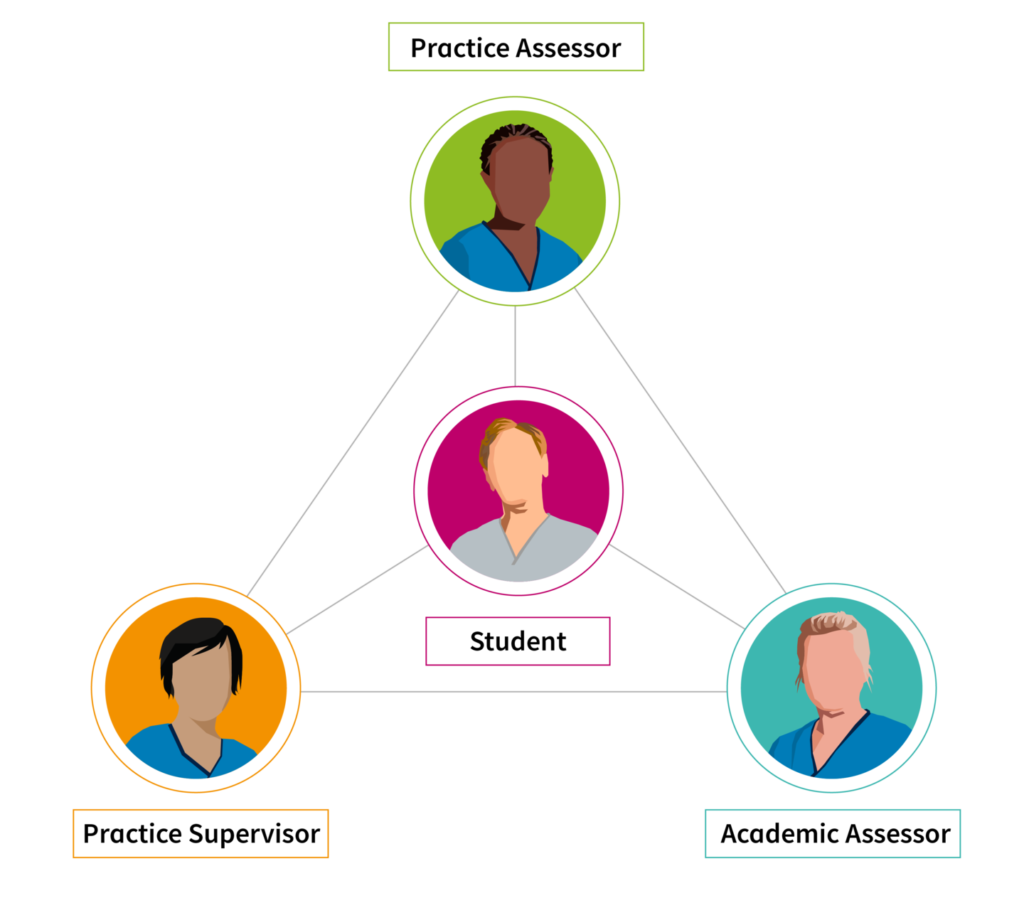
The NMC Standards for Education and Training (updated 2023) replaced the NMC Standards to Support Learning and Assessment and students on pre and post registration programmes are now supervised and assessed whilst in practice learning environments. As a result of this change, the roles of mentor, sign-off mentor, practice teacher and teacher have been replaced with three new roles: the practice supervisor, practice assessor and academic assessor.
As a practice supervisor of student nurses and midwives you will:
Serve as a role model for safe and effective practice in line with the NMC (2018) Code of Conduct.
Support learning in line with your scope of practice, enabling students to meet their skills and proficiencies.
Keep your own knowledge and practice up to date in the areas where you provide support, supervision and feedback.
Provide timely feedback on student progress towards achieving their skills and proficiencies.
Contribute to the student’s record of achievement by recording relevant observation of their practice.
Have sufficient opportunity to engage with practice assessors and academic assessors to share relevant observations on student performance in practice.
Appropriately raise and respond to student conduct and competency concerns and seek support when doing so.
Practice Assessors
As practice assessor of student nurses and midwives you will:
Have previous working knowledge of supporting and assessing students’ performance in practice
Are suitably prepared in supporting learning and assessment in practice and have a working knowledge of the students learning and achievement in theory.
Conduct assessments to confirm student achievement of proficiencies and programme outcomes for practice learning, including periodic observation of the student across a range of environments.
Make assessment decisions informed by feedback provided by the students practice supervisors and academic assessor.
Record objective, evidence based assessment on student performance from a range of sources.
Keep your own knowledge and practice up-to-date in the areas where you are providing support, supervision, feedback and assessment.
Work in partnership with the nominated academic assessor to review the student performance prior to recommending progression in the programme.
Academic Assessors
The academic assessor works with a nominated practice assessor to make recommendations for progression for the student they are assigned to. They collate and confirm the student’s academic and practice learning outcomes for the part of the part of the programme they are assigned to the student, before recommending them for progression on to the next part of the programme.
The three roles undertaking the supervision and assessment of student nurses and midwives
The NHSGGC Practice Education Team can also support your continuing professional development in the PS and PA roles. Not only do we offer different topics as listed below, but also we offer them in a variety of different teaching and learning styles to meet your needs. In addition, your local PEF/CHEF can provide bespoke updates in your area so please get in touch with them. Also, remember that effective practice learning should be a focus of discussion within your annual appraisal and revalidation and that reflection on the supervisory or assessor role, feedback from students and CPD hours focusing on the PS or PA role may form part of the evidence for your NMC revalidation.
Pre-Registration Nursing Programme Proficiencies, Skills and Procedures
As a practice supervisor or practice assessor you are required by the NMC to have an understanding of proficiencies and programme outcomes you are supporting students to achieve or the student you are assessing is aiming to achieve. Use our resources below to support your continuing professional development.
Online Awareness Session
During this session we aim to increase your awareness of the theory student nurses learn at university and the skills and procedures they must demonstrate to enter the NMC register. In addition, this session will provide an outline of governance processes and resources available to guide Practice Supervisor / Practice Assessor in their role of supporting students to demonstrate specific skills and procedures. This session will provide you with one hour of continuing professional development participatory time for NMC revalidation requirements.
Listen at a time and place convenient to you, our audio podcast featuring your PEF colleagues discussing the role of the practice supervisor and practice assessor in supporting nursing students to demonstrate the proficiencies, skills and procedures required to enter the NMC register.
Staff guide to new NMC Skills and Procedures for student nurses undertaking pre-registration 2020 programmes
The NMC (2018) Future Nurse Standards contain some nursing skills and procedures that were not previously taught or assessed in practice. The Staff Guide to the new NMC skills and procedures (NHSGGC, 2023) will assist you when supporting these students and give you detail of when and how students will be provided with the theoretical underpinning to the skills and procedures and when they are able to undertake them in practice and/or simulation.
Having an awareness of how you can support students with a disability to achieve proficiency is important in your role as their practice supervisor or assessor. Use our resources below to support your continuing professional development.
Online Session
During this session we aim to increase your awareness of reasonable adjustments. We will provide examples of situations that may require reasonable adjustments, the impact these may have on students, and how you as their practice supervisor or assessor can support them within the practice learning environment.
Furthermore, the session also provides you with opportunity to discuss what constitutes a reasonable adjustment, learning development support plans, interim feedback meetings and additional supports available and will provide you with one hour of continuing professional development participatory time for NMC revalidation requirements.
Please note this is a generic session and if you required information on specific topics such as anxiety, dyslexia or religion and culture, please contact your PEF or CHEF.
Reasonable Adjustments in the Practice Setting – NHS Education for Scotland Learning Resource
The aim of this three part, NHS Education for Scotland learning resource is to guide you in your role as PS or PA when you are, or will be, working with a student where reasonable adjustments should be considered to allow the student to safely perform during their practice placement or learning experience with you.
Reasonable adjustments are changes that organisations and people providing services must make if someone’s physical or mental disability puts them at a disadvantage compared with others who aren’t disabled (GOV.UK)
How do reasonable adjustments relate to students?
At the application stage of the programme for the student, the HEI will determine if a student is able to meet the requirements of the programme. That is, will they be able to satisfactorily achieve all NMC proficiencies, skills and procedures taking into account their disability and what, if any, reasonable adjustments can be put in place.
However it is important to note that students may only disclose or be aware that they require a reasonable adjustments once they have already started their training.
Students represent our diverse society and therefore equality and diversity needs for all students must be considered.
What are examples of reasonable adjustments?
Changing the recruitment process so a candidate can be considered for a job
Doing things another way, such as allowing someone with social anxiety disorder to have their own desk instead of hot desking.
Making physical changes to the workplace, like installing a ramp for a wheelchair user or audio-visual fire alarm for a deaf person.
Letting a disabled person work somewhere else, such as on the ground floor for a wheelchair user.
Changing their equipment, for instance providing a special keyboard if they have arthritis.
(Above examples provided by GOV.UK)
What are the legal requirements of reasonable adjustments?
The general definition of disability for the purposes of the Equality Act 2010 is “a physical or mental impairment which has a substantial and long-term adverse effect on a person’s ability to carry out normal day-to day activities”. The Act defines long-term in this context as having lasted, or being likely to last for at least 12 months or the rest of the person’s life. Substantial is defined as more than minor or trivial.
What types of reasonable adjustments considerations could we have to manage in practice?
Student with dyslexia. One example could be a student that requires some extra time to complete documentation.
Student with religious or cultural needs. One example could be a Muslim student who requests use of a private area to pray.
Student with carer commitments. On example could be a student that has an elderly parent and has carer duties.
Student with anxiety. One example could be a student that suffers from anxiety and finds delivering handovers particularly challenging.
Student who requests flexible working due to childcare commitments. One example could be a single parent who struggles to work nightshift.
Please note that for such examples there are no hard and fast rules. Each request needs to be carefully considered at an individual level and impact on students learning or the areas ability to accommodate have to be carefully considered.
Who can support staff with students requiring reasonable adjustments?
In the first instance your local PEF can support. If you are unsure of who your local PEF is, please check via the NHS GGC Practice Education website.
Link Academic Assessor for your area can also assist.
When would I be made aware that a student has a reasonable adjustment in place?
Students may have a RAP in place before starting their placement. This may have been part of their induction university or put in place during their course. Occasionally a pre placement meeting is required to discuss the student and their reasonable adjustments request.
There is also an opportunity to discuss at the Initial meeting with your student. This should take place within the first 48 hours of starting placement.
Please see the students Practice Education Document.
What if I think my student may require a reasonable adjustment, for example, dyslexia and they are not disclosing?
It is the student’s decision to disclose, however the NMC does recommend that students disclose.
If a student has not disclosed an individual learning requirement/disability and you have a concern about their knowledge or practice, you would follow the same process outlined in the Practice Learning Support Protocol to ensure a fair support and assessment to your students.
What can I do to support my student with a reasonable adjustment?
This would be dependent on what the reasonable adjustment was. It is a good idea to have a learning development support plan in place and review throughout the placement.
The students can link in with their personal tutor to access support services offered by their university.
What about assessing students with a reasonable adjustment in place?
Reasonable adjustments can allow a student with an individual requirement to achieve a competency or meet a standard. However professional standards and competencies must be maintained (NMC, 2019)
It is the students decision and responsibility to disclose they have a specific learning need.
The student can still fail even if they have reasonable adjustments in place if they don’t meet the required standard. There remains a duty to safeguard and protect the public.
What if my student requests flexible working?
Employers must deal with requests in a ‘reasonable manner’
Examples of handling requests in a reasonable manner include:
Assessing the advantages and disadvantages of the application
During this session we aim to provide a general overview of the PAD. In addition to discussing the role of the Practice Supervisor and Practice Assessor, this session will provide information and encourage discussion on the topics of student assessment, grading and the proficiencies, skills and procedures that students must achieve, as well as the principles of learning development support planning.
This session will provide you with one hour of continuing professional development participatory time for NMC revalidation requirements.
Designed by the Practice Education Team, this interactive PAD resource will provide you with information and guidance on how to complete the different sections of the Practice Assessment Document. From recommended timelines for each stage of the student journey, who completes the different sections, to clear and simple examples of evidence needed for each platform.
You might find it useful to access the relevant university/field specific Practice Assessment Document to review a particular section or if you require additional PAD pages these can be printed from the relevant Practice Assessment Document (Please note that NHS Scotland log-in required).
Our grading rubric calculator with worked example demonstrates how to use Glasgow Caledonian University’s grading rubric (Please note that Desktop MS Excel App required).
If you’re unsure about the terms used in the PAD when it comes to student assessment, we’ve created a helpful guide just for you. the PAD Terminology for Practice Supervisors and Practice Assessors explains key terms (called level outcomes) and gives examples to help you understand what’s expected of your student by the end of their placement.
Learning Development Support Plans are used to support students to meet specific objectives, particularly if they face challenges in achieving level of knowledge and/or skills required by their educational programme or if there are concerns regarding their professional practice. We have compiled a number of sample plans that you can use to help you to write an effective Learning Development Support Plan to support your students to progress in their practice learning environment.
**Coming Soon** Our Learning Development Planning Resource will give you useful information on how to write a LDSP, whose responsibility it is and how to implement them. Use this in conjunction with our PAD Terminology for Practice Supervisors and Practice Assessors which explains key terms (called level outcomes) and gives examples to help you understand what’s expected of your student by the end of their placement.
Supporting a student with additional competency requirements
This 10 minute narrated presentation on Strengthening Student Nurse and Midwife Practice will give you an insight and awareness in ways you can support student nurses and midwives with additional competency requirements and provide robust assessment (NHS Scotland log in required).
Audio Podcast
** Coming soon**
Listen to our podcast featuring a practice assessor sharing their experience of supporting a student with additional competency requirements.
These pages include eligibility checkers and embedded criteria documents. An information session held on 10th June has also been recorded and upload to these pages and the link to this has been included below:
Was this helpful?
Yes
No
Thanks for your feedback!
Working in our team means you can also access a wide range of other information that may help you and your families to stay healthy, active and connected. Below are some links to a wide range of additional resources on topics like energy at home, travel, sustainability and healthy living.
Active Staff Spring 2026 Walking Challenge – Less than 2 weeks to go!
The challenge starts at 00:01 on Monday 1 May and runs for 4 weeks. Each team will be aiming to complete the Lakes and Mountains Route over the course of the challenge. That’s a staggering 715.9miles in just 4 weeks. We have a total of 2000 spaces available, however, please register and join/create a team ASAP to avoid disappointment.
Or download the free ‘Big Team Challenge’ app from the iPhone or Android app stores. Enter “nhsggcspring2026”
Staff Shuttle Bus
There are Shuttle Buses available for staff traveling between hospitals.
Public Transport Information
Search door-to-door public transport journey options to NHS healthcare facilities with Public Transport Information
Travel Information For Staff
Travel Information for Staff helps find information, links and various initiatives that makes it cheaper, easier and more environmentally sustainable for staff to travel to and from their place of work and between sites.
Home Energy Scotland
Home Energy Scotland offers free, impartial advice on energy saving, keeping warm at home, renewable energy, greener travel, cutting water waste and more.
If you’re struggling to heat your home, you could be eligible for support from the Scottish Government funded Warmer Homes Scotland programme to help make your home warmer and cosier.
Sustainability
Zero Waste Scotland has the facts to help everyone end the climate crisis by wasting less and making things last instead.
Stop Smoking Support
Stop Smoking Support – Quit Your Way services offer free information, advice and support, including nicotine replacement therapy, to those who want to stop smoking.
Maintaining a healthy weight or losing some weight has real health benefits.
Active Staff
The Active Staff Programme was set up to protect and promote health in the workplace by providing a range of free opportunities for all NHSGGC/HSCP staff to engage in activities that support good mental and physical health.
Women’s Health
Over 50% of Scotland’s population are women and there are 32,344 women working for NHSGGC. Throughout her life course, women and girls experience various health needs and risks which are not the same as men.
The Scottish Government Women’s Health Plan (2021-2024) underpins actions to improve women’s health inequalities by raising awareness around women’s health, improving access to health care and reducing inequalities in health outcomes for girls and women, both for sex-specific conditions and in women’s general health.
Was this helpful?
Yes
No
Thanks for your feedback!
Working for NHSGGC comes with a range of discounts and staff benefits. You can find out more and sign up to benefit from these using the links below.
Benefits
Blue Light Card
For just £4.99, members of the Blue Light community can register for 2-years access to more than 15,000 discounts from large national retailers to local businesses across categories such as holidays, cars, days out, fashion, gifts, insurance, phones, and many more.
20% discount on public transport ticket bundles and 4 weekly tickets for First Bus via Commuter Travel Club.
Save up to 25% compared to buying your public transport season ticket on a weekly basis.
Discount on ScotRail season tickets now at approximately 40%.
New ticket option now available for Glasgow Tripper ticket. Travel on multiple bus companies with the one ticket.
SPT ZoneCard ticket now in Smartcard format.
Annual ticket options for First Bus, Glasgow Tripper, ScotRail and SPT ZoneCard. Deductions are taken directly from your weekly/monthly salary saving you the initial outlay.
Easy one off process each year.
No more waiting in a queue for that weekly ticket.
Discounted gym memberships for NHS staff – We are delighted to announce that we have teamed up with neighbouring local authority leisure providers to offer staff the chance to sign up to discounted leisure memberships.
The scheme works by NHSGGC paying the annual membership fee, entitling staff to a 12 month membership. Staff sign a salary mandate form and the payments are deducted on a monthly basis from their salary for a period of 12 months.
All employees are able to access online learning and development opportunities. You can find out more at the links below, or speak to your Team Leader for more information if you are unsure about which you should sign up for.
We have a range of courses available for enrolment. Please speak with your Team Leader for more information and to find the right course for you.
Staff Bursary Scheme 2025/26 to open on 1 April 2025
The 2025/2026 Staff Bursary will be opening 9.00am Tuesday 1 April 2025 and run until 23:59pm on Sunday 27 April 2025.
The Staff Bursary Scheme is available to NHSGGC employees from all grades and service areas to support them to gain educational qualifications and undertake courses of study relevant to their role and personal development. The bursary will cover course fees only, and does not cover cost of living, travel, accommodation or materials.
The Staff Bursary will support applications from 1 August 2025 to 31 July 2026 (all courses must start between these dates).
If you wish to be added to our mailing list to get a reminder nearer the live dates then please contact the Staff Bursary team at: staff.bursary@ggc.scot.nhs.uk
Any enquiries please contact the bursary team on staff.bursary@ggc.scot.nhs.uk or LE Support 0141 278 2700 (option 3).
Upcoming Induction Dates
All staff within Facilities complete a three day induction programme prior to starting in their sites, to ensure that all basic training is covered. This induction includes completing their REHIS Elementary Food Hygiene training. The dates for the next induction sessions are as follows:
Wednesday, 05th March 2025 – 3 days
Wednesday, 19th March 2025 – 3 days
Wednesday, 02nd April 2025 – 3 days
Wednesday, 30th April 2025 – 3 days
Frequently Asked Questions
Am I eligible to enrol in a course?
Many of the courses on offer can are offered on a first come, first served basis, and while some are available to certain roles only, there are a wide range of training opportunities that are open to everyone. Please speak to your supervisor if you aren’t sure whether a course is available for you, or if it will fit your needs.
How do I apply for a course?
Most courses will need you to apply online, usually via a Form. You may need an email address to receive confirmation or to access a course. Your supervisor can help if you’re unsure.
Can I take the course during work hours?
All staff have some time available within their working hours for training and development. Sometimes we can’t have all staff off the floor at any one time, so please check with your supervisor or manager if you are unsure.
Will I need to sign a learning agreement?
It will depend on each individual course whether this is required or not. The majority of our courses won’t need you to sign an agreement, but if your course is funded or accredited, it’s likely that you will have to sign a learning agreement.
What happens if I fail or don’t complete the course?
We encourage participants to fully complete any course they commit to, and to try to pass the test, if there is one, at the end. For some specific training courses, you will need to pass the test before progressing further in your career. Any courses, including those hosted online, come at a significant cost to the organisation. Drop-outs from courses therefore costs the organisation money, and we’d rather invest that money in your development, so we ask all staff to do their utmost to finish the course. If you have specific circumstances that prevent this, please discuss them with your line manager first.
Can I enrol in more than one course at a time?
It depends. Some courses have long waiting lists, and if you apply for multiple courses these may be offered at the same time. We want to ensure that all staff have the opportunity to develop, so please ensure that you only apply for relevant courses and if you are offered a place on different ones at the same time, especially if it impacts on your working hours or ability to complete them, please discuss with your supervisor.
Will I need to report my progress during the course?
It depends. If you’re attending college and completing a course that takes a significant period of time, it would be good practice to have regular discussions with your manager about your progress, and any challenges you might be facing. If you are completing some online learning, it might be useful to discuss how you got on with it when you complete it. Speak to your supervisor for more advice.
Was this helpful?
Yes
No
Thanks for your feedback!
Cookie Consent
We use cookies to analyse traffic to our site and to enable certain functions such as forms and embedded videos. These do not collect personal information. By clicking "Accept All", you consent to our use of cookies, or you can customise the options.
This website uses cookies
Websites store cookies to enhance functionality and personalise your experience. You can manage your preferences, but blocking some cookies may impact site performance and services.
Essential cookies enable basic functions and are necessary for the proper function of the website.
Name
Description
Duration
Cookie Preferences
This cookie is used to store the user's cookie consent preferences.
30 days
CloudFlare provides web performance and security solutions, enhancing site speed and protecting against threats.
Sequence rules uses cookies to track the order of requests a user has made and the time between requests and makes them available via Cloudflare Rules. This allows you to write rules that match valid or invalid sequences. The specific cookies used to validate sequences are called sequence cookies.
session
cf_ob_info
The cf_ob_info cookie provides information on: The HTTP Status Code returned by the origin web server. The Ray ID of the original failed request. The data center serving the traffic
session
cf_chl_rc_m
These cookies are for internal use which allows Cloudflare to identify production issues on clients.
session
__cfruid
Used by the content network, Cloudflare, to identify trusted web traffic.
session
__cf_bm
Cloudflare's bot products identify and mitigate automated traffic to protect your site from bad bots. Cloudflare places the __cf_bm cookie on End User devices that access Customer sites that are protected by Bot Management or Bot Fight Mode. The __cf_bm cookie is necessary for the proper functioning of these bot solutions.
session
__cflb
When enabling session affinity with Cloudflare Load Balancer, Cloudflare sets a __cflb cookie with a unique value on the first response to the requesting client. Cloudflare routes future requests to the same origin, optimizing network resource usage. In the event of a failover, Cloudflare sets a new __cflb cookie to direct future requests to the failover pool.
session
_cfuvid
The _cfuvid cookie is only set when a site uses this option in a Rate Limiting Rule, and is only used to allow the Cloudflare WAF to distinguish individual users who share the same IP address.
session
cf_clearance
Whether a CAPTCHA or Javascript challenge has been solved.
session
cf_use_ob
The cf_use_ob cookie informs Cloudflare to fetch the requested resource from the Always Online cache on the designated port. Applicable values are: 0, 80, and 443. The cf_ob_info and cf_use_ob cookies are persistent cookies that expire after 30 seconds.
session
__cfwaitingroom
The __cfwaitingroom cookie is only used to track visitors that access a waiting room enabled host and path combination for a zone. Visitors using a browser that does not accept cookies cannot visit the host and path combination while the waiting room is active.
session
cf_chl_rc_i
These cookies are for internal use which allows Cloudflare to identify production issues on clients.
session
cf_chl_rc_ni
These cookies are for internal use which allows Cloudflare to identify production issues on clients.
session
Statistics cookies collect information anonymously. This information helps us understand how visitors use our website.
We use Microsoft Clarity to understand how users interact with our website, including information such as clicks, scrolling and navigation behaviour, to help improve our services.
Microsoft Clarity uses cookies and similar technologies. These are only set if you accept analytics cookies.
If you choose not to accept analytics cookies, Clarity will operate in a limited mode using non-cookie-based data, which does not track users across pages or visits.
The data collected is behavioural and technical in nature and does not directly identify individuals. Sensitive information such as names, email addresses and form inputs is automatically hidden and not recorded or viewed.
Some information, such as device and approximate location data will still be collected and is treated as personal data in accordance with data protection legislation.
This will not be used for any purpose other than analytics and will not be used to identify you.
We use Microsoft Clarity to understand how users interact with our website, including information such as clicks, scrolling and navigation behaviour, to help improve our services.
Microsoft Clarity uses cookies and similar technologies. These are only set if you accept analytics cookies.
If you choose not to accept analytics cookies, Clarity will operate in a limited mode using non-cookie-based data, which does not track users across pages or visits.
The data collected is behavioural and technical in nature and does not directly identify individuals. Sensitive information such as names, email addresses and form inputs is automatically hidden and not recorded or viewed.
Some information, such as device and approximate location data will still be collected and is treated as personal data in accordance with data protection legislation.
This will not be used for any purpose other than analytics and will not be used to identify you.