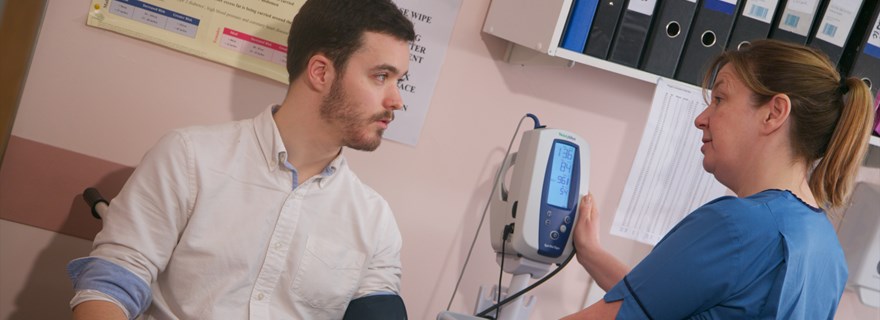
The clinical team will do their best to answer the questions you might have about living with HIV. But, for some people getting advice and information from someone that has gone through a similar experience, can be incredibly useful and reassuring. Below is a list of frequently asked questions and answers compiled by patients at the Brownlee Centre covering some of the main questions they themselves had when first diagnosed.
What is HIV?
HIV stands for Human Immunodeficiency Virus. HIV attacks the body’s immune system and weakens it over time until it cannot fight off infections and cancers that a healthy person can. There is no cure for HIV, but very effective treatment means many people now consider HIV as a long-term manageable condition. With this effective treatment people with HIV are living, long and healthy lives. HIV causes AIDS and it is HIV that can be passed on. Just because someone has been diagnosed with an AIDS-related illness, does not mean they will die. Thanks to effective HIV treatment, many people who develop AIDS are now very well and can look forward to a long and healthy life.
More detailed information can be found at the Aidsmap website.
How will living with HIV affect my life?
Nowadays people living with HIV can live long and healthy lives and it is considered by many to be a long-term condition. But as with any long-term condition, being diagnosed with HIV can be a life-changing experience that will have a whole range of emotional and practical implications. You can get information on a whole range of subjects by speaking to the staff or meeting with a Peer Volunteer.
Am I going to die because of HIV?
Nowadays the majority of people in the UK diagnosed with HIV who follow the advice of their specialist care team are physically healthy and will not die due to their HIV infection. More detailed information can be found at the NAM and Aidsmap website.
What tablets will I have to take and how are they going to affect me?
This depends on how long you have had HIV before being diagnosed and what strain of the virus you have and any other illnesses or conditions you might have. It is recommended that everyone diagnosed with HIV starts treatment right away but this will be discussed with your doctor. Improvements in medications are happening all the time, so that people take fewer tablets less often – some people take only one pill once per day. Medications also have less severe side effects with a lot of people not having any long-term side effects at all. But everyone is different. More detailed information can be found at the NAM and Aidsmap website.
What do I need to know about transmission?
People sometimes worry about infecting others, but you cannot ‘give’ anyone HIV through normal social contact (shaking hands, hugging, kissing), by sharing food or cutlery, or using the same toilet. Even if you cut yourself HIV cannot cross healthy unbroken skin and washing with normal soap and water kills the virus. HIV is most commonly transmitted through having sex without a condom (anal or vaginal) or sharing injecting equipment. More detailed information can be found at the NAM and Aidsmap website.
Can I still have sex?
When first told they have HIV, many people feel that their sex lives are over or at least things will be very difficult, but this is not true. Most people living with HIV have happy, healthy and fulfilling sex lives. But it does mean there are some things you need to consider when deciding how and when you want to have sex.
This section contains information on some of the things you may need to think about when you feel ready to have sex again. If you wish to discuss any of these issues you can ask to see one of the Sexual Health Advisers at the Brownlee.
Who should I tell?
The answer to this varies from person to person and depends on your situation. What you do have to remember is that once you tell someone you cannot take it back. This is why it is important to think about it carefully and it can be helpful talking this through in confidence with a Peer Volunteer.
What about my partner(s)?
It is important that current or previous sexual partners are tested as this is the only way to find out if someone has HIV and it could prevent them from becoming seriously ill. Notifying them can be done anonymously on your behalf and a member of staff will speak to you about this. More detailed information can be found at the NAM and Aidsmap website.
Who looks after me at the Brownlee?
Every patient with HIV has a named consultant and a specialist nurse allocated to them. At clinic visits you won’t always see your consultant and it might be one of the department’s speciality doctors, but your overall care is always monitored and reviewed by your consultant. At clinic you can also access: sexual health advisors, counsellors, pharmacist, occupational therapist and a dietician. These staff are key members of our Multidisciplinary Team.
I don’t understand all the medical jargon like CD4 and Viral Load?
If you don’t understand something then the best thing to do is to ask the member of staff to explain it. When it comes to your treatment and care there is no such thing as a stupid question. CD4 and Viral are the blood tests commonly carried out as they give important information about the effects HIV is having on your body. A CD4 cell count tells you about the strength of the immune system, which protects us against infections and illness. Viral load measures how much HIV there is in a drop of blood. For more information click here
What about my medical records and confidentiality?
All patient records are now held electronically; however the notes related to your HIV treatment and care are maintained with restricted and secure access. Only healthcare professionals looking after you will have access to the letters and blood tests that are relevant to providing you with optimal care. All NHS staff irrespective of their speciality or department are bound by and work under strict policy and rules on patient confidentiality. If you want more information on this then speak to a member of staff, view the Health Board’s information on Data Protection and Privacy or see the guides Your Voice, Your Choice, Your Rights developed by HIV Scotland in conjunction with the National AIDS Trust (NAT).
How do people come to terms with their diagnosis?
There is no right answer to this question that will make you feel instantly better. Although people living with HIV share many of the same experiences and fears each person deals with it uniquely. Coming to terms with it also means different things to different people, but for many this is about acceptance and moving forwards to deal with what living with HIV means for them. Talking to someone can help and this could be someone close to you, a trained counsellor or a Peer Volunteer who understand what it’s like. Find out about Peer Support and Peer Volunteers.
Was this helpful?
Yes
No
Thanks for your feedback!
NHS Greater Glasgow and Clyde consider that any stigmatisation or discrimination of people living with HIV is unacceptable.
Poor knowledge and misconceptions about how the virus is transmitted means that HIV can evoke fears, prejudices and negative attitudes, and unfortunately many people living with HIV still experience stigma and discrimination within healthcare settings in NHSGGC.
Here you will find information on the work we are doing to tackle and reduce HIV-related stigma and discrimination within NHSGGC.
We have been working closely with people living with HIV to create new resources and a staff campaign. This is the story of how through collaborative working we hope to put and end to stigma within our services.
What is Stigma?
Stigma is usually based on fear, ignorance and prejudice. Misconceptions and a lack of knowledge about HIV and how it is transmitted contribute to stigma.
What is Discrimination?
While stigma is found in a person’s attitude or beliefs, discrimination is about their behaviour. Discrimination means treating one person differently from another based on their characteristics. Examples HIV patients report include:
“Your appointment is delayed or you are moved to the end of the list”
“The person puts on two pairs of gloves to treat you”
“Openly discussing status in front of other staff or even patients”
“Treatment was poor. Their fear made them aggressive towards me”
Your Experience
Have you experienced or seen HIV stigma or discrimination taking place within NHS Greater Glasgow and Clyde (NHSGGC) health services? If you have we want to hear about your experience. This could be any service from primary care to hospital appointments, especially if it is not related to HIV care. It could have happened any time in the last 3 years.
You may have had direct experience or wish to let us know on behalf of someone else; you may have experienced staff treating a patient living with HIV in a discriminatory manner or, as a member of staff you feel that a procedure you have been told to follow causes stigma for those living with HIV.
It doesn’t matter if you don’t remember all the details just tell us as much as you can. Collecting these experiences helps us to work together to ensure people living with HIV are treated with the dignity, compassion and respect that all patients in NHSGGC can expect.
You can complete the form anonymously. However, if you would like the HIV Peer Support Manager to discuss the incident further including how to make a formal complaint please make sure you enter your contact details.
In October 2023, the national HIV Stigma Campaign launched. Its tv ad was the first major new TV advert on HIV to air in Scotland since the UK Government’s ‘Don’t Die of Ignorance’ campaign featuring falling tombstones aired 40 years ago. It was a decades overdue update on the huge medical progress in the fight against HIV.
In 1987 the advert’s message was ‘it’s a deadly disease and there’s no known cure’, while this new campaign explains how an HIV diagnosis has transformed since then by highlighting ‘you can live a healthy, happy life just like anyone else’.
The film is informed by Scottish Government funded research from YouGov into attitudes and beliefs about HIV in Scotland and produced by Terrence Higgins Trust, the UK’s leading HIV and sexual health charity.
New research has found worryingly low levels of knowledge about HIV. Just one third (35%) of people in Scotland would be happy to kiss someone living with HIV, despite it being known since the 1980s that HIV can’t be passed on through saliva.
The data also shows almost half (46%) of people in Scotland would be ashamed to tell other people they were HIV positive – demonstrating just how stigmatised a condition HIV remains today.
A lack of knowledge about how much progress has been made in the fight against HIV in the last 40 years is also clear in the data, with just a third of Scots aware that people living with HIV and on effective treatment can’t pass it on to partners.
The film features four powerful depictions of HIV stigma based on real experiences of people living with HIV in Scotland, including a father pulling his hand away after his daughter says she’s HIV positive and a nurse putting on a second pair of gloves during a hospital appointment.
The film concludes with the message that stigma is more harmful than HIV to encourage all of those watching to think about their role in perpetuating stigma and impacting the lives of people living with HIV.
Last year, the number of heterosexuals newly diagnosed with HIV was higher than in gay and bisexual men in Scotland for the first time in 15 years, according to the latest data from Public Health Scotland. Which is why it is important for everyone to know the realities of HIV and remove barriers to getting tested.
Alongside providing up-to-date information about HIV, the campaign aims to tackle the stigma still surrounding the virus.
The reason why stigma is now more harmful than HIV is because of the huge medical progress in treating HIV. Treatment works by suppressing levels of HIV in the blood to undetectable levels, which means the immune system is protected from damage and HIV cannot be passed on to partners. But a lack of knowledge about this progress fuels stigma, negatively impacts people living with HIV and makes others too scared to get tested.
The campaign was developed in partnership with NHS Greater Glasgow and Clyde, Public Health Scotland, University of Strathclyde, Waverley Care, Our Positive Voice and Scottish Drugs Forum. It was then produced by award-winning Scottish agency Stand, which was behind Police Scotland’s high profile ‘Don’t Be That Guy’ campaign to reframe the conversation on sexual violence and male sexual entitlement. It’s hoped this new campaign will result in important discussions about the realities of HIV today.
For more information about HIV and wo watch the campaign video visit www.hivstigma.scot
The NHSGGC Campaign 2013 to 2018
The campaign focused on challenging and changing the knowledge, skills and attitudes NHSGGC staff have towards people living with HIV. The campaign consisted of marketing and resources such as posters and leaflets, interviews with HIV+ people and specialist staff in staff magazines, road shows to major NHSGGC sites and a host of other initiatives. All this has been created through working directly and collaboratively with people who are living with HIV. Thomas, a Brownlee Patient Forum member had this to say about it:
“This work is vital as HIV+ people can experience stigma, in some shape or form, sometimes on an almost daily basis. What we are doing is innovative, it’s exciting and a totally different approach from anything I have never seen anywhere in the NHS. It shows that NHSGGC are taking this issue seriously and they are determined to eradicate stigma in whatever form it takes. The approach taken by the Board to do this has to be applauded.”
One of the key driving forces throughout the whole campaign has been local people living with HIV. Their involvement and direction has led to the creation of two very innovative pieces of work.
The Brownlee HIV Patient Forum felt strongly that, in addition to the staff-facing campaign, something should be done to support patients to help them to challenge stigma and discrimination. Often described as ‘the look’ a ‘gut feeling’ or by ‘recognising the anxiety’ in the other person, they suggested that empowering patients to effectively challenge this directly was required.
They created a booklet titled ‘HIV Stigma – A resource for people living with HIV when attending healthcare services’. It uses examples and scenarios and suggests ways that these situations might be resolved. View or download the PDF booklet.
You can subscribe to the mailing list for more details on this and other work the Forum does please email ggc.brownlee.hiv@nhs.scot.
Was this helpful?
Yes
No
Thanks for your feedback!
One of the key driving forces throughout the whole campaign has been the Brownlee patients themselves. Their involvement and direction has led to the creation of two innovative pieces of work.
HIV stigma… what’s all the drama?
When exploring and developing ideas to tackle HIV Stigma the Brownlee HIV Patient Forum suggested that drama might be an excellent way to reflect and validate HIV+ people’s lived experiences. Collaborating with Scottish Youth Theatre we have produced four short dramatic scenes that were developed by a BAFTA award winning writer and Brownlee Centre patients.
All the dramatic clips and one detailing how we developed them can be found on the YouTube videos below.
The e at the end of Brownlee HIVe stands for engaged and this is about the services that are led by patients, or the opportunities for patients to be more involved and have a say in how services are delivered.
Above all the Brownlee HIVe services aim to connect people living with HIV to share what it’s like living positively.
Brownlee HIVe Patient Forum
The Brownlee HIV Patient Forum is a safe space where patients attending the Brownlee Centre can discuss HIV-related issues and challenges affecting their lives.
The focus is on HIV treatment, care and associated programmes within NHSGGC. The Forum provides a way for patients to formally communicate with the Health Board and they provide input and consultation on the delivery of local services.
They work hard to ensure as wide a range of patients are consulted and have their say about the services they receive. They also want to encourage and empower patients to make better healthcare choices.
If you’d like to participate in the Forum or find out more about it you can email us at ggc.brownlee.hiv@nhs.scot. Alternatively you can ask any member of staff when you are next at the Brownlee.
Peer Support
“I have hope for the first time (since diagnosis). It feels less traumatic. They really understood me.”
– Brownlee Patient
Many people have questions surrounding their diagnosis, treatment or other issues related to living with HIV. Unless they know someone else living with HIV they often struggle to speak to someone who really understands things from their perspective.
The Peer Support Project provides a confidential environment for one HIV positive individual to meet with another more experienced HIV patient, who will listen to your concerns and fears and share what it’s like living positively.
The service is open to all current HIV positive patients in NHSGGC, regardless of how long they have been diagnosed, and who could benefit from speaking to another person living with HIV. This could be related to issues such as; shock of diagnosis, stigma, relationships, disclosure, work, social isolation, beginning treatment and other constraints or questions a person might have related to living with HIV.
“I was cynical…I did not expect the impact meeting the peer has had. It has changed my outlook totally.”
Brownlee Patient
To access Peer Support, or find out more about the service, get in touch with us:
Alternatively, you can ask any member of staff when you are next at the Brownlee.
Peer Volunteers
Peer Volunteers are HIV positive people who attend the Brownlee Centre for their own treatment and care. They have valuable first-hand experience of the physical, psychological and emotional support needs that others with HIV might face. After training, they are able to share their knowledge and experience to support, and build confidence in others living with HIV.
To meet with a Peer Volunteer or if interested in becoming a Peer Volunteer yourself, get in touch.
Alternatively, you can ask any member of staff when you are next at the Brownlee.
Seminars & Events
Regular seminars and events with the content determined by people living with HIV, take place throughout the year. Previous topics have included the basics of HIV, HIV and the law and ageing with HIV.
These free, informal sessions are a way to connect with others, learn more about HIV and speak directly to the experts. You can register for future events by emailing us at ggc.brownlee.hiv@nhs.scot or alternatively you might want to get in touch with an idea for a seminar.
You will see a range of staff when you come to the Brownlee Clinic for your appointments. Every HIV patient has a named consultant physician (doctor) and a specialist nurse allocated to them when they are diagnosed and referred. Most routine appointments are with the nursing and medical staff. You might see one of the department’s speciality doctors instead of the consultant at some of your visits. Each person’s care is closely monitored by their consultant and in addition to the medical management of your HIV there is a wide range of other staff on hand including:
The Brownlee Centre is named after Dr John Brownlee who was born on 21st June 1868 in Rutherglen. Originally a student of mathematics and natural philosophy at the University of Glasgow, he graduated with first class honours in 1889. He then went on to study medicine and qualified as a doctor in 1897. By 1914 he had established a reputation as a public health officer and an expert in infectious diseases.
Little is known of John Brownlee’s personal life. He was described as a likeable, somewhat eccentric man who had various quirks that endeared him to his friends. He died suddenly from bronchopneumonia in 1927 aged 59 years.
In 1951 at Ruchill hospital, the initial site of HIV care in Glasgow, a Research Laboratory was named after him to honour his work on infectious diseases. The hospital was closed in 1998 when the Brownlee Centre opened at Gartnavel General Hospital.
The Brownlee Centre officially opened on the 22nd of June 1998 at a time when combination therapy had radically changed the outlook and life expectancy for people living with HIV. However, planning took place three years before this, at a time when there was little effective treatment for HIV, and most people still died from their infection. As a result, the out-patient department was designed to manage a maximum of about 400 HIV+ patients at any one time.
Since 1996, treatment has become very effective and the number of deaths related to HIV in the UK, and Glasgow, is very small. Now there are approximately 2,000 people attending the Brownlee Centre for HIV care. So if you ever find yourself thinking the waiting room seems a bit small, then it’s worthwhile considering why.
Here you will find information for people living with HIV who are attending the Brownlee Centre for their treatment and care. The information on this page is intended to help you with managing your HIV. However; if you have any issues or concerns about your HIV then please get in touch with the clinic.
HIV Treatment
Treatment for HIV involves taking a combination of anti-HIV (antiretroviral) drugs. This treatment has a very powerful anti-HIV effect and stops the virus from reproducing. This allows the immune system to strengthen and fight infections effectively.
To get the most benefit from your HIV treatment, you need to take it as prescribed, every day. This is often called “Adherence” or “Compliance”.
Was this helpful?
Yes
No
Thanks for your feedback!
The only way to know if you have HIV is to have a test. Everyone in Scotland, including refugees and asylum seekers, can access free and confidential HIV testing. HIV treatment and care is available from the National Health Service.
An HIV test can only tell you about your HIV status. It cannot tell you if your current of previous partners are infected. Other people can only find out if they go for a test themselves.
Who should test for HIV?
You can’t tell by looking at someone if they have HIV so the only way to know is by having a test. You should have a test for HIV, if you have:
had unprotected sex with a man or a woman
ever injected drugs, even if it was a long time ago
had unsterile medical treatment abroad, or treatment in countries where infection control procedures are sub-standard
had tattoos or body piercing in circumstances where infection control procedures are suboptimal
were born or who have lived in a country that has a high prevalence of HIV
Where can I get an HIV test?
Testing is free and confidential in all NHS services. There are a range of places to get a test including:
After someone is infected with HIV, it can take some time for their body to develop antibodies to the virus. It is these antibodies that a test looks for. This is known as the ‘window period’. This means that if you were infected shortly before you have a test, it might not show up. Most of the HIV tests used are very sensitive and will detect HIV one month after someone is exposed, so a negative test is highly likely to be accurate. However, it is recommended that an additional HIV test is offered at 12 weeks to everyone who tests to make sure that they were not in the window period and are not infected.
If you are asked to have a follow-up test, you should take the following precautions while waiting for your second result:
We use cookies to analyse traffic to our site and to enable certain functions such as forms and embedded videos. These do not collect personal information. By clicking "Accept All", you consent to our use of cookies, or you can customise the options.
This website uses cookies
Websites store cookies to enhance functionality and personalise your experience. You can manage your preferences, but blocking some cookies may impact site performance and services.
Essential cookies enable basic functions and are necessary for the proper function of the website.
Name
Description
Duration
Cookie Preferences
This cookie is used to store the user's cookie consent preferences.
30 days
CloudFlare provides web performance and security solutions, enhancing site speed and protecting against threats.
Sequence rules uses cookies to track the order of requests a user has made and the time between requests and makes them available via Cloudflare Rules. This allows you to write rules that match valid or invalid sequences. The specific cookies used to validate sequences are called sequence cookies.
session
cf_ob_info
The cf_ob_info cookie provides information on: The HTTP Status Code returned by the origin web server. The Ray ID of the original failed request. The data center serving the traffic
session
cf_chl_rc_m
These cookies are for internal use which allows Cloudflare to identify production issues on clients.
session
__cfruid
Used by the content network, Cloudflare, to identify trusted web traffic.
session
__cf_bm
Cloudflare's bot products identify and mitigate automated traffic to protect your site from bad bots. Cloudflare places the __cf_bm cookie on End User devices that access Customer sites that are protected by Bot Management or Bot Fight Mode. The __cf_bm cookie is necessary for the proper functioning of these bot solutions.
session
__cflb
When enabling session affinity with Cloudflare Load Balancer, Cloudflare sets a __cflb cookie with a unique value on the first response to the requesting client. Cloudflare routes future requests to the same origin, optimizing network resource usage. In the event of a failover, Cloudflare sets a new __cflb cookie to direct future requests to the failover pool.
session
_cfuvid
The _cfuvid cookie is only set when a site uses this option in a Rate Limiting Rule, and is only used to allow the Cloudflare WAF to distinguish individual users who share the same IP address.
session
cf_clearance
Whether a CAPTCHA or Javascript challenge has been solved.
session
cf_use_ob
The cf_use_ob cookie informs Cloudflare to fetch the requested resource from the Always Online cache on the designated port. Applicable values are: 0, 80, and 443. The cf_ob_info and cf_use_ob cookies are persistent cookies that expire after 30 seconds.
session
__cfwaitingroom
The __cfwaitingroom cookie is only used to track visitors that access a waiting room enabled host and path combination for a zone. Visitors using a browser that does not accept cookies cannot visit the host and path combination while the waiting room is active.
session
cf_chl_rc_i
These cookies are for internal use which allows Cloudflare to identify production issues on clients.
session
cf_chl_rc_ni
These cookies are for internal use which allows Cloudflare to identify production issues on clients.
session
Statistics cookies collect information anonymously. This information helps us understand how visitors use our website.
We use Microsoft Clarity to understand how users interact with our website, including information such as clicks, scrolling and navigation behaviour, to help improve our services.
Microsoft Clarity uses cookies and similar technologies. These are only set if you accept analytics cookies.
If you choose not to accept analytics cookies, Clarity will operate in a limited mode using non-cookie-based data, which does not track users across pages or visits.
The data collected is behavioural and technical in nature and does not directly identify individuals. Sensitive information such as names, email addresses and form inputs is automatically hidden and not recorded or viewed.
Some information, such as device and approximate location data will still be collected and is treated as personal data in accordance with data protection legislation.
This will not be used for any purpose other than analytics and will not be used to identify you.
We use Microsoft Clarity to understand how users interact with our website, including information such as clicks, scrolling and navigation behaviour, to help improve our services.
Microsoft Clarity uses cookies and similar technologies. These are only set if you accept analytics cookies.
If you choose not to accept analytics cookies, Clarity will operate in a limited mode using non-cookie-based data, which does not track users across pages or visits.
The data collected is behavioural and technical in nature and does not directly identify individuals. Sensitive information such as names, email addresses and form inputs is automatically hidden and not recorded or viewed.
Some information, such as device and approximate location data will still be collected and is treated as personal data in accordance with data protection legislation.
This will not be used for any purpose other than analytics and will not be used to identify you.