Our managers are at the core of helping us deliver our objectives, to uphold our NHS values and their skills in managing people are vital for the function of all departments and the wider organisation. They organise the care or services delivered by each team and they work to ensure that all staff can not only operate at their best, but also experience NHSGGC as a great place to work and develop. This pathway is designed to provide clear guidance for managers joining NHSGGC and signposting next steps in development for their career journey.
The Induction pathway for new people managers is based on the following which have been developed using feedback from iMatter and Investors in People to ensure that our staff have the best experience of being managed:
People Management Guide: Being a Manager of People in NHSGGC – Responsibilities and Guidance
Equality Law: A Manager’s Guide to Getting it Right in NHSGGC
People Manager Self-Assessment Questionnaire
Systems and Processes
If there is any other information you need to support you in your new role please discuss with your line manager or contact the Learning and Education Team through our HR Portal.
1. The People Management Guide: Being a Manager of People in NHSGGC-Responsibilities and Guidance
This guide covers the following eleven main people management responsibilities. It is designed to set out in one place a summary of what is expected of you as a people manager in NHSGGC irrespective of your band or profession, and also to provide help and support for your development:
Staff Health, Safety and Wellbeing (ShaW)
Staff Engagement
Individual PDP&R
Service Performance, Team Meetings and Communications
Team Development and i-Matter
General HR Policy Awareness and Application
Equalities
Partnership Working and Managing Change
Attendance Management and SSTS
Recruitment and Retention
Leadership Skills
2. Equality Law – A Manager’s Guide to Getting It Right in NHSGGC
This guide has been produced for operational managers by NHSGGC’s Equality and Human Rights Team with the support of the Workforce Equality Group to highlight the key areas of the Equality Act 2010 which have specific relevance for operational managers in the management of teams and delivery of services.
The guide is currently under review and is expected to be available again in due course. In the meantime you can attend in one of our EDI training session designed for managers.
3. People Management Self Assessment Questionnaire
The Self-Assessment Questionnaire accompanies the People Management Guide. This is developed to support you to identify where you think they are on the development journey as a manager. For many managers, this list of people management responsibilities will be a given, but there may be some activities listed in the guide that require additional advice or support.
As a new people manager, you are encouraged to complete the questionnaire and discuss this with your line manager to direct and support you through your induction period. The questionnaire should be completed within the first 3 months following appointment to your role in NHSGGC. A copy of the questionnaire results will be emailed to you to use for the basis of personal development conversations.
You will have the opportunity to discuss your personal learning needs at 121s and through your personal development planning and review meetings. Your line manager should provide time for development and be available to support discussion around specific areas of guidance and support.
Furthermore, the following resources and training opportunities can support you as a new manager with your people management responsibilities:
Staff Engagement – NHSGGC for more information and resources to improve staff engagement in your team or department.
4. People Management Systems
In the development of the pathway we identified people management systems that may be used by managers depending on their role and responsibilities. Information is added below and includes guidance on access to username, passwords and training resources:
Scottish Standard Time System (SSTS)
SSTS is an electronic duty sheet which must be completed by department managers with details of the shifts worked by staff and any absences ( AL, Sickness, etc).
JobTrain is the NHS Scotland National Recruitment System to manage the key recruitment and selection activities and processes during the core stages of the recruitment process. To access JobTrain Support and Guidance click here.
eEmployee Support System(eESS)
eESS is a single, national NHS Scotland approach to HR systems providing a high quality, standardised HR functions including; Employee Self Service, Manager Self Service, Core HR and Oracle Learning Management System (OLM).
The Task Calendar is a platform being used to provide a structured approach to support departments to complete a range of activities that are within their Health and Safety Manuals. To access the user guide click here.
Datix
Datix is the software used by NHS Greater Glasgow and Clyde for clinical and non-clinical incident reporting and forms part of the boards Risk Management Strategy. It is also used for Risk Register, Legal Claims, Complaints and FOI Module. Staff do not require a Datix user account to report an incident.
Staff do not require training before reporting an incident on Datix and can refer to the Incidents help page as well as the help links on the Incident form itself.
iMatter
iMatter is the NHS Scotland Staff Experience continuous improvement tool, developed and designed nationally to help individuals, teams, Directorates, HSCPs and Boards to understand and improve staff experience, engagement, motivation and productivity.
MicroStrategy is a web based platform where most of the Workforce Analytics and monthly reports such as personnel, recruitment and training information can be obtained there. To access the MicroStrategy Web Help click here.
PECOS
PECOS (Professional Electronic Commerce Online System) is the online eProcurement system used by NHS Greater Glasgow and Clyde for ordering and receiving all goods and services.
The aim of our Investors in People (IiP) journey is to enable all of us to contribute our best and be involved in making ongoing positive changes in our workplace.
Our corporate objective of ‘Better Workplace’ sets out our priorities for creating a great place to work and growing our great community.
Our Workforce Strategy sets out how we aim to achieve this, and has Investors in People (IiP) at the core, reaffirming our commitment to the National Staff Governance Standards.
Making work better together is one of the key enablers of better patient care.
Our engagement with IiP assesses us as an employer, providing external benchmarking and assurance, continuous improvement opportunities and accreditation for achieving high workplace standards and being a great place to work.
IiP is an international global benchmark which is recognised in over 66 countries and working with them will provide us with an independent assessment of areas for improvement and celebration.
IiP provides a consistent framework that helps us to align all our initiatives within a holistic approach, including iMatter, Collaborative Conversations and other values and culture work. External benchmarking from IiP then provides NHSGGC with an independent assessment of areas for improvement and celebration.
Investors in People assesses organisational standards across 3 broad areas:
Leading
How much trust is there between leaders, colleagues and teams??
Do we together live up to our values, and inspire the right kind of culture?
Supporting
Are colleagues and teams rewarded for doing well?
Improving
Are we as ready as we can be for any changes the future might bring?
Following the pilot and achievement of IiP accreditation at the Inverclyde Royal Hospital, colleagues and teams working within corporate services, including Estates and Facilities at our non-acute sites, have also successfully achieved the Investors in People standard.
Investors in People continues to make great progress across the organisation, and NHSGGC is aiming to continue our Board-wide work with Investors in People (IiP) in the next cycle of assessments.
Continuously learning about our opinions and viewpoints is essential to ensuring we can continue to grow and develop our workplace.
Frequently Asked Questions
Why did we choose Investors in People?
Over the years we have done a great deal of work to support staff and ensure that as an employer, NHSGGC is doing its best for staff. iMatter is the framework to develop our culture and collective leadership. It now includes the development of our staff mental health and wellbeing plan. Since the launch of iMatter, we have been looking for a way to assess and benchmark how well these efforts actually improve NHSGGC as a place to work for our staff and how we compare with other employers.
IiP is a key element of our Workforce Strategy and reaffirms our commitment to the Staff Governance Standards.
What is the aim of IiP?
The aim of IiP is to enable our staff to be involved in making ongoing positive changes. Our long term objective is to embed good people management practice in the core of services. The IiP process supports NHSGGC to put staff at the front and centre of our organisation. The IiP approach emphasises partnership working, collaboration and team working across staff groups and also along management and directorate lines.
What are the benefits of IiP?
Improved staff motivation and morale.
Provides independent in-depth insight into organisation culture and practice.
Gives a clear road map and route for progression.
Provides a consistent framework against which we can conduct internal and external benchmarking of people processes and performance.
Enhances organisational reputation and is also a factor for being a more desirable employer to attract the people we need.
Alignment of key people issues to the organisation’s performance and goals.
All these contribute to enhanced patient experience and quality of care.
Who was involved?
IiP assessment has been rolled out across Acute and Corporate sites in five clusters, 344 Senior Managers and Medical Consultants
A randomly selected 5% sample of all colleagues were invited to take part. Of that sample 25% were senior managers, invited to in-depth discussions. 75% of the sample were staff groups invited to workshops for in-depth discussion.
This comprised of:
1310 – Members of staff taking part. That’s approximately 16 working weeks or 594 hours of dialogue with staff about what’s working well and what could be improved.
344 – Senior managers who took part in online interviews with IiP specialists.
337 – Face to face focus groups.
38 – Assessors who supported the focus groups.
What did we find?
What we do well as an organisation:
Our staff told us we were getting quite a few things right, such as:
Operating in line with our NHS values, adopting and living the values
Empowering our staff
Making decisions
Setting objectives
Our approach to recognition and reward where staff are recognised for excellence
Designing roles that were fit for purpose
Creating autonomy in roles so our staff can give their best
Enabling collaborative working with colleagues
Supporting learning and development
Creating a culture of continuous improvement
Understanding the external context
Areas where we could do better
• Creating Transparency and Trust, specifically for leaders to provide more clarity around the organisations purpose, vision and objectives.
• Deploying the right people at the right time, specifically that recruitment and selection is fair, efficient and effective and fits with the organisations objectives and that any room for improvement in process (within the national policy and process) or queries, concerns and escalations are prioritised. Staff are also looking to be kept updated of plans around staffing challenges.
• Improving through internal and external resources, that the investment we make in our people is evaluated and the results are used to improve performance.
• Focusing on the future, specifically for leaders to communicate more around future priorities (staff want to know what/how things are happening and what/how to prioritise).
• Embracing Change, specifically when change happens it is communicated in a timely and transparent way across the organisation.
What happens next?
There are 5 Investors in People clusters across our Corporate and Acute Sector sites. Each Cluster has developed their own improvement plans, tailored to respond to feedback from colleagues in the cluster.
The IiP Clusters are:
Corporate Cluster
The Corporate Cluster is chaired by Anne MacPherson, Director of Human Resources and OrganisationalDevelopment and supported by Paul Cogan, Senior OrganisationalDevelopment Advisor.
The Corporate met the standards of IiP and achieved accreditation in April 2022.
The cluster is made up of all the corporate directorate office staff and the Facilities and Estates staff who work in discreet units, such as the Decontamination Unit and the Laundry (i.e. the Corporate and Facilities staff not based on acute sites).
They included staff from the following directorates:
Chief Executives Office
Board Medical Directorate (Excludes pharmacy as is covered as are in all hospitals sites, but incudes staff at Clarkston Court )
Board Nurse Directorate
Board Administration
Corporate Communications
Finance
Human Resources & Organisational Development
Non-Acute site eHealth (non-site based, Call centre in Hillington and Paisley Smithhills Street and Westward house)
Public Health (including contact tracing, test and protect recovery and COVID Vaccinations)
Non-Acute site Estates and Facilities (Cowlairs FM, Cowlairs Estates, Inverclyde CDU, Laundry)
Clyde Cluster
The Clyde Cluster is chaired by Melanie McColgan, Director for the Clyde Sector, led by Louise Watson SChief AHP Clyde and supported by Julie Pearson, Senior Organisational Development Advisor.
The Cluster is made up of all staff at :
Royal Alexandra Hospital in Paisley
Vale of Leven Hospital
Inverclyde Royal Hospital
Inverclyde Royal Hospital was a single site pilot in 2021 and is now been included in the Clyde Cluster.
North Cluster
The North Cluster is chaired by Neil McCallum, Director for the North Sector, led by Alison Leiper, Chief AHP for the North Sector and supported by Claire Robertson, Senior Organisational Development Advisor.
The Cluster is made up of all staff at
Glasgow Royal Infirmary Campus
Stobhill Hospital
Lightburn Hospital
Rowanbank Clinic
Leverndale Hospital
South Cluster
Jamie Redfern, Director of Women and Children’s Services is the Chair for the South Cluster, supported by Sue Tanner, Human Resources Manager South Sector and John Scrimgeour, Senior Organisational Development Advisor.
Sites in the South Cluster is made up of staff at:
Queen Elizabeth University Hospital Campus
Queen Elizabeth University Hospital
Institute of Neurological sciences
Spinal injuries Unit
WestMARC on two sites QE and Yoker
QEUH Maternity Unit
Royal Hospital for Children
Laboratory Medicine
New Victoria Ambulatory Care Hospital
West Cluster
The West Cluster is chaired by Susan Groom, Director of Regional Services and supported by the West Cluster Senior Organisational Development Advisor and Nicola Bailey, Head of Human Resources for Regional and Diagnostics.
The Board Partnership Agreement was developed jointly by the Board and the Trade Unions/Professional Organisations representing staff. The Agreement is designed to ensure staff are effectively involved in influencing the shape and implementation of decisions that affect their work, and offer managers the means where staff views can be considered before taking the decisions for which they are accountable. We are delighted to support this Board Partnership Agreement and commend it to you. Currently under review the updated version will be linked when available.
Facilities Agreement
The Facilities Agreement was developed jointly by the Board and the Trade Unions and Professional Organisations representing staff and has been designed to establish a formal policy and procedure on trade union/professional organisation facilities. In developing the agreement, cognisance was taken of the legal requirements placed on the Board, the Staff Governance Standard and the Partnership Information Network Policy and Practice. Currently under review the updated version will be linked when available.
Corporate Staff Partnership Forum
Like other Staff Partnership Fora, the Corporate Staff Partnership Forum serves as a collaborative platform designed to foster open dialogue between staff and management, aiming to strengthen organisational governance and advance shared objectives. Its purpose is to enable meaningful consultation on corporate workplace matters, support transparent decision-making, and promote culture of partnership where issues are jointly discussed and resolved. Membership of the Forum includes Corporate Directors and Staff Side Representatives.
Area Partnership Engagement Process
In early 2022, the Area Partnership Forum agreed engagement process documents which outline the process for bringing papers to the Area Partnership Forum for both Acute and Community and the process for seeking staff side representation for meetings. Please click on the link above to access Forum Minutes and access to APF engagement documents. If you require further information on either process, please contact the APF Administrator by emailing Kirstin.McKenzie@ggc.scot.nhs.uk.
The Employee Director is a Non-Executive Director member of NHS Greater Glasgow and Clyde (NHSGGC) and Co-Chair of the Area Partnership Forum. They work in partnership with the Board and its Executive Management to provide advice on workforce issues directly affecting NHS Greater Glasgow and Clyde. Working alongside the Employee Director are 2 Staff Partnership Leads and an APF Administrator.
Directly accountable to the Chairman of the Board and elected as the Chair of the Staff Side, the Employee Director and Employee Director’s Office is the Board’s conduit for 15 Trade Unions/Professional Organisations, and takes forward staff side views to influence Board Policies and to ensure that staff interests are properly reflected in Policy Development and encourage the ethos of Partnership Working.
Portraying positive behaviours and encouraging collaborative working, the Employee Director’s Office work with the Board to achieve its objectives and represent the views of NHS Greater Glasgow and Clyde staff by influencing debate and discussion.
To find out more about the Team and to access Trade Union/Professional Organisation or further information regarding the Area Partnership Forum (APF) and partnership working, please click on the tiles below.
If you require to speak with your Trade Union Lead or your local Staff Partnership Fora Staff Side Lead or Deputy Staff Side Lead, please see the contact lists below
Contact Details
Trade Union and Professional Organisation Leads
Contacts – Trade Union and Professional Organisational Leads
British and Irish Orthoptists Society (BIOS), Vacant (please refer to the BIOS website)
Local Staff Partnership Fora Staff Side Leads and Deputies
A Staff Side Lead and Deputy Staff Side Lead is elected through the Employee Director’s Office on a 4 year term to represent the Area Partnership Forum at your local Staff Partnership Forum. If you are required to contact either, please see contact details below.
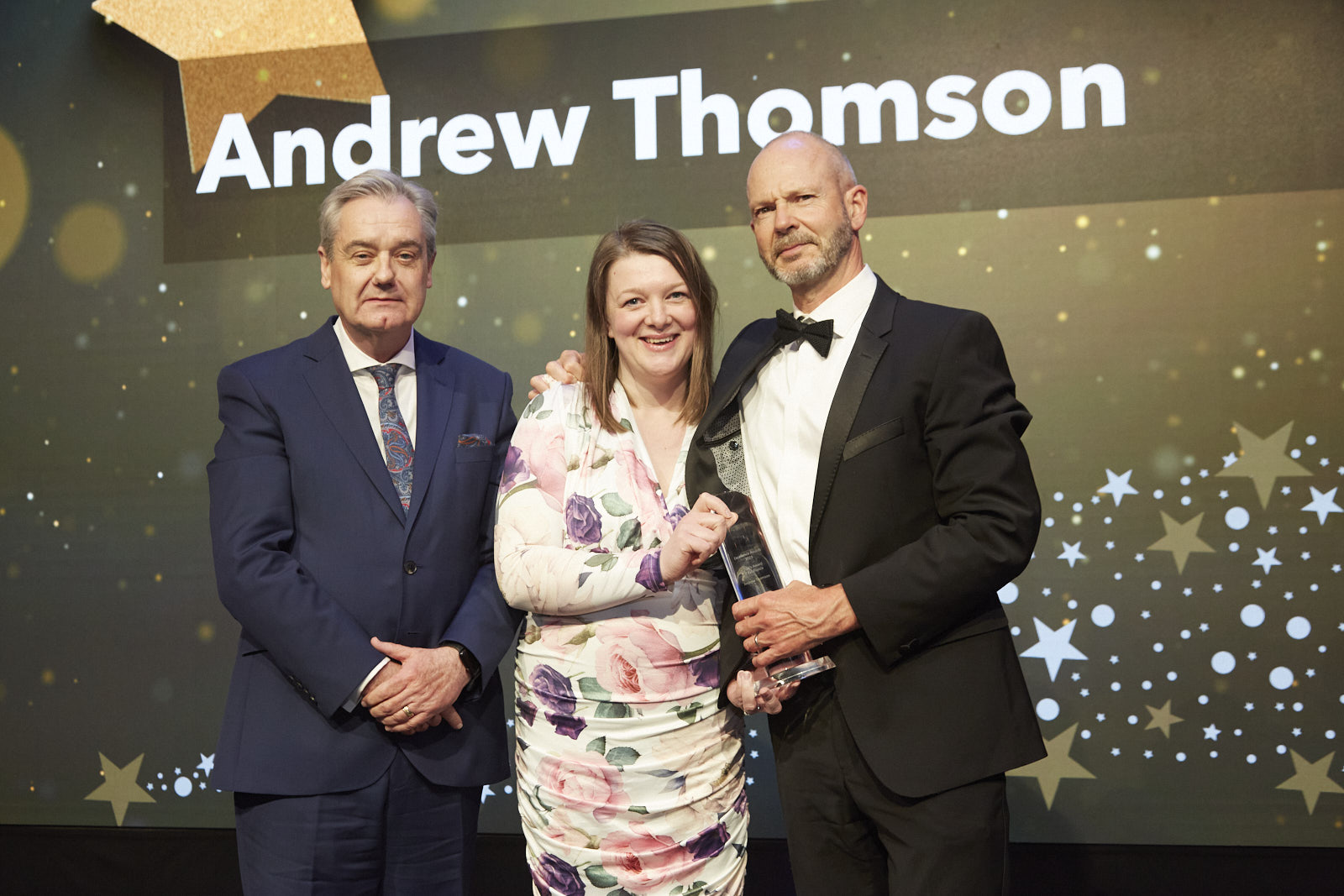
This year the Chair, Prof John Brown CBE, presented two awards which recognise outstanding achievement, expertise, and dedication in patient care. In common with all the other awards, these celebrate our people’s collective efforts and the lasting impact they have had on the lives of the people of Greater Glasgow and Clyde.
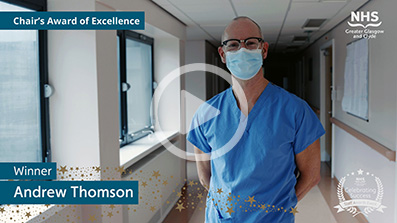
Andrew Thomson
One of Andrew’s patients was going through a high risk pregnancy, when her husband sadly passed away after a two week battle with cancer. On hearing the news, Andrew called to offer his condolences and also talk about how he and his team could support the patient during this heart breaking time.
Andrew has an incredible way of communicating with patients and their families, with empathy and intuitiveness in abundance.
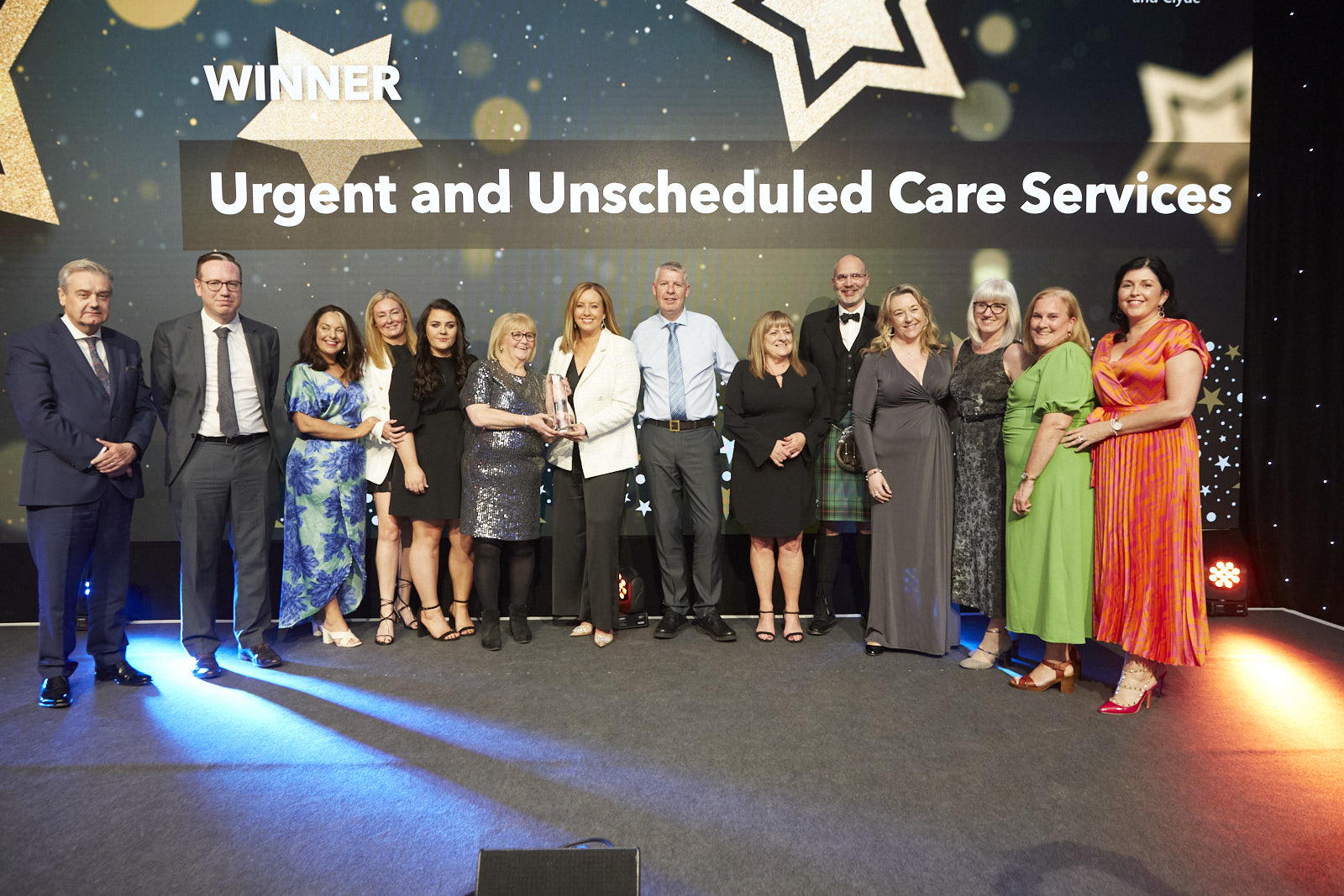
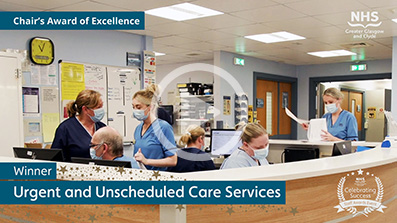
Unscheduled and Urgent Care Services
Due to unprecedented pressures, our Urgent and Unscheduled Care services have adapted to new and ever-changing situations which have been nothing short of remarkable. From the launch of the Flow Navigation Centre and Mental Health Assessment Units, to the ongoing dedication, commitment and professionalism of our EDs, IAUs, Community Pharmacies, MIUs, in-hours and Out of Hours GP Services, who have worked tirelessly with the support of diagnostic services.
At the start of the pandemic, it became clear that those who became very ill with Covid need a place where they could be seen and assessed safely and away from non-Covid patients.
Our Community Assessment Centres were created. This significant project required input from all of the eHealth teams to ensure the centres had all the necessary telephony and IT kit. They also needed to be set up very quickly.
eHealth teams responded to the needs of the service, working above and beyond to introduce new processes to book in Covid patients outwith hospital settings. The staff showed immense flexibility and changed their hours of work and their roles. The success of the CACs was due to the commitment, flexibility and team working across eHealth to support the Board in its response to the pandemic.
Was this helpful?
Yes
No
Thanks for your feedback!
The William Cullen Prize for Excellence In Teaching and the William Cullen Prize for Service Innovation are awarded in collaboration with the Royal College of Physicians in Edinburgh.
William Cullen Prize for Innovation
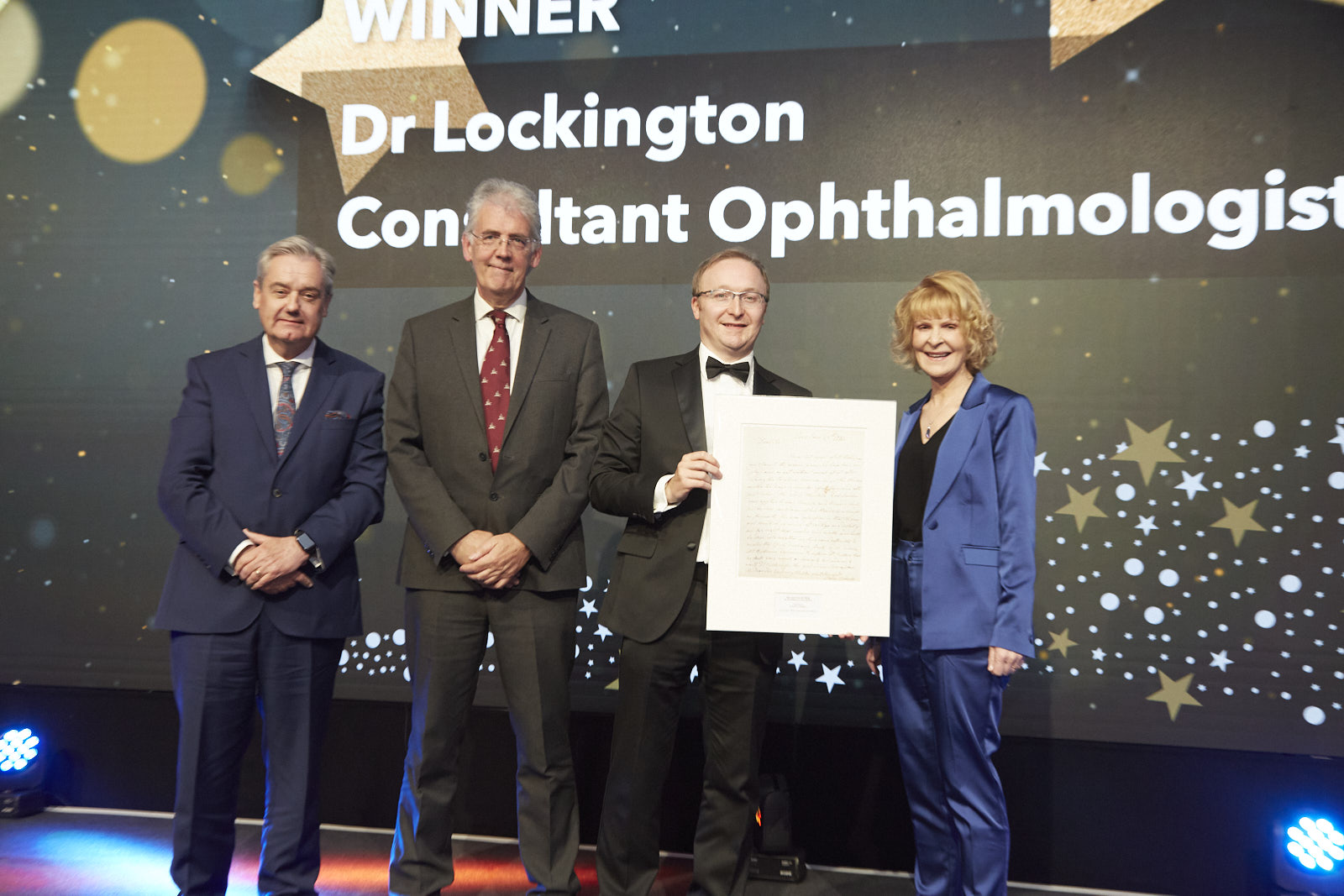
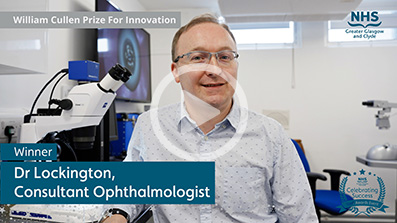
Dr David Lockington is a Consultant Ophthalmologist based in Gartnavel General Hospital.
Dr Lockington identified the opportunity to transform unused rooms within the Tennent Institute of Ophthalmology library into a state of the art teaching suite for ophthalmology training. There are now three rooms which consist of an ophthalmic simulation area, a computer room for trainees and a seminar room.
The suite allowed simulated microsurgical skills to be developed and maintained during lockdowns, and is now used regularly by trainees and the wider multidisciplinary team. This development has been extremely well received by local trainees, and has addressed previously identified surgical training gaps.
Local ophthalmology training has been enhanced significantly, and to illustrate the impact, this initiative has since been replicated in other UK centres.
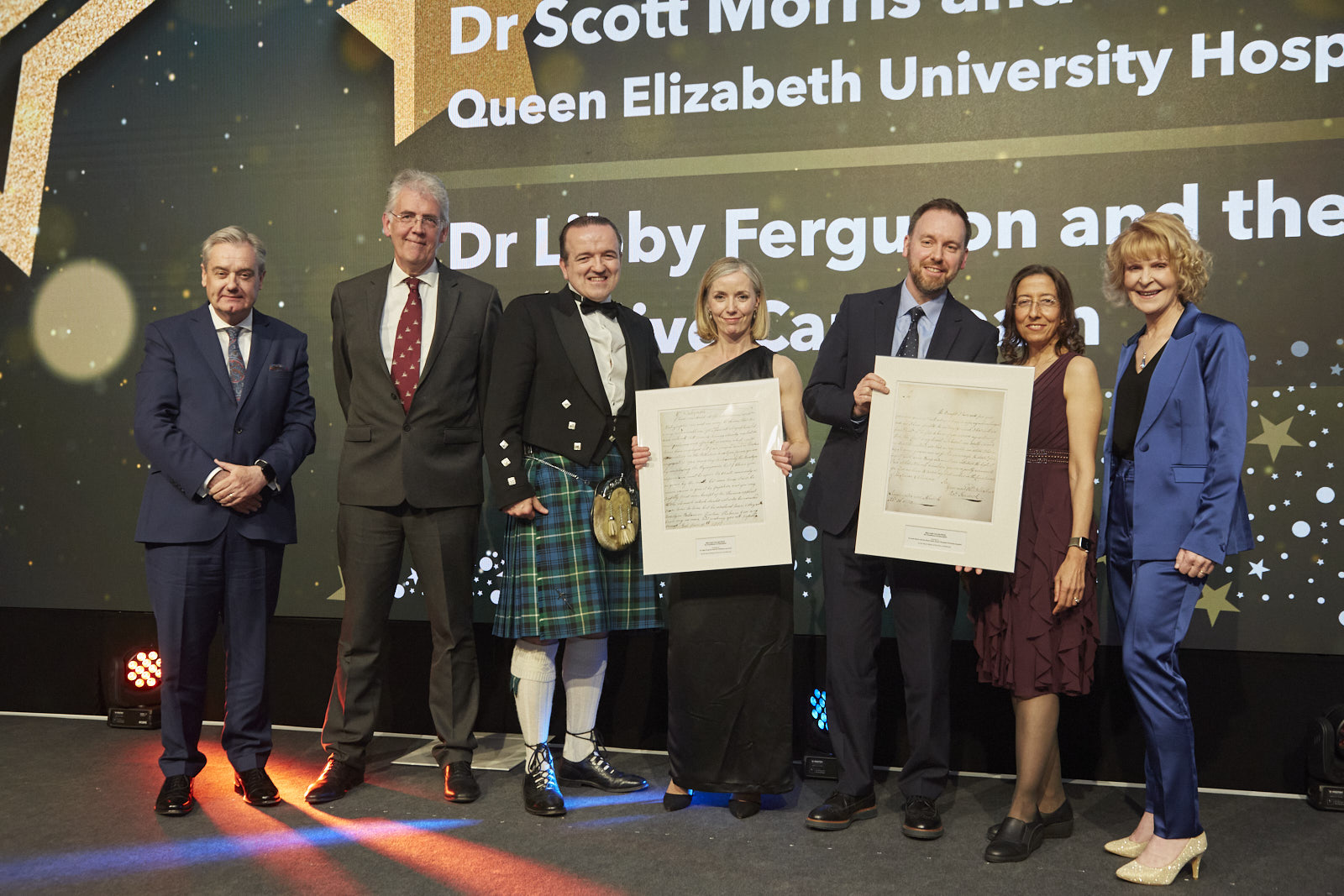
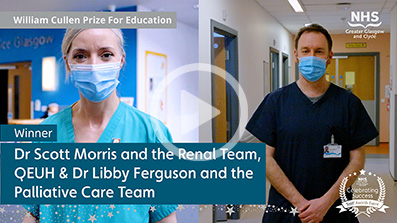
William Cullen Prize for Education – Joint Winners
Doctor Scott Morris is the Clinical Director for the Renal Unit, based in the Queen Elizabeth University Hospital, though which provides a full range of renal services to the West of Scotland.
This unit has for some time demonstrated a high standard of teaching and training, as evidenced by consistent and positive feedback from trainees. Trainees emerge as highly trained renal physicians, having been supported by a skilled group of established Consultants with a range of subspecialty interests.
The experience gained while attached to the unit is clearly valued by trainees, who highlight in particular the supervision they receive within the department, the supportive environment and the overall level of satisfaction working within a very strong team.
Dr Libby Ferguson and the Palliative care team based in the Marie Curie Hospice in Glasgow continue to provide an extremely high standard of clinical training which trainees recognise with positive responses to the Scottish trainee survey and National training survey.
There is a strong culture of educational governance identified within the centre. Trainees attached to the team there give very positive feedback in all areas, with Foundation trainees in particular highlighting the very supportive and educational environment provided by the team, and General Practice Specialty Trainees similarly appreciating the education and experience that is provided.
Was this helpful?
Yes
No
Thanks for your feedback!
Staff Awards 2026
The Celebrating Success Staff Awards event will be held on the evening of the 30 October 2026. It is a chance to recognise our staff from across NHSGGC and celebrate their achievements in style.
The incredible commitment, passion, professionalism, and innovation of staff is inspirational and showcases the core NHS values embedded in NHSGGC. This is what helps us to navigate even the most challenging of times.
We deliver vital services under day-to-day pressures, at the same time evolving and innovating across the Board. Our staff strive to provide our patients with the best possible experiences, and it is a testament to every staff member that, despite ongoing challenges, outstanding levels of care are provided.
Before the excitement of the Awards Ceremony on the 30 October 2026, find out about the nominees in each of the award categories, by using the links below.
The winners will be announced live on the night on our social media channels (follow the #ggcawards tag).
Staff Awards 2025
Find all the winners, nominees and more below from our 2025 Celebrating Success Awards.
Every award winner and nominee should be immensely proud of themselves for the contribution they make to the delivery of healthcare in Scotland.
Find out about the winners and nominees from each award category below.
The winners were also announced live on the night on our social media channels (follow the #ggcawards hashtag).
Our dedicated teams and individuals were nominated for the prestigious NHSGGC Excellence Awards by patients, visitors and staff. All of our staff have gone above and beyond in the past year and we asked to hear about your experience of outstanding care and for your nominations.
There are 7 categories in our Excellence Awards and the winners were announced at the Celebrating Success Event on 4th May 2023.
The winners were announced live on the night on our social media channels (follow the #ggcawards tag).
You can find out who the Gold Winners were, read about the Silver Winners who were shortlisted, and also view photos and videos in each of the categories below.
Congratulations to all our winners!
Better Care
This award recognises staff who provide and contribute towards incredible patient care improving everyday practices across NHSGGC.
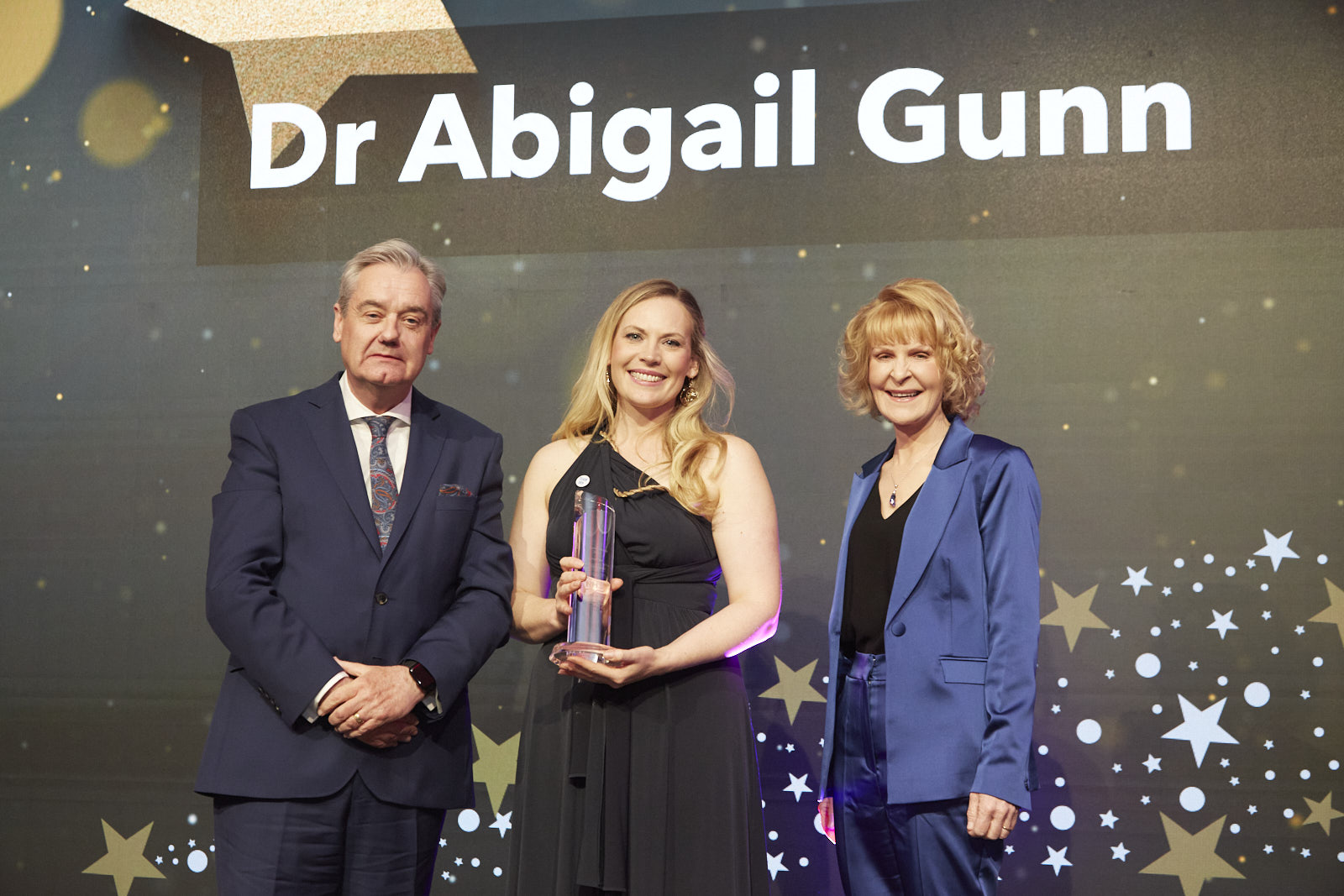
Gold Winner – Dr Abigail Gunn
Dr Gunn has established the Medical Assessment Unit and Short Stay Unit at Inverclyde Royal Hospital, to facilitate rapid assessment of patients. These are aimed at reducing the number of hospital admissions and ED pressures, while ensuring patients continue to receive the highest standards of care possible.
This has all been facilitated by Dr Gunn while she continues her usual work place requirements, giving up her own time to ensure this was implemented. In addition, she is a focal point for the junior doctors and the advance nurse practitioners and also trainees rotating through the hospital, arranging inductions for these doctors and providing support, advice and supervision as required.
Silver Winners
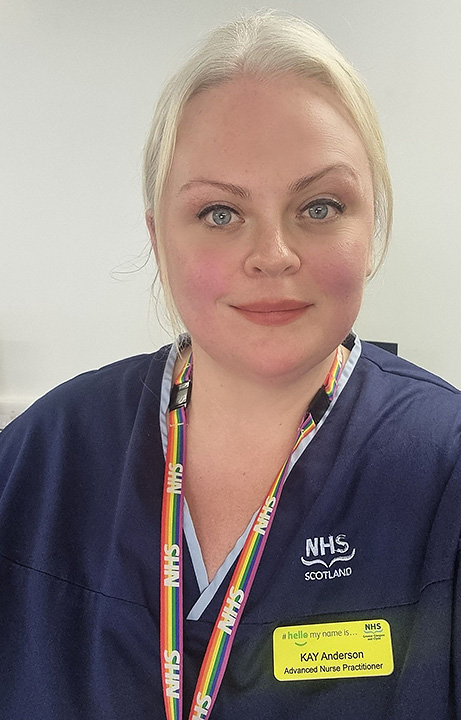
Kay Anderson
Frailty Advanced Nurse Practitioner Kay Anderson has been nominated for a Better Care award after successfully setting up a primary care focussed frailty service covering every GP surgery in Inverclyde.
By offering polypharmacy reviews and anticipatory care planning, patients are receiving realistic medicine that suits their needs and prevents hospital admissions.
As well as this Kay has managed a Frailty MDT clinic comprising herself, a consultant geriatrician, physio and occupational therapist with links to other AHPs.
Kay’s service has been pivotal in treating patients in the community rather than putting further pressure on unscheduled care services in Inverclyde, with the service dealing effectively with the waiting list for geriatric falls and frailty reviews.
Andrew Thomson
One of Andrew’s patients was going through a high risk pregnancy when her husband sadly passed away after a two week battle with cancer. On hearing the news Andrew called to offer his condolences and also talk about how he and his team could support the patient during this heart breaking time.
Andrew has an incredible way of communicating with patients and their families, with empathy and intuitiveness in abundance.
Glasgow Royal Infirmary’s Nuclear Cardiology Team
Over the past two years, the Glasgow Royal Infirmary Nuclear Cardiology Team has launched the UK’s first routine service the assessment of Coronary Flow Reserve (CFR) via Single Photon Emission Computed Topography (SPECT) to reduce Major Adverse Cardiovascular Events (MACE).
SPECT usually involves patients having two 90 minute sessions of intensive imaging, but the team – in collaboration with centres of excellence in Italy and consultants in France – delivered a new technique which can require just one 45 minute treatment, reducing the radiation burden on patients by an average of 30 per cent.
This innovation is a UK-first, with the one day technique being adopted as routine last year.
Urgent and Unscheduled Care services
Due to unprecedented pressures our Urgent and Unscheduled Care services have adapted to new and ever-changing situations which have been nothing short of remarkable. From the launch of the Flow Navigation Centre and Mental Health Assessment Units to the ongoing dedication, commitment and professionalism of our EDs, IAUs, Community Pharmacies, MIUs, in-hours and Out of Hours GP Services, who have worked tirelessly with the support of diagnostic services.
At the start of the pandemic, it became clear that those who became very ill with Covid need a place where they could be seen and assessed safely and away from non-Covid patients.
Our Community Assessment Centres were created. This significant project required input from all of the eHealth teams to ensure the centres had all the necessary telephony and IT kit. They also needed to be set up very quickly.
eHealth teams responded to the needs of the service, working above and beyond to introduce new processes to book in Covid patients outwith hospital settings. The staff showed immense flexibility and changed their hours of work and their roles. The success of the CACs was due to the commitment, flexibility and team working across eHealth to support the Board in its response to the pandemic.
Better Health
This award commends staff who have implemented an initiative to improve the health and wellbeing of patients, the public and/or staff.
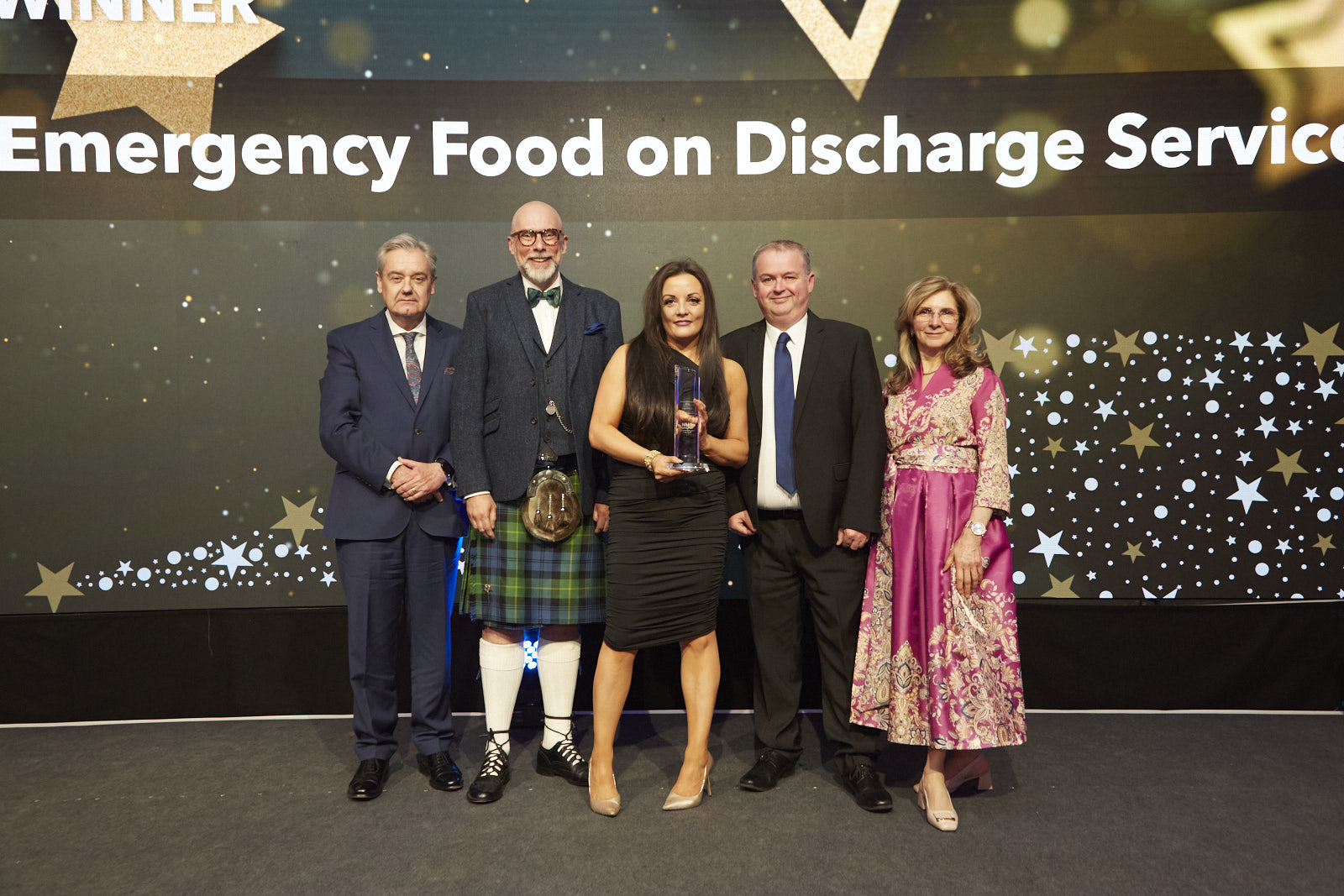
Gold Winner – Emergency Food Discharge Service
The Emergency Food Discharge Service was created by our Support and Information Services in partnership with the Aroma Café and GGC Foodbanks to help patients tackle the immediate cost of living challenge.
The team uses a referral process from clinicians to ensure no at risk patient or carer goes home hungry by providing a 2-day supply of food upon discharge. The intervention also enables conversations and support in relation to fuel for heating and money to be put in place prior to them going home.
The initiative has supported 1,000 patients as of January this year and is a fantastic example of how our acute, catering and our charitable organisations can work in partnership to meet the most basic, fundamental needs of our patients.
Silver Winners
Dr Alison MacBeth
Dr Alison MacBeth, a Speciality Doctor in Breast Surgery at Stobhill ACH Breast Clinic, has almost 10 years’ experience – but she undertook training to enhance her knowledge of menopause in her own time while maintaining her regular clinical commitments.
She is now recognised as a specialist menopause doctor, which has proved to be an invaluable addition to the service, with consultants from other hospitals now referring patients.
Her knowledge is reassuring to patients who attend her clinics, and by liaising with community GPs, she is able to advise on best practice on hormone replacement therapy, particularly in cases involving patients with a family history of breast cancer.
The Health For All Team
The Health For All Team set a target of improving the health of Unaccompanied Asylum Seeking Young People (UASYP) to ensure they are able to access appropriate health care that meets their needs.
This meant the team carrying out comprehensive health assessments for all UASYP under the age of 18 arriving in Greater Glasgow and Clyde, East Renfrewshire and East Dunbartonshire within 28 days of their referral to the service.
Many UASYP have known adversity or traumatic experiences on their journey to the UK, without any family support. The team sought to address many of the inequalities and challenges the young people faced and have taken on board the many learning opportunities this offered to inform future practice.
Better Value
This award is for staff who have increased efficiencies taking a new approach to work making better use of resources.
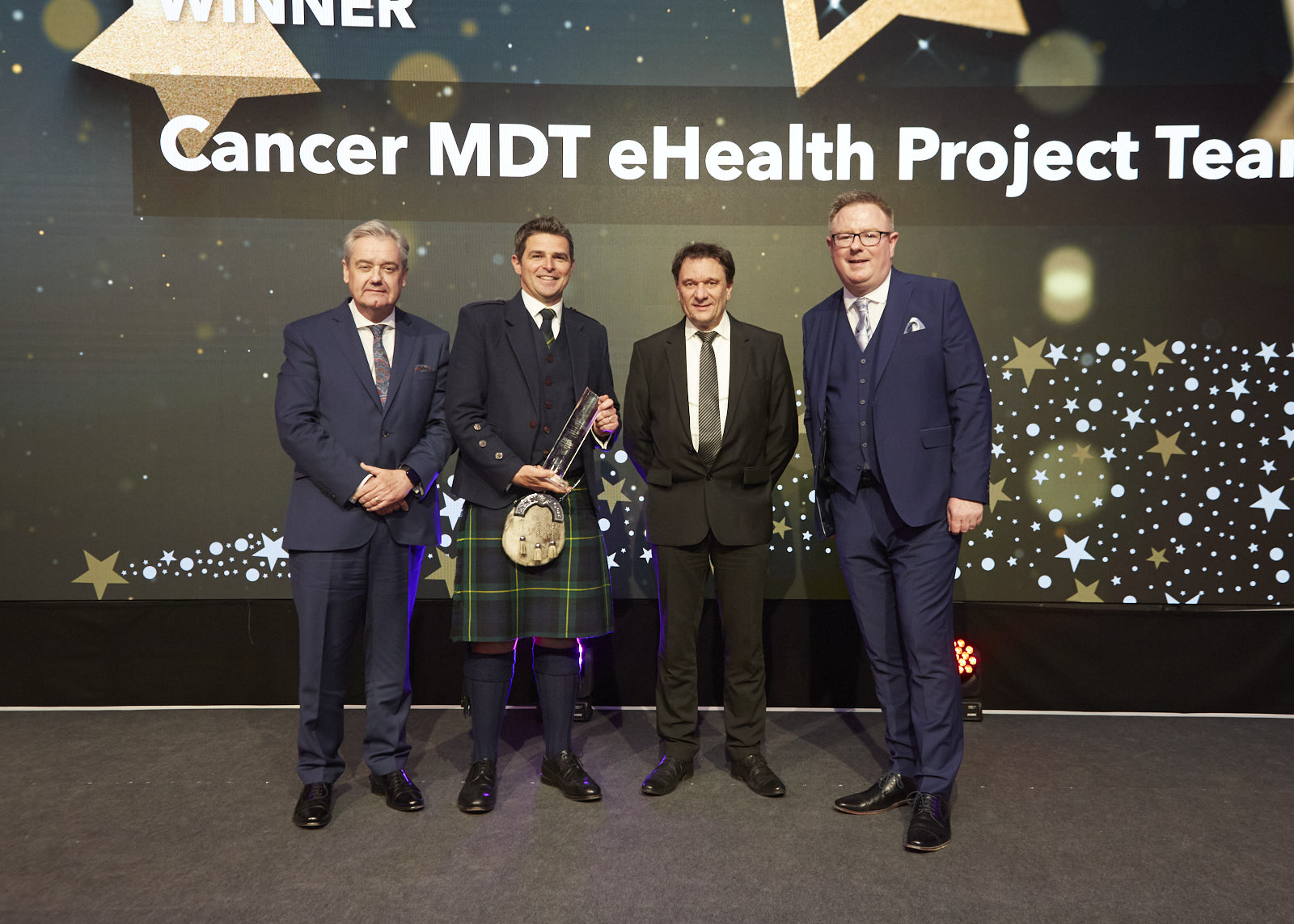
Gold Winner – Cancer MDT eHealth Project Team
The Cancer Multi-Disciplinary Team eHealth project team based at Glasgow Royal Infirmary have developed a digital solution to help streamline the MDT process, offering an ehealth solution that allows better cross board working and aligns MDT working to standardise referrals.
The project demonstrated its success through a live pilot for gynaecological cancers. In 2022, there were nearly 3000 patient episodes with the feedback from all users resoundingly positive.
This is now being adopted as the standard for cancer MDT’s across the West of Scotland with a matrix of regional eHealth departments supporting the development and support for the application as it is rolled out to each cancer type.
Silver Winners
Knowledge Services Team
The Knowledge Services Team at Gartnavel Hospital have been nominated for their contribution on the Adult Acute Care and Realistic Medicine apps as.
The team, made up of Michelle Kirkwood, Catriona Denoon, Fran Harkness and Amanda Wright, utilised their skills to organise mass amounts of clinical data into one, readily accessible format for both web and mobile either inside or out of a hospital setting.
Overcoming numerous obstacles, the team have worked to tight timescales and have been committed to delivering an influential and highly usable product.
The Realistic Medicine app was so highly thought of by the Scottish Government Realistic Medicine team, that it has been adopted as the framework and basis for a national Realistic medicine App for all NHS.
Paul Reid
Corporate Transport Manager Paul Reid worked through the Covid-19 pandemic to ensure transportation was adapted to accommodate vaccine deliveries in addition to existing regular services.
Since then, Paul has gone on to identify areas where efficiencies can be made with some services, such as the transport of renal dialysis patients, has been brought in-house.
This has meant Paul developing a network of colleagues in various disciplines to develop new ways of working together to improve service provision.
As a result, Paul is now being approached by clinical teams, seeking his advice on how transport services have be adapted to provide more cost effective ways of operating, in-line with the board’s ongoing financial improvement measures
Better Workplace
This award recognises the often unseen work of our staff who help make NHSGGC a better workplace, improving the culture and supporting colleagues.
Gold Winner – Elizabeth Thomson
Silver Winners
NHS Practice Education Team
The NHS Practice Education Team have created the Newly Qualified Practitioner (NQP) pathway for all newly qualified nurses, midwives and allied health professionals joining the organisation.
The pathway provides support to NQPs to the organisation throughout their first year in practice by offering a supportive culture and environment as they begin their careers.
By delivering sessions to final year students at university, the pathway informs NQPs of the various support mechanisms in place to allow them to highlight they are joining a supportive organisation which has been shown to lead to improved patient care outcomes and retention of staff.
The team regularly evaluate their input for the supports in place to ensure if any changes are required with the feedback being overwhelmingly positive since the outset.
Rachel McGowan
Rachel is a Witness Support Manager based at West Glasgow Ach and has been influential in providing practical and emotional support and guidance on court and legal process for staff who are required to participate in court or legal proceedings.
Initially, Rachel was volunteering in the role before securing a permanent position to support staff across acute, corporate and partnership settings.
In recent months, the demand on Rachel’s services has increased substantially, yet she has continued to go over and above to provide support to all staff who have contacted her.
Although anonymous, the feedback that has been provided for Rachel has been unequivocally positive as she continues to deliver a unique service.
Liz Thomson
As part of the Complex Needs Service, Liz went beyond her role as a Health Care Support Worker, and provided extra support to fellow staff members through “Lizzie’s Lunch Club”.
Liz made sure members of the mental health team were able to get a healthy lunch despite their busy daily schedules. She would use her own lunch break to make sure staff were able to eat properly, even making packed lunches for staff on outreach visits as well as care packages for patients, ensuring they had adequate items at their time of need.
Staff said that Liz’s initiative helped them going through their often very busy days and the fact that she is so giving to colleagues and patients was worthy of special recognition.
Global Citizenship
This award recognises staff who have travelled overseas to provide healthcare and/or education in developing countries or countries in crisis.
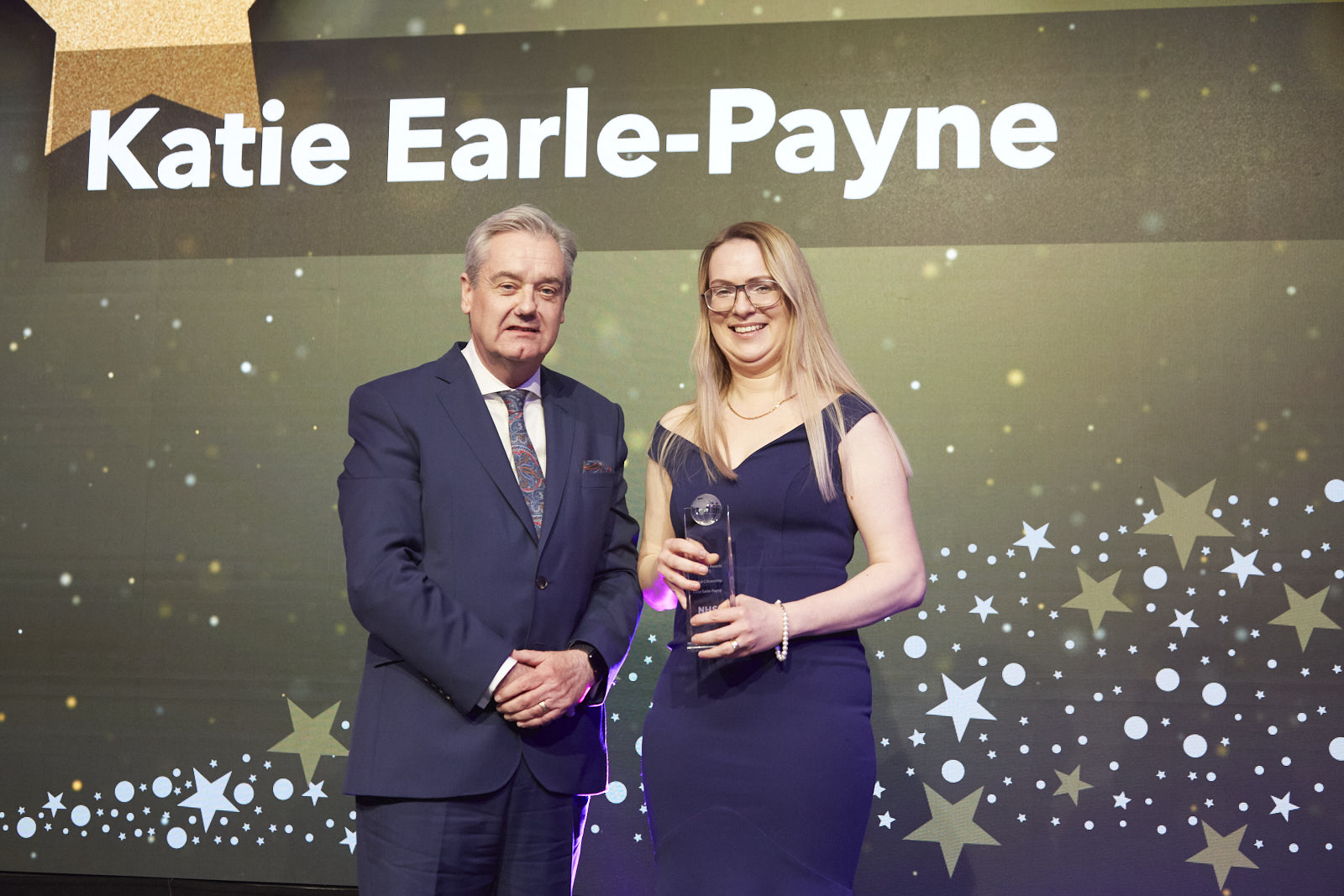
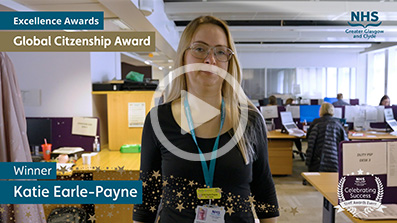
Gold Winner – Katie Earle-Payne
Providing healthcare for 1,500 Ukrainian refugees aboard the MV Ambition cruise ship posed a number of challenges – but Senior Pharmacist Katie Earle-Payne’s unique skill set allowed her to help offer outstanding patient care.
Katie speaks, reads and writes Ukrainian and was able to work as a prescribing pharmacist on-board MV Ambition without needing translation services.
She developed pathways for GP support for refugees as well as other specialities and was able to keep refugees accurately informed about treatment as some medicines prescribed in Ukraine are not available in the UK and alternatives had to be identified.
With just two weeks’ notice, Katie worked three days per week on board MV, providing in-person advice and consultations and acting as a link between patients and other services.
Silver Winners
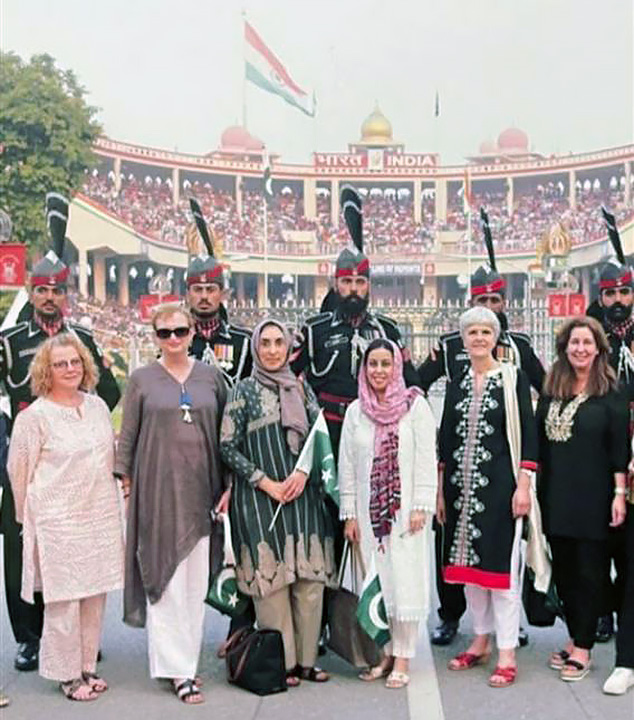
Infant Feeding Educational Delegation to Lahore Children’s Hospital
The Royal Hospital for Children in Glasgow (RHC) has been twinned with the Children’s Hospital and University of Child Health (CHICH) – a government hospital in Lahore, Pakistan since 2001. CHICH is now the largest children’s unit in Pakistan with 1100 beds and deals daily with thousands of outpatients on very limited resources.
In recent years, the Infant feeding educational delegation has worked hard to help the hospital tackle challenges associated with breastfeeding currently facing mothers and babies. They delivered a 4-day infant feeding programme which was attended by more than 60 staff locally, coupled with a one-day programme of lectures. This is helping create breastfeeding trainers and champions locally and improving outcomes for infants in Lahore.
This type of global collaboration where each member of a partnership benefits is the essence of global citizenship.
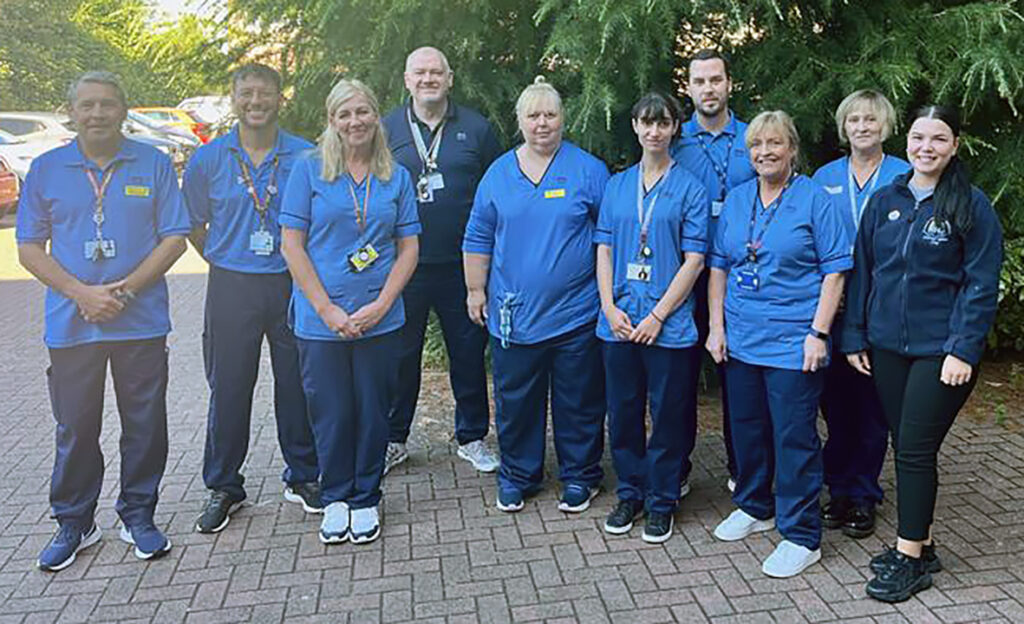
Asylum Health Bridging Team
MV Ambition cruise ship was berthed in Glasgow, accommodating Ukrainian 1,500 refugees since September last year, until they can find longer term homes across Scotland.
Stewart is the Asylum Bridging Team (ABT) Lead and worked extremely hard, alongside his colleagues, to ensure there was a streamlined system and processes in place supporting Ukrainian refugees to access health care. The ABT were on board the ship providing those residing there initial health assessments, translated information documentation, signposting, and supporting the GP registration process. Stewart was supported by Ukrainian Senior Pharmacist Katie Earle-Payne, who provided medical translations and eased any worries patients had.
As the refugees settle into more permanent accommodation, across NHS Greater Glasgow and Clyde, Stewart and his team continue to support these patients and their GP colleagues.
Nursing
This award recognises nurse(s) who demonstrate the best qualities of patient care and the ethos of nursing.
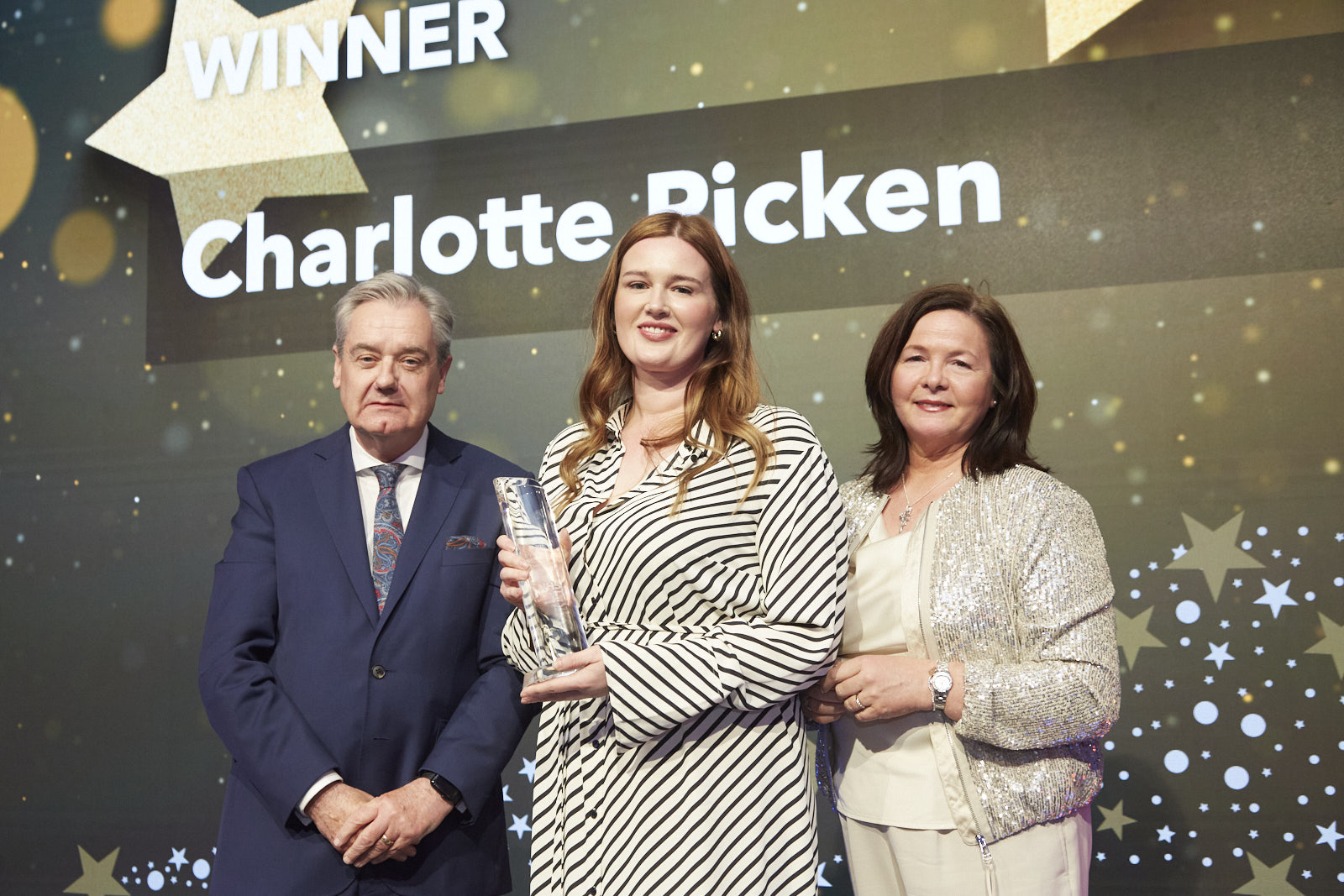
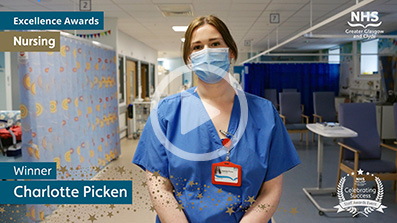
Gold Winner – Charlotte Picken
Senior staff nurse Charlotte Picken based at the Royal Hospital for Children was the first nurse to identify a need for nurse prescribing in theatre recovery and drive the project through to completion.
After carrying out an audit, Charlotte highlighted the prolonged suffering of children in pain while waiting for additional analgesia to be prescribed by anaesthetic staff. This had a knock on effect by interrupting routine theatre services as anaesthetists were required to attend recovery to prescribe.
As a result, this has reduced suffering of post-operative pain as waiting times for analgesia have significantly improved with additional feedback from nursing and medical colleagues to support this.
Silver Winners
Marie Cairnie
Marie has been a Nursing Assistant in Dykebar Hospital for 48 years. She has been based in Continuing care for a great many years, working with elderly male patients with significant cognitive decline.
Marie is approaching 75 years of age and could have retired years ago, but she has chosen to continue working and serving our most vulnerable patient group.
She is committed to maintaining the dignity of her patients, but it is her energy and positivity that singles her out among her colleagues. She brings laughter and joy to her patients and workmates alike.
In addition, Marie knows her experience is invaluable to younger colleagues and she is happy to pass on her knowledge to others. She is very much an “old school nurse” in every sense of those words.
Pamela Charles
Pamela Charles is a specialist mental health nurse who provides essential support to young people in their homes, completing mental health assessments and ensuring they get the treatment they need.
One day in between visits, Pamela spotted a male on the wrong side of the safety railings on a bridge and immediately she kicked into action.
After alerting emergency services, Pamela used her suicide first-aid training, supporting the individual and eventually talking him back to the safety of the bridge. On that day, Pamela’s quick thinking and compassionate approach helped avoid a fatal accident.
Her response embodies nursing practice. She even continued to her next appointment to ensure the young person she was seeing received the support and care they needed. Pamela herself saw her actions as ‘all in a day’s work’ which further evidences the humility she applies to the way she approaches her job.
Recovery Staff Theatres
The team works hard to ensure every child is re-united with their parents or carers as soon as possible after surgery. Seeing their child go for surgery can often be a hugely anxious and stressful time for families, parents and carers and for a child to wake up and see familiar faces can be distressing.
The staff within recovery understand the difference it makes having parents and carers involved in the process and the benefits of them being re-united with their child as soon as possible. An innovative pager system has been implemented, which allows the team to stay in touch with families and eliminates mobile phone signal issues. This system means the recovery team can meet with parents and carers as their child goes into theatre, introducing themselves and giving any information they might need, putting them at ease.
Volunteer
Recognising people who go the extra mile contributing tirelessly and providing outstanding help and support for the benefit of others.
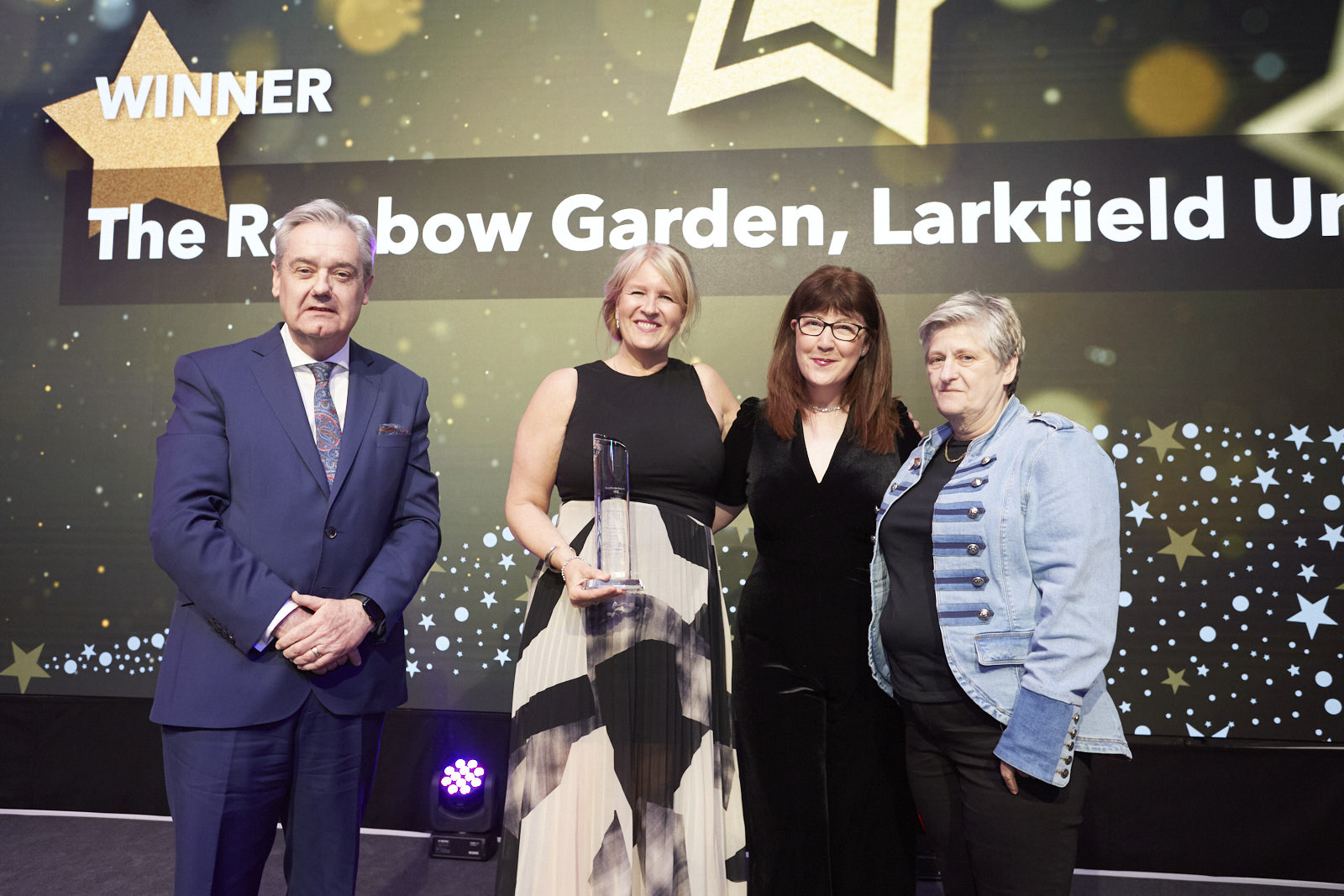
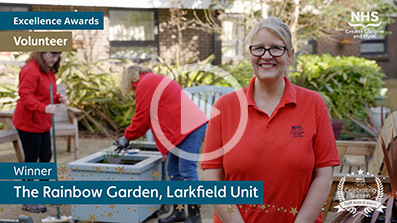
Gold Winner – The Rainbow Garden, Larkfield Unit
After seeing a patch of ground at the Larkfield Unit at Inverclyde Royal Hospital, Sandra Forbes set about transforming it into a colourful, tranquil green garden enjoyed by patients, visitors and community groups. With the help of NHS Greater Glasgow and Clyde staff, volunteers and donations from local people and businesses.
While this was the brainchild of Sandra, social worker Fiona McInnes loved the garden and donated some money which helped to transform the courtyard area of the Larkfield Unit, before she passed away suddenly. Fiona is still a key part of the garden and is remembered each day in the garden through a special memorial.
Silver Winners
Margaret Gunduz
Among all specialties across NHSGGC, our volunteers make among the most significant differences to patients, staff and members of the public.
Margaret Gunduz is a Discharge Lounge Volunteers at the Royal Alexandra Hospital and, without her, patients waiting to leave our care would have a far less positive experience.
The main role of our Discharge Lounge volunteers is to provide companionship and stimulation for patients, offering a distraction whilst they wait to be discharged from their hospital stay.
Margaret is a very welcome extra pair of hands in the lounge, and she has become one of the best-known faces at the RAH. Everybody knows her, and her caring, proactive approach to our patients singles her out as a particularly special member of the RAH team.
Naloxone Peer Champions
The Peer Naloxone Programme was introduced to combat the drug death crisis in Scotland.
It offers training to anyone who might come into contact with someone experiencing an overdose to administer Naloxone which can reverse overdoses and save lives.
Our Naloxone Peer Champions are volunteers living in prisons who are able to provide crucial training on overdose awareness and Naloxone to prisoners and those leaving prison. This service is unique and our champions are helping make the communities that people return to safer and contribute to the reduction of drug deaths in Scotland.
Since November 2021, the champions have trained more than 745 people. There are now 12 champions working in HMP Low Moss, Barlinnie and Greenock and together they are helping equip more people than ever before to save lives.
Was this helpful?
Yes
No
Thanks for your feedback!
Cookie Consent
We use cookies to analyse traffic to our site and to enable certain functions such as forms and embedded videos. These do not collect personal information. By clicking "Accept All", you consent to our use of cookies, or you can customise the options.
This website uses cookies
Websites store cookies to enhance functionality and personalise your experience. You can manage your preferences, but blocking some cookies may impact site performance and services.
Essential cookies enable basic functions and are necessary for the proper function of the website.
Name
Description
Duration
Cookie Preferences
This cookie is used to store the user's cookie consent preferences.
30 days
CloudFlare provides web performance and security solutions, enhancing site speed and protecting against threats.
Sequence rules uses cookies to track the order of requests a user has made and the time between requests and makes them available via Cloudflare Rules. This allows you to write rules that match valid or invalid sequences. The specific cookies used to validate sequences are called sequence cookies.
session
cf_ob_info
The cf_ob_info cookie provides information on: The HTTP Status Code returned by the origin web server. The Ray ID of the original failed request. The data center serving the traffic
session
cf_chl_rc_m
These cookies are for internal use which allows Cloudflare to identify production issues on clients.
session
__cfruid
Used by the content network, Cloudflare, to identify trusted web traffic.
session
__cf_bm
Cloudflare's bot products identify and mitigate automated traffic to protect your site from bad bots. Cloudflare places the __cf_bm cookie on End User devices that access Customer sites that are protected by Bot Management or Bot Fight Mode. The __cf_bm cookie is necessary for the proper functioning of these bot solutions.
session
__cflb
When enabling session affinity with Cloudflare Load Balancer, Cloudflare sets a __cflb cookie with a unique value on the first response to the requesting client. Cloudflare routes future requests to the same origin, optimizing network resource usage. In the event of a failover, Cloudflare sets a new __cflb cookie to direct future requests to the failover pool.
session
_cfuvid
The _cfuvid cookie is only set when a site uses this option in a Rate Limiting Rule, and is only used to allow the Cloudflare WAF to distinguish individual users who share the same IP address.
session
cf_clearance
Whether a CAPTCHA or Javascript challenge has been solved.
session
cf_use_ob
The cf_use_ob cookie informs Cloudflare to fetch the requested resource from the Always Online cache on the designated port. Applicable values are: 0, 80, and 443. The cf_ob_info and cf_use_ob cookies are persistent cookies that expire after 30 seconds.
session
__cfwaitingroom
The __cfwaitingroom cookie is only used to track visitors that access a waiting room enabled host and path combination for a zone. Visitors using a browser that does not accept cookies cannot visit the host and path combination while the waiting room is active.
session
cf_chl_rc_i
These cookies are for internal use which allows Cloudflare to identify production issues on clients.
session
cf_chl_rc_ni
These cookies are for internal use which allows Cloudflare to identify production issues on clients.
session
Statistics cookies collect information anonymously. This information helps us understand how visitors use our website.
We use Microsoft Clarity to understand how users interact with our website, including information such as clicks, scrolling and navigation behaviour, to help improve our services.
Microsoft Clarity uses cookies and similar technologies. These are only set if you accept analytics cookies.
If you choose not to accept analytics cookies, Clarity will operate in a limited mode using non-cookie-based data, which does not track users across pages or visits.
The data collected is behavioural and technical in nature and does not directly identify individuals. Sensitive information such as names, email addresses and form inputs is automatically hidden and not recorded or viewed.
Some information, such as device and approximate location data will still be collected and is treated as personal data in accordance with data protection legislation.
This will not be used for any purpose other than analytics and will not be used to identify you.
We use Microsoft Clarity to understand how users interact with our website, including information such as clicks, scrolling and navigation behaviour, to help improve our services.
Microsoft Clarity uses cookies and similar technologies. These are only set if you accept analytics cookies.
If you choose not to accept analytics cookies, Clarity will operate in a limited mode using non-cookie-based data, which does not track users across pages or visits.
The data collected is behavioural and technical in nature and does not directly identify individuals. Sensitive information such as names, email addresses and form inputs is automatically hidden and not recorded or viewed.
Some information, such as device and approximate location data will still be collected and is treated as personal data in accordance with data protection legislation.
This will not be used for any purpose other than analytics and will not be used to identify you.