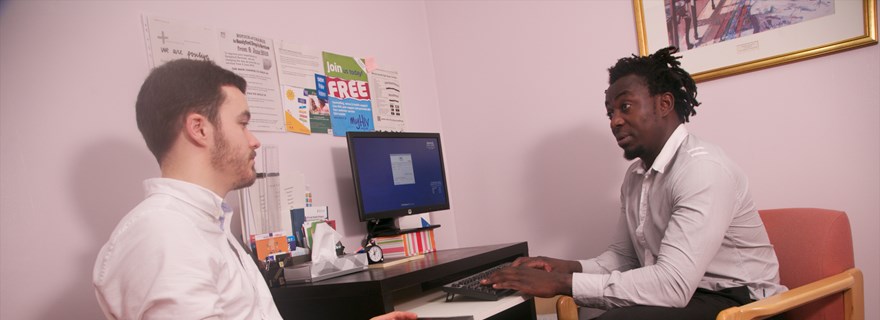
Have you experienced or seen HIV stigma or discrimination taking place within NHS Greater Glasgow and Clyde (NHSGGC) health services? Have you, or someone else been treated differently, or with a lack of respect because you or they are living with HIV? If you have we want to hear about your experience.
This could be any health service in Greater Glasgow and Clyde, hopefully not related to HIV care, and could have happened any time in the last 3 years.
It doesn’t matter if you don’t remember all the details just tell us as much as you can.
We collect these experiences to help us to work together to ensure people living with HIV are treated with the dignity, compassion and respect that all patients in NHSGGC can expect.
There are several ways to feedback the experience:
1 – Discuss with the service / clinician
We advise that in the first instance, you speak to the person or team responsible if you are not happy with your treatment, or the treatment of someone you care about. For example, this can the nurse in charge of a ward, or the practice manager at a GP surgery.
We have developed a stigma reporting form that the peer support engagement manager views so they can support you. They will contact you if you have provided your contact details, however the form can be completed anonymously.
It is important to note that if you do not provide your contact details you will not receive a direct response to the specific issues you raise. However, your comments will still be used to drive forward change.
3 – Anonymously tell your story on Care Opinion
Patients and families can use Care Opinion provide anonymous feedback about their experiences. Incidents are reviewed by the Patient Experience and Public Involvement Team at NHSGGC who will feedback them directly to service managers. You will receive a response from NHS Greater Glasgow and Clyde.
4 – Feedback to Patient Experience Public Involvement Team (PEPI)
You can give feedback whether good or bad, in a confidential user friendly way to the NHSGGC Patient Experience Public Involvement Team. Simply complete the form with as much information as you can and the PEPI team will make sure this goes to the right services. You will not receive a direct response to the specific issues you raise, but your comments will still be used to drive forward change.
The advice is that you speak to the person or team in the first instance and then escalate if you are not happy with the outcome. The complaints team can help you to do this if you need help. They can give you advice about where to get independent help in making your complaint.
Was this helpful?
Yes
No
Thanks for your feedback!
Healthtalk have developed a new, free online resource regarding feeding a baby while living with HIV. The resource looks at the factors influencing how parents living with HIV feed their babies in the UK. The resource was developed using data from the HIV & infant feeding study.
HIV is a protected characteristic under the 2010 Equality Act and it is illegal to treat someone less favourably because of it. In Scotland we also have The Patient Rights (Scotland) Act 2011 which in turn informs The Charter of Patient Rights and Responsibilities.
In short this means that irrespective of someone’s HIV status they are entitled to fair and respectful treatment when accessing NHS services.
The most important points for people living with HIV are:
Access –You cannot be denied treatment due to HIV
Respect –You should be treated with dignity
Safety –Your care should be effective
Confidentiality –Your personal health information should be secure
If you feel that any of these are being compromised due to stigma or discrimination, then ask to see someone else, or you can exercise your right to Feedback or Complain
We ask that you:
Keep appointments or cancel within a reasonable time.
Follow the course of treatment which you have agreed and talk to you doctor if you find this difficult
Provide accurate information about your health
Treat staff with same dignity and respect you would like to receive
Feedback and Complaints
NHSGGC encourages feedback – both positive and negative- about the treatment and care you have received, to help us improve service delivery.
If you wish to feedback your experience of using NHS Services, whether at the Brownlee or in another part of the NHS, or make a complaint, all departments have information available on how to do that.
Brownlee has a suggestions box in the reception area that patients can use to feedback on experiences both good and bad. NHS GGC also has an official Feedback and Complaints system.
Patients are supported with their physical and mental health in a variety of ways via the multidisciplinary team.
In addition there are a range of services available to help manage emotional and practical issues.
For information on Peer Support, Seminars and Events click here.
Terrence Higgins Trust has a range of support services that runs from their city centre offices.
Waverley Care similarly offers support and advice on a range of issues and their African Health Project is specifically designed to meet the needs of African people living with HIV.
Many patients are infected with both HIV and Hepatitis C, and can access the support services available from Waverley Care.
Hwupenyu Health and Wellbeing is a community based project that provides a range of support services including a food bank and complementary therapies to people living with HIV and other related health conditions.
Terrance Higigns Trust and HIV Prevention England have created a collection of videos, featuring people living with HIV talking about how treatment has impacted their lives; these can be viewed at YouTube/THT.
Was this helpful?
Yes
No
Thanks for your feedback!
As well as being NHS Greater Glasgow and Clyde’s centre for HIV care and treatment, the Brownlee Clinic provides the following services:
HIV stands for Human Immunodeficiency Virus. HIV attacks the body’s immune system and weakens it over time until it cannot fight off infections and cancers that a healthy person can. There is no cure for HIV, but very effective treatment means HIV can now be classed as a long-term manageable condition. With this effective treatment people with HIV are living, long and healthy lives. But as with any long-term condition, being diagnosed with HIV can be a life-changing experience that can have a whole range of emotional and practical implications.
However, there are a range of services that offer support and guidance on all aspects your life with HIV.
If you are looking for more information then we recommend reading the basics about HIV via NAM and checking out their range of excellent leaflets.
What about AIDS?
AIDS stands for Acquired Immune Deficiency Syndrome. AIDS is the name used to describe a combination of potentially life-threatening infections and cancers, which can develop when someone’s immune system has been damaged by untreated HIV. You cannot catch AIDS and there is no AIDS test. HIV causes AIDS and it is HIV that can be passed on. Just because someone has been diagnosed with an AIDS-related illness, does not mean they will die. Thanks to effective HIV treatment, many people who develop AIDS are now very well and can look forward to a long and healthy life.
How is HIV transmitted?
HIV is a blood borne virus that is present in the body fluids and tissues of a person living with HIV. Only blood, genital fluids (i.e. semen and vaginal fluids) and breast milk from an HIV infected person can transmit HIV.
The main ways HIV can be passed on to someone else are during unprotected sex (vaginal or anal), by sharing any equipment used to inject drugs, and from a mother to her baby during pregnancy, birth or through breastfeeding. But there are very effective ways of preventing HIV infection in all of these situations.
HIV cannot be transmitted through normal social contact. There is no risk to your friends and family from kissing, hugging or shaking hands – or any other social contact. You cannot get HIV by being in the same place as someone with HIV, or by sharing household items such as crockery, cutlery, or bed linen. HIV is not passed on by sneezing or coughing or sharing food and drink.
What is PrEP?
Pre-Exposure Prophylaxis is a course of anti-HIV drugs which would be taken by people to lower the risk of becoming infected with HIV. Research suggests that PrEP is as effective as condoms at preventing HIV.
PrEP does not protect against any STIs other than HIV and it only protects the person taking PrEP.
For more information on PrEP and how you can access it, see the PrEP FAQ on the Sandyford Initiative website.
Was this helpful?
Yes
No
Thanks for your feedback!
Below are a selection of useful links to websites and organisations that you may find helpful or interesting. Most are independent organisations that are not part of NHS Greater Glasgow and Clyde. NHSGGC is not responsible for the content or information contained on these websites.
On this page we have linked to the main website of these organisations, some of which are Scotland or UK wide. Other sections of the Brownlee HIV website have links to local services that some of these organisations provide in NHS GGC. You can find a lot of these services on the patient support page.
Free Condoms is the NHS GGC free condom service for anyone in NHS GGC who wants them
HIV Drug Interactions provide a clinically useful, reliable, comprehensive, up-to-date, evidence-based drug-drug interaction resource, freely available to healthcare workers, patients and researchers.
HIV Stigma is the NHS Greater Glasgow and Clyde HIV Anti Stigma and Discrimination campaign website.
Hwupenyu Health and Wellbeing is a service user community based project principally for Black Minority Ethnic communities infected and affected by HIV and other related health conditions.
i-Base is a treatment activist group committed to providing timely and up to date information about HIV treatment to HIV positive people and to health care professionals.
LGBT Health & Wellbeing are a community initiative that promotes the health, wellbeing and equality of lesbian, gay, bisexual and transgender (LGBT) people in Scotland.
LGBT Youth Scotland is the largest youth and community-based organisation for lesbian, gay, bisexual and transgender (LGBT) people in Scotland
Sandyford is the NHS GGC specialist sexual and reproductive health service.
Steve Retson Project is the NHSGGC specialist sexual health service for gay and bisexual men or men who have sex with men.
Terrance Higgins Trust Scotland is a charity supporting people living with or affected by HIV and promotes good sexual health to all.
Waverley Care are Scotland’s HIV and Hepatitis C charity.
Was this helpful?
Yes
No
Thanks for your feedback!
NHS Greater Glasgow and Clyde (NHSGGC) and our Health and Social Care Partnerships (HSCPs) have been conducting periodic Health and Wellbeing Surveys since 1999. Over the years, the survey has grown significantly in both size and content. The 2022/23 survey had a sample size of just over 10,000 and, for the first time, covered all geographic areas within NHSGGC.
More information about the Adult Health and Wellbeing Survey
The survey offers a comprehensive overview of health and wellbeing, encompassing aspects such as perceived health and illness, health behaviours, social capital, social health, and financial wellbeing. With its extensive sample size and broad geographic coverage, the survey enables detailed analysis by age, gender, and deprivation category across Greater Glasgow and Clyde. Additionally, it allows for specific insights within Health and Social Care Partnerships/Localities and various neighbourhoods within Glasgow City, based on SG intermediate zones.
The survey is extensively used by NHSGGC to assess health needs and address inequalities across various topics, such as smoking, alcohol consumption, diet, physical activity, long-term conditions or illnesses, social connectedness, reciprocity/trust, volunteering, caring responsibilities, and difficulty finding unexpected sums. Questions are designed and adapted to be comparable with those of other national surveys such as the Census and Scottish Health Survey but also to reflect changing policy priorities and social context so that, for example the 2022/23 survey included questions relating to the impact of COVID.
The survey includes a set of indicators to track trends in key areas such as perceptions of general health, physical and mental wellbeing, overall quality of life, diet, smoking, social capital, economic activity and perceptions of household income. In this way we aim to monitor the wellbeing of our population over time, while also measuring new and changing public health themes and targets. The survey is designed to be flexible, ensuring it aligns with current policies and emerging issues.
As previous NHSGGC Health and Wellbeing surveys have not had a sufficient sample size for a detailed analysis of the experiences of minority ethnic people, the first Minority Ethnic Health and Wellbeing Survey was conducted in 2016 within Glasgow City Health and Social Care Partnership. The second Minority Ethnic Health and Wellbeing Survey was conducted across NHS Greater Glasgow and Clyde in 2024. This followed the same format as that of the Adult survey of 2022/23. It is hoped that future Minority Ethnic surveys will be merged as part of the Adult survey process.
The overall objectives of the Health and Wellbeing survey are:
to gather intelligence to inform Board wide planning concerning Public Health priorities and local Community Planning Partnerships
to investigate the varying experience of health and wellbeing in our most deprived communities compared to other areas
to provide intelligence on the impact of the COVID pandemic on health behaviours; health and illness; social health; social capital; financial wellbeing; and
to provide valuable information for monitoring health improvement interventions
Accessing Health and Wellbeing Survey Data
Access to the data is available to researchers, public health professionals, and partner organisations with a legitimate interest in improving population health. All requests are subject to review and must comply with data protection legislation.
Respondents to the 2017/18 and 2022/23 were asked if they agreed to having their anonymous surveys linked to their CHI number. Of the most recent 2022/23 Adult Health and Wellbeing sample, more than 80% agreed to have their surveys linked. This allows for linkage and exploration to other clinical records. Requests for linked datasets requires a Safe Haven pathway.
To request access to the survey or linked dataset, applicants must in the first instance email the Health and Wellbeing Survey Team at the email address below. Following and initial discussion you will be asked to:
Submit a formal data access request outlining:
The purpose of the research or analysis
Specific data requirements (e.g., variables, population groups)
Ethical approval status (if applicable)
Data protection and security measures
· Indicate whether access is required via a secure environment such as the NHS Safe Haven.
If you would like more information about the NHSGGC Health and Wellbeing survey or have an initial discussion about accessing the data please email ggc.contact.research@nhs.scot
Recent external reports using Health and Wellbeing Survey data
Volunteer Scotland analysed the NHSGGC triennial Health and Wellbeing Survey 2022/23 to explore the relationship between volunteering and a range of social indicators.
Stòr is NHS Greater Glasgow & Clyde’s digital repository for Public Health. You can access the Health and Wellbeing Survey reports for 2014/15 and 2017/18 as well as reports produced by our partners using the Health and Wellbeing data.
The clinical team will do their best to answer the questions you might have about living with HIV. But, for some people getting advice and information from someone that has gone through a similar experience, can be incredibly useful and reassuring. Below is a list of frequently asked questions and answers compiled by patients at the Brownlee Centre covering some of the main questions they themselves had when first diagnosed.
What is HIV?
HIV stands for Human Immunodeficiency Virus. HIV attacks the body’s immune system and weakens it over time until it cannot fight off infections and cancers that a healthy person can. There is no cure for HIV, but very effective treatment means many people now consider HIV as a long-term manageable condition. With this effective treatment people with HIV are living, long and healthy lives. HIV causes AIDS and it is HIV that can be passed on. Just because someone has been diagnosed with an AIDS-related illness, does not mean they will die. Thanks to effective HIV treatment, many people who develop AIDS are now very well and can look forward to a long and healthy life.
More detailed information can be found at the Aidsmap website.
How will living with HIV affect my life?
Nowadays people living with HIV can live long and healthy lives and it is considered by many to be a long-term condition. But as with any long-term condition, being diagnosed with HIV can be a life-changing experience that will have a whole range of emotional and practical implications. You can get information on a whole range of subjects by speaking to the staff or meeting with a Peer Volunteer.
Am I going to die because of HIV?
Nowadays the majority of people in the UK diagnosed with HIV who follow the advice of their specialist care team are physically healthy and will not die due to their HIV infection. More detailed information can be found at the NAM and Aidsmap website.
What tablets will I have to take and how are they going to affect me?
This depends on how long you have had HIV before being diagnosed and what strain of the virus you have and any other illnesses or conditions you might have. It is recommended that everyone diagnosed with HIV starts treatment right away but this will be discussed with your doctor. Improvements in medications are happening all the time, so that people take fewer tablets less often – some people take only one pill once per day. Medications also have less severe side effects with a lot of people not having any long-term side effects at all. But everyone is different. More detailed information can be found at the NAM and Aidsmap website.
What do I need to know about transmission?
People sometimes worry about infecting others, but you cannot ‘give’ anyone HIV through normal social contact (shaking hands, hugging, kissing), by sharing food or cutlery, or using the same toilet. Even if you cut yourself HIV cannot cross healthy unbroken skin and washing with normal soap and water kills the virus. HIV is most commonly transmitted through having sex without a condom (anal or vaginal) or sharing injecting equipment. More detailed information can be found at the NAM and Aidsmap website.
Can I still have sex?
When first told they have HIV, many people feel that their sex lives are over or at least things will be very difficult, but this is not true. Most people living with HIV have happy, healthy and fulfilling sex lives. But it does mean there are some things you need to consider when deciding how and when you want to have sex.
This section contains information on some of the things you may need to think about when you feel ready to have sex again. If you wish to discuss any of these issues you can ask to see one of the Sexual Health Advisers at the Brownlee.
Who should I tell?
The answer to this varies from person to person and depends on your situation. What you do have to remember is that once you tell someone you cannot take it back. This is why it is important to think about it carefully and it can be helpful talking this through in confidence with a Peer Volunteer.
What about my partner(s)?
It is important that current or previous sexual partners are tested as this is the only way to find out if someone has HIV and it could prevent them from becoming seriously ill. Notifying them can be done anonymously on your behalf and a member of staff will speak to you about this. More detailed information can be found at the NAM and Aidsmap website.
Who looks after me at the Brownlee?
Every patient with HIV has a named consultant and a specialist nurse allocated to them. At clinic visits you won’t always see your consultant and it might be one of the department’s speciality doctors, but your overall care is always monitored and reviewed by your consultant. At clinic you can also access: sexual health advisors, counsellors, pharmacist, occupational therapist and a dietician. These staff are key members of our Multidisciplinary Team.
I don’t understand all the medical jargon like CD4 and Viral Load?
If you don’t understand something then the best thing to do is to ask the member of staff to explain it. When it comes to your treatment and care there is no such thing as a stupid question. CD4 and Viral are the blood tests commonly carried out as they give important information about the effects HIV is having on your body. A CD4 cell count tells you about the strength of the immune system, which protects us against infections and illness. Viral load measures how much HIV there is in a drop of blood. For more information click here
What about my medical records and confidentiality?
All patient records are now held electronically; however the notes related to your HIV treatment and care are maintained with restricted and secure access. Only healthcare professionals looking after you will have access to the letters and blood tests that are relevant to providing you with optimal care. All NHS staff irrespective of their speciality or department are bound by and work under strict policy and rules on patient confidentiality. If you want more information on this then speak to a member of staff, view the Health Board’s information on Data Protection and Privacy or see the guides Your Voice, Your Choice, Your Rights developed by HIV Scotland in conjunction with the National AIDS Trust (NAT).
How do people come to terms with their diagnosis?
There is no right answer to this question that will make you feel instantly better. Although people living with HIV share many of the same experiences and fears each person deals with it uniquely. Coming to terms with it also means different things to different people, but for many this is about acceptance and moving forwards to deal with what living with HIV means for them. Talking to someone can help and this could be someone close to you, a trained counsellor or a Peer Volunteer who understand what it’s like. Find out about Peer Support and Peer Volunteers.
Was this helpful?
Yes
No
Thanks for your feedback!
Cookie Consent
We use cookies to analyse traffic to our site and to enable certain functions such as forms and embedded videos. These do not collect personal information. By clicking "Accept All", you consent to our use of cookies, or you can customise the options.
This website uses cookies
Websites store cookies to enhance functionality and personalise your experience. You can manage your preferences, but blocking some cookies may impact site performance and services.
Essential cookies enable basic functions and are necessary for the proper function of the website.
Name
Description
Duration
Cookie Preferences
This cookie is used to store the user's cookie consent preferences.
30 days
CloudFlare provides web performance and security solutions, enhancing site speed and protecting against threats.
Sequence rules uses cookies to track the order of requests a user has made and the time between requests and makes them available via Cloudflare Rules. This allows you to write rules that match valid or invalid sequences. The specific cookies used to validate sequences are called sequence cookies.
session
cf_ob_info
The cf_ob_info cookie provides information on: The HTTP Status Code returned by the origin web server. The Ray ID of the original failed request. The data center serving the traffic
session
cf_chl_rc_m
These cookies are for internal use which allows Cloudflare to identify production issues on clients.
session
__cfruid
Used by the content network, Cloudflare, to identify trusted web traffic.
session
__cf_bm
Cloudflare's bot products identify and mitigate automated traffic to protect your site from bad bots. Cloudflare places the __cf_bm cookie on End User devices that access Customer sites that are protected by Bot Management or Bot Fight Mode. The __cf_bm cookie is necessary for the proper functioning of these bot solutions.
session
__cflb
When enabling session affinity with Cloudflare Load Balancer, Cloudflare sets a __cflb cookie with a unique value on the first response to the requesting client. Cloudflare routes future requests to the same origin, optimizing network resource usage. In the event of a failover, Cloudflare sets a new __cflb cookie to direct future requests to the failover pool.
session
_cfuvid
The _cfuvid cookie is only set when a site uses this option in a Rate Limiting Rule, and is only used to allow the Cloudflare WAF to distinguish individual users who share the same IP address.
session
cf_clearance
Whether a CAPTCHA or Javascript challenge has been solved.
session
cf_use_ob
The cf_use_ob cookie informs Cloudflare to fetch the requested resource from the Always Online cache on the designated port. Applicable values are: 0, 80, and 443. The cf_ob_info and cf_use_ob cookies are persistent cookies that expire after 30 seconds.
session
__cfwaitingroom
The __cfwaitingroom cookie is only used to track visitors that access a waiting room enabled host and path combination for a zone. Visitors using a browser that does not accept cookies cannot visit the host and path combination while the waiting room is active.
session
cf_chl_rc_i
These cookies are for internal use which allows Cloudflare to identify production issues on clients.
session
cf_chl_rc_ni
These cookies are for internal use which allows Cloudflare to identify production issues on clients.
session
Statistics cookies collect information anonymously. This information helps us understand how visitors use our website.
We use Microsoft Clarity to understand how users interact with our website, including information such as clicks, scrolling and navigation behaviour, to help improve our services.
Microsoft Clarity uses cookies and similar technologies. These are only set if you accept analytics cookies.
If you choose not to accept analytics cookies, Clarity will operate in a limited mode using non-cookie-based data, which does not track users across pages or visits.
The data collected is behavioural and technical in nature and does not directly identify individuals. Sensitive information such as names, email addresses and form inputs is automatically hidden and not recorded or viewed.
Some information, such as device and approximate location data will still be collected and is treated as personal data in accordance with data protection legislation.
This will not be used for any purpose other than analytics and will not be used to identify you.
We use Microsoft Clarity to understand how users interact with our website, including information such as clicks, scrolling and navigation behaviour, to help improve our services.
Microsoft Clarity uses cookies and similar technologies. These are only set if you accept analytics cookies.
If you choose not to accept analytics cookies, Clarity will operate in a limited mode using non-cookie-based data, which does not track users across pages or visits.
The data collected is behavioural and technical in nature and does not directly identify individuals. Sensitive information such as names, email addresses and form inputs is automatically hidden and not recorded or viewed.
Some information, such as device and approximate location data will still be collected and is treated as personal data in accordance with data protection legislation.
This will not be used for any purpose other than analytics and will not be used to identify you.