Welcome to the NHS Greater Glasgow and Clyde (NHSGGC) care homes page. There are currently 183 registered care homes providing specialist care for adults and older people, people living with learning and physical disability, neurological illness, mental health conditions and brain injury.
There are approximately 7,000 people residing in care homes with around 15,000 staff supporting the delivery of care. Care homes are supported by their local Health and Social Care Partnership (HSCP) teams who provide a range of different services.
Webpage feedback
We welcome your feedback on the NHSGGC care home webpages.
Partners
Care Home Collaborative (CHC)
The Care Home Collaborative works in partnership with all care homes across NHSGGC. We learn from and work with care home teams and their communities to help residents live their lives according to what matters to them.
Health and Social Care Partnerships (HSCPs)
HSCP teams provide a range of services to support care homes.
Care Home Assurance visits provide an opportunity for partnership working and shared learning between care homes and HSCP teams. These visits identify areas of good practice as well as what could be better. Care homes are supported to have ownership of changes required and can work in collaboration with the HSCPs and the CHC to achieve changes.
To access the current version of the Care Home Assurance Tool (CHAT) click here
Winter Vaccinations
Flu and Covid vaccinations are available for all residents in care homes, carers, frontline Health and Social Care Staff which includes those working in Care Homes and in Care at Home Services. Every year we offer flu and the vaccine changes with the strains that are present so that we are all given the most protection possible. Even if you have had your primary course of the Covid Vaccine it is really important that you take up the offer of a Booster as Covid is a virus which changes and therefore the Covid Vaccine offered as a Booster is the most up to date for the variant that is circulating.
Both Vaccines protect against severe illness and reduce hospital admissions. By receiving your vaccinations you not only protect yourselves but your friends, family and those who are most vulnerable especially those we care for. By being vaccinated we also protect the demand on our NHS and Social Care Services.
If you are a resident in a Care Home then the Vaccination Team will come to vaccinate you in your residence and will also be able to vaccinate staff. If as a member of staff you are not at work on the day they visit it is still possible to receive your vaccine by attending our mobile bus and Community Clinics.
If you are over 75 years or have a Weakened Immune System (WIS) and live in the community then you will receive a letter with an appointment. NHSGGC website has a list of all our clinics and mobile bus drop-ins: NHSGGC – Autumn Winter Vaccination Programme 2023/24
If you cannot attend the appointment allocated on the letter. You can change this via the NHS Inform Booking portal Login – Customer Service (nhs.scot) or by calling the National Contact Centre on 0800 030 8013. You can attend any community clinic where you work or live whatever is easiest. Flu is also available at Community Pharmacies across NHS GGC for those who are over 75, those with a weakened immune system (WIS) and Health and Social Care Staff including those working in Nursing Homes and Care at Home Services.
Useful links A-Z
You can search useful links to partner organisations under the appropriate letter below
Are you looking to increase your physical activity levels but unsure where to start?
There are lots of people just like you who are now leading more active lives and feeling the benefits. This is thanks to the physical activity initiatives and classes we offer across Greater Glasgow and Clyde.
With a range of classes and activities taking place in your local community, there has never been a better time to become active. Simply call 0141 232 1860 or browse this website and we’ll help you chose the best option for you. Alternatively, you can speak to your health professional to explore which option might best meet your needs.
What counts as physical activity?
Physical activity is simply any kind of activity or movement that we do in our day-to-day lives. It includes a whole range of activities from structured sport and exercise programmes, to dance, housework, gardening and things like walking around the shops. You don’t need to run a marathon or be a sports star to get the benefits of an active lifestyle; any activity which makes you breathe a bit faster, feel a bit warmer and raises your heart rate can help you to lead a healthier and happier life.
Why should I be active?
Being physically active is one of the most important things you can do for your health and wellbeing. Even if you’ve not thought of getting active before, there are lots of reasons why you should get actve now:
It can be fun!
It helps you manage stress and gives you the feel good factor
It can help you maintain your independence, keep your mind active and improve your social life
It prevents and manages a range of medical conditions and diseases
It can help you live a longer & healthier life
It improves your quality of sleep
It can help you maintain a healthy weight
You can learn new skills
It can give you more energy
Most people are more likely to stay active, if they choose activities they enjoy and that fits easily into their lifestyle. We have a range of options for you to choose from which can support you in becoming more active.
This popular video “23 and 1/2 hours” by Dr Mike Evans, with over 5 million views on YouTube, talks about the many benefits of being more active in an engaging and informative way:
Build up to being active for 150 minutes spread across the week (for example 30minutes on 5 days of the week) but remember something is better than nothing. Try to be active daily, start small and build up gradually – just 10 minutes at a time provides benefits.
Try to move more often and break up the time that you spend sitting down when you can.
Take part in activities which make your muscles, joints and bones strong twice per week. This could be anything which uses your body weight, added weights or resistance, e.g. yoga, carrying groceries, gardening or exercising with weights
Success Stories
Some inspirational stories from people who have participated in our physical activity and weight management programmes.
Live Active – if you need one-to-one support to become more active
If you’re not currently being active, unsure where to begin and would like support getting started, then Live Active is for you!
Please take a look at the following clip which shows you what Live Active is all about. You can also read testimonials from other Live Active service users.
What some of our some of our service users have said about Live Active
Janet Fitzpatrick, age 55 – Clydebank
“I started Live Active in October 2018 and my life has changed for the better. I would never have tried a gym or classes if it wasn’t for the help and support I got. It started with Diane’s supervised gym sessions and I attended her Vitality classes, now I have build my confidence to try things like hips, bums and tums and Aqua Aerobics. My main focus was to improve on my diabetes and lose weight. I have managed to control my diabetes better and dropped 2 dress sizes and feeling much healthier and mentally better too. Not to mention doing simple daily tasks like taking the stairs is much easier for me.
I would recommend Live Active for people looking for that extra support to get started.”
Hugh McMullen, age 71 – Bishopbriggs
“My Live Active Referral helped me to increase my confidence after my knee replacement. The supervised gym sessions provided great company, a friendly atmosphere, and complimented my physiotherapy exercises perfectly.”
Betty, 56 – Kelvin Hall
“I had put on 5 stone since the death of my daughter and ended up with low mood and anxiety. I felt I had to do something about it so my doctor referred me. There have been great benefits… a few examples are I am healthier and more mobile. I feel part of a group when in the classes – this has been a big benefit in my confidence growing I am not as anxious anymore. I have also lost nearly 6 stone. Fitness is now a way of life for me and I can’t imagine not doing it now. I can’t believe I came from coach potato to going to the gym 3-4 times a week – my only regret is that I didn’t start sooner!”
Vanessa Collingridge
Through the support of our highly trained and qualified Live Active Advisors, we’ll help you build the confidence you need to make positive lifestyle changes. We’ll work with you to develop a support package, provide you with one-to-one catch-ups, supported activity sessions and encourage you to set goals, which will leave you feeling great and ensure you’re getting the most out of life.
Please Note – A referral from your health professional is required for you to attend Live Active. This is necessary as it gives the Live Active Advisors all the information that they need to best support you. The referral form will be sent to a Live Active Advisor at the Leisure Centre you wish to attend. Live Active operates within the main Leisure Centres across Greater Glasgow and Clyde.
Live Active Support
Once your referral is made you will be assigned a dedicated Live Active Advisor who is there every step of the way to help and support you to become more active. The Live Active Advisor will receive your referral from the health professional, and they will give you a call to book in your first appointment. The first appointment will last about an hour and is a great opportunity to meet your Live Active Advisor and have a chat about what you would like to do. You will work together to agree an achievable goal and a plan to help you succeed. Your Advisor will also show you around the centre, so you know where everything is and make sure you have everything you need to get started.
Whether it’s increasing physical activity, healthy eating/weight loss or simply living a more positive lifestyle, our Live Active advisors are with you every step of the way. During the Live Active programme, you’ll be given access to various activities such as Vitality classes, supervised gym sessions, swimming, health walks and many more (fees apply for some supported activities).
The Live Active team will be in touch regularly for up to 12months (either by face-to-face catch ups or over the phone) to see how you are getting on. The advisors also provide supervised activity sessions* in the gym during the week so that you know they are there on hand if you need them with your gym programme.
If your health professional has already referred you and you haven’t heard anything within 2 weeks then please call 0141 232 1860 and select Live Active to book in for your first appointment.
Cost
The one-to-one support from the Live Active Advisor is free. You will have to pay for the additional activities you choose to take part in. Costs vary and your advisor can give you more details about these.
What’s next
If you would like to take part in Live Active, then please speak to your health professional who will complete a referral form on your behalf and make the arrangements to book you in for you free consultation.
Or if you have already been referred but still waiting to hear from the Live Active team please call 0141 232 1860 and select the Live Active option to speak to an Advisor who will be able to book you in for your first appointment.
Data collection and privacy
The data collected is done so in line with our privacy notice for patients. Please read our data protection and privacy information in full before signing a referral form. The privacy notice sets out the legal basis for processing this data, how long we will keep your data for, how we protect your personal information, and your rights in relation to the personal data that we hold on you.
For more information about Live Active within your local area please visit your Local Authority website:
Vitality Exercise Classes – Ideal for those with medical conditions
Vitality exercise classes are specially designed for people living with a range of medical conditions, such as; Parkinson’s disease, MS, Stroke, Cardiac Conditions, Osteoporosis, Cognitive impairments and COPD. Vitality is also ideal for those of you who have a fear of falling or find your strength and balance is starting to impact on your daily lives.
Our supportive instructors will improve your confidence to join in, get active and lead a fuller, more independent life.
Please take a look at the following clip which shows you what Vitality exercise classes are all about.
We will help you choose a Vitality class that best suits your needs, making sure you are safe, comfortable and above all else having fun. Before you know it, you’ll be joining in, having a laugh and really feeling the difference.
There are over one hundred classes per week in various Leisure Centres and Community Centres throughout Greater Glasgow and Clyde and classes last for approximately 60 minutes.
Cost
Costs varies depending on Local Authority – when you call 0141 232 1860 they will be able to inform you of the exact costs.
Where and when?
If you would like to find a Vitality Class near you all you need to do is call 0141 232 1860 and select the Vitality option or click the button below to find your nearest class:
If you would like to come along to a Vitality Class all you need to do is call 0141 232 1860 and select the Vitality option. Here they will be able to advise you to which class is best, inform you of the days and times of when they are on and book you in (if need be) for your first session.
All we ask is that you attend your first class 10-15 minutes before it starts so you can meet the instructor and discuss your specific needs.
For more information about Vitality within your local area please visit our Local Authority website:
Everyone can take part in our walks. They’re easy, you don’t need fancy equipment and they won’t cost you a penny.
Health walks are a great way of meeting people whilst getting out and taking in the sights of your local parks and gardens. They’re fun and a great first step to becoming more active. Our trained Walk leaders are on hand to make sure you go at a pace you are comfortable with.
Walks usually last up to 1 hour and with over 75 walks taking place each week there’s bound to be one to suit you.
Take the first steps to becoming more active!
Please take a look at the following clip which shows you what our health walks are all about
What’s next
There’s no need to book a place, simply call 0141 232 1860 and select the Walking option to find out more about your nearest walk.
OR
You can also visit your Local Authority or partner organisation website to find out more about health walks in your area:
In addition to our NHS activities mentioned above, our six Local Authority partners have a range of general physical activity opportunities available such as gym facilities, swimming and a range of exercise classes. There’s literally something for everyone.
Cost
Costs vary depending on activity and local authority area. For more information please just call 0141 232 1860 and select General Physical Activity Opportunities.
What’s next
If you would like to know what other activities are on in your local area either click on the relevant local authority area below which will take you to their website or call 0141 232 1860 and select General Physical Activity Opportunities to have a chat with someone.
You can also find out more about local physical activity opportunities by visiting your Local Authority website:
The Glasgow and Clyde Weight Management Service is your gateway to a healthier, happier you.
Our service is here to support people who are overweight and those living with health conditions that may benefit from weight loss. We also provide practical resources for those who would like to manage their weight on their own, or who are not eligible for the service.
We offer an effective, sustainable weight loss journey through practical lifestyle changes. Many people have improved their blood pressure, cholesterol, and blood sugar levels by taking simple, achievable steps – all at no cost.
Beyond the health benefits, even a small amount of weight loss can enhance confidence and self esteem, improve mobility, and increase energy levels.
A useful way to check if you are a healthy weight is by using Body Mass Index (BMI), which compares your height and weight. While BMI isn’t perfect and doesn’t account for factors like muscle mass, age, or body shape, it can be a helpful starting point for thinking about your health.
Depending on your medical history and individual needs, our NHSGGC staff will appoint you to either self-help resources, the Community or Specialist Weight Management Service.
The NHSGGC Weight Management Service supports individuals who are overweight with health conditions which could be improved through weight loss.
Access is free through a referral and most people receive this following a discussion about their health and weight with their GP or health professional.
Self-refer now
You can self-refer to the service if you have a BMI over 25 (22.5 for patients with South Asian, Chinese, Middle Eastern ethnicity) and are living with diabetes, heart disease, or have experienced a stroke. To get started, simply complete the self-referral form below and our staff will be in touch to guide you through the next steps.
Self-help resources
You’ll find information below on a range of local and national self-management resources which could support you on your weight loss journey.
There has been a significant increase in travelling over the last decade or so with many of us travelling to more far flung destinations. As a result there has been an increase in preventable travel related illness.
If you’re visiting friends or family, backpacking on your gap year or heading off on a family holiday, you may require a Travel Health Assessment and also vaccinations to keep you safe. Many vaccinations are available for free on the NHS.
GP’s previously delivered travel health vaccines however, this service is now provided by your health board. To get the care and advice you need it is important that you seek an appointment in plenty of time before you travel.
We advise you to contact our services at least 8 weeks before your travel date.
Emcare remains our preferred partner for additional vaccines not available on the NHS.
Parking – both on site (limited) and on road parking available – 2 disabled parking spaces on site and venue has ramp access and disabled toilets.
Transport links – Carntyne station (0.5 miles / 15 mins walk)
Bus route – Shettleston road & Toll cross road buses
You can plan your journey by going to Traveline Scotland Journey Planner: Traveline Scotland |
Health Professionals Providing Travel Health Advice
Prior to travel, UK residents planning to undertake Hajj or Umrah should be advised to:
Check with a travel health professional as early as possible to identify what vaccines or boosters are required before travelling to Hajj/Umrah. MenACWY vaccine is required at least 10 days prior to travel as part of the Hajj/Umrah visa. It is recommended that travellers have received two doses of MMR vaccine.
Follow official Kingdom Saudi Arabia Ministry of Hajj and Umrah guidance by registering and booking through the Nusuk Hajj website.
Obtain comprehensive travel insurance before travelling for Hajj and Umrah.
Returning Travellers
Returning travellers from Saudi Arabia are advised to call their GP by phone or call NHS24 on 111 (out of hours) as soon as possible if experiencing flu-like symptoms (including fever, cough and/or shortness of breath) within 14 days of returning from Saudi Arabia, mentioning their recent travel.
This service is only for those residing within the NHSGGC Health Board area.
Attending your appointment
Please bring a note of your vaccination history with you to your appointment
If you are unable to provide this information at the time of your appointment it may cause a delay in you receiving any necessary vaccinations and you may have to return at a later date. If you have children attending with you, please bring the child’s red book or details of any vaccinations the child has received in school.
You must give a minimum of 48 hours notice of cancellation
If you have an appointment to receive your travel vaccinations and are no longer able to attend, it is important you tell us as early as possible. Late cancellation or not attending your appointment result in a cost to the NHS and denies others the opportunity to receive an NHS travel health appointment.
Covid Vaccination
We will not vaccinate you with Covid-19 unless this is a requirement for entry for a country you are travelling too. There are very low numbers of countries that require this now and information on the up to date list can be found on the Government website for the country you are travelling to.
A current list of countries that require Covid-19 vaccination for travel entry certification purposes can be found here: COVID-19 Vaccination Requirements.
If you require covid vaccination for entry and haven’t had your primary course, please get in touch with the contact centre on 0800 917 6115 who will arrange an appointment.
Get advice about travelling abroad, including the latest information on coronavirus, safety and security, entry requirements and travel warnings:
UKHSA are currently managing an outbreak of meningococcal meningitis centred on Canterbury and Kent University. The outbreak has been confirmed to have been caused by a group B strain of the meningococcal bacteria, but it is currently unknown whether this is one of the group B strains included in available Men B vaccinations. At this stage, there is no evidence of wider community transmission beyond identified contact groups, and no cases linked to Scotland.
We are aware that as a result of the media attention on the outbreak, GP surgeries will be receiving queries from patients and parents, in particular with queries relating to meningitis vaccinations. We have updated this page to help address this.
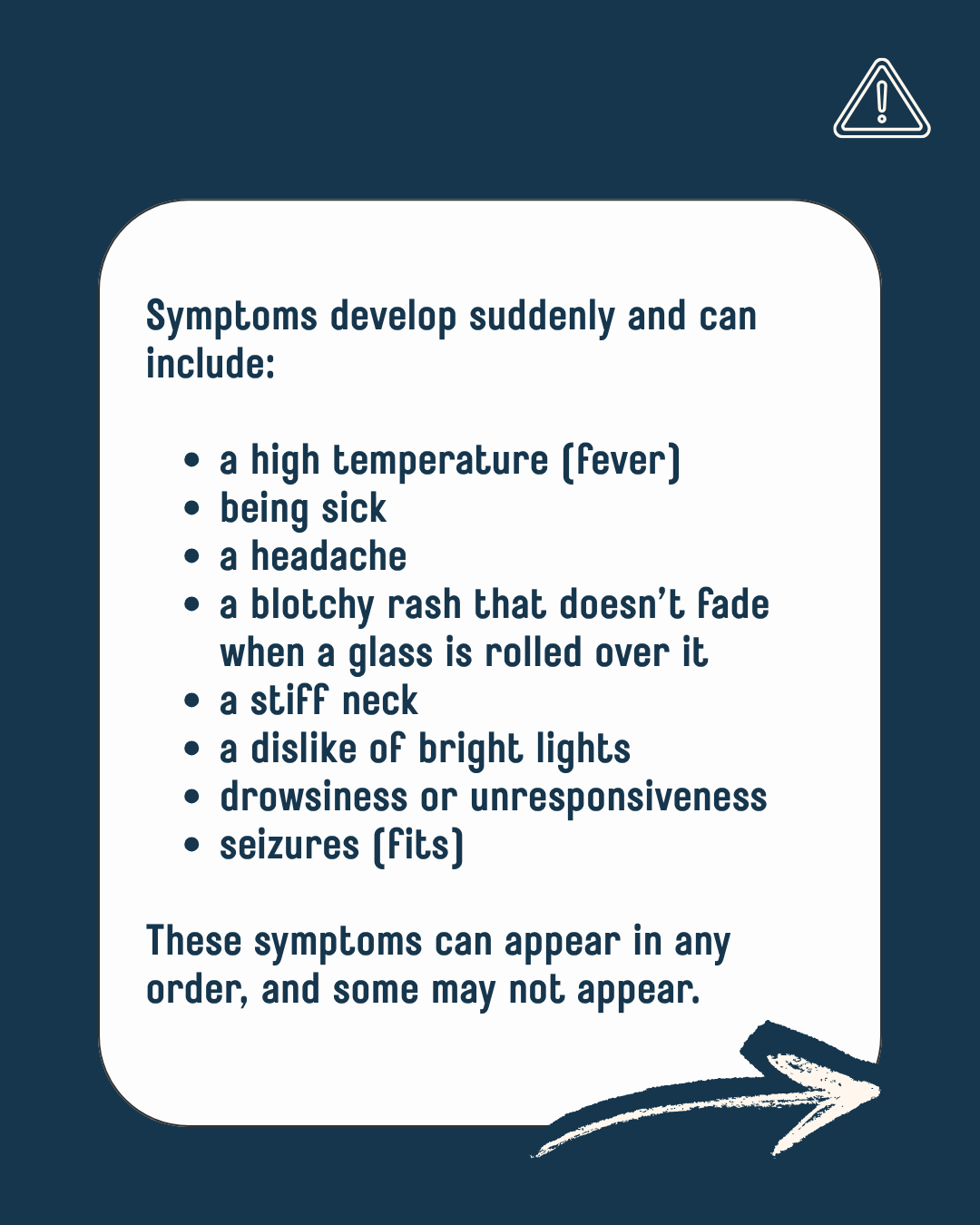
Symptoms develop suddenly and can include:
a high temparature (fever)
being sick
a headache
a blotchy rash that doesn’t fade when a glass is rolled over it
a stiff neck
a dislike of bright lights
drowsiness or unrespnsiveness
seizures (fits)
These symptoms can appear in any order, and some may not appear.
NHS Vaccination schedule
The NHS inform pages include the vaccination schedules for children and young people. This includes the following meningitis vaccinations:
the Men B vaccination at 8 weeks, 12 weeks and 12 months
the MenACWY vaccination during the S3 school year (aged 13 or 14)
The MenB vaccination is offered to children under 2 who may have missed appointments in their first year, but is not available on the NHS for children over 2. Young people aged up to 25 are eligible to catch up on the MenACWY vaccination if they have missed this.
How can I check what vaccines my child has had?
The Public Health Department do not hold vaccine records. The first step to checking your child’s vaccination history would be to look at their Red Book, but if you do not
have this, then you should ask your health visitor (for children under 5) or your child’s GP who can contact Child Health to request your child’s vaccination records.
Can I get a vaccine for MenB on the NHS?
The MenB vaccine is part of the routine NHS childhood immunisation programme and is offered to infants. Those under the age of 2 who have missed a Men B vaccine, are eligible for this in a catch-up form. For older children, teenagers, and adults, the MenB vaccine is not routinely offered on the NHS. There are a number of private providers available who will be able to administer Men B vaccine. You will understand that we cannot recommend any one private provider over another.
What about MenACVWY vaccination?
There are numerous strains of the meningococcal infection. The MenACWY vaccination gives good protection against MenA, MenC, MenW, and MenY. This vaccination is routinely offered in the UK to school pupils aged 13 or 14, but students and young adults who have not previously had the MenACWY vaccine may be eligible to receive it up to age 25. If anyone eligible has missed their Men ACWY vaccination, their GP can make a referral for this.
Additionally, for students attending universities in Glasgow, the NHS Greater Glasgow and Clyde Immunisations team run clinics on campus at the start of term offering vaccinations for eligible students who might have missed these.
My teenage child has never had a meningitis vaccine – can they get one?
Children aged 13 or 14 will be offered the MenACWY vaccination as part of the national routine schedule. Children who have missed this can catch up by being referred via their GP.
Older Adult Vaccinations
Pneumococcal Vaccine
Overview
The pneumococcal vaccine provides some protection against illnesses caused by pneumococcal bacteria.
NHS GGC Vaccination Contact Centre is 08009176115
What are pneumococcal bacteria?
Pneumococcal bacteria cause pneumococcal infection. They can cause serious illnesses like pneumonia and bacterial meningitis. They can also cause other conditions like severe ear infections.
Some adults carry pneumococcal bacteria in the back of their nose and throat. They can pass bacteria on by coughing, sneezing, and close contact.
Exposure to pneumococcal bacteria doesn’t normally result in serious illness. But, sometimes it leads to pneumococcal infections.
You have a higher chance of becoming unwell with a pneumococcal infection if:
you’re aged 65 or over
you’re under 65 and have certain health conditions
People aged 65 or over are more likely to suffer serious long-term health problems from pneumococcal infection. These health problems can lead to death.
What is pneumococcal disease and why do we need a vaccine?
Dr Andrew Prendergast explains why it’s important to vaccinate against pneumococcal disease.
Why should I be vaccinated?
The pneumococcal vaccine provides some protection against the serious conditions caused by pneumococcal bacteria. These conditions include:
one of the most common types of meningitis
severe ear infections
pneumonia caused by pneumococcal bacteria
This vaccine doesn’t protect against meningitis or pneumonia caused by other bacteria or viruses.
Who is eligible for the vaccine?
The pneumococcal vaccine is available in Scotland for all people aged 65 and over.
Some people under 65 are also eligible for the vaccine if they have certain health conditions, or are at high risk of exposure because of their job. You may be at risk if you have:
Asplenia or problems with the spleen
This includes conditions that can lead to problems with the spleen, like homozygous sickle cell disease or coeliac syndrome.
have a genetic disorder that affects the immune system, like IRAK-4 or NEMO
are on or are likely to be on a high dose of systemic steroids for more than a month
Cochlear implants
Individuals with cochlear implants are eligible for extra pneumococcal vaccinations
Cerebrospinal fluid leak
If you have leakage of cerebrospinal fluid from trauma or major skull surgery, you may be eligible for extra pneumococcal vaccinations.
This does not include leakage from CSF shunts, which deliberately drain excess fluid from the brain to another part of the body.
Occupational risk
Research has found a link between exposure to metal fumes and pneumonia.
If your job involves frequent or constant exposure to metal fumes, you may be considered at risk. This would make you eligible for the pneumococcal vaccine. An example of an at risk occupation would be a welder.
How do I get my pneumococcal vaccination?
You do not need to arrange your appointment. You’ll be contacted by your local NHS immunisation team when you’re eligible to be immunised. They’ll tell you:
the date and time of your appointment
where your appointment will be
They’ll contact you by sending an invitation to your home address. This is the address that is registered with your GP.
You can be invited for the vaccine at any time of the year.
Shingles Vaccine
Who is eligible for the shingles vaccine?
Your local NHS immunisation team will contact you when you’re eligible to get the vaccine. This will be from January 2024 onwards. Please wait to be contacted. Eligibility for the shingles vaccine depends on what age you were on 1 September 2023. NHS GGC Vaccination Contact Centre is 08009176115.
Shingles can be very painful and is more common among older people. The older you are, the worse it can be. For some, the pain caused by shingles can last for many years.
People who have a severely weakened immune system are also at higher risk of getting shingles and experiencing further complications from it.
Every year in Scotland, around 400 people aged 70 and over will be hospitalised due to shingles and related complications.
The shingles vaccine helps to build up your immunity to the virus. This means, if you do get shingles, your body will fight it off more easily.
Getting the vaccine will:
reduce your risk of developing shingles by over 70%
reduce your risk of experiencing long-term pain from shingles
reduce your risk of being hospitalised with complications from shingles
What is shingles?
Shingles is caused by a virus called varicella zoster. This is the same virus that causes chickenpox. When you recover from chickenpox most of this virus is destroyed, but some of the virus survives and lies inactive in your body’s nervous system.
The virus can then become active again later in life. This normally happens when your immune system has been weakened by:
age
stress
illness
certain treatments that can reduce your immunity
The shingles vaccine helps to protect you by boosting your immunity.
Do I need the shingles vaccine if I’ve never had chickenpox?
Yes. The chances are that you may have had chickenpox at some point without knowing it. Some people have chickenpox without displaying any of the typical chickenpox symptoms.
Do I need the shingles vaccine if I’ve had shingles before?
Yes. Even if you’ve already had shingles, you should still get it again. The vaccine will reduce your risk of getting shingles again.
What vaccine will be offered?
From September 2023, the Shingrix vaccine will be used in Scotland.
Are there any reasons I shouldn’t have the shingles vaccine?
You shouldn’t have the shingles vaccine if you’ve had a severe allergic reaction (anaphylaxis) to:
any of the ingredients in the vaccine
a previous dose of the chickenpox vaccine
Is the shingles vaccine a live vaccine?
No, the shingles vaccine is not a live vaccine. It cannot cause shingles.
How many doses of the vaccine do I need?
You need to have 2 doses of the shingles vaccine for it to be effective.
You’ll be offered your second dose 2 to 12 months after your first dose.
How do we know the vaccine is safe?
The shingles vaccination programme was introduced in Scotland in 2013.
All medicines (including vaccines) are tested for safety and effectiveness. The vaccine meets the high safety standards required for it to be used in the UK and other European countries. The vaccine has been given to millions of people worldwide.
Once they’re in use, the safety of vaccines continues to be monitored.
The respiratory syncytial virus (RSV) vaccine helps to protect people from RSV.
RSV is a common respiratory (lungs and airways) illness. RSV infection is more common from late autumn to early spring, but can happen at any time of year.
Sometimes, RSV infection can cause severe lower respiratory infections like pneumonia. It can also cause other life-threatening conditions.
Last year in Scotland, there were over 1,000 RSV cases in adults aged 75 and over.
The vaccine helps protect you by reducing your chances of getting an RSV infection.
Who can get the RSV vaccine
If you’re turning 75 years old between 1 August 2024 and 31 July 2025, you’ll be offered the RSV vaccine. This includes if your 75th birthday is on 1 August 2024 or 31 July 2025.
The vaccine will also be offered to anyone who is aged 75 to 79 years on 1 August 2024. This means you can get the vaccine if your date of birth is between 2 August 1944 and 31 July 1950. This is because the RSV vaccine is new to Scotland, and this group could not be given the vaccine before now.
In future years, the vaccine will be routinely offered to those turning 75 years old between 1 August and 31 July.
Getting the RSV vaccine is the best way to protect yourself against infections caused by RSV.
About the RSV vaccine
The Abrysvo vaccine is offered to protect against RSV in Scotland. It’s usually given as an injection in your upper arm.
You may be able to get the RSV vaccine at the same time as other vaccines (like shingles or pneumococcal). You can discuss this with the person giving you the vaccine. Because RSV infections often happen earlier in the year, this vaccine will be offered in August and September. You’ll be offered a different appointment later in the year to get your flu vaccine.
The Abrysvo vaccine is not a live vaccine. It does not cause RSV infection.
It’s important to tell the person giving you the vaccine if you:
have ever had a severe allergic reaction (anaphylaxis) to anything
are receiving medicines, treatment or therapy at a hospital or specialist clinic
How to get the RSV vaccine
You’ll be contacted by your local NHS immunisation team when it’s time to get the vaccine. Most immunisation teams will begin inviting patients from August 2024 onwards.
If you’re ill on the day of your appointment
Reschedule your vaccine appointment if you feel very unwell, for example if you have a fever, vomiting or diarrhoea. You should not attend an appointment if you think you might be infectious to others.
To reschedule your appointment, phone the number on your invitation letter. If you’ve lost your invitation letter, contact your local NHS immunisation team.
Side effects of the RSV vaccine
After having the vaccine you may have some side effects. These are usually mild and disappear within a few days.
Around the injection site you might experience:
pain
redness
swelling
Where can I report side effects?
You can report suspected side effects of vaccines and medicines through the Yellow Card Scheme.
by phoning 0800 731 6789 (9am to 5pm, Monday to Friday)
Flu Vaccine
Flu vaccine
Influenza (flu) is an infectious virus and can be serious. Symptoms may include a fever, a cough, a headache and tiredness. The virus spreads through the air when people cough or sneeze, or when they touch surfaces where the virus has landed then touch their eyes, nose or mouth. You can catch flu all year round, but it’s especially common in winter. It can be serious, even if you’re healthy.
The flu vaccine
The flu vaccine is the safest and most effective way to help protect against flu. It’ll also help reduce the risk of spreading flu to others.
The flu vaccine is available between September and March.
Why should I get vaccinated?
The flu vaccine has a good safety record. It gives the best protection against flu. It’s offered every year for free by the NHS to help protect people at risk of flu and its complications.
The vaccine helps protect against the main types of flu viruses. But there’s still a chance you might get flu after having the vaccine. If you do get flu, it’s likely to be milder and not last as long if you’ve received the flu vaccine.
Having the flu vaccine can also stop you spreading flu to other people who may be more at risk of complications and serious illness if they catch flu.
You have to get immunised every year because flu viruses change constantly and your immunity reduces over time.
The flu vaccine can’t give you flu, but it can stop you catching it.
Vaccine safety
All medicines (including vaccines) are tested for safety and effectiveness before they’re allowed to be used.
Once they’re in use, the safety of vaccines continues to be monitored by the Medicines and Healthcare products Regulatory Agency (MHRA).
Pregnant Women Vaccinations
Whooping Cough Vaccine
What the whooping cough vaccine is for
The whooping cough vaccine protects your baby against whooping cough.
Whooping cough (also known as pertussis) is a disease that can be very serious for babies. It’s a highly contagious bacterial infection that affects the lungs and airways. It can last for 2 to 3 months.
Babies and young children are at increased risk of complications from whooping cough. It can be very serious, and lead to pneumonia and permanent brain damage. In the worst cases, whooping cough can be life threatening.
In Scotland, the whooping cough vaccine is offered to everyone who is pregnant.
If you’re pregnant, you’ll be offered the vaccine from week 16 of your pregnancy.
It’s better to get the whooping cough vaccine as soon as possible. The sooner you get the vaccine, the more time there is for you to pass antibodies to your baby.
When you get the whooping cough vaccine, your body makes antibodies. These are what your body uses to fight whooping cough. These antibodies will transfer from you to your unborn baby through the placenta. This means that your baby will have some protection from whooping cough as soon as they’re born.
The protection you receive from the vaccine will also lower your own risk of getting whooping cough and passing it to your baby.
Even if you’ve had whooping cough before, you need the vaccine to help protect your baby.
Getting the whooping cough vaccine is the best way to protect your baby from whooping cough.
If you’ve had the whooping cough vaccine before
You may have had a vaccine against whooping cough before. This could have been when you were a child or during a previous pregnancy. The immunity you develop from being vaccinated wears off over time.
This means you’ll need to have the vaccine every time you’re pregnant. It’s the best way to protect your baby from getting ill from whooping cough.
If you have a new-born baby but were not immunised when pregnant
If you did not get your whooping cough vaccine when you were pregnant, speak to your midwife or health visitor. You may be offered the vaccine if your baby has not yet had their vaccinations at 8 weeks old.
About the whooping cough vaccine
Most people in Scotland will receive the ADACEL vaccine to help protect against whooping cough.
This vaccine protects against 3 different diseases:
There is no whooping cough only vaccine currently available.
If you cannot have the ADACEL whooping cough vaccine, an alternative vaccine (Boostrix-IPV or REPEVAX) may be suitable. Your midwife will be able to advise about which vaccine is right for you.
Read more about vaccine ingredients in the patient information leaflets:
The whooping cough vaccine is not a live vaccine. It cannot cause you or your baby to contract whooping cough. It’s the safest and most effective way to protect your baby from whooping cough.
You need 1 dose of the whooping cough vaccine
You only need 1 dose of the whooping cough vaccine for you and your baby to be fully protected. This is the same even if you’re expecting more than one baby.
You’ll need to get 1 dose of the whooping cough vaccine every time you’re pregnant.
The whooping cough vaccine protects
Getting the vaccine is an effective way of protecting you and your baby from whooping cough. A whooping cough vaccine has been offered in Scotland since 2012.
The vaccine offers around 90% protection against death from whooping cough in babies under 3 months of age.
Vaccine safety
All medicines (including vaccines) are tested for safety and effectiveness before they’re allowed to be used. Their safety continues to be monitored once in use. The vaccine meets the high safety standards required to be used in the UK and other European countries.
Respiratory Syncytial Virus (RSV) Vaccine
RSV vaccine during pregnancy
If you’re pregnant, you’ll be offered the RSV vaccine. It will help protect your baby against serious illness from RSV infection.
What the RSV vaccine is for
The respiratory syncytial virus (RSV) vaccine is offered during pregnancy. It helps protect your baby against serious illness caused by RSV infection.
RSV is a common respiratory virus. In most people it causes a mild illness with cold-like symptoms. It’s highly infectious and spreads easily when people with the virus cough or sneeze.
In Scotland, RSV is the most common reason that babies are admitted to hospital with respiratory (breathing) problems.
Those who are at highest risk of severe illness from RSV infection include:
premature babies
newborn babies (particularly in the first 6 months)
children under 2 years with conditions that affect their heart, breathing or immune system
Older children and adults can also get infected with RSV. The disease is more serious for young babies.
RSV infection is more common in winter, but can happen at any time of year.
Who can get the RSV vaccine
You’ll be offered the RSV vaccine if you’re pregnant. It’ll help protect your baby against serious illness from RSV infection.
During pregnancy, you can get the RSV vaccine from 28 weeks. Having the RSV vaccine at this time means that your baby is protected even if they’re born early.
You should not get the RSV vaccine if you’re less than 28 weeks pregnant.
If you did not get the RSV vaccine at 28 weeks, you can still get it later in your pregnancy. It’ll still protect you from infection and reduce the risk of passing RSV infection to your newborn baby.
The best way to protect your baby from serious illness is getting all recommended vaccines at the right time.
It’s important to tell the person giving you the vaccine if you:
have ever had a severe allergic reaction (anaphylaxis) to anything
are receiving medicines, treatment or therapy at a hospital or specialist clinic
You need 1 dose of the RSV vaccine
You only need 1 dose of the RSV vaccine, even if you’re having multiple births (like twins or triplets).
If you get pregnant again in the future, you’ll need to get another dose of the vaccine at that time.
How the RSV Vaccine Works
The RSV vaccine boosts your immune system, which then produces more antibodies against the virus. These antibodies then pass through the placenta to your baby. This helps protect your baby from the day they are born.
The vaccine helps protect your baby
The vaccine has been shown to reduce the chance of your baby becoming very ill from RSV.
Like all medicines, no vaccine is 100% effective. If you have the vaccine, your baby may still get RSV. However, their RSV infection should be less severe.
If you get the RSV vaccine during pregnancy, the chance of your baby developing a serious infection caused by RSV reduces by over 80%.
The RSV vaccine has a good safety record
In a clinical trial of almost 4,000 women, the vaccine had a good safety record. It’s now been approved by medicines regulators in the UK, Europe and the USA. Many thousands of women have since had the vaccine in national programmes. This includes more than 100,000 women in the USA.
The clinical trial compared pregnant women who received the vaccine with those that had not. Slightly more babies were born early in the group that had the vaccine than in the group who had not had the vaccine. It’s thought that this difference is due to chance, and that there is not a link between vaccination and early birth. However, this is why the vaccine is being given from 28 weeks rather than earlier in your pregnancy.
Overall, it’s still safer for you and your baby to have the vaccine than to risk your baby getting an RSV infection.
All medicines (including vaccines) are tested for safety, quality and effectiveness before they’re allowed to be used. Once they’re in use, the safety of vaccines continues to be carefully monitored.
How to get the RSV vaccine
You should be offered the RSV vaccine around your 28 week antenatal appointment.
Speak to your midwife to find out the local arrangements for vaccination. They’ll be able to advise you on how to get your vaccine.
Influenza (flu) is an infectious virus and can be serious. Symptoms may include a fever, a cough, a headache and tiredness. The virus spreads through the air when people cough or sneeze, or when they touch surfaces where the virus has landed then touch their eyes, nose or mouth. You can catch flu all year round, but it’s especially common in winter. It can be serious, even if you’re healthy.
The flu vaccine
The flu vaccine is the safest and most effective way to help protect against flu. It’ll also help reduce the risk of spreading flu to others.
The flu vaccine is available between September and March.
Why should I get vaccinated?
The flu vaccine has a good safety record. It gives the best protection against flu. It’s offered every year for free by the NHS to help protect people at risk of flu and its complications.
The vaccine helps protect against the main types of flu viruses. But there’s still a chance you might get flu after having the vaccine. If you do get flu, it’s likely to be milder and not last as long if you’ve received the flu vaccine.
Having the flu vaccine can also stop you spreading flu to other people who may be more at risk of complications and serious illness if they catch flu.
You have to get immunised every year because flu viruses change constantly and your immunity reduces over time.
The flu vaccine can’t give you flu, but it can stop you catching it.
Vaccine safety
All medicines (including vaccines) are tested for safety and effectiveness before they’re allowed to be used.
Once they’re in use, the safety of vaccines continues to be monitored by the Medicines and Healthcare products Regulatory Agency (MHRA).
Other Vaccinations
MPOX Vaccine
Vaccination to help protect against mpox (monkeypox)
Mpox (monkeypox) is a rare viral infection that usually causes a high temperature (fever) and a body rash that lasts a few weeks.
The risk of getting mpox in Scotland is low.
Who is offered the mpox vaccine?
The vaccine is recommended for people whose sexual networks mean they are more likely to come into contact with mpox. These include:
gay, bisexual, men who have sex with men (GBMSM), those who have multiple partners, take part in group sex, attend sex on premises venues, or have had a bacterial STI such as chlamydia, gonorrhoea or syphilis in the past year
some trans and non-binary people who are in similar sexual networks to GBMSM
some healthcare workers in high-risk settings where they may care for a patient with mpox
How many doses will be offered?
A full course of 2 doses of vaccine given at least 28 days apart is recommended for those at risk of mpox exposure.
Where can I get the vaccine?
If you’re eligible, some specialist sexual health clinics are offering the MVA vaccine.
Healthcare workers at higher risk will be offered the vaccine from their employer.
The vaccine
Mpox is caused by a virus similar to the one that causes smallpox. So vaccines designed for smallpox are expected to prevent or reduce the severity of mpox.
The vaccine used in Scotland contains a virus that’s been modified so that it cannot grow in the human body. This Modified Vaccinia Ankara (MVA) vaccine is a much safer form of the smallpox vaccine. MVA vaccines do not contain smallpox virus and cannot spread or cause smallpox.
The MVA (Imvanex) vaccine has been authorised for immunisation against mpox as well as smallpox by the Medicines and Healthcare products Regulatory Agency (MHRA).
As there is no UK branded vaccine available, you may be offered the US labeled equivalent of the MVA (Imvanex) vaccine, which is called Jynneos. This is the same vaccine as Imvanex and is also approved for mpox.
The vaccine helps the immune system (the body’s natural defence system) produce its own protection in the form of antibodies against the smallpox virus.
The UK Health Security Agency (UKHSA) and the Joint Committee on Vaccination and Immunisation (JCVI) recommend the MVA vaccine to help prevent mpox.
Vaccines are recommended to protect against disease. After vaccination, you should continue to be aware of the risks and symptoms of mpox.
How is the vaccine given?
Most vaccines are given by injection into the muscle of the upper arm (intramuscular) or the tissue just above it (subcutaneous).
Some vaccines can also be injected into the upper layer of the skin. This is known as intradermal vaccination. This is how the MVA vaccine to protect against mpox may be given.
Is the vaccine safe?
MVA vaccines meet the required standards of safety and effectiveness. Vaccine safety continues to be monitored once it’s in use.
Are there any reasons I can’t have the vaccine?
You should not have the vaccine if you’ve previously had a sudden life-threatening allergic reaction (anaphylaxis) to either:
a previous dose of the MVA vaccine
any ingredient of the vaccine, including those present in very small amounts such as chicken protein, benzonase, gentamicin or ciprofloxacin
It’s also important to tell the person giving you the vaccine if you:
have a high temperature
have atopic dermatitis (atopic eczema)
are living with HIV or any other condition or treatment leading to a weakened immune system
are pregnant, planning to have a baby or breastfeeding
You can also let them know if you:
have a minor infection such as a cold
are taking or have recently taken any other medicines
have recently received any other vaccine
You can be given this vaccine even if you’ve received a smallpox vaccination in the past. But you may be at increased risk of side effects, so speak to the person giving you your vaccine.
Are there any side effects?
Like all medicines, the vaccine can cause side effects, but not everybody gets them. The common side effects are:
a headache
aching muscles
nausea
tiredness
chills
fever
joint pain, pain in the extremities (hands and feet)
loss of appetite
pain, redness, swelling, hardness, itching, discolouration, a lump or bruising at the injection site
Around 1 in 10 people may have chills and fever, but these should not last more than a few days. If you experience any of these side effects, you should rest and take paracetamol. Always follow the manufacturer’s instructions. Do not take medicines containing aspirin if you’re under 16.
The most common side effects reported are at the site of injection. Most are mild to moderate in nature and cleared without any treatment within 7 days.
If you have atopic dermatitis (atopic eczema), you may experience:
more intense skin reactions such as redness, swelling and itching
other general symptoms such as headache, muscle pain, feeling sick or tired
a flare-up or worsening of your skin condition
Can I pay for an MVA vaccine privately or at a pharmacy?
No, the MVA vaccination is only available through the NHS to eligible groups and it’s a free vaccination.
If you have been exposed to mpox
If you’ve had significant contact with someone with mpox, you may also be offered the vaccine. This includes healthcare workers in high-risk settings, who are caring for someone with confirmed mpox.
The vaccine is most effective when given within 4 days from the date of exposure. However, it can be given up to 14 days after exposure if you’re at high risk of ongoing exposure or at risk of more severe disease. This may reduce your symptoms but may not prevent disease.
Two doses are recommended for longer term protection against mpox. The second dose can be given at least 28 days after the first.
Are there side effects of the intradermal vaccination?
Common side effects after intradermal vaccination are:
mild fever and tiredness
moderate redness, swelling and itching at the injection site
Around a third of people who get the intradermal vaccination may develop a small dark mark at the injection site for some months.
This information is only a guide. If you’re concerned about any side effects, speak to your health professional or phone NHS 24 on 111 for free.
Student Vaccination
As your college or university term begins, remember to check your vaccines are up-to-date. Read about keeping yourself protected from serious diseases.
It’s really important for all students to ensure they’re up-to-date with their vaccines before starting college or university. You should have had:
Upcoming student vaccination clinics will be held at Glasgow University, the University of the West of Scotland Paisley, and Strathclyde University. Please use the links below to book a vaccination appointment.
Students in the NHS Greater Glasgow and Clyde are encouraged to ensure their vaccinations are up to date before returning to college or university this year.
Infectious diseases that can cause meningitis and other serious conditions can spread easily in universities and colleges. The Meningococcal ACWY (MenACWY) and MMR vaccines help to protect you against these very serious diseases, which is why it’s important to check that your vaccines are up to date.
Students are at higher risk of developing invasive meningococcal disease than the general population. The MenACWY vaccine helps protect against meningitis and septicaemia (blood poisoning). The vaccine is offered to young people because meningococcal disease is much more likely to spread within this group.
Meningitis and septicaemia are very serious, life-threatening conditions that get worse very quickly.
It’s also important to check that you’ve had two doses of the MMR vaccine. This protects against measles, mumps and rubella.
Measles can lead to serious and potentially life-threatening complications in some people. These include infections of the lungs (pneumonia) and brain (encephalitis).
There is also still time to get the human papillomavirus (HPV) vaccine, although most students will have received this at school. It helps protect against HPV-related cancers including head, neck and cervical cancer. It also protects against over 90% of genital wart infections.
What to do to if you’ve missed/to catch-up on vaccinations
We deliver on-campus sessions twice a year for newly arriving international students, which are promoted through the university’s student communication channels. We visit the following universities:
Glasgow University
Strathclyde University
Caledonian University
University of the West of Scotland (Paisley Campus only)
If you are concerned about a missed vaccination, please discuss this with your GP and if appropriate, your GP will refer you for vaccination via SCI Gateway.
What vaccinations am I offered?
Students will be offered the following vaccines:
MenACWY
MMR
Human papillomavirus (HPV)
If you require any other vaccines that are not listed above, please consult with your GP.
Student Vaccination Clinics
The next student vaccination clinics will be held at the following:
Human Papillomavirus (HPV) vaccine
Most students will have had the HPV vaccine at school. If you missed it, you may still be able to get it up until you turn 25.
This only applies to:
people who are currently eligible
boys who became eligible from the 2019/2020 academic year
girls under 25 who were eligible under routine and catch up HPV vaccine programmes introduced in 2008
If you’re from Scotland and have not yet had the HPV vaccine, you first need to register with a GP practice local to your new address.
The HPV vaccine is available in Scotland for men who have sex with men (MSM) up to and including 45 years old.
Men who have sex with men are offered the vaccine because they’re known to have a higher risk of HPV infection. The HPV vaccine may be offered to MSM at sexual health and HIV clinics across Scotland.
If you don’t know what vaccinations you’ve had
If you’re not sure if you’re up to date on all your vaccines, you can check your red book to see immunisations you’ve had. If you don’t have a red book, contact your GP to check your vaccination records. If they cannot help, you can try contacting your local NHS immunisation team.
The importance of support from family members and loved ones for people in hospital cannot be overstated, bringing comfort to both the person in hospital and their family. We welcome, encourage and support people to stay connected to those who matter most in their lives, while they are in hospital. We know that this support has a positive effect on nutrition, healing, recovery and overall quality of care.
In line with NHS Scotland Hospital Visiting Guidance, a person-centred approach to visiting is in place across all NHSGGC sites. This page provides information about person centred visiting arrangements, guidance and safety measures everyone needs to follow.
What is Person centred visiting?
Supporting people in hospital to involve their family or carers as much as they would like is an important principle of person-centred visiting. This recognises the beneficial effect of a family member or carer participating in some elements of personal care and support, such as at mealtimes or with personal hygiene, etc.
Person centred visiting core principles
Person Centred Visiting means we will work together with patients, family members and staff so that care is in line with the following core principles:
We welcome and encourage the involvement of the people who matter to patients.
We are guided by patients: when the people who matter will visit, how they would like them involved in their care, and note when they want to rest.
We work in partnership with the people who matter to patients.
We have no set visiting times.
We respect people’s individual needs and act on an individual basis to ensure the safety, privacy and dignity of all patients. This means there may be times when we need to ask people to leave a clinical area temporarily.
Individual visiting plans
An individual visiting plan should be discussed with the person, their family and ward staff. This will ensure:
the needs of the person are met
no blanket timelines for the duration of a visit
Frequently Asked Questions
When can I visit?
Please speak to the person you are visiting, and the ward staff, about the best times for you to visit.
In most circumstances we ask that there are no more than 2 visitors at a time (these visitors can change). This is to help make the environment as restful as possible, and to minimise the risk of infection. There may be times when it would be appropriate for more than 2 people to visit at a time. The nurse in charge will be happy to discuss this with you.
Can I phone the ward to find out how a relative or friend is doing?
Yes. If possible, we ask that one family member is identified to be the key hospital contact who takes responsibility to share information with other family and friends, as appropriate.
Please note, there is a limit to what information we can give over the phone, and who we can give this information to.
What safety measures do I need to follow?
Please use the hand sanitizing gel provided when coming into and leaving the ward.
Please do not visit if you are unwell. For example, if you have cold or flu, vomiting or diarrhoea, or an upset stomach.
Please use the toilets for the public, and not those designated for patients or staff, where you can.
Visiting may take place at a bedside or communal area. In all instances chairs provided for visiting should be used. If visiting at a bedside, you should avoid sitting on the bed as this can spread infection.
If your relative/friend is being isolated, or if the ward is temporarily closed, please follow the advice provided by staff as there may be additional safety measures to follow.
What visiting arrangements are in place in outpatient areas or emergency departments?
Person Centred Visiting is in place across NHSGGC, including outpatient areas and emergency departments.
Please see the rest of this page for information about Person Centred Visiting.
My family member or friend is particularly vulnerable to the risk of infection. What visiting arrangements are in place for them?
Where there is a particularly high risk of infection, patients will continue to have visiting arrangements discussed as part of their individual risk assessments. Ward and department staff will be happy to discuss these with you.
My family member or friend has an infection. Can I visit them?
If your relative/friend is being isolated, please follow the advice provided by staff, as there may be additional safety measures to follow.
A ward is closed due to an outbreak of an infection. What visiting arrangements are in place there?
If the ward is temporarily closed, please follow the advice provided by staff, as there may be additional safety measures to follow.
Eating is a social occasion. You are welcome to visit at mealtimes to offer support and encouragement. However, please discuss visiting during mealtimes with the person you are visiting, and the ward staff.
Children are welcome to visit, however children under 18 years of age need to be supervised at all times.
If I am not able to visit, are there other ways that I can stay in touch?
We are offering ‘virtual visiting’ (video calls) for all patients. All wards have iPads specially set up to make video calls. This lets you see and talk to the people who matter to you. If you have your own mobile phone, tablet or laptop we can help you to make video calls using your equipment, if you are not able to do this yourself
This service will update as changes and closures take place. You must check back here if you need to use a service again.
Please enter your postcode, select the age of the patient and type of service, then click GO to find your A&E or Minor Injury Service. You may need to zoom in our out on the map.
If you have a minor illness such as a cough or high temperature, then your GP or pharmacist can help. Call NHS24 on 111 when they are closed.
To find the right service and the quickest treatment for your needs go to Right Care Right Place.
Was this helpful?
Yes
No
Thanks for your feedback!
Following a review by the local Incident Management Team at the QEUH, and further review by a group of senior medical, nursing and infection prevention and control staff, older peoples’ wards in Gartnavel General Hospital will move to one named visitor per patient on Monday 29 November.
Patients who do not have COVID-19 will be able to choose one named visitor.
The revision to hospital visiting arrangements applies to all older peoples’ wards in Gartnavel General Hospital (namely 2A, 4C, 8A and 8C).
Visiting arrangements in the rest of Gartnavel General Hospital will continue to be as follows:
Following a review by the local Incident Management Team at the QEUH, and further review by a group of senior medical, nursing and infection prevention and control staff, the Langlands Unit moved to one named visitor per patient on Monday 29 November.
Patients who do not have COVID-19 will be able to choose one named visitor.
The revision to hospital visiting arrangements applies to all wards in the Langlands Unit, with the exceptions of:
The COVID Hubs, which will continue to be utilised to cohort and safely care for patients and will continue to be restricted to ‘essential visits only’.
Further guidance on visiting wards which are ‘one named visitor’ is available here.
Please speak to ward staff to find out more about the current visiting arrangements in that ward, and to arrange a visit if possible. Ward telephone numbers are available here.
We use cookies to analyse traffic to our site and to enable certain functions such as forms and YouTube videos. These do not collect personal information. By clicking "Accept All", you consent to our use of cookies, or you can customise the options.
This website uses cookies
Websites store cookies to enhance functionality and personalise your experience. You can manage your preferences, but blocking some cookies may impact site performance and services.
Essential cookies enable basic functions and are necessary for the proper function of the website.
Name
Description
Duration
Cookie Preferences
This cookie is used to store the user's cookie consent preferences.
30 days
CloudFlare provides web performance and security solutions, enhancing site speed and protecting against threats.
Sequence rules uses cookies to track the order of requests a user has made and the time between requests and makes them available via Cloudflare Rules. This allows you to write rules that match valid or invalid sequences. The specific cookies used to validate sequences are called sequence cookies.
session
cf_ob_info
The cf_ob_info cookie provides information on: The HTTP Status Code returned by the origin web server. The Ray ID of the original failed request. The data center serving the traffic
session
cf_chl_rc_m
These cookies are for internal use which allows Cloudflare to identify production issues on clients.
session
__cfruid
Used by the content network, Cloudflare, to identify trusted web traffic.
session
__cf_bm
Cloudflare's bot products identify and mitigate automated traffic to protect your site from bad bots. Cloudflare places the __cf_bm cookie on End User devices that access Customer sites that are protected by Bot Management or Bot Fight Mode. The __cf_bm cookie is necessary for the proper functioning of these bot solutions.
session
__cflb
When enabling session affinity with Cloudflare Load Balancer, Cloudflare sets a __cflb cookie with a unique value on the first response to the requesting client. Cloudflare routes future requests to the same origin, optimizing network resource usage. In the event of a failover, Cloudflare sets a new __cflb cookie to direct future requests to the failover pool.
session
_cfuvid
The _cfuvid cookie is only set when a site uses this option in a Rate Limiting Rule, and is only used to allow the Cloudflare WAF to distinguish individual users who share the same IP address.
session
cf_clearance
Whether a CAPTCHA or Javascript challenge has been solved.
session
cf_use_ob
The cf_use_ob cookie informs Cloudflare to fetch the requested resource from the Always Online cache on the designated port. Applicable values are: 0, 80, and 443. The cf_ob_info and cf_use_ob cookies are persistent cookies that expire after 30 seconds.
session
__cfwaitingroom
The __cfwaitingroom cookie is only used to track visitors that access a waiting room enabled host and path combination for a zone. Visitors using a browser that does not accept cookies cannot visit the host and path combination while the waiting room is active.
session
cf_chl_rc_i
These cookies are for internal use which allows Cloudflare to identify production issues on clients.
session
cf_chl_rc_ni
These cookies are for internal use which allows Cloudflare to identify production issues on clients.