
Documents
Was this helpful?
Thanks for your feedback!
Stories of how our staff are finding new, creative ways to work and move forward together. What could you change? Read now for ideas.
‘Hospital at Home created valuable bed day capacity at NHS Greater Glasgow and Clyde’
‘At home COPD care gives me peace of mind when I need it most’
‘Four in five virtual A&E patients opt for video ahead of telephone consultations’
‘Jonstone Library providing community virtual local access to virtual medical consultations’
‘Digital ‘one-stop-shop- to transform support for people with neurological conditions’
‘Landmark 3D holoportation consultations to bring specialist treatment to remote parts of Scotland’
‘Landmark partnership aims to improve Scotland’s health’
‘More bed free, specialist patient care and faster treatment: OPAT Service moved to seven days’
Moving Forward Together – Implementation Strategy workshops with our staff.
Based on the MFT principals established pre-COVID and taking into account any lessons learned during the pandemic, a number of engagement workshops have taken place across NHSGGC services to progress our Moving Forward Together (MFT) Strategy.
The workshops enable us to liaise with our clinical staff to consider the clinical model and the physical infrastructure required to achieve the objectives as set out in the MFT strategy.
In the coming months, we will review the feedback from these workshops and provide updates on this webpage when appropriate.
The way that healthcare and social care services in Greater Glasgow and Clyde are provided is changing.
Prior to the pandemic we began working together with patients, the public, staff and other stakeholders to develop plans for a better, modernised, healthcare and social care system in line with the Scottish Government’s vision and to allow us to keep pace with national and regional developments.
This new system of care will be organised in the most effective way to provide safe, effective, person-centred and sustainable care to meet the current and future needs of our population. New ways of working will be developed which provide safe, effective and patient centred care, make best use of available resources and the opportunities created by innovation and technology.
The ‘Moving Forward Together’ strategy provides a clear plan for change to make this a reality. Delivery of the Programme will see improvements in care and outcomes for everyone.
You can use these pages to keep up to date with the Moving Forward Together Programme across NHSGGC.
Here you will find helpful information around the topic of nutrition – why it is important to eat a healthy balanced diet, where you can find access to food support in your area and some helpful resources, hints and tips to help you make healthier choices.
Following a healthy, balanced diet ensures our bodies receive all essential nutrients to work well day to day, and to help reduce the risk of developing dietary diseases like heart disease, Type 2 Diabetes and some types of cancers.
A range of resources designed to help you make healthier choices.
Good nutrition is essential in the early years of life to provide young babies and children with the vital nutrients required for growth and development and to encourage healthy eating habits for later in life. Below are a range of resources which are helpful for any parent or carer beginning to introduce solids, as well as some information on the free Vitamin D drops scheme and oral health for children.
If you or someone you care for has Type 2 Diabetes or you have recently been diagnosed with Prediabetes or Gestational Diabetes and are looking for further support, please visit the Type 2 Diabetes Hub where you can find out about our services and access useful resources.
Use the resources below to find out where you can get support and access healthy, affordable food in your local area.
The current cost of living crisis presents an ongoing challenge for many individuals and families across Scotland. The Scottish Government have launched a new website, Cost of Living support, to help people find the support they may be entitled to. Use the links below to find out what support is available in your local area.
Best start foods – A prepaid card which can be used online or in shops to pay for healthier items like fruit and milk as well as first infant milk, if you are pregnant or have a child under 3. Use the link to find out more information.
Best Start Grants – One off payments made at key stages during your pregnancy and child’s early years: Pregnancy and baby payment, early learning payment and school age payment. Use the link to find out more information.
Glasgow City Food Plan is a holistic 10-year plan aiming for Glasgow to be recognised for its good food and as a city where tasty, healthy, affordable food is accessible to everyone. The plan has 6 themes and is based around 3 overarching pillars – Equity, Sustainability and Health
All schools play an important role in promoting healthy eating habits to children from an early age and providing healthier food and drink choices. Schools should focus on integrating consistent healthy eating messages within classroom settings and carrying these forward to families, parents and carers. By following this whole school approach, children, young people and their families are given the opportunity to have the best start in life, helping to reduce diet related health inequalities
All children at local council schools can get free school meals during term-time in primary 1 to 5, your family’s financial circumstances do not matter.
Please visit your local council website to find out more about free school meals and clothing grants.
The resources below are designed to support teaching and learning within schools around the topics of food, nutrition, food safety and much more.
Food a fact of life – Free resources for teaching young people aged 3-16 years about where food comes from, cooking and healthy eating. Resources include recipes, activity packs, lesson plans and more.
Food Standards Scotland – Curriculum for Excellence linked activities to feed into lesson plans and deliver food safety and healthy eating messages.
Eat, Move, Learn – World Cancer Research Fund resources for children aged 7-11 years to learn about healthy eating and keeping fit.
Food waste whole school teaching resources | Zero Waste Scotland– Resources created for the school curriculum
Below you will find a range of resources which are appropriate for teaching and learning about growing, climate change, cooking and foraging.
Glasgow City Council – Food growing strategy webpage has information on the let’s grow together fund, an introduction to horticulture and the city wide growing strategy.
World Cancer Research Fund– Learn how to grow fruits and vegetables within the school environment.
NHSGGC offer a range of training opportunities including accredited REHIS courses. Please get in touch with ggc.communityfoodnetwork@ggc.scot.nhs.uk to find out more.
Scotland aims to reach net zero carbo emissions by 2045. This will be a lot more achievable if we start to make small changes to our everyday living such as eating more sustainably and reducing food waste.
Food planning, correctly storing foods and shopping smarter can all help to reduce food waste, shopping bills and carbon footprint.
As we age, our sense of taste and smell can change which may affect our appetite, the variety of foods we enjoy eating and interest in food. Despite this, it is important to still maintain a balanced diet to ensure our bodies have enough energy to function as normal. Below are a range of resources which are useful for anyone aged 65+ or caring for an older person who has concerns about appetite, unplanned weight loss or eating well.
Simple microwave recipes and some other easy to follow recipes to cook a healthy family meal from scratch
Serves: 1
Total cook time: 8 minutes
Ingredients:
Method:
Serves: 1
Total cook time 2 minutes
Ingredients
Method
Serves 1
Cook time: 8 minutes
Ingredients:
Method:
Serves 1
Total cook time: 4 minutes
Ingredients
Method
erves 1
Total cook time: 3 minutes
Ingredients
Method
Serves 1
Total cook time: 2 minutes
Ingredients
Optional toppings
Method
Serves 2 – 4 (as part of a main meal or a snack)
Total cook time: 12 minutes
Ingredients
Method
Serves 1
Total cook time: 2 minutes 30 seconds
Ingredients
Method
Serves 2
Total cook time: 15 minutes
Ingredients
Tip:
Blend sauce for a smooth consistency. This can also be used as a base for other tomato-based sauces such as bolognaise Bolognese, lasagne or pizza sauce.
Method
Serves 2
Cook time: 14 minutes
Ingredients
Method
This cook-a-long video demonstrates how to cook a healthy family meal from scratch using the ingredients found in the description below. The video can be paused at any time and accessed from a mobile, tablet or computer.
(Recipe provided by Donna Borokinni)
Serves 4
Prep:10 mins
Total cook time: 10 mins
Ingredients
· 100g self-raising flour, plus extra for dusting
· 100g natural yoghurt
· ½ teaspoon baking powder
Method
This cook-a-long video demonstrates how to cook a healthy family meal from scratch using the ingredients found in the description below. The video can be paused at any time and accessed from a mobile, tablet or computer.
Serves 4
Total cook time: 10 minutes
Ingredients
· 4 wholemeal pitta breads, toasted
· 140g feta cheese, drained and diced
· 1 yellow pepper, diced
· 2 medium salad tomatoes
· 1/3 large cucumber, diced
· 2 tablespoons of olive oil
· 1 lemon
Method
his cook-a-long video demonstrates how to cook a healthy family meal from scratch using the ingredients found in the description below. The video can be paused at any time and accessed from a mobile, tablet or computer.
(Recipe provided by Nutrition Scotland)
Serves 4
Total prep and cook time: 45 mins
Ingredients
· 1 large onion
· 1 tin of chickpeas, drained (400g)
· 1 tin of reduced-fat coconut milk (400g)
· 2 tablespoons curry paste or powder
· 2 tablespoons of tomato puree
· 1 tablespoon of ginger, peeled and grated or finely chopped
· 1 tablespoon of oil
· 2 large handfuls of spinach, washed
· Handful of fresh coriander, finely chopped
Method
This cook-a-long video demonstrates how to cook a healthy family meal from scratch using the ingredients found in the description below. The video can be paused at any time and accessed from a mobile, tablet or computer.
(Recipe provided by Diabetes UK)
Follow the link for more helpful information.
Total prep and cook time: 35 mins
Ingredients
· 2 chicken breasts, chopped
· 1 onion, chopped
· 150g natural low-fat yoghurt
· 2 tablespoons korma curry paste
· ½ tin chopped tomatoes (200g)
· 2 tablespoons flaked almonds, toasted
· 1 tablespoon ground almonds
· Rice, pitta or other to serve
Method
This cook-a-long video demonstrates how to cook a healthy family meal from scratch using the ingredients found in the description below. The video can be paused at any time and accessed from a mobile, tablet or computer.
For more healthy eating support please visit:
(Recipe provided by Parent Club)
Serves 4
Total cook time: 10 mins
Ingredients
· 1 large banana
· 2 medium eggs
· 2 tablespoons of plain flour (60g)
· Teaspoon of cinnamon
· Suggestion to serve: natural or Greek yoghurt, fresh, tinned or frozen fruits.
Method
This cook-a-long video demonstrates how to cook a healthy family meal from scratch using the ingredients found in the description below. The video can be paused at any time and accessed from a mobile, tablet or computer.
(Recipe provided by Diabetes UK).
Serves 4
Prep: 15 mins
Cook: 30-40 mins
Ingredients
· 2 medium butternut squash, peeled, deseeded and chopped
· 1 onion, diced
· ½ red chilli, chopped
· 1 garlic clove, chopped
· 1 tablespoon oil
· 1 tablespoon curry paste
· 1 low-salt stock cube
· 400g reduced fat coconut milk (1 can)
· 2 tablespoon fresh coriander
Method
This cook-a-long video demonstrates how to cook a healthy family meal from scratch using the ingredients found in the description below. The video can be paused at any time and accessed from a mobile, tablet or computer.
(Recipe provided by Donna Borokinni)
Serves 1
Total cook time: 15 mins
Ingredients
· 2 cups of cooked long-grain rice
· 1 cup semi-skimmed milk
· 1 tablespoon of cinnamon
· 1 teaspoon of vanilla extract (optional)
· Suggestions to serve: fresh, tinned or dried fruit.
Method
*This recipe can also be made in the microwave. Add all the ingredients to a bowl and microwave on full power for 2 minutes. Stir and return for a further 2 minutes. Allow to stand for 1 minute. Serve as above.
This cook-a-long video demonstrates how to cook a healthy family meal from scratch using the ingredients found in the description below. The video can be paused at any time and accessed from a mobile, tablet or computer.
(Recipe provided by Donna Borokinni)
Serves 2
Total prep and cook time: 14 mins
Ingredients
· 120g courgette, washed and grated
· 1 large egg
· 3 tablespoons plain flour
· 50g frozen peas, thawed
· 1 ½ teaspoon ground cumin
· 1 teaspoon oil, for frying
· ½ teaspoon baking powder
· ½ teaspoon salt
· Black pepper to season
· 2 tablespoons plain natural yoghurt
· 1 teaspoon mango chutney
Method
Serves 1
Cook time: Follow cooking instructions on the tin
Method
Serves 1
Cook time: 1 ½ – 2 minutes
Ingredients
Method
Serves 1
Cook time: 2- 2 ½ minutes
Method
All recipes were tested using an 800W microwave. Remember to check the wattage of your microwave at home and adjust accordingly. If you are not sure about wattage or timings for your microwave check your microwave manufacturer guide or cook for a shorter duration and check regularly.
If you adjust the portion size of the recipes, you will need to adjust the cooking time. For example if you cook 2 jacket potatoes at the same time, you will have to double the duration in the microwave.
• Smaller pieces of food will cook faster than larger pieces.
• Stir or turn food regularly to ensure the product is hot and to avoid hot and cold spots.
• After food is cooked, allow 1-2 minutes standing time to avoid hot and cold spots.
Ensure you are using suitable containers when using the microwave. The following are suitable for use:
• Toughened glass
• Ceramics
• Some plastics – check to see if the container has a microwave label (see below for examples)
Suitable coverings for a plate, bowl or container; microwaveable container with a suitable lid, plate, parchment paper or cling film with holes pierced.
Metals must not be used in microwaves as this can cause sparking or flashing. This also includes wires, foil and dishes with gold or silver decorations. Some plastics must not be used in the microwave, check the container.

When handling hot food from the microwave, some containers will have a suitable handle that does not transfer heat and therefore food can be taken in and out of the microwave with bare hands. However, some containers can get very hot and therefore use of a heatproof material is advised, such as oven gloves or tea towel.
• 100g carrots 2 – 2½ minutes
• 100g cauliflower 2 – 2½ minutes
• 100g celery 2 – 2½ minutes
• 100g sprouts 2 – 2½ minutes
• 100g broccoli 1½ – 2 minutes
• 100g courgettes 1½ – 2 minutes
• 100g leeks 1½ – 2 minutes
• 100g old potatoes – 2½ minutes
• 100g new potatoes – 2 minutes
• 100g mixed vegetables 3 minutes
• 100g peas 3 minutes
• 100g sweet corn 2 – 3 minutes
• 100g cut green beans 3 – 4 minutes
Follow the instructions on the tin.
This section has information on help available to improve your digital skills and confidence
Supporting staff to be digitally literate is a high priority for NHSGGC. The new NHSGGC digital strategy Digital on Demand (2023-2028) acknowledges that staff need to be digitally literate and have the skills and confidence to be able to use technology to its fullest extent.
The Digital Skills and Literacy Programme Hub is your one-stop resource for training, support, and guidance on healthcare applications from eHealth. It offers learning from basic computing skills to getting the best out of clinical applications ensuring all users can make the most of digital tools, with help available whenever needed to improve digital capabilities.
You can find out more about digital accessibility tools on the NHSGGC e-health intranet site:
Being online can help with:
The organisations listed provide support to develop skills and confidence in using digital devices, as well as directing you to places where a digital device can be accessed if you do not have one.
This includes support to:
Digital access can benefit other aspects of your life e.g. online shopping, banking and staying in touch with friends and/or family.
Libraries
Libraries are places in communities to find trusted health and wellbeing information. The opening hours for libraries can be found on your Local Authority website.
Connecting Scotland
Website: Connecting Scotland – Citizens
The Free Digital Support Helpline is available for anyone needing digital support. Contact them at:
Phone: 0800 158 3974
Website: Glasgow Life – Digital Skills
Renfrewshire libraries are able to offer digital support. Contact them at:
Phone: 0300 300 1188
Email: libraries@renfrewshire.gov.uk
Website: Renfrewshire Libraries
Contact the Community Hub:
Phone: 0141 876 9555
Email: hello@va-er.org.uk
Website: East Renfrewshire Community Hub
Contact Community Learning & Development:
Phone: 01389 738775
East Dunbartonshire libraries are able to offer digital support. Contact them at:
Phone: 0141 777 3143
Email: libraries@eastdunbarton.gov.uk
The Alliance ( the national third sector intermediary for health and social care) produced this guide to support people to develop their skills, knowledge and confidence in using digital tools to support Health and Wellbeing.
The Mhor Collective have produced a video to help you understand trust and safety when using a digital health website.
Find out more about the Mhor Collective and the human rights approach to digital health:
With the cost of living hitting hard, many people are looking at ways to save money.
Social tariffs are cheaper broadband packages that are affordable to people on low incomes.
If you are claiming Universal Credit, Pension Credit and some other benefits, you may be able to get cheaper broadband.
If your provider offers this it is free to switch and the price won’t go up mid contract.
The Office of Communications has a page dedicated to social tariffs which include pricing examples, with social tariffs starting from £12 per month with a line rental included.
Click the link below to see if your provider offers a social tariff and how to apply for this.
Cheaper broadband and phone packages – Ofcom
If you do not currently have Broadband or a Digital device, your local Library offers free Wi-Fi and many have devices you can use.
The Good Things Foundation are a charity whose one aim is to fix the digital divide for good.
There are 3 aspects that help the Good Things Foundation to deliver this:
Many of us used video calling on our phones, tablets and laptops during the Covid-19 pandemic to keep in touch with friends and relatives. You can now also attend some health care appointments in the same way.
Near Me is a video consulting service that enables you to attend some health care appointments from the comfort and convenience of home or other suitable location. The technology is safe and secure and is being used by many of our services. Near me is for pre-arranged appointments and your health care professional will provide you with the relevant information if a video consultation is offered.
There are many benefits to video consultations including:
· No travelling time, parking worries or public transport issues
· No fares required for travelling
· Being in your own home is more relaxing than a clinic environment
· Less time out of your day
· Easier to have a family member or carer attend with you
· Reduced exposure to inclement weather
· Reduced exposure to infectious diseases
To use Near Me you will need a reliable internet connection; broadband or 3G/4G, and a suitable device for making video calls such as a smartphone, tablet, laptop or computer with webcam and speaker
Please use a WiFi connection for your call whenever possible. We want to make you aware that a 20 minute consultation will use approximately 230MB of mobile data. If you are on a limited mobile data plan this may cause you to exceed your permitted usage allowance.
The service is best accessed using the Google Chrome web browser on a PC or Safari on Mac (webcam required), or on an Android or Apple smartphone. You can find more information on the Near me website including how to make a test call.
Many of our hospital and outpatient services are now using Near Me. Your GP services will also be able to offer you a Near Me appointment.
Your health care professional or clinician will advise you when your appointment is being arranged.
There are some Libraries across the Board area where a private room is available for Near Me. This will be rolling out further this year and an updated list of available Libraries can be found here.
Watch the video below to find out more about this service.
Patients in and around Johnstone can book a ‘Near Me’ space for virtual video consultation at Johnstone Library by phoning 0300 300 1188.
Patients in and around Paisley can can now book a ‘Near Me’ space for virtual video consultation at Ferguslie Library by phoning 0300 300 1188.
Near Me is used across NHSGGC and both Johnstone Library and Ferguslie Library provides a safe alternative to home and can support people at risk of digital exclusion. Patients have access to a private and confidential space with Library staff available to support patients with digital literacy needs.
Johnstone Library and Ferguslie Library provides a venue for ‘Near Me’ which allows patients to access the help they need without having to travel a significant distance from home.
Our Podiatry service has been using Near me and has produced an evaluation of the experiences of patients and staff summarised in this infographic (pdf)
It is now an offence for anyone to smoke within 15 metres of an NHS hospital building. The law applies to everyone, including staff, patients and visitors to our NHS hospital sites.
The new law applies to all NHS hospital buildings in Scotland and includes all awnings, canopies, or other overhanging structures connected to an NHS hospital building (even if they extend further than 15 metres from a hospital building).
Anyone found smoking within the 15 metre perimeter should be asked to stop smoking right away or they could receive:
Where you feel safe to do so, please remind anyone smoking within the perimeter of the new no-smoking law.
“Excuse me, I am not sure if you are aware but the Scottish Government have introduced a new no smoking law making it an offence to smoke within 15 metres of an NHS hospital building. Can I ask that you extinguish your cigarette or leave the grounds. Thank You”.
*If you have a ‘No Smoking – Please move away from this area business card’ available please offer this.
NHS Boards have had voluntary smokefree grounds policies in place since 2015, however there have been significant issues around compliance with people continuing to smoke on hospital grounds, in some instances congregating near entrance doorways and windows creating a nuisance and hazard for others.
Setting a 15 metre perimeter around buildings focusses on the areas with the highest traffic of people entering and leaving the hospital and where there is a risk of smoke entering the hospital buildings as a result of people smoking. Furthermore, it protects patients, visitors and staff from the exposure of second-hand smoke.
E-cigarettes can be used on NHSGGC grounds by patients, visitors and staff. However, they are not permitted within NHS buildings or at building entrances and exits.
By politely reminding smokers of the legislation and asking them to go off the grounds if they wish to smoke.
Please remind smokers of our policy and smokefree message when carrying out your duties on the wards or in the grounds.
Offer all smokers nicotine replacement therapy (NRT) to help them manage their cravings during their stay in hospital. This should initially be offered at point of admission and revisited at regular intervals during the patients stay.
If they wish to stop smoking they should be referred to the Quit Your Way Hospital Service (refer through TrakCare). Alternatively, if you are a member of staff who smokes you are required to go off site to have a cigarette. If you smoke within the grounds you could be subject to disciplinary action.
Yes, within our current Smokefree Policy, we ask that all staff be ambassadors in promoting our smokefree grounds message. The new legislation does not change this. As an employee of NHSGGC we are required to support all NHSGGC policies and procedures, and follow required government legislation. Patients and visitors can also be influenced by our own behaviour and may smoke if they see staff smoking in areas they should not.
Many patients or visitors may not have the information or ability to communicate their feelings about others smoking around them therefore it is our role to ensure visitors to our sites are free from tobacco smoke.
Your safety is paramount, if someone does not respond well to your request please walk away.
However remember to be sensitive about why they may be visiting our premises and if they become angry it is important not to take their reactions personally.
Knowingly permitting someone to smoke within the 15 metre no smoking perimeter outside of a hospital building could make NHSGGC liable to a fixed penalty or a fine. If an NHS staff member assists a patient to smoke (physically taking a patient outside to smoke) within the 15 metre no smoking perimeter, they may be subject to fixed penalty notice as it is illegal to ‘knowingly permit’ someone to smoke within the prohibited areas.
Staff should strongly advise patients not to leave the ward to smoke. If a patient still insists on leaving against the advice of staff, then they should be reminded that they are responsible for anything that may occurs as a result of their action and this should be documented in the patients’ notes/EMIS.
Our smokefree policy is clear that smoking is not allowed on hospital grounds. Patients can be offered Nicotine Replacement Therapy (NRT) to help with any withdrawal discomfort that they may experience during their hospital stay. Alternatively, they can visit Quit Your Way or call our team on 0800 916 8858 to find out more about Quit Your Way.
Since 2023, it is illegal to smoke within 15 metres of hospital buildings. NHSGGC also has a clear policy that smoking is not allowed on NHS grounds including Mental Health hospital sites. There are no longer any exceptions to this. Regardless of their length of stay or restrictions on their movement while in hospital, patients do not have a right to smoke.
Ask them to extinguish their cigarette immediately, advise them of the risk of fire, legislation etc. and report it to your line manager who will complete a DATIX form.
No, the legislation is not banning people from smoking, but to support compliance with NHS smoke free grounds policies, does prohibit the use of tobacco within 15 metres of an NHS hospital building.
All NHS Greater Glasgow and Clyde employees can access stop smoking support and free stop smoking medications via the Quit Your Way staff service. You can refer yourself to this service by emailing ggc.smokefreestaff@nhs.scot . Alternatively, you can access support in your local area by calling 0800 84 84 84 or visiting quityourway.scot.
Complainants should be directed to the NHSGGC Complaints Team:
Further information can be found on our complaints page.
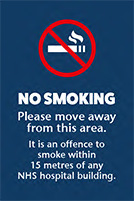
Business cards can be ordered by Acute teams via the Public Health Resource Directory (Search for code: C00058).
Group A streptococcus (GAS), also referred to as Strep A is a common bacterium. Lots of us carry it in our throats and on our skin and it doesn’t always result in illness. However, GAS does cause a number of infections, some mild and some more serious.
Milder infections caused by GAS include scarlet fever, impetigo, cellulitis and pharyngitis. These can be easily treated with antibiotics. Even without antibiotics, most mild GAS infections would clear up on their own.
Often symptoms that look like GAS infections, like sore throats, are more commonly caused by viruses than GAS bacteria. If you or your child has a runny nose with their sore throat, it’s more likely to be a virus infection. Children without fever are very unlikely to need antibiotics. Sore throats caused by viruses do not need to be treated with antibiotics unless there are concerns about complications.
Strep A symptoms can range from:
While the vast majority of GAS cases are mild, sometimes GAS can cause more serious illness, called invasive Group A strep (iGAS). This is very rare.
When the immune system is compromised, a person is more vulnerable to invasive disease. Children who have chicken pox and the very elderly are also more at risk.
There are a number of routes to go down to look after your child if they are displaying Strep A symptoms. Please consider points 1 – 3 as this will help your child get the right type of treatment without relying on A&E.
Thank you for visiting our Pride Pledge page.
Over 9,200 of our staff have made the pledge and are wearing the badge with pride!

The NHS Scotland Pride Badge promotes inclusion for LGBTQ+ people and makes a statement that there’s no place for discrimination in NHS Scotland.
An NHS staff member who wears the badge is pledging to –
Please note that all badges have now been distributed and the campaign has now ended. Support information and contacts are available below. You can also contact us at equality@ggc.scot.nhs.uk for further information on NHSGGC’s work in this area and access to additional resources.
Some people may be having a particularly tough time and may disclose to you that they have experienced hate crime on the grounds of their LGBTQ+ identity. It’s important that you know there are supports in place for people to report this type of crime and that it can be reported easily. More information on reporting a hate crime is available from the Police Scotland website.
You may be approached by colleagues who discloses they are experiencing discrimination in the workplace from colleagues or service users and would like support to deal with it. Our HR Department is on stand-by to support any employee who feels they are being victimised or bullied because of their identity. More information is available on the HR Support and Advice Unit page.
NHSGGC has supported the development of Staff Forums representing the voice of our BME, Disabled and LGBTQ+ staff. Please support the Forum membership by signposting anyone interested in joining. More information is available on our Staff Forums page.