Our dietitians provide advice about many different aspects of health. You will find advice for a few specific areas below:
Cancer
For people with cancer, the relationship between food and eating can change. The webpage below was written by Dietitians at the Beatson West of Scotland Cancer Centre to help you to take care of your food intake and nutrition by yourself. But if you are struggling to manage on your own you can ask a Dietitian for advice.
Dietitians and Support Workers can see you if you stay on a ward at the Beatson (or at your local hospital). Or you can ask your GP to refer you to see a Dietitian in a local clinic.
Constipation is a common digestive issue that can cause discomfort and bloating. It occurs when bowel movements become infrequent or difficult to pass. A healthy diet plays a key role in prevention and management.
The above video highlights how appropriate dietary management can slow the progression of chronic kidney disease. This can delay the patients’ need to access renal replacement therapies such as haemodialysis, peritoneal dialysis and transplant.
This patient education video was created by NHSGGC Renal Dietitians as an introduction to diet and chronic kidney disease, with a focus on the no added salt diet. Patients can be referred to the Renal Dietitians for more tailored dietary advice.
As chronic kidney disease progresses, the kidneys become less efficient at removing potassium and other waste products from the body. This can lead to a raised potassium level in the blood. Once other potential causes have been excluded a patient may be advised by their healthcare team to follow a low potassium diet.
This patient education video was created by the NHS GGC Renal Dietitians as an introduction to the low potassium diet. For specific individual advice, patients should be referred to the Renal Dietitians.”
This video below explains the importance of keeping blood phosphate at a safe level. It will explain what a low phosphate diet is and show you types and portion sizes of phosphate containing foods. The video will also explain types of phosphate binders and how they work
Please click on the button below to access Right Decisions Glasgow Kidney Unit app, for more information on the Glasgow Kidney Unit
Iron is an essential mineral that helps carry oxygen in the blood and supports energy production. Low iron levels can lead to tiredness and anaemia. See our link below for more information
This information is for people who have been diagnosed with IBS.
Irritable bowel syndrome (IBS) affects 1 in 5 adults, primarily impacting the bowel and gut. Symptoms include diarrhoea, constipation, abdominal pain and/or discomfort, abdominal cramps, bloating, and excessive wind. Other symptoms are nausea, heartburn, lethargy and tiredness.
Although there is no specific test for diagnosing IBS, it is important to have a diagnosis confirmed. Tests are required to rule out other conditions like coeliac disease and Irritable Bowel Disease (IBD) (eg crohns disease, ulcerative colitis). If you think you might have IBS it’s important to speak to your Doctor before making dietary changes. It’s essential that you explain your symptoms, making sure to mention if you have any of the following:
– unintentional and unexplained weight loss
– rectal bleeding
– a family history of bowel or ovarian cancer
– a change in bowel habit to looser and/or more frequent stools persisting for more than six weeks in a person aged over 60 years
– iron deficiency anaemia
– nausea and / or vomiting
– reflux / heartburn
The cause of IBS is unknown, however symptoms can be improved through diet and lifestyle changes. This might include changes to what you eat and drink, exercising and finding ways to relax and manage stress.
The links below provide information and first line advice to help you manage your symptoms.
If your symptoms continue despite making these changes, speak to your Dietitian. Sometimes special Diets such as low lactose, wheat free or a low FODMAP diet can help. However these diets can cause nutritional deficiencies so always make sure that you get advice from a Dietitian before trying them. Your GP or health professional can refer you to your local Dietetic service.
When your liver is not working well, your body needs extra energy and protein. Malnutrition (weight loss and muscle wasting) is common in liver disease. This resource was written by dietitians in NHSGGC to help guide you on what to eat and drink if you have, or are at risk of, malnutrition.
For further information on nutrition, talk to your liver team. They may refer you for an appointment with a dietitian.
See Information Eating to Feel Better. Liver Disease for more information
The role of the dietitian includes nutritional assessment, diagnosis, intervention, monitoring and evaluation of nutrition related issues in respiratory patients.
Universally across respiratory conditions, the management of malnutrition is at the forefront of priorities for Dietitians – however both under nutrition and over nutrition are considered.
Having a diagnosis of Chronic Obstructive Pulmonary Disease (COPD) means patients use 10 times more energy to breathe than someone with healthy lungs – Therefore COPD patients need more energy to do the work of breathing. A good diet can help prevent lung infections. Ensuring the patient has a sound nutritional status reduces the risk of getting infections, improves lung function and reduces both likelihood/ duration of hospital stay. Good diet also reduces the likelihood of unplanned weight loss from eating poorly which can weaken the muscles used for breathing. Poor nutritional intake/ status can make symptoms of COPD worse and it can also decrease a patients ability to exercise.
Community Respiratory Team can be contacted on 0141 800 0790 and patient needing dietetic input will be seen by Community dietitians
See link below for short video on the role on diet and COPD.
Hospital at Home provides the same level of high-quality multi-disciplinary care they would receive as a patient in a hospital bed.
Patients who are treated within Hospital at Home also have access to hospital-level diagnostics, such as radiology, rapid blood analysis, cardiology and a range of urgent hospital-level interventions such as IV therapy and oxygen.
About the service
The service runs 8.00am – 8.00pm seven days a week (including weekends and public holidays)
About the Team
Patients are registered under the care of a Hospital Consultant
Clinical care is delivered by a team, led by a Consultant Nurse and is comprised of:
Changes to your diet can significantly improve IBS symptoms in some people. Eating well, being well hydrated and increasing/ decreasing your fibre intake (based on symptoms) might be helpful in managing symptoms. Links below provide further information on diet.
Alcohol can make IBS symptoms worse. Reducing alcohol intake can help to reduce symptoms, as well as having positive effects on physical and mental health.
If your patient requires behavioural change support to become more active, has a history of heart disease and / or has had a stroke within the last 6 months, please refer via Live Active.
NHS Greater Glasgow and Clyde has the largest MSK team in the UK and we are committed to providing the highest quality of care to our patients, and in return we invest in your development.
Our Vision
The NHSGGC MSK Physiotherapy Service will deliver a comprehensive, accessible, quality service responsive to the needs of the public it serves and fit for the 21st century. It will ensure the delivery of this service is of clinical and educational excellence encompassing at its very heart a patient focused model of care. The service will be consistent, equitable, safe and efficient and provide the highest standard of care for adult patients with a musculoskeletal condition.
Our Mission Statement
Our mission is to provide a high quality musculoskeletal physiotherapy service that is effective, person centred, safe, timely, efficient and equitable. We aim to create a dynamic and innovative culture where all staff are valued and supported to work in partnership with patients, providing a service to be proud of.
Who is in the NHSGGC MSK Physiotherapy Team?
MSK Consultant
MSK Advanced Practice Physiotherapists
GP Advanced Practice Physiotherapists
Back Pain Advanced Practice Physiotherapists
Band 6 MSK Physiotherapists
Band 5 MSK Physiotherapists
Health & Social Care Support Workers
Service lead MSK Physiotherapy
Quadrant (Senior) Managers
GP APP Clinical Leads
Team Lead Physiotherapists
Practice Development Physiotherapists
Administrative Team
We also have strong links working alongside:
Orthopaedic Advanced Practice Physiotherapists
Band 5 Rotational Physiotherapists
Community Administrative Teams
Learning and Development
Learning and development comes in many forms. We offer an excellent range of learning and development opportunities that focus on fulfilling your potential and ambition, guided by the National Education of Scotland’s 4 pillars of Practice.
In-service Training- local & service wide
Annual MSK conference
Dedicated CPD time
Course funding
Online learning platform opportunities
Organisation bursary
Dedicated MSK Practice Development Group
Dedicated B5 training
Flying start for new graduates
CPD via TURAS appraisal
Annual wellbeing event
Peer coaching
Mentorship
Weekly case review
Clinical supervision
Clinical reasoning support from Advanced Practitioners
Virtual support clinics with Advanced Practitioners
Ask the APP live Teams channel
Graduate Opportunities in NHSGGC MSK Physiotherapy
As well as the learning and development opportunities for all our MSK clinicians, we offer a dedicated B5 training pack including:
Our MSK service is split into 4 geographical areas:
Clyde (Inverclyde and Renfrewshire)
East (East Dunbartonshire and North East Glasgow City)
South (South Glasgow City and East Renfrewshire)
West (North West Glasgow City and West Dunbartonshire)
We provide assessment and treatment in both acute and primary care sites: our locations.
“A day in the life of a Physio” (Two minute long video)
How To Apply
Our vacancies are advertised on the NHS Scotland Job Portal. All vacancies are listed in regions please select NHS Greater Glasgow and Clyde to view the opportunities within our Health Board.
Follow our Twitter account for up-dates and job opportunities
More information about the Greater Glasgow and Clyde area
The North East Sector provides both a General Nuclear Medicine and a Specialist Nuclear Cardiology service. Please select which service you wish to access by clicking the links below.
After an illness you may find you have difficulty catching your breath and feel short of breath more easily. This is called breathlessness. It is a common problem if you have had coronavirus (COVID-19), even if you have not attended a hospital. It is also a normal feeling which happens as a result of exercise or a change in the temperature or humidity of the air around you. This can be a scary feeling but there are several things you can do to reduce this feeling.
Techniques to Reduce Breathlessness
Positions to Ease Breathlessness
Using a different position will allow your breathing muscles to work better and help you to feel less short of breath. You might find one position works best for you. Feelings of panic will often make your breathlessness worse so trying to relax in your preferred position will also help. Lying on your front (prone lying) can help reduce breathlessness if you are recovering from coronavirus (COVID-19). Adding pillows under your chest or pelvis may make this position more comfortable. Only use this position if you feel comfortable and it helps your breathing.
Sit in a relaxed position in a chair with your back well supported. Place one hand on your tummy. Slowly take a deep breath in through your nose. As you breathe in, allow your tummy to rise up and then feel it relax down as you breathe out slowly. This may take some practice but can be very useful to help reduce breathlessness.
Relaxation techniques
Breathlessness can be a scary experience, especially if you have not experienced it before. It often causes people to feel anxious leading to a panic attack. Anxiety and panic themselves can lead to more breathlessness creating a vicious cycle. The breathing techniques above can help to reduce the feeling of breathlessness and so lower anxiety levels.
This can be useful to control breathlessness when you are walking or being more active. Take a breath in through your nose then gently breathe out through your mouth with your lips pursed, just like are whistling or blowing out a candle. Try to breathe out for longer than you breathe in.
Blow as you go
Breathe in before you start to move, then breathe out when you are making a big effort, such as bending down, lifting something heavy or going up stairs.
Fan therapy
Hold a small hand held fan about 15 centimetres away from your face, aim to feel the air on the centre of your face above your lip, the cool air can help you feel less breathless. A desk or free standing fan can also be used.
Here are some tips to help clear secretions in your chest that you find difficult to get rid of:
Drink water regularly throughout the day.
Limit the amount of tea and coffee you drink.
If your mouth feels dry your airways are dry too so drink some water (Note: Some medical conditions mean you have to restrict fluid intake, if you think this applies to you discuss and check this with your GP)
Avoid alcohol as it can make you dehydrated.
Steam or humidity can also help loosen and clear secretions. A warm shower can often be useful.
Moving around can be one of the best ways to clear secretions as activity makes you breathe deeper. This can help loosen and move secretions making it easier to clear. Remember that after illness you may find yourself more tired, breathless and low in energy even when just walking. So take your time and build up activity gradually and rest when you need to. You can find some simple activities and exercises to get you started on the physical activity pages.
Cough Management
Coughs can be caused by different of things like smoking, allergies, heartburn (acid reflux) or infections. Further information and guidance on managing a cough can be found from NHS Inform
Breathing Exercises & Techniques to help Remove Secretions
These videos explain two physiotherapy techniques you may want to try:
Active Cycle of Breathing Technique
Autogenic Drainage Technique
Please note: The above videos were produced by Advanced and Specialist Physiotherapists within the Respiratory Services of NHSGGC. The aim of the videos is to provide patients with a diagnosis of bronchiectasis with treatment options to help manage their symptoms. The Respiratory Physiotherapy Services have expertise managing a wide range of respiratory conditions and these videos are relevant to managing other lung conditions.
Information produced by NHSGGC Physiotherapist, Association of Chartered Physiotherapists in Respiratory Care, NHS Inform
Was this helpful?
Yes
No
Thanks for your feedback!
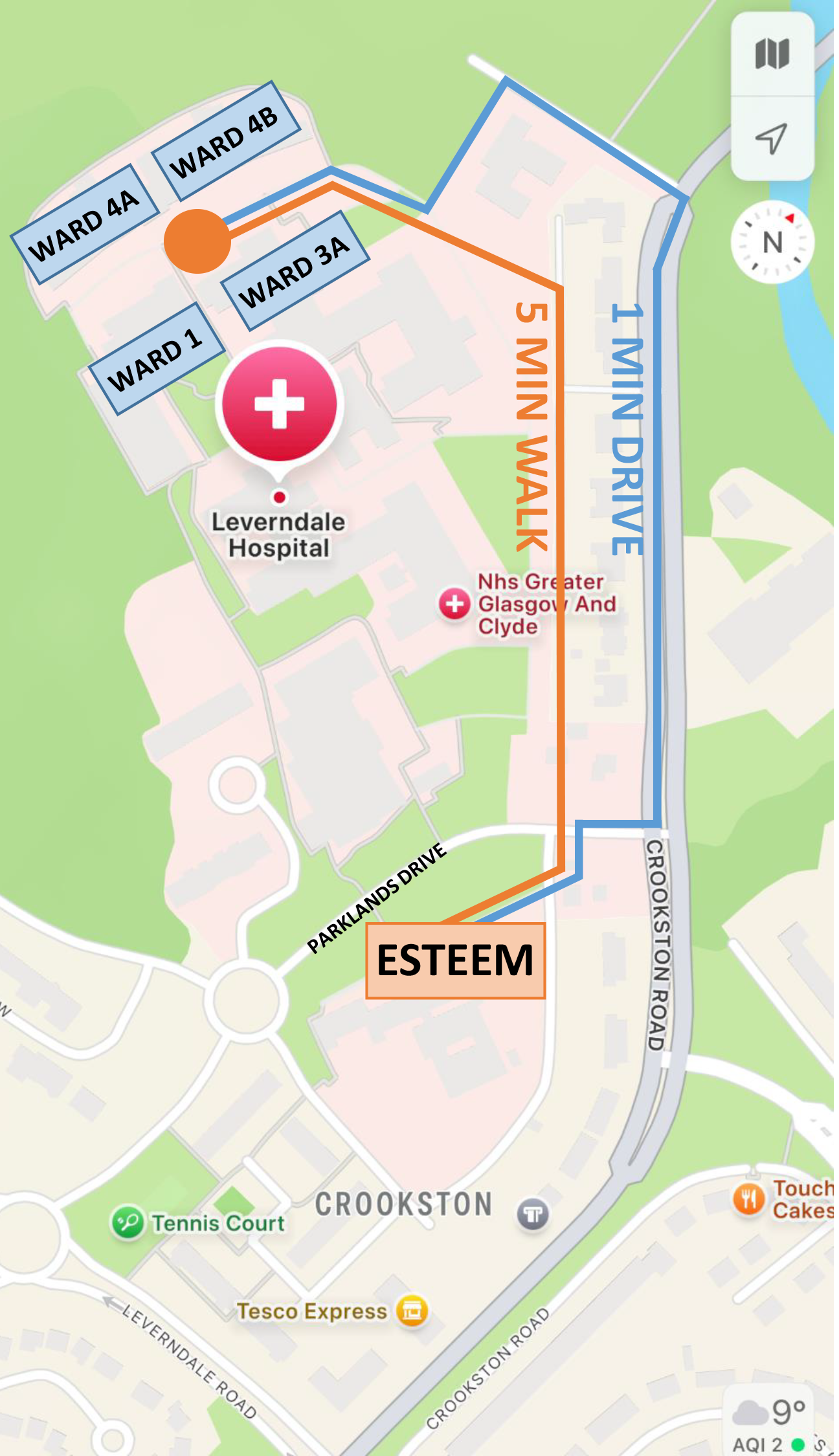
Esteem Glasgow is a community mental health service hosted by HSPC, for people usually within the age range 16 – 35 years, who appear to be experiencing their first episode of psychosis. We have four teams working in Greater Glasgow and Clyde, and they work with people for up to two years.
Esteem offers different types of support which have been shown to help people recover from psychosis, including medication, practical support, family work, groups and psychological therapy. You can contact us at Esteem from Monday to Friday between 9.00am – 5.00pm.
Contact Info
Contact the North Team
Telephone: 0141 232 2239
Address: Kershaw Unit, Gartnavel Royal Hospital, 1055 Great Western Road, Glasgow, G12 0XH
You may be aware of feeling very stressed or worried lately, and you may have spoken to your GP or someone close to you about this. You might have noticed some unusual experiences or feelings which can often be frightening or make you worry more. You might have started having problems at home, with other people or when you leave the house.
When someone is under stress, it can affect them in many ways. Some people notice changes in their body, such as sleep pattern or their interest in food. People also notice changes in how they feel or think, and the things they do.
When people get very distressed or worried a whole range of unusual experiences can occur at the same time. Within mental health services, this is often referred to as psychosis.
This can be frightening or overwhelming for people; especially if it seems those around them do not understand what is happening.
Common Experiences of Psychosis
Changes in Thinking
Some people feel like their thoughts have been taken away, are speeded up or are being controlled by someone or something else. There can often be some strong or unusual beliefs, such as feeling that some powerful force is out to hurt you or everyday things become more significant and meaningful to you.
Changes in Emotion
You might start to feel low all the time, more angry than usual or notice that you have lost interest in the things you used to enjoy.
Changes in Senses
Some people notice strange smells or very bright colours. There can also be images or voices that no-one else can see or hear. The voices people hear can often be very critical or threatening towards you. They sometimes comment on the things you do or try to get you to act in particular ways.
Changes in Behaviour
People can often start avoiding other people or staying indoors more, usually as they feel this helps keep them safe. It can be difficult to keep track of things or concentrate on what you are doing at times. This can be particularly difficult if you are being distracted by the voices you hear. Read Rai Waddingham’s article about her lived experience with Psychosis.
How to be referred
You can be referred by: Your GP, Community mental health teams, Inpatient services, Primary care teams, Statutory and non statutory services or you can self refer with the agreement of your GP.
The team consists of medical staff, community nurses, occupational therapy, support workers and psychology.
In Esteem we work together with the young person and their family. We meet with families at the early stages in someone’s care to gather information and offer support. Where possible we involve families in care and treatment planning.
We offer regular information evenings for families and the allocated keyworker can provide one to one support.
Useful Links
Read Stephanie’s account of working with the ESTEEM team – Stephanie Allan; Early Intervention in First Episode Psychosis: A Service User’s Experience, Schizophrenia Bulletin, Volume 43, Issue 2, 1 March 2017, Pages 234–235.
Telephone referral is preferable. You can contact the team and speak with a duty worker.
We also have further information for staff on our StaffNet page.
Was this helpful?
Yes
No
Thanks for your feedback!
During a hospital stay you can spend more time in bed or in a chair than normal. This causes your muscles to get weaker and make you feel like you have less energy. This is a normal process caused by being less active, but it is something which can be improved with movement. Movement should be as abilities and condition allows, it can mean as little as moving more often and sitting for shorter spells. Speak to a member of staff if you are unsure or need support.
It is important to improve muscle strength so you can return to your normal life. Being able to do your hobbies and interests is good for both your physical and mental recovery. These are things you can work up to as you become stronger and less tired. But you should recognise if you are becoming over-tired. You can read more about how to manage fatigue and save your energy in our Fatigue Management Page.
Stay Active at Home
Here are some examples of how you can be more active at home:
Move Regularly
Sitting still for long periods of time is not good for our bodies. Move your arms and legs regularly to stop them becoming stiff and sore. Stand up and move at least once every hour to help with balance and circulation.
Basic Seated Exercises
If you are struggling or unable to stand you can try some seated exercises.
You can also follow this Physiotherapy-led seated exercise class:
Basic Standing Exercises
If you are able to stand, why not try this exercise routine below:
When you are recovering from illness you may find you are more breathless than normal. Remember to take breaks as you need them and gradually increase the number of times you do each exercise/activity as you feel able. There are some tips on coping with breathlessness <breathing easier section>
The Talk Test is a simple way to measure how hard you are exercising. In general, if you’re doing moderate intensity activity, you can talk but not sing during the activity.
When to Stop Exercising
You should stop exercising and rest if you experience any of the following: • Chest pain • Increase in chest tightness • Dizziness or feeling faint • Much more breathless than you experienced the last time you did this exercise
If symptoms continue for more than 2-3 minutes, contact your GP.
Exercise programmes
After a period of illness or injury when you are starting to get back to normal life and would like to continue to improve your fitness there are a number of schemes available in the Glasgow and Clyde area.
Vitality Classes – Specially designed for people living with a range of medical conditions, and are ideal if you are finding that a lack of strength and/or poor balance is starting to impact on your daily life.
Call: 0141 232 1860
Live Active Referral Scheme – Qualified Live Active Advisors will chat to you to discuss benefits and set activity goals that are suitable for you in relation to your medical conditions (if any) and taking into account the current Scottish Government guidelines around Coronavirus (Covid-19).
Call: 0141 232 1860
Live Active Advisors are able to support you at a time and in a way that suits you best (e.g. phone call, texts, emails or video calls or face to face) depending on the latest Scottish Government guidelines. All Advisors follow the latest guidelines to ensure that the physical activity goals set are safe, effective and following the latest safety measures. They are there on hand to help support, motivate and advise so that a regular physical activity routine is established.
Call: 0141 232 1860
Ask your GP or Physiotherapist about a referral or follow the link above for more information.
If you are a health professional and never referred into Live Active before then please email liveactive@ggc.scot.nhs.uk to chat through the referral process and scheme in more detail.
Walking programmes
Walking is a great way to increase your general fitness and help your mood. The websites below will give you information on how to get started and keep motivated.
NHS England Active 10 – Free Active 10 walking tracker app shows how much brisk walking you’re doing and helps you do more.
Paths for all – Paths for All is a Scottish charity which aims to increase the number of people walking every day in Scotland to improve well-being and prevent ill health. See the website for free, gentle, volunteer led health walks that are available for everyone. Walks usually last up to 1 hour and there are over 75 walks taking place each week.
Call: 0141 232 1860 to discuss walking options near you.
National guidance
National guidelines are published by the Chief Medical Officers in the UK on the amount and type of physical activity people should be doing to improve their health.
NHSGGC Neurorehabilitation Unit has videos of seated exercise classes suitable for those with a physical disability, all lead by NHS GG&C Physiotherapists
Later Life Training produce 3 daily ‘movement snacks’ (search Make Movement your Mission). Movement snacks are short sessions to integrate into your day. Videos are saved on their Youtube channel for you to access whenever you wish.
Information produced by NHSGGC Physiotherapist, NHSGGC Active Wards Group, NHSGGC Health Improvement Team, NHS Inform, NHS England, Moving Medicine, Paths for All, UK Chief Medical Officers, Later Life Training.
Was this helpful?
Yes
No
Thanks for your feedback!
Tips for Managing Fatigue during your Recovery
During your recovery from illness you may feel more tired which affects what you are able to do. This is a very common problem for people who have had the illness even if you did not need to go to hospital. Everyone’s experience of fatigue will be unique.
Daily activities require both physical and mental energy (such as concentration, attention and problem solving) as well as emotional energy (talking with family and making decisions). This will all impact on feelings of fatigue.
Below are some ideas on how to help you to manage your fatigue as you recover from your illness.
Try to plan your day. Break it into small parts. Rest between activities and only do what you feel able to do. Try and set easy goals to begin with.
Try to avoid a boom/bust cycle by doing lots of things one day and then nothing the next few days. Instead try to pace yourself and spread out what you are doing during the week.
Avoid sitting for too long. Get up each hour to have a stretch or get a glass of water. Remember to use any walking aids you require.
Your energy levels will be different on different days – this is normal
Build up your strength but in small chunks. Think of what you can do on both your good and bad days and slowly build up from there. This will take time. For example when making a meal try to increase the time you can stand at the worktop before you need a seat. If going for a walk add a little bit more each time – an activity tracker you can wear on your wrist can show you how many steps you have taken and show your improvement.
Use an activity diary by writing down each activity you have carried out during the day you can follow your progress. Remember this could look very different each day depending on how you are feeling.
If you are trying to build up your activity but find that you are always feeling more tired and unwell after doing this, do not keep trying to increase it. Instead, work with what you feel you’re able to manage which does not seem to increase your fatigue. It may be of benefit to speak to a healthcare professional if this continues longer-term.
It is also important to eat and sleep well – for more information on this see the General Well-Being – NHSGGC
Adapting Activity
If you are struggling to carry out everyday tasks, try to change them – sit when you are preparing a meal; put smaller loads into your washing machine. Spread chores such as dusting and vacuuming across the week.
If you are feeling tired, ask yourself – do you need to finish (or even start) the task? Can someone else do it? Or can it wait?
Sit down to save energy where possible. Avoid going up and down the stairs – leave items that you would like to take up at the bottom of the stairs and take them up in the evening when going to bed.
Support and Advice
Our occupational therapy colleague are experts in helping manage fatigue, adapting activities and supporting with your day-to-day activities
Information produced by NHSGGC Physiotherapist and Occupational Therapists, The Royal College of Occupational Therapists
Was this helpful?
Yes
No
Thanks for your feedback!
Cookie Consent
We use cookies to analyse traffic to our site and to enable certain functions such as forms and embedded videos. These do not collect personal information. By clicking "Accept All", you consent to our use of cookies, or you can customise the options.
This website uses cookies
Websites store cookies to enhance functionality and personalise your experience. You can manage your preferences, but blocking some cookies may impact site performance and services.
Essential cookies enable basic functions and are necessary for the proper function of the website.
Name
Description
Duration
Cookie Preferences
This cookie is used to store the user's cookie consent preferences.
30 days
CloudFlare provides web performance and security solutions, enhancing site speed and protecting against threats.
Sequence rules uses cookies to track the order of requests a user has made and the time between requests and makes them available via Cloudflare Rules. This allows you to write rules that match valid or invalid sequences. The specific cookies used to validate sequences are called sequence cookies.
session
cf_ob_info
The cf_ob_info cookie provides information on: The HTTP Status Code returned by the origin web server. The Ray ID of the original failed request. The data center serving the traffic
session
cf_chl_rc_m
These cookies are for internal use which allows Cloudflare to identify production issues on clients.
session
__cfruid
Used by the content network, Cloudflare, to identify trusted web traffic.
session
__cf_bm
Cloudflare's bot products identify and mitigate automated traffic to protect your site from bad bots. Cloudflare places the __cf_bm cookie on End User devices that access Customer sites that are protected by Bot Management or Bot Fight Mode. The __cf_bm cookie is necessary for the proper functioning of these bot solutions.
session
__cflb
When enabling session affinity with Cloudflare Load Balancer, Cloudflare sets a __cflb cookie with a unique value on the first response to the requesting client. Cloudflare routes future requests to the same origin, optimizing network resource usage. In the event of a failover, Cloudflare sets a new __cflb cookie to direct future requests to the failover pool.
session
_cfuvid
The _cfuvid cookie is only set when a site uses this option in a Rate Limiting Rule, and is only used to allow the Cloudflare WAF to distinguish individual users who share the same IP address.
session
cf_clearance
Whether a CAPTCHA or Javascript challenge has been solved.
session
cf_use_ob
The cf_use_ob cookie informs Cloudflare to fetch the requested resource from the Always Online cache on the designated port. Applicable values are: 0, 80, and 443. The cf_ob_info and cf_use_ob cookies are persistent cookies that expire after 30 seconds.
session
__cfwaitingroom
The __cfwaitingroom cookie is only used to track visitors that access a waiting room enabled host and path combination for a zone. Visitors using a browser that does not accept cookies cannot visit the host and path combination while the waiting room is active.
session
cf_chl_rc_i
These cookies are for internal use which allows Cloudflare to identify production issues on clients.
session
cf_chl_rc_ni
These cookies are for internal use which allows Cloudflare to identify production issues on clients.
session
Statistics cookies collect information anonymously. This information helps us understand how visitors use our website.
We use Microsoft Clarity to understand how users interact with our website, including information such as clicks, scrolling and navigation behaviour, to help improve our services.
Microsoft Clarity uses cookies and similar technologies. These are only set if you accept analytics cookies.
If you choose not to accept analytics cookies, Clarity will operate in a limited mode using non-cookie-based data, which does not track users across pages or visits.
The data collected is behavioural and technical in nature and does not directly identify individuals. Sensitive information such as names, email addresses and form inputs is automatically hidden and not recorded or viewed.
Some information, such as device and approximate location data will still be collected and is treated as personal data in accordance with data protection legislation.
This will not be used for any purpose other than analytics and will not be used to identify you.
We use Microsoft Clarity to understand how users interact with our website, including information such as clicks, scrolling and navigation behaviour, to help improve our services.
Microsoft Clarity uses cookies and similar technologies. These are only set if you accept analytics cookies.
If you choose not to accept analytics cookies, Clarity will operate in a limited mode using non-cookie-based data, which does not track users across pages or visits.
The data collected is behavioural and technical in nature and does not directly identify individuals. Sensitive information such as names, email addresses and form inputs is automatically hidden and not recorded or viewed.
Some information, such as device and approximate location data will still be collected and is treated as personal data in accordance with data protection legislation.
This will not be used for any purpose other than analytics and will not be used to identify you.