NHSGGC has a moral and legal responsibility to protect the confidentiality of the data it holds and patients expect the information we retain about them will be kept secure and confidential. Your job role may give you access to patients’ clinical information and you are reminded of your responsibility to access only the information that is required to allow you to carry out your legitimate duties. This includes never accessing HEPMA records on occasions where either you or somebody you know personally is receiving treatment as an inpatient.
To protect against inappropriate access to records, the Board continues to use an audit system called FairWarning which was put in place to provide assurance that clinical information is kept safe. The system provides the Information Governance Team with daily audit reports from clinical systems which allows them to monitor and investigate any potential inappropriate access to records, including staff accessing their own records and those of family members. If, after investigation, a record is found to be accessed inappropriately, then a formal discussion between the member of staff and manager will take place and depending on the severity of the breach, there could be a number of consequences including refresher training and/or formal disciplinary action. Some good practice tips are:
1. Never share passwords with other colleagues or managers.
2. Keep your LearnPro Safe Information Handling Training up to date.
Staff are reminded that if they wish to access their own health information, they should submit a subject access request. The Board’s Subject Access Policy provides the relevant information and forms needed and can be found here Subject Access Policy.
If you have any questions on FairWarning or data protection in general, including training, please visit our Information Governance Knowledge Hub, or contact the Information Governance Team:
As part of our requirements under Data Protection legislation, we have published a Staff Privacy Notice. By issuing this privacy notice, we demonstrate our commitment to openness and accountability.
The Privacy Notice lets you know what information the Board collects about you, how it is used, including who we may share it with.
We recognise the need to treat staff’s personal and sensitive data in a fair and lawful manner. No personal information held by us will be processed unless the requirements for fair and lawful processing can be met.
We have produced a summary of the staff privacy notice, together with a more detailed notice. Both documents can be accessed below.
Working in a virtual environment, such as MS Teams, presents challenges and opportunities. If you are thinking about using a virtual environment for education and training (along with other methods) then these resources will help:
Where do I start with MS Teams?
There is no substitute to hands-on experience, so do your best to get familiar and confident with using MS Teams. Initially this will be in virtual meetings and individual chats. You will probably start to share documents on screen and share files, create teams and channels.
Your first resource is the ‘Help’ feature built in to MS Teams. It provides a range of short videos demonstrating the main features of the platform. This Microsoft support site also provides a wide range of videos detailing various Teams functions.
NHSGGC e-Health run regular virtual training sessions.
This ‘Getting started with Teams’ guide produced by NES introduces MS Teams in the context of Office 365 and signposts a range of very useful hints and tips around the general use of the platform.
NES has also provided these guides and resources, focusing on the use of MS Teams for training purposes, which includes an introduction to MS Teams, a guide to transferring face to face training online as well as dates of facilitation training sessions.
Guidance on facilitating virtual events
The following resources provide valuable guidance, hints and tips on running virtual events:
Facilitating Virtually by Ken Blanchard provides a detailed and extensive guide to delivering a virtual session.
Guidance and instruction
In addition to the MS Teams introduction and the basic principles set out above the following provides detailed guidance and instruction on how to use some of the key functions of MS Teams. The key is preparation, practice and knowing what you want to do and why. Provide clear instructions to delegates and take time to practice so that you are comfortable with the process.
Please note:
MS Teams is updated regularly by Microsoft. This means that some functions may change over time.
Slightly different versions of MS Teams have been made available so people may not have straightforward access to some of the features outlined below.
Arranging a Session
The development of comprehensive joining instructions is essential to ensure meeting material is provided in good time and to encourage delegates to check that they will be able to access the platform. This should include information about recording of the session (if required).
This series of short instructional videos takes you through the basics of using teams including, an introduction to teams and channels, setting up a session (using a channel), working with files, starting chats and calls, managing meetings.
Etiquette and Housekeeping
Encourage delegates to call in at least five minutes before the session. You should be there at least 15 minutes before to check everything is in place and to welcome the delegates. If it is a large scale event, and you cannot personally welcome everyone, then sharing a welcome slide with some course information can reassure delegates that they have called in to the correct session.
This sample housekeeping document can be used (and amended) to reflect session-specific requirements and includes guidance on the using mute, hand raising and chat functions.
A breakout rooms feature has recently been added to MS Teams.
This is a live recording of an actual breakout room training session (around 55 mins). This means that you will experience the session just as the original delegates did and it contains a lot of valuable information. There is a section of silence (between 17 and 23 mins approx) as all the teams are in there breakout rooms. When the audio is picked up again further guidance and hints and tips are detailed.
Please note that this video will not play in Internet Explorer.
These shorter videos cover the same material but they merely introduce the feature and offer brief demonstrations.
We strongly advise that before using breakout rooms you should test and rehearse your session so that you are comfortable using the feature. This will also ensure you have a clear purpose for using breakout rooms in your session.
Information Governance
MS Teams is now widely in use across the Board for meetings and communication between services and other users. It is important that all staff adhere to Information Governance and Data Protection obligations when using Teams.
This essential NHSGGC Training and Guide offers, how you can get started with creating your own web pages or YouTube videos.
You can also contact the Learning and Education Service for initial advice and guidance.
Remember, if you are thinking about creating resources, you will need to consider:
What is their purpose?
How will they fit with other interventions?
Existing Resources
A huge amount of really valuable material already exists and it is always worth doing a little research before thinking about developing new resources. Here are a few that you should know about:
Turas Learn; offers a wide range of resources covering clinical and non-clinical roles.
The Knowledge Network; huge amount of information with access to numerous libraries and databases. (In some cases you may require and Athens account. You can register here if you do not have an account).
The Learning and e-Support team supports, develops and delivers relevant on line and computer based learning opportunities for all staff employed in NHS Greater Glasgow and Clyde.
Our purpose is to widen access to learning content for staff either through signposting staff to current on line content on our digital learning management system, LearnPro, or by working with internal subject matter experts to create customised courses which will support work based learning.
Online learning topic areas include Statutory and Mandatory courses, Personal and Management Development courses and courses which provide support for the Core KSF Dimensions and Induction.
Contact Information
Please use the HR Self-Service Portal for your request and ensure that you add the link to your Favourites for easy access.
Telephone: 0141 278 2700 Option 3
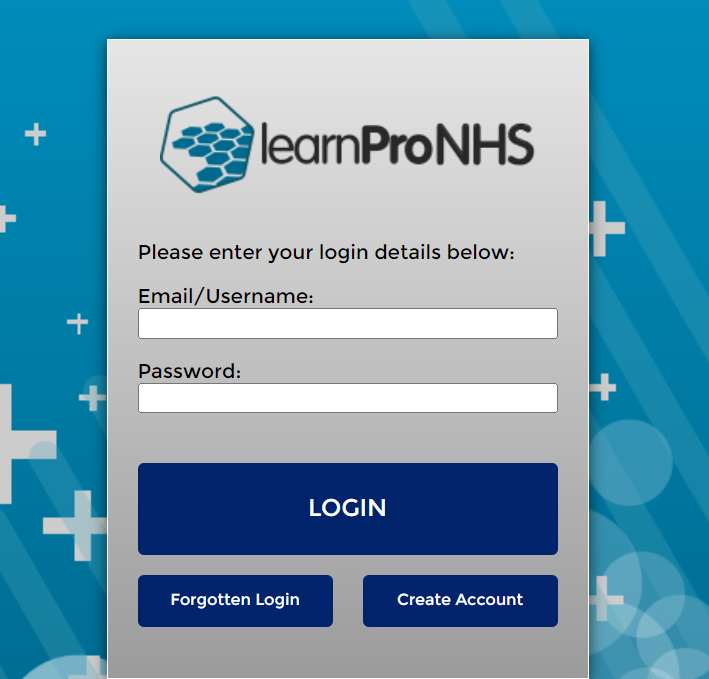
Forgotten passwords and log in details reset
If someone has forgotten their password for TURAS Appraisal or Learn Pro and need it reset, then they can do this quickly and easily themselves, without any need to contact the L&E support team, simply follow the steps below:
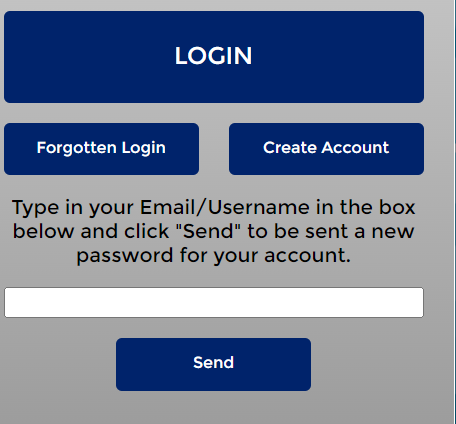
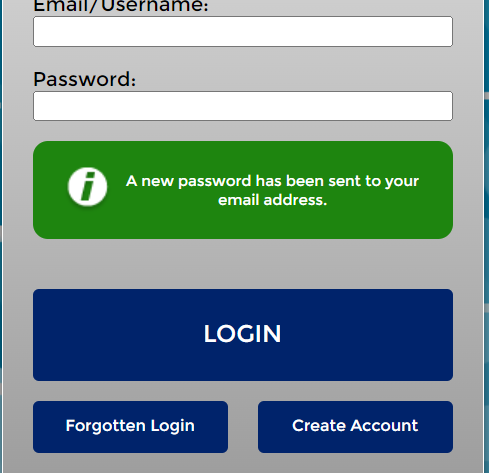
Learnpro
Click on the Forgotten password link
2- A box will appear below the forgotton password link for an email address to be added and send button clicked
3- A reset link will be emailed to email added above for the password to be reset
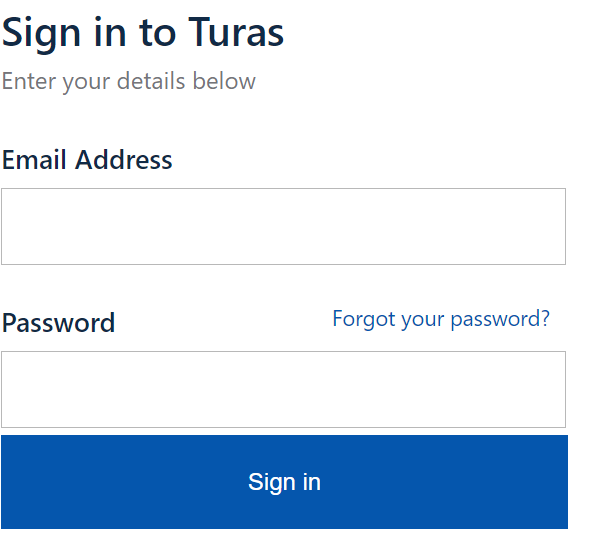
TURAS Appraisal
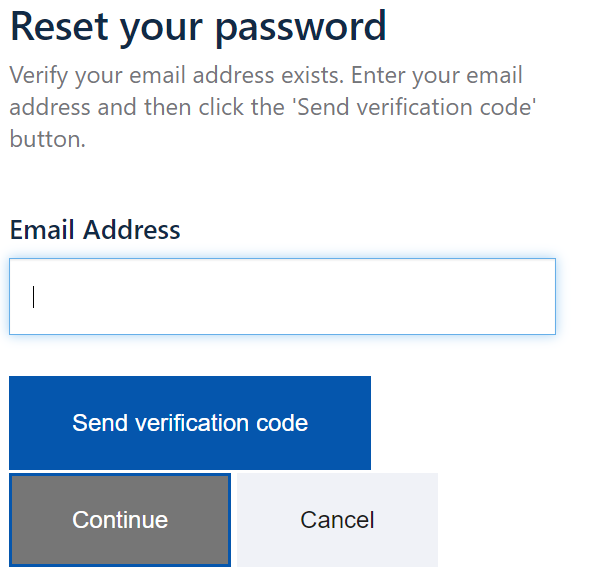
Click on the ‘Forgot your password?’ link.
2- Add email address and click ‘Send verification code’
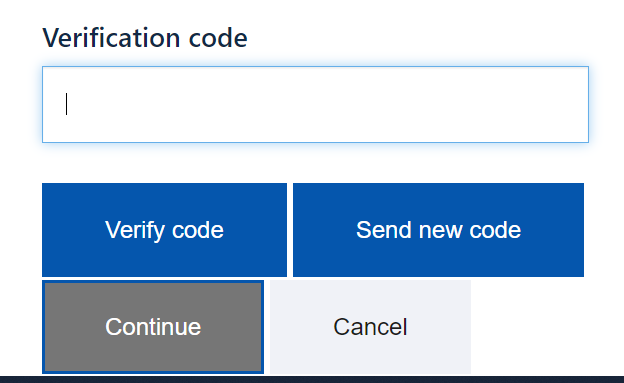
3- A code will then be emailed to the address you gave. Please leave the TURAS page opened until the code arrives, then copy and past it into the ‘Verification code’ section and click ‘Verify code’ and then ‘Continue’.
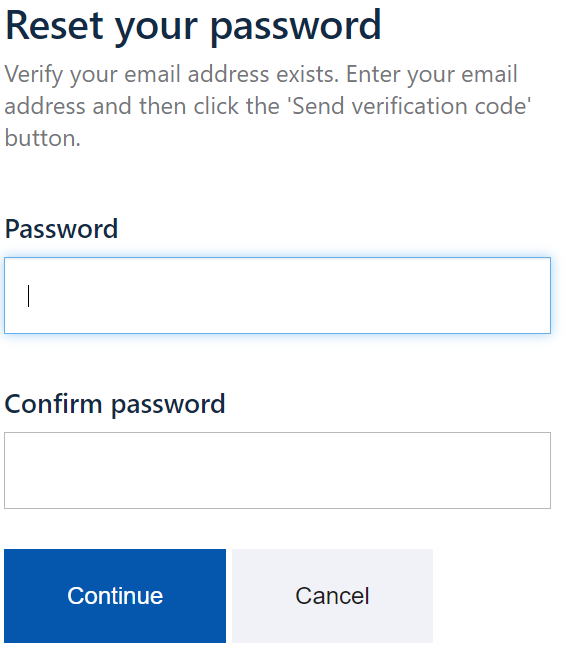
4- This then allows the password to be reset
Was this helpful?
Yes
No
Thanks for your feedback!
Another route which includes work experience are programmes that will support the development of pathways into employment for 16-24 year old. These programmes are in partnership with NHSGGC services and external stakeholders, with provision for under represented groups with specific barriers to employment.
The format of these programmes are a combination of classroom based sessions and work placements which together with tutor support aim to provide young people with the confidence and basic skills and knowledge to make successful applications for entry level posts in NHSGGC.
Access to Initiatives
Entry to these programmes are made through partner agencies and not directly through NHSGGC.
Further information regarding the next scheduled session will appear on this webpage.
Was this helpful?
Yes
No
Thanks for your feedback!
NHSGGC recognises that there is a lack of awareness of the range of jobs and careers available within the organisation, and of the pathways into these.
Up to date, accurate careers information is essential in supporting young people to make informed choices about what kind of career path is best suited to them, which college and university programmes will support their transition into employment and to highlight other pathways into successful NHS careers.
The Employability Service works with a range of partners to highlight the opportunities available. This includes schools, colleges, universities, training providers, community organisations, Jobcentre Plus and many more.
Current activity in this area
Programme of schools engagement
Attendance at careers event
Provision of on line resources via NHSGGC website and linking with key partner agencies
Ongoing management and development of the schools work experience programme.
You can also find information on the wide range of NHS Careers at the NHS Scotland Careers Website
The aim of this programme of modules is to ensure that our people managers are competent and confident in dealing with their routine people management responsibilities. The focus is not only on an understanding of key HR policies and procedures, but also on their practical implementation and how information and support can be accessed.
Supporting staff is a key part of the manager’s job and this module offers guidance and support on issues relating to promoting employee health and attendance. The main aspects of attendance management including roles and responsibilities, policy framework, reporting procedures and sources of advice and support will be covered.
Supporting the development of your staff is an essential part of your role. It ensures that your team members develop their competence and confidence in order to provide the best possible service. This module explores underpinning values and tools and techniques to support continuing development.
This course is designed to help our newly appointed people managers to promote and achieve the highest EDI standards and getting the best performance from their teams by valuing diversity across the workforce.
This training provides all the necessary information that supervisors/managers need when inducting new members of staff to their team. This includes the Health Care Support Worker induction standards and code of conduct to help ensure safe, effective and person centred care for all patients and service users.
As a manager you sometimes need to address issues with staff and peers. These conversations can be challenging. This module will help you plan and prepare for these difficult conversations.
Managing Employee Conduct, Grievances, Behaviours and Capability
Supporting staff is a key part of the manager’s job and this module offers guidance and support on issues relating to conduct and behaviours at work. The main aspects of addressing conduct/behaviour concerns including roles and responsibilities, policy framework and sources of advice and support will be covered.
Supporting staff is a key part of the manager’s job, and this module offers guidance and support on issues relating to promoting employee health and attendance. This module has a particular focus on supporting staff with mental health and/or stress issues including use of the Stress Risk Assessment Tool.
This module is designed to provide a practical guide to help all NHSGGC Managers to recruit fairly, lawfully and effectively, by gaining an understanding of the key stages in the recruitment and selection process, offer best practice, guidance and outline the interactions necessary with the NHS Scotland Recruitment System (Job Train).
Supporting staff is a key part of the manager’s job, and this module offers guidance and support on issues relating to harassment at work. The main aspects of addressing harassment concerns including roles and responsibilities, policy framework and sources of advice and support will be covered.
Strong partnership working is at the heart of NHSGGC. This interactive module will help all staff including managers and staff-side representatives build the confidence, knowledge and practical skills needed to work effectively in partnership and support positive working relationships across the organisation.
Our purpose is to provide direction and focus for the development of qualification and vocational training frameworks across Greater Glasgow and Clyde. As you might expect in an organisation as large as NHSGGC a wide range of learning and education opportunities are available.
It is our job to:
Identify and manage the qualification activity within Greater Glasgow and Clyde ensuring that appropriate linkages are made across disciplines and functions
Work with internal and external partners to develop and provide individual qualification pathways which will address service learning needs and create new opportunities for groups of employees and individuals
Develop knowledge and expertise in the principles and applications of national frameworks such as the KSF, SCQF and the NHS Career Framework ensuring that Greater Glasgow and Clyde is able to exploit the full potential of such developments
To lead and manage the provision of Scottish Vocational Qualifications (SVQs) in Greater Glasgow and Clyde ensuring robust processes are in place to successfully offer a wide range of vocational qualifications to our employees.
Explanation of Levels
SVQs are offered across 5 levels:
The Scottish Credit Qualifications Framework (SCQF) has been developed to help Employers and Learners understand how qualifications relate to each other and to other forms of learning. SQA has developed an interactive framework to visualise this. A full explanation of all qualifications are shown on the SCQF Framework.
Level 2 (SCQF Level 5/6)
For a level 2 SVQ, candidates have to be able to show that they are competent in a range of varied activities, in a variety of contexts.
Some of the activities will be complex, and the person will have some individual responsibility or autonomy. The job may also involve collaboration with others, perhaps through membership of a work group or team.
Level 3 (SCQF Level 7)
At this level, candidates have to perform a broad range of activities in a variety of contexts, most of which are complex and non-routine.
They will usually be working with considerable responsibility and autonomy, and may have control or guidance of others.
Level 4 (SCQF Level 9)
Level 4 SVQs involve a broad range of complex, technical or professional work activities. They will be performed in a wide variety of contexts and with a substantial degree of personal responsibility and autonomy. People doing these SVQs will often be responsible for the work of others and for allocating resources.
The decision to apply for a vocational learning programme may be identified for staff either by the individual or by Service Managers.
Criteria
This may be as a result of one or more of the following criteria:
Links to Service Needs, Redesign or Workforce Plans
Identified at PDP Review
Other e.g. (Role Development).
In all cases PDPs should indicate the required learning need.
Determining the correct SVQ award and level
Informal discussions may be required to determine the correct SVQ award & level. Application forms are then completed and forwarded to the SVQ Centre. Further discussions may be required with Managers regarding delivery options and possible funding implications/cost. Assessment is generally provided internally (using assessors from within the organisation) or in some cases externally (using assessors contracted to an FE college or external provider). The NHSGGC SVQ Centre has a limited resource and can offer a number of SVQ programmes annually which will be funded corporately, assessed and quality assured directly from the Centre. Intakes will take place around September and March of each year. Priority will be given to the applications depending on the need for staff to undertake a vocational qualification.
The SVQ Centre manages the Vocational Learning provision for NHSGGC, including quality assurance, any relevant internal verification and appropriate administration.
Service Level Agreement (SLA)
A Service Level Agreement (SLA) may require to be drawn up between the service area and the SVQ Centre. This agreement will confirm how the required underpinning Knowledge and Understanding for candidates will be met.
Sessions, workshops and tutorials
Introductory workshops/planning sessions for candidates will be arranged. This will include training on the e-portfolio system ‘Proof Positive’ if necessary.
These sessions will be followed by individual tutorials arranged with the candidate and the assessor.
Assessments and certificates
Assessor judges and assesses candidate competence against the standards and advises on how to cover gaps
Assessor accredits SVQ units individually until full SVQ achieved
Certificate is then issued by awarding body.
What NHSGGC can offer
NHSGGC SVQ Centre has approval to offer various S/NVQs across these areas:
HealthCare Support
Business and Administration
Learning and Development
Social Services and Healthcare Management.
Update to Management SVQs
Due to operational reasons the SVQ Team have taken the decision to temporarily withdraw the Management SVQs from our portfolio of Qualifications. As soon as we are in a position to deliver this qualification we will update this site. If you have any question regarding this, please contact Brian Keogh, Senior Learning and Education Advisor either by email (brian.keogh@ggc.scot.nhs.uk) or call 07834 228 569.
Applying for an SVQ
Complete section one of the application form. All questions must be completed. Once you reach the end of this section you should click the save and continue later button. This will now ask you to enter an email address, enter your line managers email address. This will email your completed application directly to your line manager.
Please inform your line manager that they must complete all of section two on the application form and click the submit button. Once both sections are fully completed your application will be held on our waiting list and once an assessor becomes available they will contact you directly to arrange an induction workshop. If you have an queries regarding your application please contact:
Please use the HR Self-Service Portal for your request and ensure that you add the link to your Favourites for easy access.
Managers have an important part to play in the NHSGGC SVQ Programme. As a manager, the following information should give you a brief insight into your role in helping to make the scheme a success for candidates and the organisation as well as being a useful tool for yourself.
If you have identified that SVQs may be useful as a development tool within your area please contact the SVQ Centre on 0141 278 2700 and choose option 3 for guidance as to how to proceed.
Why are Managers important in the SVQ process?
The manager is responsible for individual PDPs and their unit or departmental training plan. It is the manager who prioritises learning and education activity in line with organisational and individual needs. Managers are responsible for the budget for learning, education and training including possible funding associated with SVQs. Managers require to support candidates with regards to allocating and agreeing time for the candidate to prepare for assessment visits/activities.
Staff will see you as a leader
You can:
Positively support the development of staff in line with service requirements and workforce planning
Authorise and support their applications
Help them achieve their awards by giving ongoing training, encouragement and support
Provide opportunities to gather evidence
Give everyone fair and equal access to the programme.
You can also help in the evaluation of the SVQ programme by giving feedback on how the scheme helped you / your workplace and how it could be improved.
What can you do to support candidates?
You can:
Provide them with witness testimonies or statements about the work they do and the way they do it
Provide them with development opportunities, which fit in with their SVQ
Show an interest in their progress
Carry out observations of them at work and provide witness testimonies of this – also very useful at appraisal times
Identify and agree underpinning Knowledge and Understanding training needs in line with the national standards requirements
Introduce yourself to the candidate’s assessor and consider attending their initial workshop if you feel it would be helpful in understanding the process
Accommodate candidate’s requests for preparation time for assessor appointments
Familiarise yourself with the SVQ your candidate is doing by talking to them and their assessor about it or looking at the standards themselves
Consider undertaking a management or related vocational qualification yourself
You may also wish to consider facilitating a member of staff in becoming a workplace assessor and thereby supporting colleagues through the SVQ process.
What can you expect from the candidate?
The candidate should:
Tell you about their SVQ and discuss their progress with you
Consult with you regarding assessment preparation time to gather evidence for their next assessor visit
By undertaking SVQs, show increased understanding and confidence in their ability to do their job.
What can you expect from the assessor?
The assessor will be one of the following:
A qualified member of the SVQ Centre team, trained workplace assessor from within your own service area or another service area (subject to negotiation with the appropriate manager in that area)
An external assessor from an outside training provider.
The assessor should:
Contact candidates regularly (usually monthly visits are arranged)
Provide progress reports and update you on your candidate’s progress
Provide you with a contact phone number / email address and give you all the help and advice they can when and if you need it
Give advice on any agreements in place with regards to SVQs.
So what’s in it for you?
You can use SVQs as an excellent staff development tool e.g. for PDP’s / KSF Reviews to help the candidate at appraisal time
Your staff may learn new skills and be interested in having work delegated to them
Your staff will be more motivated and will be looking for opportunities to achieve their award
You can use SVQs to ensure that your staff have the competences necessary for current and future service delivery.
This qualification is suitable for employees who are involved in direct patient support/care, the qualification consists of eight units, four of which are mandatory and must be completed with four more units being chosen to show competency in specific areas of practice at level 2 this is reduced by 1 optional unit. The candidate would be expected to complete this award over a twelve month period. This qualification is available at level 2 and 3, SCQF levels 6-7.
Health Care Support (clinical)
Again this qualification is open to employees who are involved in direct patient support/care but with the main emphasis being on tasks that are carried out within the clinical environment. At level 3 this qualification consists of eight units 3 of which are mandatory and must be completed with five more being chosen to show competency in specific areas of practice at level 2 this is reduced by 1 optional unit. The candidate would be expected to complete the award over a twelve month period. This qualification is available at levels 2 and 3, SCQF levels 6-7.
Healthcare Support (non clinical)
This qualification is suitable for employees who are involved in support services within the NHS that do not routinely involve direct patient support/care i.e. those who are employed within the facilities dept of the NHS. At level 3 this qualification consists of 8 units, 3 of which are mandatory and must be completed with five more being chosen to show competency in specific areas of practice at level 2 this is reduced by 2 optional units. This qualification is available at levels 2 and 3, SCQF levels 6-7.
Business Administration
This qualification is suitable for employees who provide administration services, for example, business administrators, secretaries and receptionists. At levels 2 and 3 this qualification consists of 8 units, 3 of which are mandatory and must be completed with five more being chosen to show competency in specific areas of practice. This qualification is available at levels 2 and 3, SCQF 5-6.
Learning and Development
This qualification is suitable for employees who are working in a training role or Learning and Development role. Workplace PDAs are available to those who wish to assess or verify candidate competency in the workplace. The SVQ in Learning and Development is also available at levels 3 and 4 SCQF levels 8 and 9. At level 3 this qualification consists of 6 units, 3 of which are mandatory and must be completed with 3 more being chosen to show competency in specific areas of practice. At level 4 this qualification consists of 8 units, 3 of which are mandatory and must be completed with 5 more being chosen to show competency in specific areas of practice.
Team Leading
This qualification is suitable for employees who have responsibility for providing support and supervision to others. At level 2 this qualification is available to those who are considered to be Team Leaders and the optional units you chose will reflect this. At level 2 this qualification consists of 6 units, four of which are mandatory and must be completed with two more being chosen to show competency in specific areas of practice. This qualification is available at level 2 (SCQF level 6).
PDAs in Management
NHSGGC offer PDAs in Management at different levels, where staff can opt to undertake a smaller award linked specifically to their role. The benefit they offer is that staff with limited time available can start with an easily manageable award but may then choose to go on and complete the full qualification later. The PDA in Management is available at SCQF Level 6.
Management SVQs
Due to operational reasons the SVQ Team have taken the decision to temporarily withdraw the Management SVQs from our portfolio of Qualifications. As soon as we are in a position to deliver this qualification we will update this site. If you have any question regarding this, please contact Brian Keogh, Senior Learning and Education Advisor either by email (brian.keogh@ggc.scot.nhs.uk) or call 07834 228 569.
The Qualifications Team support the development of qualifications and vocational training frameworks across NHS Greater Glasgow and Clyde through the following activities:
Identify and manage the qualification activity within NHSGGC ensuring that appropriate linkages are made across disciplines and functions
Work with internal and external partners to develop and provide individual qualification pathways which will address service learning needs and create new opportunities for groups of employees and individuals
Develop knowledge and expertise in the principles and applications of national frameworks such as the KSF, SCQF and the NHS Career Framework ensuring that NHSGGC is able to exploit the full potential of such developments
Lead and manage the provision of Scottish Vocational Qualifications (SVQs) in NHSGGC ensuring robust processes are in place to successfully offer a wide range of vocational qualifications to our employees
Promote and support the use of Modern Apprenticeship Frameworks across our services in line with NHSGGC’s Workforce Employability’s Workforce strategy (Workforce Employability pages).
For further information or an application form for any of the above qualifications please use the HR Self-Service Portal (link below) for your request and ensure that you add the link to your Favourites for easy access.
To discuss how the Qualifications Team can support the development of qualifications pathways please email svq.qualifications2@ggc.scot.nhs.uk or contact L&E Support 0141 278 2700 (option 3).
Meet the Team
John McIndoe
Role: SVQ Assessor/Internal Verifier
Background: Almost 30 years experience in the provision of care services, predominantly in the learning disability field in the provision of hospital care, respite care and supported living, I have worked in residential child care in both secure and non secure environments. I am the Lead for Business & Administration, Health Care Support (Non Clinical) and the PDAs for Assessor and Internal Verifier awards. I also work with Emma to deliver the Modern Apprenticeship Frameworks
SVQ Assessor for Social Services and Health Care, Health Care Support, Business and Administration and Management.
Emma Brogan
Role: SVQ Assessor/Internal Verifier
Background: I have a background in General Nursing and most recently District Nursing. I have been the Clinical Lead for the Qualifications Team since May 2022. I have been a qualified SVQ Assessor since 2022 and a qualified Internal Verifier since 2023. I deliver Health Care Support Worker (Clinical and Non Clinical) as well as Business and Administration. I also work with John delivering Modern Apprentices qualifications
SVQ Assessor for Healthcare Support Worker (Clinical & Non Clinical).
Brian Keogh
Role: Senior Learning and Education Advisor (SVQ Centre Manager)
Background: I have over 20 years experience in Learning and Education, HR and Frontline Management both within NHSGGC and previously Royal Mail. I have been a qualified N/SVQ Assessor for 22 years and I have been an Internal Verifier for 8 years.
SVQ Assessor for Learning and Development, Business and Administration and Management.
Moira MacDonald
Role: Head of Learning and Education
Moira is our Head of Learning & Education as well as the Head of Centre for our SVQ Centre. Moira has been an assessor for over 10 years and an internal verifier for 8 years. Moira specialises in Management and Learning and Development qualifications.
Jacqueline Johnstone
Role: Administrator for SVQ Centre
Background: I have worked for the NHS for 16 years within the Learning and Education function and I am now currently working in the SVQ team. During this time I have completed a SVQ 3 in Business and Administration and I feel this has enabled me to develop my role and skills in my work place.
Responsibilities: It is my role to undertake all administration duties for the SVQ centre and to support the SVQ Assessors and Manager.
We use cookies to analyse traffic to our site and to enable certain functions such as forms and embedded videos. These do not collect personal information. By clicking "Accept All", you consent to our use of cookies, or you can customise the options.
This website uses cookies
Websites store cookies to enhance functionality and personalise your experience. You can manage your preferences, but blocking some cookies may impact site performance and services.
Essential cookies enable basic functions and are necessary for the proper function of the website.
Name
Description
Duration
Cookie Preferences
This cookie is used to store the user's cookie consent preferences.
30 days
CloudFlare provides web performance and security solutions, enhancing site speed and protecting against threats.
Sequence rules uses cookies to track the order of requests a user has made and the time between requests and makes them available via Cloudflare Rules. This allows you to write rules that match valid or invalid sequences. The specific cookies used to validate sequences are called sequence cookies.
session
cf_ob_info
The cf_ob_info cookie provides information on: The HTTP Status Code returned by the origin web server. The Ray ID of the original failed request. The data center serving the traffic
session
cf_chl_rc_m
These cookies are for internal use which allows Cloudflare to identify production issues on clients.
session
__cfruid
Used by the content network, Cloudflare, to identify trusted web traffic.
session
__cf_bm
Cloudflare's bot products identify and mitigate automated traffic to protect your site from bad bots. Cloudflare places the __cf_bm cookie on End User devices that access Customer sites that are protected by Bot Management or Bot Fight Mode. The __cf_bm cookie is necessary for the proper functioning of these bot solutions.
session
__cflb
When enabling session affinity with Cloudflare Load Balancer, Cloudflare sets a __cflb cookie with a unique value on the first response to the requesting client. Cloudflare routes future requests to the same origin, optimizing network resource usage. In the event of a failover, Cloudflare sets a new __cflb cookie to direct future requests to the failover pool.
session
_cfuvid
The _cfuvid cookie is only set when a site uses this option in a Rate Limiting Rule, and is only used to allow the Cloudflare WAF to distinguish individual users who share the same IP address.
session
cf_clearance
Whether a CAPTCHA or Javascript challenge has been solved.
session
cf_use_ob
The cf_use_ob cookie informs Cloudflare to fetch the requested resource from the Always Online cache on the designated port. Applicable values are: 0, 80, and 443. The cf_ob_info and cf_use_ob cookies are persistent cookies that expire after 30 seconds.
session
__cfwaitingroom
The __cfwaitingroom cookie is only used to track visitors that access a waiting room enabled host and path combination for a zone. Visitors using a browser that does not accept cookies cannot visit the host and path combination while the waiting room is active.
session
cf_chl_rc_i
These cookies are for internal use which allows Cloudflare to identify production issues on clients.
session
cf_chl_rc_ni
These cookies are for internal use which allows Cloudflare to identify production issues on clients.
session
Statistics cookies collect information anonymously. This information helps us understand how visitors use our website.
We use Microsoft Clarity to understand how users interact with our website, including information such as clicks, scrolling and navigation behaviour, to help improve our services.
Microsoft Clarity uses cookies and similar technologies. These are only set if you accept analytics cookies.
If you choose not to accept analytics cookies, Clarity will operate in a limited mode using non-cookie-based data, which does not track users across pages or visits.
The data collected is behavioural and technical in nature and does not directly identify individuals. Sensitive information such as names, email addresses and form inputs is automatically hidden and not recorded or viewed.
Some information, such as device and approximate location data will still be collected and is treated as personal data in accordance with data protection legislation.
This will not be used for any purpose other than analytics and will not be used to identify you.
We use Microsoft Clarity to understand how users interact with our website, including information such as clicks, scrolling and navigation behaviour, to help improve our services.
Microsoft Clarity uses cookies and similar technologies. These are only set if you accept analytics cookies.
If you choose not to accept analytics cookies, Clarity will operate in a limited mode using non-cookie-based data, which does not track users across pages or visits.
The data collected is behavioural and technical in nature and does not directly identify individuals. Sensitive information such as names, email addresses and form inputs is automatically hidden and not recorded or viewed.
Some information, such as device and approximate location data will still be collected and is treated as personal data in accordance with data protection legislation.
This will not be used for any purpose other than analytics and will not be used to identify you.