
Skip to content
Home > Your health > Page 6

Your health

Capturing Workplace Learning: Care Home Registered Nurses

The NHSGGC Care Home Collaborative are committed to celebrating excellent in everday practice and fostering a culture of continuous learning with the Care Home nursing workforce across the NHSGGC region.

From conversations with Care Home registered nurses (RNs) over the past three years it has been identified that better support through enhanced professional development, recognition, and a stronger sense of value is needed.

This opportunity will support RNs from Care Homes (of all experience levels) in documenting, evaluating and recognising the value of their ongoing professional development. Participants will collaborate with senior colleagues and receive support and guidance in using the Turas Professional Portfolio to create a comprehensive record of evidence that highlights their expertise and experience in their speciality area of Care Homes.

Our vision is to empower Care Home nurses to take ownership of their career progression, acknowledging the breadth and depth of their skills and experiences throughout their journey as a professional. This initiative will support current best practice in care homes and promote future career planning for Care Home RNs and help those aspiring to transition into specialist, leadership, or advanced roles.

If you are interested in pursuing this brilliant opportunity please get in touch with the CHC team and email ggc.chccontact@nhs.scot to receive the MS Teams joining link.

Care Around Death Study Day

This study day presents an opportunity to help increase Care Around Death knowledge and skills. Using a case study approach this day will enable participants to learn and share practice with each other whilst taking into consideration relevant local and national guidance.

This study day meets ‘Enhanced’ level on Domain #2 of the NES Palliative and End of Life Care Education Framework.

Click on the link below for more information and upcoming dates.

Caring for Smiles

Caring for Smiles is Scotland’s national oral health, training and support programme, which aims to improve the oral health of older people particularly those living in care homes.

Education and training of staff play an important role in the delivery and improvement of oral care. All care staff including supervisors and managers are encouraged to take up Caring for Smiles training where it is available.

Staff are invited to attend a 2 hour training session between 2.00pm – 4.00pm, delivered by the NHSGGC Oral Health Directorate.


Caring for Smiles have also developed an e-learning module on mouth care for care home staff. This module can be accessed here.

Catheter Passport

The National Catheter Passport (NCP) is a person-held document that supports safe, high-quality, and continuous care for people with urinary catheters. It provides education for patients and carers and acts as a communication tool for health and social care staff.

The passport records key information such as the reason for catheterisation, insertion date, care needs and future plans. By accompanying the person across care settings it promotes improved communication, reduced duplication and helps reduce complications, particularly catheter-associated urinary tract infections (CAUTIs).

Confirmation of Death

Care Home Collaborative

The NHS Greater Glasgow and Clyde (NHSGGC) Confirmation of Death (CoD) policy permits any trained Registered Health Care Professional to confirm death in any circumstance.

The Care Home Collaborative sessions provide an overview of the national learning resources, provide an opportunity for reflective discussion, simulation and competency sign off.

These are 2 ½ hours sessions which are delivered face to face, with rotating venues.

The aim of the session is to familiarise care home registered nursing staff with the process of Confirmation of Death.

Learning Outcomes

  • Identify the difference between Confirmation of Death and certification of death

  • Understanding and undertaking the practical component of CoD

  • Demonstrating knowledge of navigation of NHSGGC palliative care website/Moodle and other relevant electronic resources

  • Overview the NHSGGC COD competency document

Please use buttons below to contact us

Delirium Risk Reduction

Delirium is a serious, life threatening condition that develops rapidly over days or hours. When untreated delirium can lead to poorer outcomes for care home residents.

Would you like to find out more about how to reduce the risk of your residents developing delirium? Click below to register for our upcoming sessions.

Essentials in Psychological Care – Dementia Training Programme

Care Home Collaborative

The Essentials in Psychological Care – Dementia Training Programme delivered by the Care Home Collaborative is a certificated, exciting training programme that will increase your existing dementia knowledge, in a practical way to help you support the people you care for.

Modules

1: Dementia and Unmet Needs

2: Understanding Distress in Dementia

3: Understanding the Persons’ Reality

4: Communication

5: Stimulation and Meaningful Activity

6: ABC Charts

7: Staff Stress and Distress

Learning Outcomes

  • To enhance understanding of the causes of distressed behaviours in dementia.
  • Explore evidence-based proactive and preventative strategies and be able to apply these effectively.
  • Improve the experience and care for people living with dementia, their families and carers.

Please book online using the buttons below

Falls Development Day

This multi-professional learning event will bring together colleagues from a range of disciplines to share knowledge and best practice in falls prevention.

Topics covered will include

  • Reducing falls
  • Rehabilitation services
  • Interactive sensory workshop
  • Continence
  • Medication and falls
Learning Links Webinars

Learning Links Webinars are free online sessions for care home staff. Expert speakers share knowledge and practical tips on topics chosen to meet the needs of care home residents.

The webinars help staff spot changes in residents, take action early, and support residents to stay as well as possible. Tell us what topics you would like to learn about in future sessions.

Have an idea for a webinar topic? Let us know and watch this space for future sessions.

Mobile Skills Bus

Mobile Skills Unit (MSU)

The Mobile Skills Unit (MSU) was developed to support the delivery of clinical skills training and education to all across Scotland.

No further dates are currently planned.

Meaningful Activity Network Meetings

Care Home Collaborative

Are you interested in new ideas to promote meaningful activities for your residents? Would you like to share your good news stories and celebrate successes with other care homes? Then this is the event for you!

The Care Home Collaborative would like to invite you to join us at our next ‘Meaningful Activity Network Meeting’ as we continue our conversation about meaningful and purposeful activity. We are hosting this event in partnership with Care Inspectorate’s Health and Social Care Improvement team.

Care homes who attended our first meeting indicated their keen interest in being involved in a network where they could support each other and share ideas, including information and resources which would enhance the provision of activities for care home residents. We have listened to your feedback and opened this to all care home staff (Managers, Nurses, carers, activity coordinators, catering, housekeeping, etc.).

Please click on the link below to register

MUST/MUST Step 5 Webinars

This webinar is open to all care home staff who would like an update on MUST and MUST Step 5. It will help refresh knowledge of each step of the MUST screening tool, including calculation of scores. It will also cover MUST Step 5 and explain how to complete the form.

This is vital in supporting nutritional care for residents and identifying risks.

Session Aims

  • Refresh knowledge of the MUST pathway
  • Learn to calculate total MUST score from steps 1-3
  • Refresh knowledge of MUST Step 5 paperwork

Learning Outcomes:

  • To accurately calculate MUST scores
  • Complete MUST Step 5 paperwork and reviews confidently

Please click on the link below to register for this webinar.

Oral Health

Caring for Smiles is Scotland’s national oral health training and support programme.

Education and training of staff play an important role in the delivery and improvement of oral care. All care staff including supervisors and managers are encouraged to take up Caring for Smiles training where it is available.  

Caring for Smiles (Non-accredited training)

Staff are invited to attend a 2 hour Online training session delivered by NHSGGC, Oral Health Directorate.  

Learning Outcomes

  1. Demonstrate an understanding of why good oral health is important

2. Recognise the factors that contribute to poor oral health

3. Confidently carry out day-to-day oral care for residents who require assistance

4. Know how to report any health concerns

5. Understand the importance of the different oral care forms e.g risk assessment, care plans and daily documentation

6. To be able to carry out an oral health risk assessment

7. Understand what techniques and strategies may help those residents with dementia who resist oral care.

Please direct any questions to the Oral Health Team

Email: oral.health3@ggc.scot.nhs.uk

Contact Tel number: 0141 201 4217

Caring for Smiles Turas Learn and Turas Learn SSSC open badges

Caring for Smiles Turas Learn: Better oral care for dependent older people

SSSC open badges: Toothbrushing for oral health is a suite of 5 badges. Each of the 5 milestone topics award their own badge. To do this you must successfully complete all the eLearning modules in the suite and submit the required evidence of your learning on the SSSC badges website.

In care at home badge is aimed at people who care for the oral health of others at home. To do this you must successfully complete the eLearning module and submit the required evidence on the SSSC badges website.

In the care home badge is aimed at people who care for the oral health of other in the care home. To do this you must successfully complete the eLearning module and submit the required evidence of your learning on the SSSC badges website

Palliative Care

NHSGGC

  • FREE online communication skills workshops.

SAGE & THYME workshops support all care home staff in using the evidence based skills required to provide person-centred support to residents and relatives with emotional concerns or worries. Using a mixture of group work, lectures and videos, the workshop discourages staff from ‘fixing’, and demonstrates how to work with the residents’ own ideas and solutions first.

Using a memorable structure, each 2 hour 45 minutes online workshop delivered via zoom reminds staff how to listen, and how to respond to distress in a way which empowers the resident or relative.

These FREE online workshops are delivered via Zoom for anyone working in health and social care. Click here to register for upcoming dates.

Macmillan Cancer Support

Macmillan Enhanced Palliative & End of Life Care Learning & Development Toolkit.

Our Toolkit has been designed to offer a range of interactive, online modules, tools and resources to develop your knowledge and skills in palliative and end of life care. The toolkit offers flexible, self-paced learning that can be accessed when and where you need it. We have divided the content into 5 topic areas:

  • Pain management in palliative and end of life care
  • Other common palliative and end of life symptoms
  • Communication in palliative and end of life care
  • Palliative care emergencies
  • Person-centred care at end of life

Who is the toolkit for?

The toolkit is aimed at health and social care professionals who regularly assess, manage and influence decision-making for people with life-limiting illness.

What level is the toolkit?

The toolkit is Enhanced Level. This means that it’s suitable for learners with existing knowledge and/or experience in palliative and end of life care who wish to develop their knowledge and skills further.

How do I navigate the toolkit?

Each topic contains a range of resources – including online modules, articles, videos and tools – to enhance your knowledge and skills. You can choose the topics and resources relevant to your role, interests and professional development and complete them in any order.

How do I access the toolkit?

The toolkit is hosted within the Palliative and End of Life Care Community in the Macmillan Learning Hub. If you are not already registered for the Learning Hub please click here to sign up for this free resource.

If you would like more information you can watch a short video that explains more about our learning hub and toolkit.

Macmillan Cancer Support – Supporting Cancer Care Programme

Click here for more information on the Supporting Cancer Care programme commencing January 2026.

Peer Support for Care Home Staff – Looking After Yourself and Others

Click here to view more details on our upcoming online training sessions focussing on peer support for care home staff.

Prevent the Pressure – Training for Pressure Ulcer Prevention and Airflow Mattress Use

This webinar covers correct use of airflow mattressses and key signs to watch for when caring for residents.

Topics covered will include:

  • Understand how pressure ulcers occur
  • Work as a team to prevent and manage pressure damage
  • Strategies to prevent pressure damage
  • Airflow Mattress guide and troubleshooting

Please click on the link below to register for this webinar.

Prevention and Management of Pressure Ulcers – Online Module

An online module to provide residential care home staff with the knowledge and skills to understand pressure ulcers – how they form, how they are treated and crucially, how they can be prevented.

Click here to access

Project milkshake and Food Fortification webinar

This webinar is open to all care home staff who would like an update on food first and project milkshake as part of the MUST Step 5. It will help refresh knowledge on key foods and fluids that can be used as first line management for residents with an identified nutrtional risk.

Quality Improvement (QI) Scottish Improvement Foundation Skills Programme (SIFS)

Do you want to make lasting changes within your care home? Let us help you make those changes by giving you the tools and knowledge to carry out Quality Improvement (QI) projects. The Scottish Improvement Foundation Skills Programme (SIFS), developed in partnership with the Scottish Social Services Council (SSSC) covers the following topics:

• An introduction to the Model for Improvement

• How to understand and identify where changes can be made

• How to test and understand what difference your changes can make

The programme lasts 14 weeks and you will be asked to carry out a small project within your care home. You will take part in 3 in person learning days during the programme.

You will be assigned a Quality Improvement Advisor from the CHC team for support during the programme. If you are interested, please watch this space for information on how to join the 2025 cohorts.

To register please select from the cohorts below.

If you have any questions, or wish to be kept informed when we launch the call for the next cohort, contact us ggc.chccontact@ggc.scot.nhs.uk

RESTORE2 Leadership Training

RESTORE2 is a physical deterioration and escalation tool recommended in My Health, My Care, My Home Healthcare Framework for adults living in care homes by the Scottish Government.

The RESTORE2 leadership training will equip Care Home leaders with the necessary skills to effectively train colleagues and implement the tool with their care homes, contributing to a culture of proactive patient safety and improved care delivery. 

Participants will gain a thorough understanding of the RESTORE2 tool, including its purpose, components (soft signs, vital signs, NEWS2, SBARD), and how to apply it in practice. 

Click here to access RESTORE2 resources including videos, charts and the rollout handbook.

If you are a Care Home manager, Deputy or Clinical Lead and you are interested in empowering your staff to use RESTORE2 in your care home, please join us at one of our training events listed below to find out more.

RESTORE2 Training

RESTORE2 is a physical deterioration and escalation tool recommended in My Health, My Care, My Home Healthcare Framework for adults living in care homes by the Scottish Government.

The Care Home Collaborative can support the implementation of this tool in care homes across GGC.

Click here to access RESTORE2 resources including videos, charts and the rollout handbook.

If you are interested in using RESTORE2 in your care home, please join us at one of our training events listed below to find out more about RESTORE2 and how to implement it in your home.

RESTORE2 Mini Training for carers

RESTORE2 Mini can help your team to identify that a resident is deteriorating and to get help earlier, supporting the resident to remain at home.

RESTORE2 Mini is a shortened version of the full RESTORE2 tool and is ideal for introducing to residential homes (that are currently unable to take physical observations) to the concepts of soft signs and SBARD structured communication.

Learning Outcomes:

  1. Learning about RESTORE2 Mini
  2. Recognising ‘soft signs’
  3. Knowing the person you care for
  4. Structured communication and escalation

Click here to access RESTORE2Mini videos.

If you are interested in using RESTORE2Mini in your home, please join us at one of our training events listed below .

SSKINS Study Day (Prevention and Management of Pressure Ulcers)

Care Home Collaborative

The Care Home Collaborative are providing full day training sessions focusing on the SSKINS Bundle on the prevention and management of pressure ulcers. With the input of a multi-agency team the session will consist of an in depth look at each element of SSKINS.

This training is aimed at nursing staff, carers, activity co-ordinators and managers working in care homes.

After the training the participants will receive a certificate of attendance that will count for 6 hours CPD.

At the end of the session participants should be able to:

  1. Explain what SSKINS is
  2. Identify residents that would be at risk of pressure ulcers
  3. Carry out a thorough skin inspection
  4. Recognise and grade the different grades of pressure ulcer
  5. Understand the importance of pressure relieving equipment and how to care for it
  6. Understand what we can do to keep our residents moving to prevent pressure ulcers developing or deteriorating
  7. Ensure moisture and continence is managed appropriately to avoid/reduce risk of pressure ulcers
  8. Recognise the importance of nutrition and hydration in pressure ulcer prevention

Please book online using the buttons below. Availability of places is dictated by the size of each venue.

Strength and Balance

Join us for a 4.5hr workshop that explains why walking, plus strength and balance provide the key to active older age. You will spend time learning how to encourage mobility and activity and build strength and balance into daily care. This course is delivered by qualified trainers with extensive experience in health and social care. Click here for more details.

Stress and Distress

A two-hour interactive learning opportunity for all care home staff to better understand how to help residents experiencing distress in dementia.

Supporting people affected by cancer

Macmillan

Macmillan’s Social care community

The Social care community on Macmillan’s Learning Hub offers free training and education for staff working in adult social care. Develop your knowledge and skills in supporting people affected by cancer by learning about topics including:

  • cancer awareness,
  • communication skills,
  • person-centred care,
  • cancer and other conditions
  • palliative and end of life care.

There is a wide range of resources in the community for you to explore, including interactive e-learning, virtual classrooms, articles and videos.

Who is it for?

This community is for staff working in adult social care who want to improve their understanding of cancer and skills in supporting people affected by cancer.

What level is it?

The community contains training and education at both Essential and Enhanced level.

How do I navigate the Community?

The training and education is organised into 5 topic areas. Each topic contains a range of resources (including e-learning modules, articles and videos) to enhance your knowledge and skills. You can choose the topics and resources relevant to your role, interests and professional development and complete them in any order.

How do I access the Community?

If you are not already registered on Macmillan’s Learning Hub, please click here to sign up for free

Once logged in, you can access the Social care community here

Turas Learn

Turas Learn is a website for Health and Social Care staff that hosts a wide range of learning materials including eLearning modules and courses.

There are a wide range of educational resources which provide guidance and support to enhance your ongoing professional development.

You must be logged into your Turas Account to view and access eLearning modules Sign In

If you do not have a Turas account you can create one

Watch the short video to find out how to:

  • Register for Turas Learn
  • Sign in to find learning resources
  • Find your Learning Record
Wound Care Study Day

The Wound Care Study Day has been developed in response to care home colleagues’ requests for wound care information and updates. We worked in partnership with colleagues from each HSCP to develop a comprehensive wound care study day.

The training is suitable for registered nurses and care staff who have an existing competency in wound management within their role in the care home. It also counts towards Continuous Professional Develop (CPD).

The study day offers a full day combining presentations with hands on interactive sessions on the topics listed:

  • Composition of the skin and its functions
  • Introduction to wound assessment and definition of a wound
  • Wound assessments – Practical session
  • Wound management
  • Healing and antimicrobial stewardship
  • Treatment of wounds and case studies

Learning outcomes:

  • Describe composition of the skin and its functions
  • Define and assess a wound
  • Carry out wound assessment
  • Describe stages of wound healing and principles of antimicrobial stewardship

The training does not deem someone competent but provides an update and refresher on wound care and current formulary products.

Please book your place by clicking the link below.

Would you like to share your free learning opportunities with Care Homes?

You can share your free learning opportunities and resources on this website. How to information is available in our About our website section.
Was this helpful?

Yes
No
Thanks for your feedback!

What is Waiting Well?

Waiting Well is the term used to support people who are on a waiting list to see a healthcare specialist or get health and/or social care services. This is important as taking positive steps for health and wellbeing can help to:

  • Ease some symptoms
  • Manage or improve health
  • Stop new problems from starting
  • Improve health before your care – this may help you to get better faster

NHS Inform has information on a range of supports to help people “Wait Well”. This includes advice and support on activity and exercise, diet and nutrition, mental wellbeing, alcohol and smoking. It is also important to look at other practical needs that can impact on health e.g. money advice, home energy costs, cost of food, support in a caring role and social connectedness.

What is Prehabilitation?

Evidence shows that improving your physical and mental wellbeing can help you cope with what lies ahead. We call this prehabilitation, or prehab for short

As well as helping you to cope, Prehabilitation can help you to recover more quickly from surgery, and reduce the chance of developing other problems during and after treatment.

This includes advice and support on activity and exercise, diet and nutrition, mental wellbeing, alcohol and smoking. It is also important to look at other needs individuals may have e.g. money advice, home energy costs, cost of food, support in a caring role and social connectedness.

More information to support your health and wellbeing while waiting for an appointment/treatment can be found via NHS Inform – Waiting Well.

Prehabilitation

Prehabilitation is defined as pre-treatment rehabilitation and aims to help individuals get as fit and ready for their treatment as possible including:

  • supported self-management
  • improved physical function through smoking cessation, exercise, nutritional support and weight management,
  • optimised social connectedness and psychological wellbeing to improve recovery and
  • removal of socio-economic concerns through improved access to entitlements, money advice and removal of barriers to adoption of health behaviours.

Information for the public and professionals: Prehabilitation for Scotland – This website provides a range of information for both the public and professionals. Although this website talks mainly about cancer, much of this information is relevant to other conditions.

Pre-Operative Assessment

Pre-Operative Assessment – Information and resources on getting ready for surgery, FAQ’s information videos and information on different sites.

Realistic Medicine

Realistic Medicine is about supporting people using healthcare services, and their families, to feel empowered to discuss their treatment. Realistic Medicine also promotes shared decision making and a personalised approach to care which are also values central to Prehab.

Holistic Needs Assessment

Holistic needs assessment (HNA) and care planning was first introduced by the National Cancer Survivorship Programme to help identify the concerns and needs of people living with cancer. The holistic needs assessment and care planning tool provides a useful framework for the basis of a person-centred discussion based on what matters to the person at that time.  Used with appropriate training, information and knowledge of available supports to meet needs, the tool facilitates the following:

  • Identification of need / impact of wider determinants;
  • Self management, self-care;
  • Person-led care or goal-setting, health and wellbeing improvement;
  • Social-prescribing, mitigating impact of poverty and life circumstances;
  • Applied health improvement, developing the wider health improvement workforce, embedding health improvement in clinical care.

In recognition that many of the issues faced by people living with cancer are similar to those for people living with other life changing and/or deteriorating conditions, the Acute Health Improvement Team identified areas where this approach could be tested:

  • Parent/Carers within Royal Hospital for Children
  • People undergoing lower limb amputation at QEUH
  • People attending Physical Disability Rehabilitation Unit at QEUH campus
  • People attending for renal dialysis at IRH. 

The concerns in the cancer focused tool required review with clinical colleagues to tailor concerns to meet the needs of each of the different groups.  A monitoring and evaluation framework for the work was developed to ensure outcomes were captured. 

National Cancer Survivorship Initiative. Living with and beyond cancer: taking action to improve outcomes,

Department of Health,  2013   

In April 2017 tests of change were developed in adult acute services to determine how the HNA and care planning model works in adult hospital settings beyond cancer services.  As a result, three locations were chosen, reflecting patients who were experienced permanent changes to their lives as a result of health conditions or traumatic events:

  • Renal Dialysis Unit, Inverclyde Royal Hospital,
  • Physically Disabled Rehabilitation Unit (PDRU), Queen Elizabeth University Hospital, Glasgow
  • Ward 11A (lower limb amputees), Queen Elizabeth University Hospital, Glasgow

Each location chosen was allocated a member of the health improvement team to liaise with them to facilitate the process in their location. This was in recognition of the fact that the implementation process was likely to be different in each location, reflecting the differing patient groups, nature of clinical interactions, and experience of conducting health behaviour change discussions in each clinical area.

The delivery model for implementing the Supporting People in Hospital approach varied amongst the three locations as follows:

  • Nurse led – Renal Dialysis Unit
  • Key worker led (both AHP’s and Nursing staff) – PDRU
  • Health Improvement Led from Support & Information Service – Ward 11A (and Ward 11D). 

The HNA has been rolled out to further to Renal services at the QEUH with other areas planned. Over time, the completion of the tools has been incorporated into routine practice within these areas.

Below is a video clip of Katharine Montgomery, Staff Nurse, Renal Unit IRH talking about how the HNA has been implemented in their area.

Renal Needs Assessment
https://youtube.com/watch?v=Ex8E1i87t2Y%3Ffeature%3Doembed

 An initial evaluation on the HNA was completed in July 2017 and a learning event took place October 2017 where findings were disseminated. The evaluation found that:

The patients welcomed this approach:

  • “It’s about helping me if I have anything that is worrying me”  
  • “It gives me the chance to tell someone if I need help with things at home”.
  • “It gave me the chance to talk to my family about how I felt and for them to tell me how they felt too”.

The staff welcomed this approach:

  • “Our patients go out of here different to when they come in.  They usually come in mobile and leave in a wheelchair.  It’s a huge psychological as well as physical change and it affects every part of their lives.  Nothing is the same for them anymore and this is a great opportunity for them to talk to someone about more than just their medical condition”
  • “Coming in here is a massive part of their weekly lives and they are exhausted.  We talk to them about how they feel physically but they have many other issues – particularly money, so this is a really good way of helping them deal with things which are affecting them and their families”
Current projects

Macmillan Prehabilitation project

The West of Scotland Cancer Network (WoSCAN) was awarded funding from Macmillan Cancer Support to recruit Prehab Advocate posts in 4 heath boards to deliver a 14 month prehabilitation project. The health boards are NHS Greater Glasgow & Clyde (NHSGC), NHS Ayrshire & Arran, NHS Lanarkshire and NHS Forth Valley.

In NHSGGC, 2 Prehab Advocates (Health Improvement Seniors) have been recruited and started in June 2024. The Prehab Advocates have started mapping current Prehabilitation provision in cancer services across NHSGGC. They will also coordinate and deliver improvement projects to support wider implementation of Prehabilitation approaches including:

  • Clinical pathways: Working across local health systems to use existing screening tools for prehab referrals, and making links with services already in place delivering prehab.
  • Education and engagement: To support clinical teams to understand the benefits of prehab and raise awareness of existing prehab services, supported by the WoSCAN regional prehab education programme
  • Sharing good practice: Utilising and learning from the models of prehab practice in place within other constituent health boards, with an ambition to copy and embed similar projects in each Board, and increase available prehab offers for patients.

To find out more about this work please contact: Jane Grant, Health Improvement Lead, email: Jane.Grant6@nhs.scot

Was this helpful?

Yes
No
Thanks for your feedback!

Documents

No downloads found!

    Was this helpful?

    Yes
    No
    Thanks for your feedback!

    Stories of how our staff are finding new, creative ways to work and move forward together. What could you change? Read now for ideas.

    Stories

    ‘Hospital at Home created valuable bed day capacity at NHS Greater Glasgow and Clyde’

    ‘At home COPD care gives me peace of mind when I need it most’

    ‘Four in five virtual A&E patients opt for video ahead of telephone consultations’

    ‘Jonstone Library providing community virtual local access to virtual medical consultations’

    ‘Digital ‘one-stop-shop- to transform support for people with neurological conditions’

    ‘Landmark 3D holoportation consultations to bring specialist treatment to remote parts of Scotland’

    ‘Landmark partnership aims to improve Scotland’s health’

    ‘More bed free, specialist patient care and faster treatment: OPAT Service moved to seven days’

    Was this helpful?

    Yes
    No
    Thanks for your feedback!

    Moving Forward Together – Implementation Strategy workshops with our staff.

    Based on the MFT principals established pre-COVID and taking into account any lessons learned during the pandemic, a number of engagement workshops have taken place across NHSGGC services to progress our Moving Forward Together (MFT) Strategy.

    The workshops enable us to liaise with our clinical staff to consider the clinical model and the physical infrastructure required to achieve the objectives as set out in the MFT strategy.

    In the coming months, we will review the feedback from these workshops and provide updates on this webpage when appropriate.

    Was this helpful?

    Yes
    No
    Thanks for your feedback!

    What is Moving Forward Together

    The Background

    The way that healthcare and social care services in Greater Glasgow and Clyde are provided is changing.

    Prior to the pandemic we began working together with patients, the public, staff  and other stakeholders to develop plans for a better, modernised, healthcare and social care system in line with the Scottish Government’s vision and to allow us to keep pace with national and regional developments.

    This new system of care will be organised in the most effective way to provide safe, effective, person-centred and sustainable care to meet the current and future needs of our population. New ways of working will be developed which provide safe, effective and patient centred care, make best use of available resources and the opportunities created by innovation and technology.

    The ‘Moving Forward Together’ strategy provides a clear plan for change to make this a reality. Delivery of the Programme will see improvements in care and outcomes for everyone.

    You can use these pages to keep up to date with the Moving Forward Together Programme across NHSGGC.

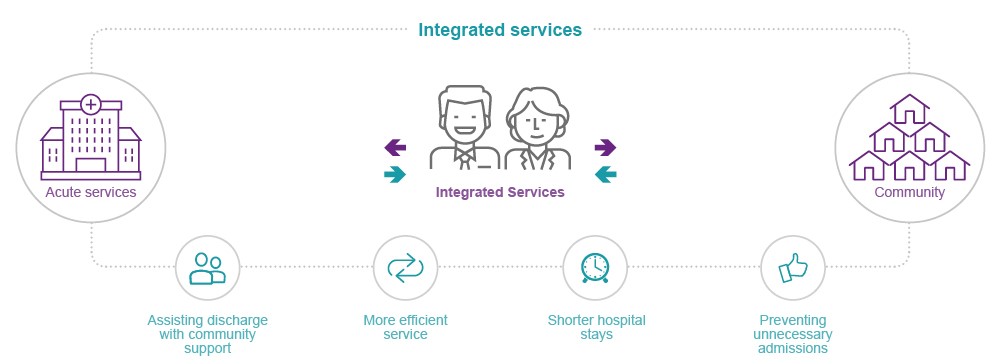
    Moving Forward Together – a Visual Representation

    Graphic representation of integrated services, showing the links between Acute and Community services.

    Was this helpful?

    Yes
    No
    Thanks for your feedback!

    This section has information on help available to improve your digital skills and confidence

    Supporting staff to be digitally literate is a high priority for NHSGGC. The new NHSGGC digital strategy Digital on Demand (2023-2028) acknowledges that staff need to be digitally literate and have the skills and confidence to be able to use technology to its fullest extent.

    The Digital Skills and Literacy Programme Hub is your one-stop resource for training, support, and guidance on healthcare applications from eHealth. It offers learning from basic computing skills to getting the best out of clinical applications ensuring all users can make the most of digital tools, with help available whenever needed to improve digital capabilities.

    You can find out more about digital accessibility tools on the NHSGGC e-health intranet site:

    Was this helpful?

    Yes
    No
    Thanks for your feedback!

    Why get online?

    Being online can help with:

    • Managing your health and being able to share experiences with people facing similar challenges
    • Accessing social networks online for support, guidance and friendship
    • Access to trusted information
    • Saving money on household bills and services by comparing different providers
    • Finding out what benefits/financial assistance you may be entitled to
    • Applying for and managing benefit
    • Attending virtual healthcare appointments

    Where to get Digital Support

    What sort of support is available?

    The organisations listed provide support to develop skills and confidence in using digital devices, as well as directing you to places where a digital device can be accessed if you do not have one.

    This includes support to:

    • Stay safe on line
    • Improve your skills and confidence
    • Access your local library for digital support and devices
    • Manage and apply for Benefits
    • Link in with Near Me video appointments
    • Use other online health and social care platforms, e.g. NHS Inform

    Digital access can benefit other aspects of your life e.g. online shopping, banking and staying in touch with friends and/or family.

    How to access support

    Libraries

    Libraries are places in communities to find trusted health and wellbeing information. The opening hours for libraries can be found on your Local Authority website.

    Connecting Scotland

    • Information and support on:
    • Choosing a device
    • Setting up a device and using the internet
    • Advice on cheapest broadband providers

    Website: Connecting Scotland – Citizens

    Local Authority areas

    Glasgow

    The Free Digital Support Helpline is available for anyone needing digital support. Contact them at:

    Phone: 0800 158 3974

    Website: Glasgow Life – Digital Skills

    Renfrewshire

    Renfrewshire libraries are able to offer digital support. Contact them at:

    Phone: 0300 300 1188

    Email: libraries@renfrewshire.gov.uk

    Website: Renfrewshire Libraries

    East Renfrewshire

    Contact the Community Hub:

    Phone: 0141 876 9555

    Email: hello@va-er.org.uk

    Website: East Renfrewshire Community Hub

    Inverclyde

    Contact Community Learning & Development:

    Phone: 01475 715450

    Email: CLD.Admin@inverclyde.gov.uk

    Website: Inverclyde Community Learning and Development

    West Dunbartonshire

    Contact Community Learning & Development:

    Phone: 01389 738775

    Email: CommunityLearning&Development@west-dunbarton.gov.uk

    East Dunbartonshire

    East Dunbartonshire libraries are able to offer digital support. Contact them at:

    Phone: 0141 777 3143

    Email: libraries@eastdunbarton.gov.uk

    Website: Library locations and opening hours | EDLC

    Discover Digital – Support for Health, Care and Wellbeing

    The Alliance ( the national third sector intermediary for health and social care) produced this guide to support people to develop their skills, knowledge and confidence in using digital tools to support Health and Wellbeing.

    Talking about trust in digital health

    The Mhor Collective have produced a video to help you understand trust and safety when using a digital health website.

    Find out more about the Mhor Collective and the human rights approach to digital health:

    How to save money on digital services

    Broadband Social tariffs

    With the cost of living hitting hard, many people are looking at ways to save money.

    Social tariffs are cheaper broadband packages that are affordable to people on low incomes.

    If you are claiming Universal Credit, Pension Credit and some other benefits, you may be able to get cheaper broadband.

    If your provider offers this it is free to switch and the price won’t go up mid contract.

    The Office of Communications has a page dedicated to social tariffs which include pricing examples, with social tariffs starting from £12 per month with a line rental included.

    Click the link below to see if your provider offers a social tariff and how to apply for this.

    Cheaper broadband and phone packages – Ofcom

    If you do not currently have Broadband or a Digital device, your local Library offers free Wi-Fi and many have devices you can use.

    The National Databank and Device Banks

    The Good Things Foundation are a charity whose one aim is to fix the digital divide for good.

    There are 3 aspects that help the Good Things Foundation to deliver this:

    1. National Device Bank– This is delivered through community partners and provides a refurbished device alongside mobile internet access. More information can be found here:National Device Bank – Good Things Foundation
    2. National Data Bank – This is provides free mobile data, texts and calls to people in need via the Good Things Foundation network of local community partners, in partnership with Virgin Media 02, Vodafone and Three. This is like a ‘food bank’ but for internet connectivity data. More information ca be found here: National Databank – Good Things Foundation
    3. Network – This is made up of thousands of community partners across the UK. They help people gain the support and skills they need to change their lives and overcome social challenges. More information can be found here: Our network – Good Things Foundation

    Near Me – Video Consultation Service

    Many of us used video calling on our phones, tablets and laptops during the Covid-19 pandemic to keep in touch with friends and relatives. You can now also attend some health care appointments in the same way.

    Near Me is a video consulting service that enables you to attend some health care appointments from the comfort and convenience of home or other suitable location. The technology is safe and secure and is being used by many of our services. Near me is for pre-arranged appointments and your health care professional will provide you with the relevant information if a video consultation is offered.

    Why use Near Me?

    There are many benefits to video consultations including:

    · No travelling time, parking worries or public transport issues

    · No fares required for travelling

    · Being in your own home is more relaxing than a clinic environment

    · Less time out of your day

    · Easier to have a family member or carer attend with you

    · Reduced exposure to inclement weather

    · Reduced exposure to infectious diseases

    How do I use Near Me?

    To use Near Me you will need a reliable internet connection; broadband or 3G/4G, and a suitable device for making video calls such as a smartphone, tablet, laptop or computer with webcam and speaker

    Please use a WiFi connection for your call whenever possible. We want to make you aware that a 20 minute consultation will use approximately 230MB of mobile data. If you are on a limited mobile data plan this may cause you to exceed your permitted usage allowance.

    The service is best accessed using the Google Chrome web browser on a PC or Safari on Mac (webcam required), or on an Android or Apple smartphone. You can find more information on the Near me website including how to make a test call.

    What services can I access?

    Many of our hospital and outpatient services are now using Near Me. Your GP services will also be able to offer you a Near Me appointment.

    Your health care professional or clinician will advise you when your appointment is being arranged.

    What if I don’t have a digital device and/or broadband and can’t access Near Me at home?

    There are some Libraries across the Board area where a private room is available for Near Me. This will be rolling out further this year and an updated list of available Libraries can be found here.

    Watch the video below to find out more about this service.

    Patients in and around Johnstone can book a ‘Near Me’ space for virtual video consultation at Johnstone Library by phoning 0300 300 1188.

    Patients in and around Paisley can can now book a ‘Near Me’ space for virtual video consultation at Ferguslie Library by phoning 0300 300 1188.

    Near Me is used across NHSGGC and both Johnstone Library and Ferguslie Library provides a safe alternative to home and can support people at risk of digital exclusion. Patients have access to a private and confidential space with Library staff available to support patients with digital literacy needs.

    Johnstone Library and Ferguslie Library provides a venue for ‘Near Me’ which allows patients to access the help they need without having to travel a significant distance from home.

    What our staff and service users have said about Near Me

    Our Podiatry service has been using Near me and has produced an evaluation of the experiences of patients and staff summarised in this infographic (pdf)

    Resources

    Was this helpful?

    Yes
    No
    Thanks for your feedback!

    Thank you for visiting our Pride Pledge page.

    Over 9,200 of our staff have made the pledge and are wearing the badge with pride!

    The NHS Scotland Pride Badge promotes inclusion for LGBTQ+ people and makes a statement that there’s no place for discrimination in NHS Scotland.

    An NHS staff member who wears the badge is pledging to –

    • be aware of and responsive to issues faced by LGBTQ+ people accessing care
    • be a friendly, listening ally who staff and service users can safely approach
    • use inclusive language and respect identity

    Please note that all badges have now been distributed and the campaign has now ended. Support information and contacts are available below. You can also contact us at equality@ggc.scot.nhs.uk for further information on NHSGGC’s work in this area and access to additional resources.

    Local support

    Some people may be having a particularly tough time and may disclose to you that they have experienced hate crime on the grounds of their LGBTQ+ identity.  It’s important that you know there are supports in place for people to report this type of crime and that it can be reported easily.  More information on reporting a hate crime is available from the Police Scotland website.

    You may be approached by colleagues who discloses they are experiencing discrimination in the workplace from colleagues or service users and would like support to deal with it.  Our HR Department is on stand-by to support any employee who feels they are being victimised or bullied because of their identity.  More information is available on the HR Support and Advice Unit page.

    NHSGGC has supported the development of Staff Forums representing the voice of our BME, Disabled and LGBTQ+ staff.  Please support the Forum membership by signposting anyone interested in joining.  More information is available on our Staff Forums page.

    Was this helpful?

    Yes
    No
    Thanks for your feedback!
    Shqip (Albanian)

    Ne mund të përkthejmë çdo informacion tonë në gjuhën e zgjedhjes suaj. Thjesht pyesni një anëtar të stafit ose na kontaktoni në numrin e telefonit të dhënë në letrën ose informacionin që keni marrë. Mund të na telefononi duke përdorur shërbimin telefonik.

    Si të telefononi shërbimet tona duke përdorur një përkthyes

    Gjithashtu mund të kërkoni informacion në formate të tjera, si shkrim i madh, lexim i thjeshtë, audio, braille dhe Gjuhën e Shenjave të Britanisë.

    አማርኛ (Amharic)

    ማንኛውንም መረጃ ወደ እርስዎ የመረጡት ቋንቋ መተርጎም እንችላለን። የሰራተኛ አባልን ብቻ ይጠይቁ ወይም በተቀበሉት ደብዳቤ ወይም መረጃ ላይ በተጠቀሰው ስልክ ቁጥር ያግኙን። የስልክ አስተርጓሚ አገልግሎታችንን በመጠቀም ሊደውሉልን ይችላሉ።

    አስተርጓሚ በመጠቀም ወደ አገልግሎታችን እንዴት እንደሚደውሉ

    እንዲሁም እንደ ትልቅ ህትመት፣ ለማንበብ ቀላል፣ ኦዲዮ፣ ብሬይል እና የብሪቲሽ የምልክት ቋንቋ ባሉ ሌሎች ቅርጸቶች መረጃ መጠየቅ ይችላሉ።

    العربية (Arabic)

    يمكننا ترجمة أي من معلوماتنا إلى اللغة التي اخترتها. ما عليك سوى سؤال أحد أعضاء فريق العمل أو الاتصال بنا على رقم الهاتف المذكور في الرسالة أو المعلومات التي تلقيتها. يمكنك الاتصال بنا باستخدام خدمة الترجمة الهاتفية لدينا

    كيفية إجراء مكالمة إلى خدماتنا باستخدام مترجم

    يمكنك أيضًا طلب الحصول على المعلومات بأشكال أخرى، مثل الحروف الكبيرة، أو النصوص المبسطة، أو التسجيلات الصوتية، أو لغة برايل، أو لغة الإشارة البريطانية.

    বাংলা – Bengali

    আমরা আমাদের যেকোনো তথ্য আপনার পছন্দের ভাষায় অনুবাদ করতে পারি। শুধুমাত্র কর্মীদের একজন সদস্যের সাথে যোগাযোগ করুন অথবা আপনার প্রাপ্ত চিঠি বা তথ্যে প্রদত্ত টেলিফোন নম্বরে আমাদের সাথে যোগাযোগ করুন। আপনি আমাদের টেলিফোন দোভাষী পরিষেবা ব্যবহার করে আমাদের সাথে যোগাযোগ করতে পারেন।

    দোভাষীর সাহায্যে আমাদের পরিষেবাগুলিতে কীভাবে কল করবেন

    এছাড়াও আপনি অন্যান্য মাধ্যমেও তথ্য চাইতে পারেন, যেমন—বড় লেখা, সহজপাঠ্য, অডিও, ব্রেইল এবং ব্রিটিশ সাংকেতিক ভাষা।

    Български (Bulgarian)

    Можем да преведем цялата Ваша информация на езика, който предпочитате. Попитайте член от медицинския екип или се свържете с нас на телефона, посочен в писмото или листовката с информация, които сте получили. Можете да се обадите по телефона като се възползвате от услугата от преводач по телефона, която предлагаме.

    Как да се свържете с нас по телефона чрез преводач

    Можете също така да поискате информация в други формати, като например с едър шрифт, в улеснен за четене вариант, в аудио формат, на брайлов шрифт и на британски жестомимичен език.

    繁體中文 (Cantonese/Traditional Chinese)

    我們可以將我們的任何資訊翻譯成您所選擇的語言。您只需向我們的工作人員查詢,或致電您在信件或資訊中看到的電話號碼以便聯絡我們。您也可以使用我們的電話傳譯服務致電給我們。

    如何使用傳譯員來致電我們的服務

    你亦可以要求以其他格式提供資料,例如大字版、易讀版本、音頻、點字和英國手語。

    Cesky (Czech)

    Veškeré naše informace můžeme přeložit do vámi zvoleného jazyka. Stačí požádat zaměstnance nebo nás kontaktovat na telefonním čísle uvedeném v dopise nebo informacích, které jste obdrželi. Můžete nám zavolat a využít naši službu telefonického tlumočení.

    Jak zavolat na naše služby s podporou tlumočníka

    Můžete také požádat o informace v jiných formátech, jako je velké písmo, snadno čitelná verze, audio, Braillovo písmo a britský znakový jazyk.

    دری (Dari)

    چگونه با استفاده از ترجمان با خدمات خود تماس بگیریم ما می توانیم هر یک از معلومات خود را به زبان که شما انتخاب کردید ترجمه کنیم. فقط از یکی از کارکنان بپرسید یا با شماره تلیفون ارائه شده در نامه یا معلومات که دریافت کرده اید با ما تماس بگیرید. می توانید با استفاده از خدمات ترجمه تلیفونی ما با ما تماس بگیرید.

    چگونه با استفاده از ترجمان با خدمات خود تماس بگیریم

    شما همچنان می‌توانید معلومات را در قالب‌های دیگر نیز درخواست کنید، مانند چاپ بزرگ، متن ساده و قابل فهم، فایل صوتی، بریل و زبان اشارهٔ بریتانوی.

    English

    We can translate any of our information into your chosen language. Just ask a member of staff or contact us on the telephone number provided on the letter or information you have received. You can call us using our telephone interpreting service.

    How to Make a Call Using an Interpreter (English translation for information)

    You can also ask for information in other formats, such as large print, easy read, audio, braille and British Sign Language.

    Staff should request information in alternative languages and formats via the Clear to All web page.

    برای ساخت (Farsi)

    ما می‌توانیم هر کدام از اطلاعات مان را به زبان مورد نظرتان ترجمه کنیم. کافی است با یکی از کارکنان صحبت کنید یا با شماره تلفنی که در نامه یا اطلاعات ارائه‌شده ذکر شده است تماس بگیرید. همچنین می‌توانید از خدمات ترجمه تلفنی ما برای تماس استفاده کنید.م

    چگونه با استفاده از مترجم با ما تماس بگیرید.

    شما همچنین می‌توانید درخواست دریافت اطلاعات در قالب‌های دیگر مانند چاپ درشت، متن ساده، صوتی، بریل و زبان اشارهٔ بریتانیایی (British Sign Language) را داشته باشید.

    Français (French)

    Nous pouvons également traduire l’ensemble de nos informations dans la langue de votre choix. Il vous suffit de demander à un membre du personnel ou de nous contacter par téléphone au numéro indiqué sur la lettre ou l’information que vous avez reçue. Vous pouvez aussi nous appeler grâce à notre service d’interprétation par téléphone.

    Comment appeler nos services avec un interprète

    Vous pouvez également demander des informations dans d’autres formats, comme des caractères agrandis, une version simplifiée, un enregistrement audio, le braille ou la langue des signes britannique.

    ქართული – Georgian

    ჩვენ შეგვიძლია, გითარგმნოთ ჩვენი ნებისმიერი სახის ინფორმაცია თქვენ მიერ არჩეულ ენაზე. ამისთვის სთხოვეთ ჩვენს მომსახურე პერსონალს ან დაგვიკავშირდით ტელეფონის ნომერზე, რომელიც თან ახლავს თქვენთან გამოგზავნილ წერილს ან ინფორმაციას. თქვენ შეგიძლიათ, დაგვირეკოთ ჩვენი სატელეფონო თარჯიმნის მომსახურების გამოყენებით.

    როგორ დავრეკოთ ჩვენს სერვისებზე თარჯიმნის დახმარებით

    თქვენ ასევე შეგიძლიათ მოითხოვოთ ინფორმაცია სხვა ფორმატში, როგორიცაა:  დიდი შრიფტი, მარტივად წასაკითხი ან აუდიო ვერსია, ბრაილის შრიფტი და ბრიტანული ჟესტური ენა.

    Ελληνικά (Greek)

    Μπορούμε να μεταφράσουμε οποιαδήποτε από τις πληροφορίες μας στη γλώσσα της επιλογής σας. Απλώς ρωτήστε ένα μέλος του προσωπικού ή επικοινωνήστε μαζί μας στον αριθμό τηλεφώνου που παρέχεται στην επιστολή ή στις πληροφορίες που έχετε λάβει. Μπορείτε να μας καλέσετε χρησιμοποιώντας την υπηρεσία τηλεφωνικής διερμηνείας.

    Πώς να καλέσετε τις υπηρεσίες μας χρησιμοποιώντας διερμηνέα

    Μπορείτε επίσης να ζητήσετε πληροφορίες σε άλλες μορφές, όπως έντυπο με μεγάλα γράμματα, εύκολα αναγνώσιμη μορφή, ηχητικό αρχείο, σε γραφή Μπράιγ και Βρετανική Νοηματική Γλώσσα.

    हिंदी (Hindi)

    हम अपनी किसी भी जानकारी का अनुवाद आपकी चुनी हुई भाषा में कर सकते हैं। बस स्टाफ के किसी सदस्य से अनुरोध करें या पत्र या आपको प्राप्त हुई जानकारी पर दिए गए टेलीफोन नंबर पर हमसे संपर्क करें। आप हमारी टेलीफोन अनुवाद सेवा का उपयोग करके हमें कॉल कर सकते हैं।

    एक दुभाषिया (इंटरप्रेटर) का उपयोग करके हमारी सेवाओं के लिए कॉल कैसे करें

    आप दूसरे फ़ॉर्मैट में भी जानकारी मांग सकते हैं, जैसे बड़े प्रिंट, आसानी से पढ़े जाने वाले (इज़ी रीड़), ऑडियो, ब्रेल और ब्रिटिश साइन लैंग्वेज।

    Maygar (Hungarian)

    Bármely információnk lefordítható az Ön által kiválasztott nyelvre. Csupán kérje meg az egyik munkatársunkat vagy lépjen velünk kapcsolatba a levélben megadott telefonszámon vagy a kapott információ alapján. A híváshoz igénybe veheti telefonos tolmácsszolgálatunkat.

    Hogyan léphet kapcsolatba velünk tolmács segítségével

    Egyéb formátumban is kérhet információt, mint például nagy betűvel írott, egyszerű nyelvezetű, hanganyag, Braille-írás vagy brit jelnyelv.

    Italiano (Italian)

    Possiamo tradurre qualsiasi informazione nella lingua da te scelta. Basta chiedere a un membro dello staff o contattarci al numero di telefono indicato sulla lettera o sulle informazioni che hai ricevuto. Puoi chiamarci utilizzando il nostro servizio di interpretariato telefonico.

    Come effettuare una chiamata ai nostri servizi utilizzando un interprete

    È inoltre possibile richiedere informazioni in altri formati, come caratteri grandi, testo semplificato, audio, braille e lingua dei segni britannica.

    Krio

    Wi kin translat eni ɔf wɛ infɔmɛshɔn intɔ ani lɛŋgwij wae yɔu chɔs. Jɔs ask wan mɛmba ɔf di staf ɔr kɔntakt wi na di tɛlɛfɔn nɔmbɔ wae dem don prɔvaid na di lɛta ɔr infɔmɛshɔn wae yɔu dɔn rɛsiv. Yɔu kin kɔl wi wae yɔu go usɛ wɛ tɛlɛfɔn intɛrprɛtin sɛrvɪs.

    Hɔw fɔ mek wan kɔl na wɛ savis wae yɔu go usɛ intɛrprɛta

    Yu kin aks fɔ infɔmeshɔn bak insay ɔda fɔmat dɛn, lɛk big print, izi rid, odio, brel ɛn British Sayn Langwej.

    کوردی (Kurdish)

    دەتوانین هەر زانیاریەکمان وەربگێڕین بۆ زمانی هەڵبژاردەی تۆ. بەتەنها داوا بکە لەئەندامێکی ستاف یاخود پەیوەندیمان پێوەبکە بەو ژمارە تەلەفۆنەی کەلەسەر نامەکەیە یاخود لەسەر ئەو زانیاریەیە کە تۆ بەدەستت گەشتوە. دەتوانیت تەلەفۆنمان بۆ بکەیت لەڕێی بەکارهێنانی خزمەتگوزاری وەرگێڕانی سەر تەلەفۆنمان.

    چۆن تەلەفۆن دەکەیت بۆ خزمەتگوزاریەکەمان لەڕێی بەکارهێنانی وەرگێڕێکەوە

    هەروەها دەشتوانیت داوای زانیاری بکەیت بە فۆرماتێکی دیکە، وەک چاپی گەورە، خوێندنەوەی ئاسان، دەنگی، زمانی نابینایان و زمانی ئاماژەی بەریتانی.

    Latvian ( Latviešu)

    Mēs varam tulkot jebkuru mūsu informāciju jūsu izvēlētajā valodā. Vienkārši jautājiet darbiniekam vai sazinieties ar mums pa tālruņa numuru, kas norādīts uz saņemtās vēstules vai informācijas. Jūs varat piezvanīt mums, izmantojot tulkošanas pa tālruni pakalpojumu.

    Kā piezvanīt mūsu dienestiem, izmantojot tulka pakalpojumus

    Jūs varat pieprasīt informāciju arī citos formātos, piemēram, lielā drukā, viegli lasāmā drukā, audio formātā, Braila rakstā un britu zīmju valodā.

    Lingala – Lingála

    Tokoki kobongola ba nsango na biso nyonso oyo tozali na yango na monoko oyo oponi. Tuna kaka mosali moko to benga biso na nimero ya telefone oyo epesami na mokanda to na sango oyo ozwi. Tosengi yo ozala na bonsomi ya kobenga biso na lisalisi ya interprete na biso na telefone.

    Ndenge nini ya kobenga na ba services na biso mpe kosalela interprete

    Okoki mpe kosenga ba informations oyo  na lolenge mosusu, na ndakisa ya makomi ya minene, pona kotanga malamu , to mpe na audio, to mpe lisusu elimboleli ya ba signe ya Grande-Bretagne.

    lietuvių – Lithuanian

    Mes galime išversti bet kokią informaciją į jūsų pasirinktą kalbą. Tiesiog teiraukitės darbuotojo arba susisiekite su mumis telefono numeriu, nurodytu laiške ar gautoje informacijoje. Galite mums paskambinti naudodamiesi vertimo žodžiu paslauga telefonu.

    Kaip paskambinti į mūsų paslaugas naudojant vertėją

    Taip pat galite paprašyti informacijos kitomis formomis, pavyzdžiui, didelėmis raidėmis, lengvai suprantama kalba, garso įrašu, Brailio raštu ir Britanijos gestų kalba.

    简体中文 (Mandarin)

    我们可以将任何信息翻译成您选择的语言。您只需询问我们的工作人员,或拨打您收到的信件或信息上提供的电话号码联系我们。您可以使用我们的电话口译服务与我们联系。

    如何通过口译员拨打我们的服务电话

    您还可以要求提供其他格式的信息,例如大字印刷、简易阅读、音频、盲文和英国手语。

    Afaan Oromoo (Oromo)

    Odeeffannoo keessan kamiyyuu afaan filattaniin hiikuu dandeenya. Hojjetaa miseensaa ta’e gaafachuudhaan ykn lakkoofsa bilbilaa xalayaa ykn odeeffannoo isin qaqqabe irratti kennameen nu qunnamaa. Tajaajila hiikkaa bilbilaa keenya fayyadamuun nuu bilbiluu dandeessu.

    Turjumaana fayyadamuudhaan akkamitti gara tajaajila keenyaatti bilbiluu akka dandeenyu

    Akkasumas odeeffannoo bifa birootiin, kan akka maxxansa guddaa, dubbisa salphaa, sagalee, bireelii fi Afaan Mallattoo Birititeeniin gaafachuu dandeessu.

    پښتو (Pashto)

    موږ کولی شو خپل هر ډول معلومات ستاسو په غوره شوې ژبه وژباړو. یوازې د کارمندانو څخه پوښتنه وکړئ یا زموږ سره په هغه ټلیفون شمیره اړیکه ونیسئ چې په لیک یا معلوماتو کې ورکړل شوي ده چې تاسو ترلاسه کړي ده. تاسو کولی شئ زموږ د ټلیفون ژباړې خدماتو په کارولو سره موږ ته زنګ ووهئ.

    څنګه د ژباړونکي په کارولو سره موږ خپل خدماتو ته زنګ ووهو.

    تاسو کولی شئ معلومات په نورو بڼو هم وغواړئ، لکه په لویو تورو لیکنه، اسانه لوست متن، غږیزه بڼه، بریل او د برتانیا اشاروي ژبه.

    Polski (Polish)

    Oferujemy możliwość przetłumaczenia wszelkich udostępnianych przez nas informacji na wybrany przez Ciebie język. Wystarczy, że poprosisz o to jednego z naszych pracowników lub skontaktujesz się z nami pod numerem telefonu podanym na otrzymanym liście lub innym dokumencie. Możesz do nas zadzwonić, korzystając z naszej usługi tłumaczenia telefonicznego.

    W jaki sposób nawiązać połączenie telefoniczne, aby skontaktować się z naszymi usługami korzystając z pomocy tłumacza ustnego

    Możesz także poprosić o informacje w innych formatach, takich jak duży druk, łatwy do czytania tekst, nagranie audio, w alfabecie Braille’a lub brytyjskim języku migowym.

    Português (Portuguese)

    Podemos traduzir qualquer uma das nossas informações para a língua que desejar. Para tal, basta perguntar a um membro da equipa ou contactar-nos através do número de telefone indicado na carta ou na informação que recebeu. Pode também contactar-nos através do nosso serviço de interpretação telefónica.

    Como telefonar para os nossos serviços utilizando um intérprete

    Também pode solicitar informações em outros formatos, como letra grande, leitura facilitada, áudio, braille ou língua gestual britânica.

    ਪੰਜਾਬੀ (Punjabi)

    ਅਸੀਂ ਤੁਹਾਡੀ ਚੁਣੀ ਹੋਈ ਭਾਸ਼ਾ ਵਿੱਚ ਆਪਣੀ ਕਿਸੇ ਵੀ ਜਾਣਕਾਰੀ ਦਾ ਅਨੁਵਾਦ ਕਰ ਸਕਦੇ ਹਾਂ। ਬਸ ਸਟਾਫ ਦੇ ਕਿਸੇ ਮੈਂਬਰ ਨੂੰ ਪੁੱਛੋ ਜਾਂ ਤੁਹਾਨੂੰ ਪ੍ਰਾਪਤ ਹੋਈ ਚਿੱਠੀ ਜਾਂ ਜਾਣਕਾਰੀ ‘ਤੇ ਦਿੱਤੇ ਗਏ ਟੈਲੀਫ਼ੋਨ ਨੰਬਰ ‘ਤੇ ਸਾਡੇ ਨਾਲ ਸੰਪਰਕ ਕਰੋ। ਤੁਸੀਂ ਸਾਡੇ ਟੈਲੀਫ਼ੋਨ ਅਨੁਵਾਦ ਸੇਵਾ ਦੀ ਵਰਤੋਂ ਕਰਕੇ ਸਾਨੂੰ ਕਾਲ ਕਰ ਸਕਦੇ ਹੋ।

    ਇਕ ਅਨੁਵਾਦਕ (ਇੰਟਰਪ੍ਰੇਟਰ) ਦੀ ਮਦਦ ਨਾਲ ਸਾਡੀ ਸੇਵਾ ਨੂੰ ਕਾਲ ਕਿਵੇਂ ਕਰਨੀ ਹੈ

    ਤੁਸੀਂ ਜਾਣਕਾਰੀ ਹੋਰ ਫਾਰਮੈਟਾਂ ਵਿੱਚ ਵੀ ਮੰਗ ਸਕਦੇ ਹੋ, ਜਿਵੇਂ ਕਿ ਵੱਡੇ ਅੱਖਰਾਂ ਵਿੱਚ ਲਿਖਤ, ਆਸਾਨ ਪੜ੍ਹਨ ਵਾਲਾ ਰੂਪ, ਆਡੀਓ, ਬ੍ਰੇਲ ਅਤੇ ਬ੍ਰਿਟਿਸ਼ ਸਾਇਨ ਲੈਂਗਵੇਜ।

    Română (Romanian)

    Putem traduce oricare dintre informațiile noastre în limba aleasă de dvs. Trebuie doar să întrebați un membru al personalului sau să ne contactați la numărul de telefon indicat pe scrisoarea sau informațiile pe care le-ați primit. Ne puteți suna folosind serviciul nostru de interpretariat telefonic.

    Cum să efectuați un apel către serviciile noastre folosind un interpret

    De asemenea, puteți solicita informații și în alte formate, cum ar fi tipar cu caractere mari, versiune ușor de citit, format audio, braille și limbajul semnelor britanic.

    Русский (Russian)

    Мы можем перевести любую информацию на ваш выбранный язык. Просто обратитесь к сотруднику или свяжитесь с нами по телефону, указанному в письме или предоставленных материалах. Вы также можете позвонить нам, используя нашу услугу телефонного перевода.


    Как позвонить в наши службы с помощью переводчика

    Вы также можете запросить информацию в других форматах, таких как крупный шрифт, упрощенный текст, аудиоверсия, шрифт Брайля и британский язык жестов.

    සිංහල – Sinhalese

    ඔබ විසින් තෝරාගනු ලබන භාෂාවකින් අපගේ ඕනෑම තොරතුරක් ඔබට පරිවර්තනය කිරීමේ හැතියාව ඇත. අපගේ නිලධාරියෙකුගෙන් විමසීම මගින් හෝ අදාළ ලිපියේ හෝ ඔබට ලැබී ඇති තොරතුර හි දක්වා ඇති දුරකථන අංකය මගින් අපගේ භාෂණ පරිවර්තන සේවාව ඔස්සේ අප ඇමතීමේ හැකියාව පවතියි.


    භාෂණ පරිවර්තකවරයෙකු භාවිතා කරමින් අප සේවාව හා සම්බන්ධවන්නේ කෙසේ ද 

    ඔබට විශාල මුද්‍රිත පිටපත්, පහසුවෙන් කියවිය හැකි පිටපත්, ශ්‍රව්‍ය, බ්‍රේල් සහ බ්‍රිතාන්‍ය සංඥා භාෂාව වැනි වෙනත් ආකෘතිවලින් ද තොරතුරු ඉල්ලා සිටිය හැකිය.

    Slovensky (Slovakian)

    Všetky naše informácie môžeme preložiť do vami zvoleného jazyka. Stačí požiadať zamestnanca alebo nás kontaktovať na telefónnom čísle uvedenom v liste alebo informáciách, ktoré ste dostali. Môžete nám zavolať prostredníctvom našej služby telefonického tlmočenia.


    Ako zavolať na naše služby s pomocou tlmočníka

    Môžete tiež požiadať o informácie v iných formátoch, ako je veľké písmo, ľahko čitateľná verzia, audio, Braillovo písmo a britský posunkový jazyk.

    Soomaali (Somali)

    Waxaan turjumi karnaa mid kasta oo ka mid ah macluumaadkaaga luqadda aad dooratay. Kaliya weydii xubin ka mid ah shaqaalaha ama nagala soo xiriir lambarka taleefanka ee ku yaal warqadda ama macluumaadka aad heshay. Waxaad nagala soo wici kartaa adiga oo isticmaalaya adeegayaga turjumaada telefoonka.


    Sida loo waco adeegyadeena adigoo adeegsanayna turjumaan

    Waxaad sidoo kale codsan kartaa macluumaadka qaabab kale, sida far waaweyn, qoraal fudud, cod, braille (hab qoraal oo taabasho ah oo dadka aragga naafada ka ah isticmaalaan) iyo Luqadda Calaamadaha Ingiriiska (BSL).

    Español (Spanish)

    Podemos traducir cualquier información a su idioma preferido. Pregúntale a un miembro del personal o póngase en contacto con nosotros en el número de teléfono que figura en la carta o en la información que ha recibido. Nos puede contactar a través de nuestro servicio de interpretación telefónica.


    Cómo hacer una llamada a nuestros servicios con un intérprete

    También puede solicitar información en otros formatos, como letra grande, texto de fácil lectura, audio, braille y lengua de signos británica.

    Kiswahili (Swahili)

    Tunaweza kutafsiri taarifa zetu zozote katika lugha uliyochagua. Uliza tu mfanyikazi au wasiliana nasi kwa nambari ya simu iliyotolewa kwenye barua au habari uliyopokea. Unaweza kutupigia simu kwa kutumia huduma yetu ya ukalimani ya simu.


    Jinsi ya kupiga simu kwa huduma zetu kwa kutumia mkalimani

    Pia, unaweza kupata maelezo haya kwa namna nyingine kulingana na mahitaji yako, kama vile maandishi makubwa, lugha rahisi, sauti, braille, na  British Sign Language.

    தமிழ் (Tamil)

    எங்களின் எந்தத் தகவலையும் நீங்கள் தேர்ந்தெடுத்த மொழியில் மொழிபெயர்க்கலாம். ஊழியர் ஒருவரிடம் கேளுங்கள் அல்லது நீங்கள் பெற்ற கடிதம் அல்லது தகவலில் வழங்கப்பட்ட தொலைபேசி எண்ணில் எங்களைத் தொடர்பு கொள்ளுங்கள். எங்கள் தொலைபேசி மொழியாக்க சேவையைப் பயன்படுத்தி நீங்கள் எங்களை அழைக்கலாம்.


    மொழிபெயர்ப்பாளரைப் பயன்படுத்தி எங்கள் சேவைகளுக்கு எப்படி அழைப்பது

    பெரிய எழுத்து, எளிதாகப் படிக்கும் வடிவம், ஒலி வடிவம், பிரெய்ல் மற்றும் பிரிட்டிஷ் சைகை மொழி போன்ற பிற வடிவங்களிலும் நீங்கள் தகவல்களைக் கேட்டுப் பெறலாம்.

    ትግርኛ (Tigrinya)

    ዝኾነ ሓበሬታና ናብቲ ዝመረጽኩሞ ቋንቋ ክንትርጉሞ ንኽእል ኢና። ንሓደ ኣባል ሰራሕተኛ ጥራይ ሕተት ወይ በቲ ኣብቲ ዝረኸብካዮ ደብዳበ ወይ ሓበሬታ ብዝተዋህበ ቁጽሪ ተሌፎን ርኸበና። ናይ ቴሌፎን ተርጓሚ ኣገልግሎትና ተጠቒምኩም ክትድውሉልና ትኽእሉ ኢኹም።


    ከመይ ጌርና ናብ ኣገልግሎትና ተርጓሚ ተጠቂምና ክንድዉል ንኽእል

    ብተወሳኺ ብኻልእ ዓይነታት ሓበሬታ ክትሓትት ትኽእል ኢኻ፣ ከም ዓቢ ጽሑፍ፣ ብቀሊል ዝንበብ፣ ብድምጺ፣ ብሬይል ን ብቋንቋ ምልክት እንግሊዝን።

    Türkçe (Turkish)

    Herhangi bir bilgimizi seçtiğiniz dile çevirebiliriz. Sadece bir personelden yardım isteyin veya size verilen mektupta ya da bilgilendirme belgelerinde yer alan telefon numarasından bizimle iletişime geçin. Telefon tercüme hizmetimizi kullanarak bizi arayabilirsiniz.


    Bir tercüman kullanarak hizmetlerimizi arama yapma yöntemi 

    Українська (Ukrainian)

    Ми можемо перекласти будь-яку нашу інформацію на вибрану вами мову. Просто попросіть нашого співробітника або зв’яжіться з нами за номером телефону, вказаним на листі або в отриманій вами інформації. Ви можете зателефонувати нам, скориставшись послугою телефонного перекладу.


    Як зателефонувати до наших служб за допомогою перекладача 

    Bilgileri büyük yazı, kolay okunabilir format, ses kaydı, Braille alfabesi ve Britanya İşaret Dili gibi diğer formatlarda da talep edebilirsiniz.

    Ви також можете попросити інформацію в інших форматах, наприклад, великий шрифт, просте читання, аудіо, Брайль та британська жестова мова.

    اردو – Urdu

    ہم آپ کی منتخب کردہ زبان میں اپنی کسی بھی معلومات کا ترجمہ کر سکتے ہیں۔ بس عملے کے کسی رکن سے درخواست کریں یا آپ کو موصول ہونے والے خط یا معلومات پر فراہم کردہ ٹیلیفون نمبر پر ہم سے رابطہ کریں۔ آپ ہماری ٹیلیفون ترجمانی سروس کا استعمال کرتے ہوئے ہمیں کال کر سکتے ہیں۔

    ایک مترجم کا استعمال کرکے ہماری خدمات پر کال کیسے کریں۔

    آپ معلومات دیگر صورتوں میں بھی حاصل کرنے کی درخواست کر سکتے ہیں، جیسے بڑے حروف، آسان مطالعہ، آڈیو، بریل اور برطانوی سائن لینگویج (اشاروں کی زبان)۔

    tiếng Việt (Vietnamese)

    Chúng tôi có thể dịch bất kỳ thông tin nào của chúng tôi sang ngôn ngữ bạn đã chọn. Chỉ cần hỏi nhân viên hoặc liên hệ với chúng tôi theo số điện thoại được cung cấp trong thư hoặc thông tin bạn đã nhận được. Bạn có thể gọi cho chúng tôi bằng dịch vụ thông dịch qua điện thoại của chúng tôi.


    Cách thực hiện cuộc gọi đến các dịch vụ của chúng tôi bằng thông dịch viên 

    Bạn cũng có thể yêu cầu thông tin ở các định dạng khác, chẳng hạn như chữ in lớn, bản dễ đọc, âm thanh, chữ nổi Braille và ngôn ngữ ký hiệu Anh.

    Yorùbá (Yoruba)

    A lè túmọ̀ èyíkéyìí nínú àwọn ìsọfúnni wa sí èdè tí o bá yàn. Kàn béèrè lọ́wọ́ òṣìṣẹ́ kan tàbí kí o kàn sí wa lóríi nọ́ḿbà ẹ̀rọ ìbánisọ̀rọ̀ tí ó wà nínú lẹ́tà tàbí ìsọfúnni tí o ti gbà. O lè pè wá nípasẹ̀ lílo iṣẹ́ ìtúmọ̀ èdè orí ẹ̀rọ ìbánisọ̀rọ̀ wa.


    Bí o ṣe lè pè sí àwọn iṣẹ́ wa nípasẹ̀ lílo atúmọ̀ èdè

    O tún lè béèrè fún ìsọfúnni ní àwọn ọ̀nà mìíràn, bíi títẹ̀wé ńlá, ìwé tí ó rọrùn láti kà, ohùn, braille àti èdè àwọn adití ti ilẹ̀ Gẹ̀ẹ́sì (British Sign Language).

    Was this helpful?

    Yes
    No
    Thanks for your feedback!