You may be discharged from hospital but admitted to the Virtual Hospital because your condition:
Requires ongoing monitoring or treatment
Can be safely managed at home
Does not require you to stay in hospital.
This approach allows you to recover in a more comfortable setting while still receiving high-quality care. It also allows us to free up hospital beds for patients who need them.
Contact Information
If you have a non-urgent concern: Contact the Virtual Hospital between 8.00am and 10.00pm, 7 days a week by calling 0800 652 1425. Your enquiry will be passed to a member of the clinical team for advice.
If you think it’s urgent but not life-threatening: Call NHS 24 on 111.
If you think your condition is life threatening: Go straight to your nearest A&E or call 999.
Was this helpful?
Yes
No
Thanks for your feedback!
What is the Virtual Hospital?
The Virtual Hospital (sometimes called a “Virtual Ward” or “Hospital at Home”) provides:
Ongoing monitoring by a clinical team (sometimes daily)
Advice and support when you need it
Access to specialist input if your condition changes.
You will remain under the care of a hospital team, even though you are at home.
Why would I be admitted to a Virtual Hospital?
You may be discharged from hospital but admitted to the Virtual Hospital because your condition:
Requires ongoing monitoring or treatment
Can be safely managed at home
Does not require you to stay in hospital.
This approach allows you to recover in a more comfortable setting while still receiving high-quality care. It also allows us to free up hospital beds for patients who need them.
How will my condition be monitored?
Depending on your needs, we may ask you to:
Check and record your observations (e.g. your temperature, pulse, oxygen levels)
Report symptoms or any concerns
Take medications as prescribed.
We will discuss everything with you before you are discharge from the ward.
Is this safe?
Yes. This option is only offered when your team feels it is safe for you to go home with the right advice and support. If you are unsure, please talk to us before you leave. We want you to feel confident before leaving the hospital.
Who will look after me?
Your care team will be made up by a number of people depending on your specific needs, but may include:
Nurses
Doctors
Advanced Practitioners
Allied health professionals (e.g. physiotherapy, pharmacy)
Administrative support staff.
What if I need special equipment?
If you need equipment such as:
Blood pressure monitor
Pulse oximeter to measure your oxygen levels
Thermometer to take your temperature.
We will provide them and explain how to use them safely.
Will my test/scan be delayed because I went home?
No. Your test is still prioritised and arranged as part of your hospital care.
Do I need to contact my GP?
No. This is organised through hospital services. Once complete, your GP will receive a copy of the results.
What will happen if I miss my appointment?
The team will contact you and discuss next steps.
Was this helpful?
Yes
No
Thanks for your feedback!
Read more on the pathways that affect you.
What is Discharge to Scan?
Discharge to Scan means you are well enough to go home, but you still need a CT or MRI scan to help your hospital team complete your care.
Instead of staying in hospital to wait for your scan, you can recover at home within our Virtual Hospital and return for your scan when your appointment is ready.
This helps you:
Get home sooner
Rest and recover in familiar surroundings
Avoid staying in hospital longer than you need to.
Why am I being offered this?
Your hospital team has checked that:
You are medically fit to leave hospital
It is safe for you to go home.
You have been offered Discharge to Scan because it is safe, planned and supported.
Remember ‘It’sOkay to Ask’. The hospital team will make sure you understand the Benefits, Risks, and Alternatives, including doing nothing (We call this BRAN).
What happens next?
Going home
Before you leave hospital, we will:
Explain why it is safe for you to go home
Talk through any symptoms to watch out for
Give you clear advice on who to contact if you feel unwell.
The team are happy to answer your questions. You should feel confident and informed about going home, before you leave the hospital.
Your scan appointment
After you go home:
The Virtual Hospital will contact you
The staff will book your scan
We will phone you with the appointment details
We may offer you an appointment at any hospital in NHS Greater Glasgow and Clyde. If you request a specific location, this may delay your scan
Most scans are arranged within 5-7 working days.
You do not need to phone to book the scan yourself. We will do this for you.
Coming back for your scan
On the day of your scan:
You will come into hospital just for the scan
The team will explain what will happen
You can usually go home after your scan.
Getting your results
After your scan:
The results will be reviewed with your hospital team
We will contact you with the results within a few days of your scan
Your referring clinician or hospital team will let you know if you need any follow up appointments or treatment.
What should I do while I’m at home?
While waiting for your scan:
Follow the advice given by your hospital team
Rest and recover as you normally would
Get help urgently if you feel worse.
Your hospital team will give you clear instructions on:
Which symptoms mean you should get help
Who to contact during the day
What to do out of hours.
If you are worried, do not wait for your scan appointment.
Contact Information
If you have a non-urgent concern: Contact the Virtual Hospital between 8.00am and 10.00pm, 7 days a week by calling 0800 652 1425. Your enquiry will be passed to a member of the clinical team for advice.
If you think it’s urgent but not life-threatening – Call NHS 24 on 111.
If you think it’s an emergency – Go straight to your nearest A&E or call 999.
Discharge to Virtual Review means you are well enough to go home, but you still need follow-up blood tests to help your hospital team complete your care.
Instead of staying in hospital to wait for your blood tests, you can recover at home within our Virtual Hospital and return for your blood tests when your appointment is ready.
This helps you:
Get home sooner
Rest and recover in familiar surroundings
Avoid staying in hospital longer than you need to.
Why am I being offered this?
Your hospital team has checked that:
You are medically fit to leave hospital
It is safe for you to go home
You still need monitoring (blood tests).
You have been offered Discharge to Virtual Review because it is safe, planned, and supported.
Remember ‘It’s Okay to Ask’, the hospital team will make sure you understand the Benefits, Risks, and Alternatives including doing nothing (We call this BRAN).
What happens next
Going home
Before you leave hospital, we will:
Explain why it is safe for you to go home
Talk through any symptoms to watch out for
Give you clear advice on who to contact if you feel unwell.
The team are happy to answer your questions, you should feel confident and informed about going home before you leave the hospital.
Your blood test appointment
After you go home:
The Virtual Hospital will contact you
The staff will book your blood test for you
We will phone you with the appointment details (date/time/location)
Appointments are usually arranged within a few days and up to one week depending on your clinical need.
You must be able to attend a clinic for your blood test as blood tests cannot currently be carried out at home.
Your Virtual Review
After your blood test:
A clinician will review your results
You will have a telephone or video consultation to discuss your care
The team will explain what will happen next:
If your results are reassuring, you may be discharged from the pathway
If further care is needed, your clinical team will explain the next steps.
What should I do while I’m at home?
While waiting for your appointment:
Follow the advice given by your hospital team Rest and recover as you normally would
Attend your blood test appointment as arranged Get help urgently if you feel worse.
Your hospital team will give you clear instructions on:
Which symptoms mean you should get help
Who to contact during the day
What to do out of hours.
If you are worried, do not wait for your appointment.
Contact Information
If you have a non-urgent concern: Contact the Virtual Hospital between 8.00am and 10.00pm, 7 days a week by calling 0800 652 1425. Your enquiry will be passed to a member of the clinical team for advice.
If you think it’s urgent but not life-threatening: Call NHS 24 on 111.
If you think your condition is life threatening: Go straight to your nearest A&E or call 999.
GP practices across NHSGGC are in the process of moving to a new GP IT system. This change is part of a wider programme to support a major computer upgrade that will see all practices across Scotland using the same GP IT system.
What does this mean for patients?
For most patients, there will be little or no long term change to how you access GP services. However, during the changeover period, there will likely be a difference in the services offered, and a reduced availability of appointments at your Practice, for approximately 10 days.
These may include:
Reduced appointment availability on specific days. Please only contact the practice if you require urgent medical assistance on the day
Changes to online services (such as appointment booking or ordering repeat prescriptions)
Delays in processing non‑urgent requests or paperwork
The Practice may continue to experience some challenges during the subsequent 2 to 3 months as it adjusts to operating services using the new system.
Your GP practice team will do everything they can to minimise disruption and continue to provide safe care.
When will I know if my GP Practice is undergoing this change?
GP Practices will look to contact all patients in advance with as much notice as possible. This page will also list the impacted GP Practices below.
If you have not been contacted or informed of any impact, this change has already happened or will happen in the future.
What does this mean for GP Practice Clinical & Administration teams?
This change represents a significant shift for clinical and administrative teams, who are adapting to new systems and processes while continuing to provide frontline care. Implementing a large‑scale change of this nature takes time, and staff are managing additional complexity as the new arrangements are introduced. We appreciate patients’ understanding during this period of transition.
What is not changing?
You will remain registered with your GP practice.
Urgent care will continue to be available as normal.
Your medical records will be transferred securely.
Routine appointments will be available again to book in the coming weeks.
What can patients do to help?
Contact your practice directly if you have urgent health concerns.
Continue to attend appointments as scheduled unless you are advised otherwise.
If you are due to order a prescription during this time, please submit your request early.
Use online services only as advised by your practice during this period.
Please be patient and understanding if there are short delays.
Thank you for your patience while this important work is carried out to improve GP IT systems for the future.
Timetable of impacted practices
05/08/2026
The Lennox Practice
The Vale Centre for Health, Main Street, Alexandria, G83 0UA
07/08/2026
Inchcruin Practice
The Vale Centre for Health, Main Street, Alexandria, G83 0UA
13/08/2026
Oakview Medical Practice
The Vale Centre for Health, Main Street, Alexandria, G83 0UA
19/08/2026
Ardgowan Medical Practice
2 Finnart Street, Greenock, PA16 8HW
26/08/2026
Loch Lomond Surgery
75 Bank Street, Alexandria, G83 0NB
27/08/2026
Purple Wing
Clydebank Health Centre, Queens Quay, Main Avenue, Clydebank, G81 1BS
Was this helpful?
Yes
No
Thanks for your feedback!
Primary Care is the front door to healthcare in NHS Greater Glasgow and Clyde, providing essential, first‑contact services to more than 1.3 million people across the region.
From GPs and community pharmacies to dental and optometry services, Primary Care plays a vital role in prevention, early intervention, and supporting people to access the right care, in the right place.
Our Primary Care Strategy outlines how we will continue to strengthen these services, improve access, reduce inequalities, and work collaboratively with partners and communities.
These publications have been produced in line with NHS Greater Glasgow and Clyde’s Accessible Information Guidelines. It is available in a range of formats and languages. Please contact us with your request.
If you would like a copy in another spoken language, please call 0141 201 4874 using our telephone interpreting service.
Primary Care Services
Read more about what Primary Care services can do for you and how to access them.
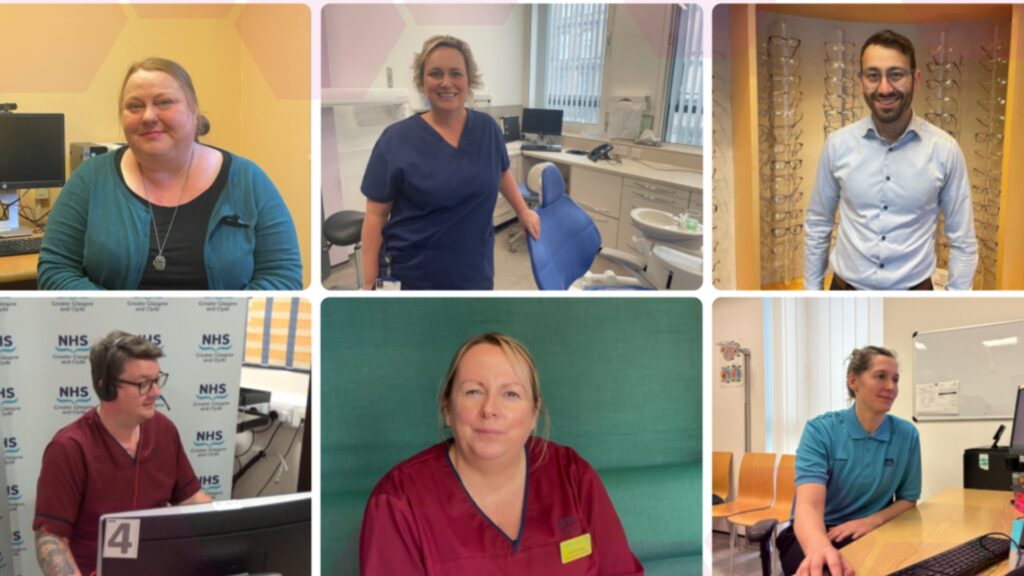
These professionals are part of your Primary Care team. To help you feel confident in seeking the right help, we’ve highlighted some of our NHS Greater Glasgow and Clyde Primary Care roles.
Click on each one below to learn more about their roles, how they can assist you, and how you can reach them.
Remember, it’s also important to utilise the resources available to you when you have a health concern. Before contacting any healthcare professional, consider using online resources, as your symptoms might be manageable at home. Helpful tools include symptom finder on NHS Inform and the NHS 24 app.
If you’re unwell and have a minor injury or illness, there are different options available for treatment and advice rather than going straight to A&E. These options could involve advice from home, or treatment which is often closer to you. This could also save you time, as waits at A&E can be long for conditions that aren’t life‑threatening.
A&E is there for serious or life‑threatening emergencies. If you think it may be an emergency, call 999 or go straight to A&E. If you’re unsure, you can get urgent advice at any time by calling NHS 24 on 111.
Finger and hand injuries (cuts and suspected fractures)
Most finger injuries involving minor cuts can be treated at home by cleaning and dressing the wound.
If you have or suspect a broken finger bone, and there isn’t an open wound, treat at home by taping or bandaging the finger so it cannot move and attend your nearest Minor Injuries Unit (MIU).
Seek A&E treatment if the injury is more serious – for example, if bones are displaced, bones are visible in a wound, or there is a deep wound with heavy bleeding.
Ankle, wrist and forearm injuries (sprains, strains and suspected fractures)
Most common ankle, wrist and forearm injuries can be managed at home with rest, ice, compression and elevation.
If you are unable to walk, or there is severe swelling or deformity, attend your nearest Minor Injuries Unit (MIU).
Seek A&E treatment if the injury is more serious – for example, if bones are displaced, bones are visible in a wound, or there is a deep wound with heavy bleeding.
Lower back pain
Most back strains and sprains can be managed at home with pain relief and gentle movement, and may benefit from physiotherapy.
New severe back pain without injury, loss of power in the legs, or difficulty passing urine may be serious. You should seek urgent medical advice from NHS 24 on 111 or call 999 in an emergency.
Head injury
Minor bumps to the head or small wounds often do not require treatment and can be treated at home. Clean any wounds and apply ice to reduce swelling, if required.
For deeper scalp wounds, attend your nearest Minor Injuries Unit (MIU).
Seek urgent medical advice from NHS 24 on 111 or call 999 if you anyone has had a head injury and:
Lost consciousness
Are aged 65 or over
Have persistent headache or vomiting
Become confused or have a seizure
Are taking blood‑thinning medication.
Illnesses
Coughs, colds and sore throats (viral infections)
Most viral infections, such as coughs, colds and sore throats, can be managed at home with rest and over-the-counter medication such as paracetamol.
See a local pharmacist or your GP if symptoms are more severe, persistent or worsening.
If you can’t take fluids, have breathing difficulties, or are unable to get out of bed, seek urgent medical advice from NHS 24 on 111 or call 999 in an emergency.
Stomach upset (diarrhoea, nausea and vomiting)
Most stomach upsets are viral and can be managed at home with rest and fluids.
See a local pharmacist or your GP if symptoms are more severe, persistent or worsening. You should contact your GP if you have other medical conditions such as HIV, diabetes, liver disease, Parkinson’s disease or if you have had a transplant.
If you are unable to keep fluids down, are vomiting blood, collapse, or have severe abdominal pain, seek urgent medical advice from NHS 24 on 111 or call 999 in an emergency.
Urinary symptoms (possible urine infection / UTI)
Minor symptoms of a urine infection, such as stinging when passing urine, can usually be dealt with by your local pharmacy in the first instance or by contacting your GP.
If symptoms are more severe, or you develop high fever, shivering, confusion or mottled skin, seek urgent medical advice from NHS 24 on 111 or call 999 in an emergency.
Eye problems
Many common eye problems, such as sore, red or sticky eyes, mild eye infections, or minor vision problems, can be assessed by high‑street opticians, who can advise on treatment or refer you on if needed.
If there is sudden loss of vision, severe eye pain, or an eye injury, seek medical advice from NHS 24 on 111 or call 999 in an emergency.
When to seek urgent help
Head injuries with loss of consciousness, confusion or vomiting
Badly deformed or visible bone injuries, heavily bleeding wounds
Severe pain, breathing difficulties, or being unable to keep fluids down
High fever, seizures, mottled skin. or becoming poorly responsive
Signs of a stroke (new face, arm, speech deficit). More information is available at Stroke | NHS inform
If you’re still unsure
If you’re not sure what to do, call NHS 24 on 111 for advice and help to get the right care for your needs.
Was this helpful?
Yes
No
Thanks for your feedback!
On this page we are happy to share a selection of examples of Quality in Action, which is what quality looks and feels like within NHS Greater Glasgow and Clyde. These examples will continue to grow as ‘Quality Everyone Everywhere‘ is implemented through 2024-2029.
Share Your Stories of Quality in Action
If you are a staff member we would love to hear about projects you’ve been involved in which showcase Quality. Please complete this short form – https://forms.office.com/e/gAfCSJt4MD. You can also complete this on someone else’s behalf if you have seen or witnessed a great example of Quality.
If you are a member of the public and have experienced an example of Quality you would like to tell us about, please get in touch. You can do this my emailing: ggc.qualitystrategy@nhs.scot.
Real Life Examples of Quality in Action
2025 – Quality in Action Stories
Keeping Families Together: Neonatal Care at Home
Jaundice is the most common neonatal condition, and when it happens treatment traditionally means a hospital stay and separation from home comforts but thanks to an innovative pilot at the Royal Hospital for Children, families now have another option: Neonatal Hospital at Home, an innovative example of Quality in Action.
Over a period of 6 months the pilot offered phototherapy treatment for jaundice in the family home. The results speak volumes:
23 babies and their families benefited from home-based care
60 maternity bed days were freed up, creating capacity for high-risk patients
£1,050 saved per bed day, demonstrating cost efficiency
This approach aligns with Scotland’s priorities for personalised care and NHSGGC’s Women and Children’s Strategy 2025. It’s a powerful example of how innovation can improve patient experience, reduce pressure on hospital resources, and keep families together when it matters most.
Family Voices
“Having the option to treat our baby at home for jaundice was absolutely life changing. With an older child at home, avoiding readmission meant less disruption and distress.”
“Honestly can’t recommend this enough and will be forever grateful for the opportunity to have done this at home.”
“Being able to treat the wee one at home was fantastic. The team were in contact daily and contactable if I needed them which was very reassuring.”
“I found treatment at home far more relaxing than being in hospital – being in my own home with my husband made the world of difference.”
Keeping Patients Safe, Warm and Supported Beyond Hospital Walls
In Gartnavel Hospital, when a 90-year-old patient at the Brownlee Centre was referred to our ‘Safe and Warm’ advice service, it sparked a life-changing chain of support. Delivered in partnership with Drumchapel Citizens Advice Bureau, the service tackles energy, benefits and debt concerns for patients in hospital.
In this case, the advisor ensured home safety improvements, secured Priority Services registration, and carried out a benefits check which helped the person claim Pension Credit and Council Tax reduction. This resulted in backdated payments worth £1,458.80. This provided financial help and gives peace of mind and dignity for someone living alone after being in hospital.
Compassion in Action: How our Volunteers Make a Difference
Sometimes, the smallest gestures have the biggest impact. Recently, an elderly gentleman arrived at reception seeking help to find his clinic. Trish, one of our volunteer welcome guides, noticed he looked frail and unwell. Concerned for his safety, she acted quickly.
What happened next shows the true value and Quality of our welcome guides:
Trish encouraged him to sit and arranged for a porter to escort him safely to his clinic.
When the gentleman became distressed after losing his wallet containing £100, Trish contacted the clinic team, who located and returned it.
Recognising his vulnerability, Trish offered to call a family member or taxi. The gentleman had no one to call but was grateful for the support and accepted Trish’s offer of calling a taxi.
This story highlights that welcome guides do far more than give directions. They provide reassurance, practical help and a person-centred approach that makes patients feel cared for from the moment they arrive. Our welcome guides embody compassion and vigilance, ensuring every patient feels safe and supported. Their actions remind us that care begins at the front door.
Driving Sustainability in Orthotics with Digital Shape Capture
The NHSGGC Orthotic Service has transitioned from traditional casting to digital scanning for ankle-foot orthoses (AFOs). In doing so we’ve reduced waste, improved patient outcomes and aligned with the Board’s sustainability and value programme.
Four months post-rollout, digital shape capture reached 98%, and a year later, this was sustained at 88%.
Casting AFOs involved costly, non-recyclable materials and courier transport between sites and external manufacturers, leading to delays, risk of loss and increased carbon emissions. Digital scanning offers repeatability, faster turnaround and improved patient care while saving approximately £26,000 annually.
Palliative Care and Care Around Dying: Building the Future Together
In March, NHSGGC brought together 163 people from across health and care services, hospices, the third sector, corporate teams and people with lived experience for an Accelerated Design Event (ADE). The goal was to co-create a new Palliative Care and Care Around Dying Strategy for our whole system.
By 2040, projections show that 90% of all deaths in Scotland will require palliative care, with the greatest need among older adults. Acting now ensures we keep patients and families at the heart of care while meeting future demand.
The NHSGGC strategy is in development following the ADE and will be published on completion in 2026.
2024 (From June-December following Board Approval of the Strategy in June 2024)
Project Milkshake
What was the aim and what did we do?
To support consistent practice with the use of standardised milkshakes as part of the food first step within the Malnutrition Universal Screening Tool (MUST) Step 5 pathway.
We worked in partnership with care staff and care home chefs to develop 14 different milkshake recipes.
We tested and adapted the recipes based on how people enjoyed them and the impact on nutritional scores.
We arranged for every member of staff in the care home to be given food first and food fortification training.
We provided access to the recipe booklet.
We provided on-going support and troubleshooting throughout the project and beyond.
What was the outcome?
There is no additional cost to NHSGGC in implementing this programme.
Residents enjoyed the milkshakes and there was a positive impact in weight with overall reduction from medium to low risk of malnutrition.
There was a reduction in referrals to dietetics and in the use of oral nutritional supplements.
There was a 42% reduction in the number of reported falls.
HMP Low Moss Improving the Cancer Journey
In partnership with Macmillan, East Dunbartonshire Improving the Cancer Journey Service is a ground-breaking service that has been developed within Low Moss Prison, specifically tailored to support people living in prison to navigate the challenges of a cancer diagnosis. This pioneering initiative aims to provide holistic care and emotional support to these individuals.
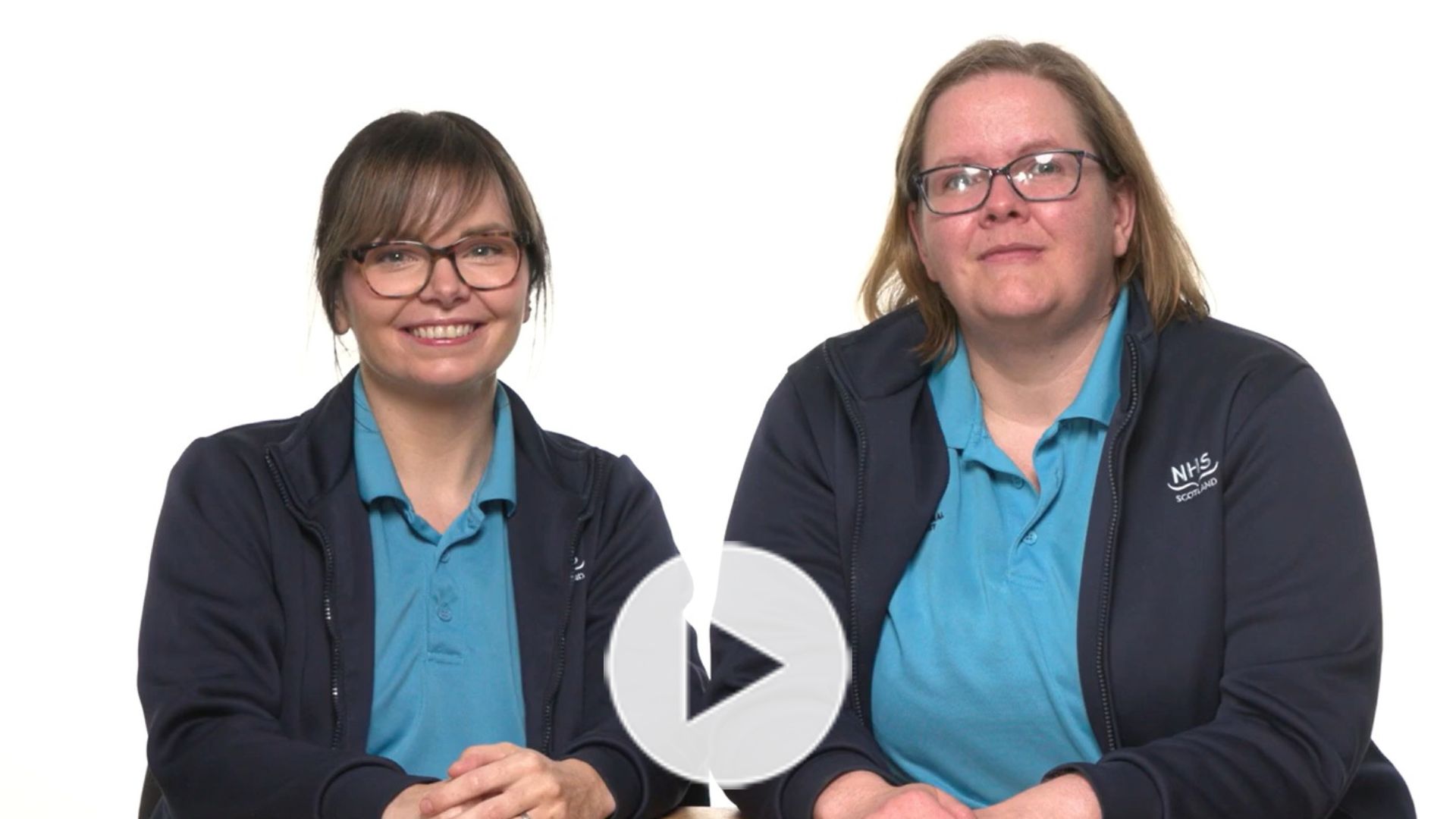
This video shows how the project is increasing options for people who are affected by a diagnosis of cancer whilst living in prison. We will hear from members of the team in the prison as well as partners from the community health improvement team who support the Macmillan Improving the Cancer Journey Service.
Spiritual Care Service
NHSGGC registered chaplains are trained professionals who offer confidential, compassionate, inclusive, non-judgemental, person-centred spiritual, emotional and bereavement care and support for all hospital communities in our health board.
The spiritual care team are available to support and listen to everyone, including family and friends, staff, students and volunteers – this includes people of all backgrounds, faiths and non religious beliefs, who have equal access to the spiritual care service.
In this video we hear from one of the Healthcare Chaplains and two members of staff who received support from the Spiritual Care Team following the sudden death of one of their colleagues.
National Green Theatres Projects – Neptune System
What was the aim and what did we do?
To reduce the carbon footprint across theatres in NHSGGC by eliminating single use surgical containers in theatres.
Currently the disposal of clinical waste costs £500 per tonne.
To address this we accessed the supplier of the Neptune System and conducted a pilot programme at the Royal Hospital for Children.
What was the outcome?
There was a reduction in time changing Vacsaxs and a reduction in the amount of plastics in theatres.
Elimination of issues with control suction within theatres at QEUH.
Improvement in infection control processes due to limited exposure to bodily fluids.
Improvement in efficiency in theatre providing an organised waste supply chain.
Suicide Reduction and Management of Ligature Risks
What was the aim and what did we do?
To reduce the risks of self-harm and suicide.
In 2020 NHSGGC began to identify and remove ligature points from patient areas where possible.
We developed a Board-wide Suicide Reduction and Management of Ligature Risks Policy to ensure a systematic and uniform approach was taken to managed ligature risks.
We developed a self-harm control checklist and a LearnPro module.
Quantifiable data on ligature points in patient areas was developed and used to generate a list of areas in order of risk.
We invested in removing ligature points where possible, starting from very-high risk areas through to low-risk areas.
This resulted removing the most common ligature point used by patients in mental health wards.
What was the outcome?
Reduction in the number of known ligature points from patient areas.
Reduction of ligature incidents using a fixed ligature point reported on Datix.
Safer environments by reducing access to material used to self-harm.
Pre-Operative Pharmacist Consultations
What was the aim and what did we do?
To address long waiting lists for elective orthopaedic surgeries by removing hip and knee replacements to day case or short stay surgeries.
Stobhill Hospital has developed and implemented a day case arthroplasty service as part of the Arthroplasty Rehabilitation in Scotland Endeavour (ARISE).
We introduced consultations with pharmacists for all hip and knee replacement patients at Stobhill.
The pharmacists provides peri-operative medicines advice, person-centred discharge education on use of medicines.
What was the outcome?
Patients felt more confident in taking their medicine.
Staff felt the service improved efficiency of medicines supply and prescribing standards.
People who had previous experience of surgery felt this approach was an improved experience.
Staff felt the service freed them up to spend more time focussing on caring for patients.
People were discharged earlier and had less appointments after they were discharged.
Was this helpful?
Yes
No
Thanks for your feedback!
The Equality & Human Rights Team offers a range of training opportunities for staff members.
In addition to our scheduled training courses, we make every effort to respond to specific requests from staff groups. In order to ensure that we have sufficient information to do this, please consider the following before completing the request form.
Purpose of Training
It is important to be clear about what you wish to achieve with your training request, such as policy compliance, service improvement or staff development. Please ensure training is:
• Approved via relevant NHSGGC management structures
• Documented in line with governance standards
• Linked to Staff PDPs and eKSF updates
Please note that training should not replace relevant HR practice and procedure. If there are concerns about conduct or live investigations outstanding, this is a matter for the Human Resources Department. For further information, go to the HR Connect Equality, Diversity and Inclusion webpage.
Training Content
You will be asked to specify the topics, competencies or behaviours to be covered in your training. For example: EQIA Lead Reviewer Training; Human Library; Equality Act overview; Communication Support; BSL Act; Anti-racism Plan.
For further information about our current equalities work, legislation and resources, please go to NHSGGC – Equalities in Health
Location & Registration
It is the requester’s responsibility to provide a suitable venue for training to be delivered. Please ensure availability of equipment and facilities for the agreed training delivery, such as a projector for PowerPoint or breakout space as required. Please note it is also the requester’s responsibility to manage course registration.
Evaluation
Course evaluation should be in place,such aspre/post assessments, feedback forms, observation or peer review.
Submit request
To submit a training request, please complete the online form. A member of the Equality & Human Rights Team will be in touch to discuss your request.
Was this helpful?
Yes
No
Thanks for your feedback!
We want to ensure that all our patients have access to the right care in the right place at the right time. This means making sure that everyone understands the range of services available in order to decide what best meets their needs.
Many patients with protected characteristics can experience barriers to receiving the care they need. These include a lack of accessible information explaining the emergency care system, difficulties understanding and working their way through the appointments system and problems managing online or telephone support.
A&E departments are often the only service people are aware of that they can walk into to get help when they are worried and in pain. This means that they are often in the wrong place to get the proper care for their ailment. It is therefore vital to provide accessible information and routes to care for those who don’t know the system.
Working with protected characteristic groups
We are liaising with our emergency departments and charities to create opportunities to engage directly with protected characteristic groups. We will work with them to –
Create accessible resources that describe routes into our services and the alternatives to emergency care
Capture people’s experiences of accessing the right care in the right place to use as case studies
Help us support our emergency services to meet the needs of people with protected characteristics
We use cookies to analyse traffic to our site and to enable certain functions such as forms and embedded videos. These do not collect personal information. By clicking "Accept All", you consent to our use of cookies, or you can customise the options.
This website uses cookies
Websites store cookies to enhance functionality and personalise your experience. You can manage your preferences, but blocking some cookies may impact site performance and services.
Essential cookies enable basic functions and are necessary for the proper function of the website.
Name
Description
Duration
Cookie Preferences
This cookie is used to store the user's cookie consent preferences.
30 days
CloudFlare provides web performance and security solutions, enhancing site speed and protecting against threats.
Sequence rules uses cookies to track the order of requests a user has made and the time between requests and makes them available via Cloudflare Rules. This allows you to write rules that match valid or invalid sequences. The specific cookies used to validate sequences are called sequence cookies.
session
cf_ob_info
The cf_ob_info cookie provides information on: The HTTP Status Code returned by the origin web server. The Ray ID of the original failed request. The data center serving the traffic
session
cf_chl_rc_m
These cookies are for internal use which allows Cloudflare to identify production issues on clients.
session
__cfruid
Used by the content network, Cloudflare, to identify trusted web traffic.
session
__cf_bm
Cloudflare's bot products identify and mitigate automated traffic to protect your site from bad bots. Cloudflare places the __cf_bm cookie on End User devices that access Customer sites that are protected by Bot Management or Bot Fight Mode. The __cf_bm cookie is necessary for the proper functioning of these bot solutions.
session
__cflb
When enabling session affinity with Cloudflare Load Balancer, Cloudflare sets a __cflb cookie with a unique value on the first response to the requesting client. Cloudflare routes future requests to the same origin, optimizing network resource usage. In the event of a failover, Cloudflare sets a new __cflb cookie to direct future requests to the failover pool.
session
_cfuvid
The _cfuvid cookie is only set when a site uses this option in a Rate Limiting Rule, and is only used to allow the Cloudflare WAF to distinguish individual users who share the same IP address.
session
cf_clearance
Whether a CAPTCHA or Javascript challenge has been solved.
session
cf_use_ob
The cf_use_ob cookie informs Cloudflare to fetch the requested resource from the Always Online cache on the designated port. Applicable values are: 0, 80, and 443. The cf_ob_info and cf_use_ob cookies are persistent cookies that expire after 30 seconds.
session
__cfwaitingroom
The __cfwaitingroom cookie is only used to track visitors that access a waiting room enabled host and path combination for a zone. Visitors using a browser that does not accept cookies cannot visit the host and path combination while the waiting room is active.
session
cf_chl_rc_i
These cookies are for internal use which allows Cloudflare to identify production issues on clients.
session
cf_chl_rc_ni
These cookies are for internal use which allows Cloudflare to identify production issues on clients.
session
Statistics cookies collect information anonymously. This information helps us understand how visitors use our website.
We use Microsoft Clarity to understand how users interact with our website, including information such as clicks, scrolling and navigation behaviour, to help improve our services.
Microsoft Clarity uses cookies and similar technologies. These are only set if you accept analytics cookies.
If you choose not to accept analytics cookies, Clarity will operate in a limited mode using non-cookie-based data, which does not track users across pages or visits.
The data collected is behavioural and technical in nature and does not directly identify individuals. Sensitive information such as names, email addresses and form inputs is automatically hidden and not recorded or viewed.
Some information, such as device and approximate location data will still be collected and is treated as personal data in accordance with data protection legislation.
This will not be used for any purpose other than analytics and will not be used to identify you.
We use Microsoft Clarity to understand how users interact with our website, including information such as clicks, scrolling and navigation behaviour, to help improve our services.
Microsoft Clarity uses cookies and similar technologies. These are only set if you accept analytics cookies.
If you choose not to accept analytics cookies, Clarity will operate in a limited mode using non-cookie-based data, which does not track users across pages or visits.
The data collected is behavioural and technical in nature and does not directly identify individuals. Sensitive information such as names, email addresses and form inputs is automatically hidden and not recorded or viewed.
Some information, such as device and approximate location data will still be collected and is treated as personal data in accordance with data protection legislation.
This will not be used for any purpose other than analytics and will not be used to identify you.