Skip to content
Home > Staff & Recruitment > Staff Resources & Support > Page 7

Staff Resources & Support

This section provides practice supervision / assessment related documents and resources for all those involved in the supervision and assessment of student nurses and midwives within NHSGGC. If you can’t find what you are looking for here, our FAQs might help.

Audio Podcast

Enjoy our audio podcasts at a time that suits you. We offer a series of 5 podcasts giving information on the new NMC standards and a variety of topics to support your CPD in the practice supervisor or practice assessor role.

Blood Glucose Monitoring for Student Nurses and Midwives

NHSGGC Pre-Reg Student Nurse and Midwife Blood Glucose Monitoring Process outlines the process to allow student nurses (all fields) and midwives to obtain their own unique barcode to operate the Abbot FreeStyle Precision Pro System, blood glucose monitor.

Blood transfusion

Please refer to page 9 of the GGC Clinical Transfusion Policy for information on the involvement of students in the transfusion process.

Communication and relationship management skills – Examples from practice

This resource has been developed to assist you in your role as practice supervisors and practice assessors to support students to achieve Annexe A: Communication and relationship management skills.

Datix guidance for healthcare student involvement

Datix guidance for healthcare student involvement outlines the process for reporting Datix incidents involving student nurses, midwives, paramedics and HNC students. It explains how to record student involvement or witness details and ensure incidents are appropriately linked to Practice education for follow-up.

FAQs

Can’t find an answer to your question. Our FAQs might be able to help.

Roles in student assessment
Does a student need both PS/PA?

Yes, The roles of mentor, sign-off mentor, practice teacher and teacher have been withdrawn, and three new roles introduced to undertake the supervision and assessment of students; the practice supervisor, practice assessor and academic assessor.

Can I be a PS and/or PA to two students at once?

You cannot be the PS and PA for the same student – each student must have two different people assigned – one as PS and another as PA – this cannot be the same person. However, you may carry out both roles at the same time for different students, for example, you may be the PS for one student whilst also being the PA for another student. You may also be the PS or PA for two different students at the same time.

Can I be both roles for the same student?

No, you cannot be both PS and PA for the same student. However, you can be PS for two different students, PA for two different students or PS for one and PA for another as guidance contained in A National Framework for Practice Supervisors, Practice Assessors and Academic Assessors in Scotland

How much time do I need to spend with my student before signing them off?

There is no set time a student needs to spend with their PS/PA. However, we would recommend that students work alongside their assigned PS/PA as much as possible for continuity.

The Practice Supervisor and Practice Assessor are responsible for gathering feedback from other staff in their area that have worked alongside their assigned student to deliver a fair and objective assessment.

How do I access student feedback?

Student feedback for Practice Learning Environments is submitted via “QMPLE”. Each area has an assigned member of staff (e.g. charge nurse, SCN or Educator) who will have access to view feedback submitted by students. All feedback via QMPLE is anonymous and is released after review from both Practice Education Facilitator and the link lecturer for the area. Practice Education would encourage PS/PAs to obtain individual feedback in their role from students (if they are willing to do so) which can then be used for their revalidation and to help improve upon their practice.

Student documentation and assessment

This is a placeholder tab content. It is important to have the necessary information in the block, but at this stage, it is just a placeholder to help you visualise how the content is displayed. Feel free to edit this with your actual content.

What does a student Practice Assessment Document (PAD) look like?

Examples of PADs from different universities.

Also, this interactive PAD resource will provide you with information and guidance on how to complete the different sections of the Practice Assessment Document. From recommended timelines for each stage of the student journey, who completes the different sections, to clear and simple examples of evidence needed for each platform.

Who can sign what in the PAD?
  • Orientation and intial meeting – PA or PS (to be completed within first 48 hours)
  • Learning Development Plan – PA or PA
  • Record of signatories – PA and PS (individual records for each role)
  • Interim review – PA or PS
  • Service user/carer feedback – PA or PS (one required per PART)
  • Proficiencies – PA or PS
  • Skills and procedures – PA or PS
  • Final assessment – PA only
  • Attendance record – PA or PS (complete after each week)
  • End of part confirmation – PA only (discussion between PA and AA to agree on student progression)
How do I complete an interim assessment?

The interim assessment is usually completed mid-way through the placement. It is recommended that a date is set for the interim assessment during the first 48 hours of placement.

The interim assessment can be completed by either the Practice Supervisor (PS) or Practice Assessor (PA). It may be that the PS completes the interim assessment to allow the PA to complete an objective final assessment at the end of the placement, but this is not essential.

If there are concerns surrounding a student’s performance the interim assessment can be completed early or alternatively, you may wish to complete several interim assessments throughout the placement to reflect and document the student’s progress.

The NMC agreed the new standards for student supervision and assessment in 2018. They have structured the standards into 7 platforms – the interim and final assessments are structured around these 7 platforms and, additionally, any progress made within Annexes A and B. Further information on the standards can be found here: NMC Standards for Supervision and Assessment

It can be helpful to look at the language used within the proficiencies (blue pages of the PAD) relating to each platform as an aid to structure your feedback.

The interim assessment is also a good opportunity to ask the student if they have any feedback that they would like to provide regarding their placement.

If any issues are raised during the interim assessment (or at any point throughout the placement) please contact your PEF/CHEF. You can find their details here: Who is my PEF/CHEF?

How do I grade my student?

Glasgow Caledonian University (GCU), University of Glasgow (UoG), Open University (OU), and University of West of Scotland (UWS) all utilise different grading for their students.

UWS: Pass or Fail

OU: Pass or Fail

UoG: Graded A-H using a specific grading rubric per PART

GCU: Graded A-F using a specific grading rubric per PART. Each platform is graded individually and then an overall grade is calculated using a percentage,

Please see example using link:

Grading Rubric Calculator – NHSGGC

My Colleague and I disagree on a student’s performance, what should we do?

If there is a disagreement between a Practice Supervisor and Practice Assessor, Practice Education would advise having a discussion around the differences between each other’s observations. It would also be useful to look back at previous assessments (if appropriate) to look for common themes.

We would also advise reviewing the grading rubric for the specific learning stage of the student using the participation in care framework.

Another tip would be to ask other staff who have worked alongside the student. What are their observations? Are there any differences? For further information or advice, reach out to the PEF/CHEF for your area. Who is my PEF/CHEF?

Our Student’s PA is on annual leave for the student’s last week, who signs them off?

The student should be assigned another Practice Assessor as soon as possible.

The new Practice Assessor should gather feedback from the original Practice Assessor if appropriate and from Practice Supervisors/ other staff in the area in order to complete a fair and objective assessment.

My student has forgotten their PAD on multiple occasions, what can I do?

Students are expected to bring their PAD with them on their first day of placement

and if they do not bring it on the first day then must bring it on their second day. If they then do not bring it you can send them home to retrieve it as it is there responsibility to make it available to their PS/PA throughout the placement.

The student should bring the full document with no pages/sections missing. If the student is continually forgetting to bring their PAD despite being prompted to do so then contact your PEF/CHEF for further advice and support.

I have some concerns regarding my student’s performance, what should I do?

Both the student and Practice Supervisor/ Assessor have access to a Practice Learning Support Protocol which details the steps to follow should there be any concerns. It is important to highlight these concerns as soon as possible. A copy of this can also be found in the student PAD.

How do I complete a Learning Development Support Plan?

You may have a student who requires some additional support to achieve a specific learning outcome/proficiency for example, time keeping, assessment skills, improving communication. In this situation it may be helpful to create a Learning Development Support Plan (LDSP) to support and guide the student to meet the outcomes required.

These sample Learning Development Support Plans will to help you to write an effective plan to support students to progress in their practice learning environment. There is also an example LDSP within the PAD.

You will also find an example Learning Development Support Plan within the PAD and further examples are available through this link:

If you are implementing a LDSP you may wish to contact your PEF/CHEF for support and guidance.

Attendance and Rostering
My student has said they have a part-time job and cannot work certain shifts, how should this be approached?

All students are made aware of the Working Time Directive prior to undertaking their placement. By law, the Maximum weekly working hours state they can only work a maximum of 48 hours per week (on average) which includes placement hours.

How many hours does a student get credited with per shift? Are breaks included?

Students should be credited with full shift hours, including breaks. For example, 7am-7.30pm shifts would be credited as 12.5 hours.

9am-5pm shifts would be credited as 8 hours.

**Reduced working week does not apply to student nurses

My student is requesting specific/ adjusted hours. How can we accommodate this?

Students are made aware that they have a requirement to be flexible to accommodate their placement hours. However, this is not always possible.

Practice Education would advise that any adjustments (within reason) are made at the area’s discretion. Students should NOT be credited with any hours they have not worked.

My student has an organised study day at university, are they credited hours for this?

Credited study days are usually highlighted within the original placement allocation email which is sent out to the student link for your area. This may be your SCN/ CN or Educator. However, sometimes study days can be arranged following these emails and the university may advise students to make their placement aware. Some of these are credited and some are not. If you are unsure, reach out to your local PEF/CHEF who will be able to find out for you.

My student has an appointment during shift time, what is the policy for this?

There is not a specific policy in relation to allowing time for appointments. However, it is encouraged by both Practice Education and Educational Institutions that students inform their PLE manager of any scheduled appointments at their earliest convenience so accommodations such as shift changes can be made.

My student hasn’t turned up for their shift or called in sick, what do I do?

All students must adhere to the NHS GGC/ local absence reporting policy. This is explained to them prior to placement and detailed within their student documentation. They also have a duty to report any absences to the university. The way of doing this differs between universities but this information is readily available within the guidance pages of the students Practice Assessment Document.

The PEF/ CHEF for your area will be able to contact the student’s PT if there are any concerns regarding absence.

Reasonable Adjustments
My student has disclosed a disability/learning need, how do I approach this?

Firstly, it is at the student’s discretion whether they disclose any additional learning needs or disabilities. This can sometimes make our roles as Practice Supervisors and Assessors a bit more challenging but there are resources available to support you. Students can often have a Reasonable Adjustment Plan or a “RAP” in place from the university. Should the student wish to share this with their PS/PA it should remain confidential and should be accommodated where possible.

Your local PEF/ CHEF will be on hand to support you with this.

Additional information and support can be accessed via our Practice Supervisor/Practice Assessor Portal

Practical Skills
Can my student take part in venepuncture and cannulation/ IV medication?

Yes, they can, however, this depends on the stage of training the student is at and whether they have had the relevant theory within University. It is important to note that when this theory is delivery may differ between different fields of nursing which is detailed in the skills statement linked below. When undertaking these skills student nurses and midwives must do so under the direct supervision of a registered healthcare professional who is competent in the skill.

Please see the staff guide for new NMC Skills and Procedures for student nurses.

Can students countersign and administer controlled medication?

Yes, Students can be involved in controlled medication administration as per NHSGGC Administration of intravenous (IV medicines and flush policy.

Responsibility ultimately lies with the administrator of the drug unless a student nurse is involved. Therefore, it is the responsibility of the registered practitioner.

Other common questions
How does my student get an ID badge?

All students should have photographic ID in the form of their student card from their university.

Swipe cards for student nurses are only available for students on placement at QEUH/ RHC at this time. This does not apply to other sites within NHSGGC.

Students about to commence their first placement within QEUH/ RHC will receive an email from university advising how to obtain a swipe card. However, they can also contact their PLE’s local PEF who can pass on a form to obtain a swipe card. They need to complete and print this form and take it to the sites facilities open sessions which are held between 9am-10am

Learning Development Support Planning

Learning Development Support Plans are used to support students to meet specific objectives, particularly if they face challenges in achieving the level of knowledge and/or skills required by their educational programme or if there are concerns regarding their professional practice. These sample plans can be used to help you to write an effective Learning Development Support Plan to support students to progress in their practice learning environment.

**Coming Soon** Learning and Development Support planning resource and Assessment and Grading Terminology document.

NES Pharmacology Learning Resources Toolkit

This resource will supplement practice supervision / assessment in the workplace for student nurses and midwives. Additionally, it is practice supervisor and practice assessor facing and provides information and guidance on Pharmacology.

New skills and procedures for student nurses

WoS guide for staff regarding the supervision and assessment of new skills and procedures for student nurses undertaking pre-registration 2020 programmes (updated 2025).

Practice Assessment Documents

(NHS Scotland sign in may be required)

If additional PAD pages are required, please refer to the relevant PAD and print the individual page(s).

PAD Learning Resources

PAD Terminology for Practice Supervisors and Assessors

If you’re unsure about the terms used in the PAD when it comes to student assessment, we’ve created a helpful guide just for you. the PAD Terminology for Practice Supervisors and Practice Assessors explains key terms (called level outcomes) and gives examples to help you understand what’s expected of your student by the end of their placement.

Practice Learning Support Protocol

These flowcharts illustrate guidance for student nurses and midwives, as well as PS / PAs, on dealing with concerns, although not care concerns, we come across in Practice Learning Environments.

Practice Supervisor Practice Assessor Checklist

Use our Practice Supervisor Practice Assessor Checklist to identify key areas will ensure your student has a smooth journey throughout their practice learning experience.

Raising concerns in practice

Raising concerns in practice – a national approach for nursing and midwifery students, non-NHS practice learning experience providers and higher education institutions in Scotland.

‘Speaking up’ – National Whistleblowing Guidance for Nursing and Midwifery Students in Scotland

This guidance details the process for raising a concern and intends for nursing and midwifery students in Scotland to use it while undertaking PLEs during their pre-registration nursing and midwifery programmes.

Strengthening Student Nurse and Midwife Practice

This 10 minute narrated presentation on Strengthening Student Nurse and Midwife Practice will help practice supervisors and practice assessors to develop increased insight and awareness around supporting student nurses and midwives with additional competency requirements (NHS Scotland log in required).

eHealth and Student IT Information

Student Access to NHSGGC eHealth Systems

Students on placement are issued NHSGGC eHealth accounts to enable access to essential digital systems.

Video – Overview of systems students may have access to

First-Time Login

Guidance for logging in for the first time is available from NHSGGC Student IT Access

Video – First time Logging in

Reporting IT Issues and Accessing Learning Resources

Students must register for the West of Scotland eHealth portal to:

  • Raise IT support tickets
  • Access additional eHealth learning materials

Video – West of Scotland Student e-Health Portal

Important:

Students do not have access to staff eHelp services and must not contact the IT Service Desk directly.

  • a step-by-step guide to registering and using the student eHealth portal is available from NHSGGC Student eHealth Portal
  • The portal is accessible from any web browser and does not require access to an NHSGGC computer.

Quick Overview

A downloadable poster summarising the student access process is available from NHSGGC Student eHealth Awareness Poster.

Safety, Governance and Audit Systems

Video – Fair Warning audit system and Data Protection

Newly Qualified Nurses and Midwives (NQN/Ms)

A step-by-step flowchart outlining the NHSGGC process for requesting eHealth accounts for band 4 NQN/Ms is available to support NQN/Ms and their line managers in updating or requesting eHealth account access and creating an NHSGGC email address.

Need eHealth help?

If you’re unsure where to start or need further support, please contact your Practice Education Facilitator or refer to the guides above.

Supplementary factsheets about specific eHealth programmes

Hospital Electronic Prescribing and Medicine Administration (HEPMA)

Student nurse Digital Clinical Notes module on TURAS Learn

University Programme Information

Return to our Practice Supervisor / Practice Assessor Portal

Was this helpful?

Yes
No
Thanks for your feedback!

Was this helpful?

Yes
No
Thanks for your feedback!

The West of Scotland Specialist Virology Centre (WoSSVC) is a United Kingdom Accreditation Service (UKAS) accredited medical laboratory No. 9319. A full list of accredited tests can be found on our schedule of accreditation.

Please note users will be informed if an assay/result lies outside the laboratory’s scope of accreditation.

WoSSVC is located at Glasgow Royal Infirmary (GRI) and is part of NHS Greater Glasgow and Clyde (NHSGGC).

Clinical advice and urgent testing: email west.ssvc2@nhs.scot during opening times or phone: 0141 242 9656 (internal 29656). Please note during busy times it is easier to email and a member of the clinical team will respond.

To add on tests please email west.ssvc2@nhs.scot with clinical details and tests required. The email is monitored during laboratory opening hours (we aim to reply to your email within 1 hour, however, at busy times this may not be possible).

Results are available on clinical portal, SCI Store, TrakCare and GPICE for NHSGGC patients if a patient’s CHI has been provided on the request form.

For out of hours clinical advice call the Switchboard on 0141 211 1000 (1000 internal) and ask for the on-call virologist.

Please contact ggc.virologystockrequests@ggc.scot.nhs.uk to request DBS kits and chlamydia swabs.

From the 1st of July 2024 WoSSVC will no longer be able to supply Molecular Sample Solution (MSS) tubes to users.

MSS swab collection kits can be ordered from PECOS, and the ordering details are as follows:

MSS swab collection kits SW00E4 1 x 100 (NP866/21)

  •    Manufacturer – E + O Laboratories Limited
  •    SKU code/Item number – 289523 (reference SW00E4)
  •    Pack Size – box of 100

Was this helpful?

Yes
No
Thanks for your feedback!

Leadership is an integral component of all Allied Health Professional (AHP) and AHP Healthcare Support Worker (HCSW) roles across the whole career pathway.

Whatever your role or level of practice, there is information and resources available to support your leadership development.

Leadership development resources

Leading to Change

Offers a range of leadership development programmes, opportunities and support for health, social care and social work leaders to help you make a difference. 

Leadership and Management Zone

You will find resources here to help you be the best you can be, as a leader or manager in health and care.

It is designed for staff at all levels and from all disciplines. 

Leadership Links

Provides bite-sized learning opportunities for leaders and managers at all roles and levels in social care, social work and health.

Leadership Academy

Has a curriculum of programmes, resources and activities for NHS staff. 

Leadership Pillar

Information and activities for HCSW staff

HCSW Learning week (2022)

Sue Simpson Leadership sessions

Presentations from Sue Simpson’s Leadership Sessions 2021/22 

Was this helpful?

Yes
No
Thanks for your feedback!
Vascular Access Service. Who are we?

We are a nurse led team. Our service provides the insertion of Peripherally Inserted Central Catheters (PICC lines),  Midline Catheters, Non-tunnelled Central Venous Catheters and the insertion and removal of Tunnelled Central Venous Catheters (TCVCs). We also provide advice and support on the care and maintenance of vascular access devices.

  • Nicola Wyllie – Senior Charge Nurse
  • Maren Hunter – Advanced Clinical Nurse Specialist
  • David McGrath – Advanced Clinical Nurse Specialist 
  • Niamh Hughes – Clinical Nurse Specialist
  • Christian Macdonald – Clinical Nurse Specialist
  • Gemma Martin – Clinical Nurse Specialist
  • Isabel Soto Martinez – Clinical Nurse Specialist
  • Christina Milligan – Clinical Nurse Specialist
  • Yumiko Shimokawa – Clinical Nurse Specialist
Contact Details

Vascular Access Contact Details (Please do not call these numbers for queries regarding vascular surgery)

  • Nurse Led Vascular Access Service Email Address:- ggc.nurseled.piccandhickteam@nhs.scot
  • Gartnavel General Hospital Telephone: 0141 232 2140 or (32140)
  • Queen Elizabeth University Hospital: 0141 452 3587 or (83587)
  • Glasgow Royal Infirmary: 0141 956 0587 or (60587)
Training and support – Vascular Access Device Care and Maintenance

There is a new corporate led competency package for NHSGGC staff

 If your clinical area requires training on the care and maintenance of vascular access devices –  please identify a device champion(s) and VAS will provide them with a workshop and simulated practice sign off. VAS can then assist with care and maintenance sessions for staff whose competency can then be assessed by the device champion.

Prior to training please ensure staff have completed learnpro modules – 

GGC: 002 Health and Safety, an introduction 

GGC: 007 Standard Infection Control Precautions 

NES: Prevention and Management of Occupational Exposure (within SIPCEP) 

GGC: 329 Vascular Access Devices

For queries regarding support and training on the care and maintenance of vascular access devices please email -ggc.nurseled.piccandhickteam@nhs.scot

Vascular Access : Guidelines and useful links
Aseptic Non Touch Technique ANTT®

When accessing any vascular access device you must always use ANTT®

Always wash hands effectively

Never contaminate key parts/key areas

Touch non-key parts with confidence

Take appropriate infection control precautions

The key principle to preventing infection is to maintain the asepsis of key parts/sites.

  • Key parts – any part of the device which will come into direct contact with the patients bloodstream.
  • Key sites – insertion and exit sites
  • The key parts can be protected by the use of micro fields such as syringe wrappers.
  • There is no need for the use of sterile dressing packs or sterile gloves, unless you are performing a dressing change when it is impossible to apply the new dressings without touching them and sterile gloves are required.
Advice and Links – Vascular Access Device Care & Maintenance

Dressing changes for all central venous vascular access devices must be done weekly (unless visibly contaminated). The dressing, stabilisation device (if PICC line), CHG impregnated foam dressing and needle-free device must all be changed weekly using an adapted ANTT®. Please see page 17 of the NHSGGC ANTT® Clinical Guideline for step by step guidance.

When accessing a vascular access device to flush, aspirate or change the needle-free device you must always ‘scrub the hub’ for 15 seconds. Whilst scrubbing the hub you should concentrate on the flat connective surface but also scrub around the side using wipes that contain Chlorhexidine 2% and Alcohol 70%.

Preventing catheter blockages

Flush immediately after use, use an ANTT® and scrub the hub for 15 seconds before accessing the device.

When flushing a vascular access device, routinely use Nacl 0.9% in a 10ml luer lock syringe and a brisk ‘push/pause’ technique. This creates a turbulent pulsatile flow which clears the lumen of debris. Ensure that you finish the flush by clamping on positive pressure (whilst you are administering the last push) to prevent blood re-entering the device and thus maintaining patency. Flush before, between and immediately after each use.

Please refer to NHSGGC ‘Vascular access device (VADs), care and maintenance‘ document.

Routinely move clamp on PICC and Midline to prevent damage.

Difficultly aspirating catheter

  • Valsalva Manoeuvre – ask the patient to take a deep breath, hold and attempt to force out air through closed mouth.
  • Change needle-free device using ANTT
  • Check the clamp on PICC line, move clamp and massage lumen underneath if crushed. Check to see if the dressing has kinked the catheter near the insertion site.
  • Please do not remove a blocked PICC until you have spoken to a member of the Vascular Access Team as it may be salvageable.
Quick Guide To Vascular Access Devices

Peripherally Inserted Central Catheter (PICC)

Suitable for the duration of therapy.

No preparation required, no exclusion criteria (although patient must be able to position arm to enable insertion).

Suitable for all IV medications and parenteral nutrition (PN)

CT compatible and Non CT compatible depending on the device.

Tunnelled Central Venous Catheter (TCVC)

Suitable for the duration of therapy.

Not all patients are suitable to attend the Nurse led service as we have an exclusion criteria – (please see referrals section).

The TCVCs we insert are cuffed so they require to be removed by an appropriately trained individual under local anaesthetic.

Midline Catheters

4F 12cm Smart Midline peripheral catheter – last up to 29 days. CT Compatible. Please be aware – blood sampling from midline catheters may result in device failure.

Vascular access referrals

We encourage early referral for a suitable vascular access device to improve patient experience, preserve vessel health and effectively facilitate IV therapy.

Please be aware that this is an extremely busy elective service, covering multiple sites within NHSGGC. We will endeavour to facilitate all referrals as soon as possible. We are not an emergency service, however we will expedite urgent cases if we are able to do so. To discuss referrals please email us on the group email address above.

The Vascular Access Service work Mon-Fri 08:30 – 16:30 and some weekends staff permitting.

Please note : Vascular access is a nurse led service, not all patients are suitable for referral.

Catheter Peripheral Central Venous Catheter (PICC) / Midline Catheter

There is no restrictive exclusion criteria for PICC or midline catheter insertion.

Cuffed Tunnelled Central Venous Catheter (TCVC)

  • APTT ratio must be equal to or lower than 1.6
  • PT no higher than 16
  • Platelets must be above 40 (if platelets between 30-40 VAS will consider placing a catheter with platelets running following discussion with medical staff)
  • Low molecular weight heparin (LMWH) must be omitted 24 hours prior to procedure if it is a treatment dose, 12 hours for a prophylactic dose.
  • Patient is able to lie flat

Patients not suitable for Nurse led service

  • Known venous stenosis, SVC obstruction or central venous stent in situ
  • Significant mediastinal disease
  • Recent myocardial infarction (within 2 days)
  • Pacemaker in situ
  • Current pneumothorax

If patient has these symptoms please refer to interventional radiology service.

Patient Referral to the Vascular Access Service

All patient referrals are made via TrakCare.

Please follow the process below:

  • Input the patients community health index (CHI) into trak
  • Click on Episode Tree
  • Select current episode
  • Click on ‘New Request’
  • Under Imaging:
  • For PICC line insertion : Input ‘IPICCI’ into item box
  • For TCVC insertion input ‘ITCVCI’
  • For TCVC removal ‘ITCVCX’
  • For TCVC exchange ‘ITCVCG
  • For Haemo-dialysis insertion ‘ ITUNDI’

For insertion of TCVC – all patients must have a recent Coagulation (Coag) and Full Blood Count (FBC) (within 2 weeks provided they have received no treatment)

Consent / AWI for Vascular Access Service

Patients will be consented by a vascular access nurse. 

All patients must have capacity to consent ( i.e. not given a sedative pre-procedure unless already consented by a member of the vascular access team). 

If the patient has impaired capacity, they must have a separate  Adults with Incapacity (AWI) form specifically for the procedure completed before being transferred to the department.

Was this helpful?

Yes
No
Thanks for your feedback!

Are you a newly qualified nurse, midwife or allied health professional (AHP)?

The Practice Education team are providing access to two Clinical Supervision sessions in your first year of practice, although these may be provided locally for some disciplines. Through attending the sessions, newly registered practitioners (NRPs) will have opportunity to explore the effects of your work, by recognising how you are impacted by this, you can then focus on solutions for your learning and development and maintain or build your resilience levels.

Clinical Supervision supports you to reflect, and develop your clinical practice, whilst embedding staff wellbeing and wellness into the working environment, promoting and establishing positive working cultures, leading to improved patient outcomes. 

To get the most from clinical supervision, please complete: Introduction to clinical supervision: supporting you to develop and thrive in your role on TURAS

The NRP Clinical Supervision sessions will take place via MS Teams and dates for sessions can be found below.

Return to Practice Education’s main page

Was this helpful?

Yes
No
Thanks for your feedback!
Professionals – Brief Overview HFE

This is common inherited disorder caused by a genetic predisposition to absorb and store excess dietary iron.  It is more common in those with Northern European ancestry.

Symptoms

Add content…..

FOLLOW SAME FORMAT AS ABOVE….H3 Headings within accordion panels and no bold headings…

Professionals

Patients

p.C282Y variant is not present

p.C282Y and p.H63D variants are not present

Heterozygous for p.H63D

Heterozygous for p.C282Y

Homozygous for p.H63D

Compound heterozygous for p.C282Y and p.H63D

Homozygous for p.C282Y

Reflex testing

Causes of iron overload

Was this helpful?

Yes
No
Thanks for your feedback!

The Clinical Genetics department is situated on Level 2A of the Laboratory Medicine Building of the Queen Elizabeth University Hospital. The staff of the Clinical Genetics Department see increasing numbers of patients and their families every year at general genetics clinics, cancer genetic clinics and other specialist genetic clinics.

These clinics are held within the department clinic area on level 1A, at other Glasgow hospitals or for some conditions, at a number of community locations throughout the West of Scotland, including Kilmarnock, Wishaw, Ayr, Larbert and Dumfries. We also offer virtual appointments by video or telephone where appropriate, or may reply by letter.

Was this helpful?

Yes
No
Thanks for your feedback!

This page is intended to assist AHPs in finding out more information about their career development and the NES NMAHP Transforming Roles Programme.

The Lead for this workstream for AHPs in NHS Greater Glasgow and Clyde (NHSGGC) is Dr Mhairi Brandon.

If you have any questions on the NHSGGC AHP transforming roles workstream please get in touch with Mhairi directly.

Was this helpful?

Yes
No
Thanks for your feedback!

Who are we?

  • Jane Dudgeon (AHP Practice Education Manager)
  • Elspeth Lee (AHP Practice Education Lead)
  • Jennifer Dick (AHP Practice Education Lead)
  • Sarah Richardson (AHP Practice Education Lead)
  • Jillian Rennie (AHP Practice Education Facilitator)
  • Sharon Dempsey (AHP Practice Education Team Administrator)
  • Heather Rodger (Associate Practice Educator)
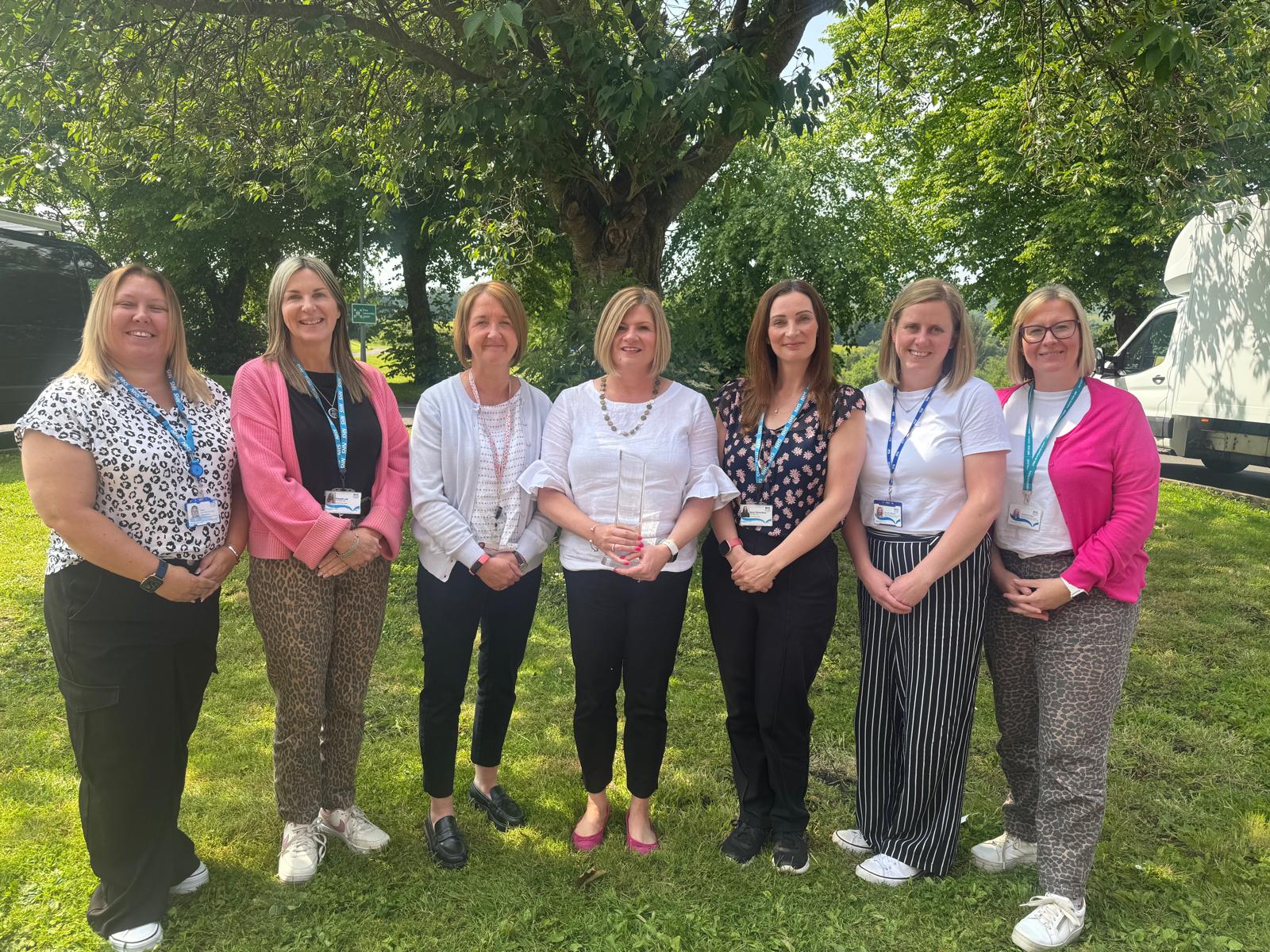
Allied Health Professions (AHP) Practice Education Team with Better Workplace Award Winners Trophy 2025

“We work strategically at both a local and national level. We support and facilitate learning and development across all levels of the AHP Career Pathway”

What do we do?

We are part of a national network of AHP Practice Education staff based in all NHS Boards across Scotland.

The AHP Practice Education Team work with AHPs at all stages of their career. We aim to ensure the quality of work-based learning and to develop the work place as a learning environment.

Workstreams

Priority areas of work are guided at a national level by NHS Education for Scotland (NES). However, the AHP Practice Education Team workstreams do reflect the needs of the AHP workforce locally in NHSGGC and NHS Golden Jubilee.

Practice Based Learning (PrBL)

We work with students and practice educators across NHSGGC, Higher Education Institutions (HEIs) and NES to support the provision of quality practice-based learning. This ensures we continue to have experienced newly qualified AHPs who can provide high quality care across NHSGGC.  

Further information on local work and resources can be found by accessing the AHP Practice Educators Information page. An NHSGGC AHP PrBL Student Information page is also available.

The team also contributes to national work to support AHP practice-based learning.

AHP Careers and recruitment, including return to practice

As a team we are involved in the promotion of career choices and pathways available for AHP professions at all levels of the Career Framework.

The team link with local Workforce Employability Leads to keep up to date and support local workforce development plans/ events and to address any local recruitment challenges.

The NHS Scotland Careers in Healthcare webpage is easily accessible to all and has a number of useful resources including up to date careers opportunities across all professions, careers stories, blogs and information on apprenticeships.

The team also supports AHP return to practice. This includes AHPs who wish to return to practice and join the HCPC register, as well as AHPs willing to support a period of supervised practice for an AHP within NHSGGC. 

NES have launched the AHP Return to Practice web page which provides information, links to resources and access to NHS Board key contacts.

This webpage includes guidance to arranging supervised practice. To compliment this guidance, we have worked with NHSGGC Human Resources (HR)  to provide Supplementary Information on the NHSGGC HR Process to assist with organising an honorary contract for the returnee. The AHP senior leads to have agreed timescales for organising supervised practice. These documents will guide NHSGGC AHPs supporting supervised practice placements.

Support and Supervision

The purpose of supervision is to promote wellbeing, support personal and professional development, develop knowledge, skills, and values and to promote competent practice, safe and effective person-centred care (Rothwell et al, 2018). All of these bring benefits to us as individuals, to our teams, organisations and to those who access our services.  

Supervision is for and about you, as a person, a professional and as an employee.

Scotland’s Position Statement on supervision for Allied Health Professionals states that all AHP practitioners, irrespective of their level of practice or experience, should have access to, and be prepared to make constructive use of supervision.

Allied Health Professions (AHP) support and supervision  on TURAS and NHSGGC AHP Supervision Policy and Resources provide further information on AHP support and supervision (including resources to support supervision in practice, and access to learning and training on the subject).


Supporting AHP workforce development

We support local networks to highlight areas of best practice that are in place to support Newly Qualified Practitioners (NQPs).

The team will also be supporting a national scoping exercise looking at the needs of NQPs and those supporting them in their transition into the workforce.

NHS Flying Start Programme

We recognise that the transition from student to Newly Qualified Practitioner (NQP) can be an exciting but often daunting time.  We therefore encourage all NQPs to complete NHS Flying Start, the national development programme designed to support NQPs including, nurses, midwives and AHPs, in their first year of practice. 

The Flying start programme combines individual learning with support in the workplace which helps NQPs develop their confidence and become competent and capable health professionals. 

Further information on the Flying Start programme can be found on the AHP Flying Start NHS® Learning Site on TURAS.

Healthcare Support Workers         

Role development and learning and development for AHP support workers working across all care settings is vitally important. Information and resources are available on Support Worker Central on TURAS.

A survey was carried out in 2023 to establish the learning and development needs of the AHP HCSW workforce across NHSGGC. A report of the findings from this survey has been produced along with a summary SWAY.

Clinical Skills

Defined as “any action by a health or social care professional involved in direct patient care which impacts on clinical outcome in a measurable way” (NHS Education for Scotland, 2008).

We work with AHPs within NHSGGC to develop the use of clinical skills to support learning and high-quality client-centred practice. We also contribute to the national work stream to support and develop clinical skills.

AHP Education Fund

We are delighted to announce that the Autumn AHP Education Fund is now open and closes at 9am on Monday 2nd November 2026.

Opportunities on offer, commencing January 2027 and fully funded through the the NHSGGC AHP Education fund for successful applicants are:

Using Counselling Skills within Allied Health Professions, delivered online by Strathclyde University, open to all NHSGGC AHP HealthCare Support Workers and registered AHPs  

Exploring Practice and Practices Module : Learning at Work, delivered by Glasgow Caledonian University, open to all NHSGGC AHP Health Care Support Workers 

For application packs and further information and guidance on both opportunities please see link below.

AHP EDUCATION FUND

Application packs can also be sent directly via email by contacting the AHP PE Team:   ggc.gjnhahpepl@nhs.scot

Contact Us

Was this helpful?

Yes
No
Thanks for your feedback!