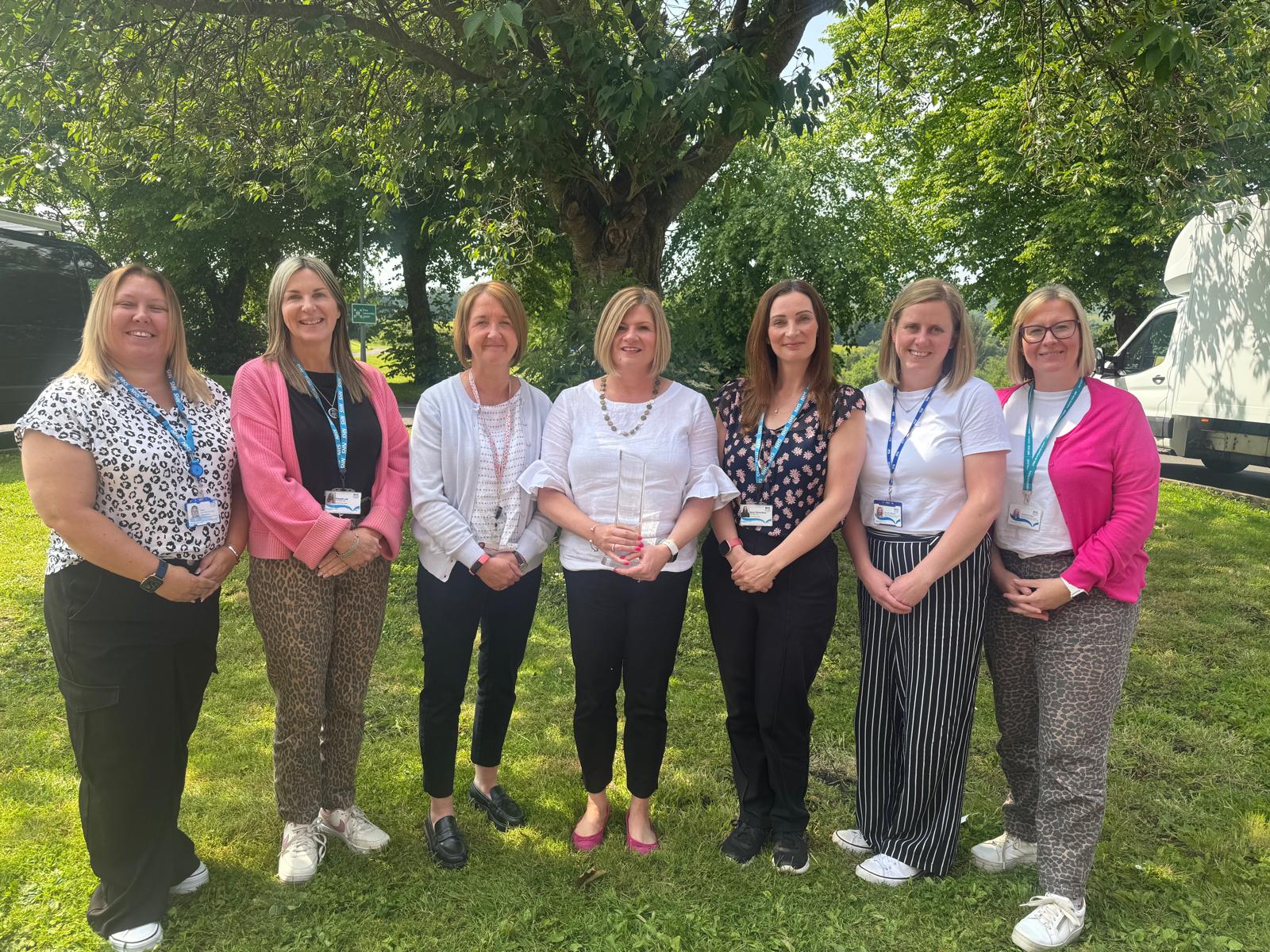
Our AHP Quality Improvement Steering Group is chaired by Nikki Munro and our purpose is:
“to provide a strategic, co-ordinated, and multidisciplinary approach to ensure all AHPs in NHSGGC are able to use QI tools and theory in routine practice.”
We hope this page will help anyone who wants to know more about Quality Improvement methodology, and how to use this in routine practice. Further information, resources and contact details for profession specific QI Leads can be found in the NHSGGC AHP Quality Improvement Sharepoint page.
If you have any questions on the NHSGGC AHP Quality Improvement workstream please email Nikki at nikki.munro@nhs.scot.
Quality Improvement Learning
Are you interested in developing QI knowledge? We recommend you start learnpro module (109) Quality Improvement Fundamentals which will give you an awareness and basic understanding of the importance, methods and successes of Quality Improvement in NHS GGC.
Kickstart QI – to give everyone an introduction to Quality Improvement
QI Essentials – to provide knowledge of core quality improvement methods and tools
Practical QI – to provide the opportunity to practise using QI tools, frameworks and methodologies in the workplace
Managing QI – to enable managers and team leaders to create and sustain the conditions for improvement
Quality Improvement Training
There are also formal courses run by the clinical effectiveness team at NHSGGC and by NES. These can be great at learning with others and gaining practical QI skills along the way.
Quality Improvement training provides learning and development opportunities to build skills, knowledge and confidence to use QI methodology to deliver better care, services and outcomes for staff working across NHS Greater Glasgow and Clyde.
QI training is available to staff in any role, working as part of NHSGGC, including those working within Health and Social Care Partnerships (HSCPs), third sector, volunteer sector as well as others who support the delivery of quality care for patients.
Are you interested in AHP Quality Improvement (QI) and want to know more? Do you want to meet up with like-minded colleagues to discuss QI projects and find out what others are doing? If so, join the NHSGGC Quality Improvement Network! Colleagues from all professions and working areas are welcome.
There’s lots of useful information:
Sharing of Projects
Space to chat
QI resources
Upcoming courses and events
There are 4 virtual network meetings a year, everyone is welcome. The aim of these meetings is to Network, Share and Learn about all things QI.
We have a registry of AHP Quality Improvement projects across NHS GGC. The registry is really useful to share current and completed projects (big and small). Projects to register include:
The Director of Allied Health Professions and the AHP Education Fund Group are delighted to advise that the 2026 AHP Education Fund opens to applications on Monday 13th April, closing at 9am on Monday 11th May.
This opportunity includes MSc Modular options from the Advanced Practice Programme, delivered by Glasgow Caledonian University, and the HNC Occupational Therapy Support Course, delivered by Glasgow Clyde College.
Allied Health Professions are a crucial part of the NHS, making up one third of the clinical workforce.
Art Therapist
Diagnostic Radiographer
Dietitian
Dramatherapist
Music Therapist
Occupational Therapist
Orthoptist
Orthotist
Paramedic
Physiotherapist
Podiatrist
Prosthetists
Speech and Language Therapist
Therapeutic Radiographer
The Return to Practice process enables you to re-register with the HCPC after a period of time away from your profession. There are many reasons why you may not have practiced such as caring/parental responsibilities, illness, travel or other career routes. We value the skills you have gained whilst you have been away and look forward to your return.
Different requirements apply depending on how long you have been out of professional practice.
NHS Careers Scotland has all the information you need about the steps to re-registration including the links to the HCPC who manage the final step.
Now is the time to return and help to deliver safe and effective care for the people of Scotland.
Was this helpful?
Yes
No
Thanks for your feedback!
This section takes a deeper dive in to what it means to be a digital champion and has some resources to help you with your digital journey
Becoming a digital champion
You could be a digital champion – someone who takes a lead within their team to help others with digital solutions. It could simply be helping with setting up passwords, getting others confident with using Teams, ensuring everyone can access and input to your clinical systems that you use everyday. You may not need specific training for this – you may just have the knack! Please join our Digital Champion Forum for more bespoke training, events and chat.
If this is the case then you should consider furthering your own knowledge and learning. A great way to do this is through the Digital Health and Care Leadership Programme .This course maximises the potential of digital to benefit people and supports participants to develop the strategic leadership skills required to influence the use of digital solutions in health and care delivery. Your project will need to fit with NHSGGC digital strategy but you can discuss this with your digital leads prior to and during your course.
You don’t necessarily require to do a formal course. Successful project work derives from great quality improvement methodology. Please refer to the online resources available on the NHSGGC website. Your Digital leads will be more than happy to support and advise. You can also submit project requests that require support from ehealth via the Project Management Office (pmo@ggc.scot.nhs.uk).
Social media is a highly influential way of connecting with others both with colleagues and patients. Please refer to the Information Systems: Acceptable Use policy if planning to provide a patient facing site on one of the many social media platforms available.
Building websites for your service
Many services and teams rely on websites to share information about their service.
There are 3 types and you may require more than one of the types for your service:
Service information webpage for the public
For information about your service that the public will access, it will likely be in the Hospitals and Service section on the NHSGGC website.
It should have the following structure:
Service overview
Info for patients
About the condition
What we do
How to be referred to service
What to expect at your appointment/hospital stay/what happens afterwards
Frequently asked questions
Leaflets
About the team
Publications
Reports
Forms
Patient Leaflets
Where to find us
Contact us
Useful resources/links
To build this type of site see information provided by the Web Team.
Generic staff information
For information that is for staff primarily but which is appropriate for public view if desired such as this website and HR Connect it will likely be in the Staff Resources section on NHSGGC website and the structure will vary depending on content.
To build this type of site see information provided by the Web Team. You will be asked to complete the LearnPro module GGC 289: WordPress CMS prior to beginning your webpage build.
Service and professional information for staff only
For information about your service that is for staff only such as rotas, contact lists, service operating procedures etc, it is best to use the functions of M365, especially Teams and SharePoint. How these work together is described in Teams and SharePoint integration.
Put simply, every team in Teams has a SharePoint site already but SharePoint sites can be created independently too. See information at M365 Training Sessions to get started using Sharepoint or watch these videos:
Adopting EPR
Most of us now input our notes in to an electronic patient record whether it be EMISweb, Trakcare or Clinical Portal. But its important to know that these systems have regular upgrades and in time and through service improvement can change to a completely different product. You should see the record as being something that evolves and that can be improved to suit the service needs and not seen as a static unchanging entity. Have a read of EHCR Adoption Considerations which describes the move from paper to EHCR but also outlines considerations for getting the most out of your current notes tool. Making the Most of your Electronic Patient Record is a great site for more in depth reading.
Using data
Good data collection is crucial to changing and influencing a service. Understanding the power of data is becoming a must have skill. Look at how you collect data within your service or team. Can it be improved? Do you know if your patient clinical system such as Clinical Portal, Trakcare or EMISweb assist processes around referral management, workload, caseload management etc. FutureLearn offers a free online course to develop your skills and understanding of the data in health care – Power of Data in Health and Social Care.
Using apps
Using apps is becoming increasingly common but there are things that need considering before adopting:
Don’t jump into a specific product – what are the functional needs?
Will you need to capture identifiable data?
IG will need to be involved – a data protection impact assessment (DPIA). See Information Security policy
Is there something that already does the job in the organisation?
While a specific app may have caught your eye from an advert or event, there may be others.
Some estimate that 45% of all software features are NEVER used.
There is likely to be a cost after an initial free trial.
Is it for clinical work?
Clinical safety of the product will need considered – some apps are even classed as medical devices. Use the DTAC
Will it be part of the clinical record or need to integrate with it?
What products suit these needs?
Installed app or web-app?
Competitive tender may be required
If considering a trial, also consider a ‘get-out’ as you could make a change that cannot be sustained due to financial or service implications.
This section looks at more in depth digital resources related to Virtual Patient Management. A term that describes all the work relating to patient care that isn’t face-to-face in nature.
Virtual Patient Management
Groupwork
Groups have been running for some time in mental health and AHP services using Teams.
You require to get access to WordPress and you will be given help and instruction from the Web Team, you can find out more on their Website SharePoint site. See Leading Digital pages for more information.
Physiotools
Physiotherapists and other AHPs such as Podiatry and Orthotics can use this tool for free. Log a call with eHelp to have it downloaded to your PC or laptop. Have a look at the training stream. A SWAY is also available on request from Gillian.Ferguson6@nhs.scot
Can you make use of QR codes and email facility to make it easy for your patients to access?
Can you make templates for commonly used exercises and activities?
Add your own videos and photographs if required.
Just remember to limit the patient data the site asks for. Stick to initials only and always gain consent from the patient before making use of their email.
This is a new system to NHSGGC. Information can be transferred electronically to your patients and including a digital appointment service.
They will be able to receive notification of their appointment and interact by accepting, cancelling or requesting to rebook.
It can be used to send leaflets, questionnaires and test results. The tonsillectomy service are now using a pre-op questionnaire which the patient completes and sends back with no need for a face-to-face appointment.
If you think your service would benefit from using this in the future, put in a project request via the Project Management Office.
Email
Email is fast becoming a popular way for patients to connect with their healthcare professionals.
Use your own or set up a generic mailbox for your service.
Review the Information Security: Acceptable Use policy for information on emailing patients to ensure safe use. It’s a safe and secure method of delivery for information such as exercise programmes, advice following provision of equipment, quick confirmation of appointment time.
It shouldn’t be used for detailed clinical discussion and must have the minimum of identifiable data included in the body of text.
Data coding
Most of us now write in to an electronic patient record.
All the systems have the function of using ‘structured’ data by linking to read codes or Snomed CT.
Services can pull lots of information by using simple coding to, for example, code a referral type or condition.
You can see how making use of this gives access to powerful data about your service.
Talk to your service leads about using this functionality.
Other
Asynchronous appointments
Asynchronous appointments or those not done in ‘real time’ can be used to cut down face-to-face visits.
Allows patients to answer a questionnaire or provide a short video or photograph in the comfort of their own home.
You can then view this later before making a decision about further therapy.
This image would need to be part of the clinical record and there are several products being tried and tested – SCIT app dermatology, vCreate neurology.
MIMS
The MIMs (Medical Illustration Management System) upgrade is a project in progress to provide a stable system for NHSGGC which allows capture of all types of clinical image.
Referral Triage
Active Clinical Referral Triage isn’t a specific digital tool. It is a model of working now used widely across services. It facilities virtual patient management and allows faster and improved flow of work getting the patient seen by the right clinician by the most appropriate method. Can this model be implemented within your service?
Was this helpful?
Yes
No
Thanks for your feedback!
The continued learning opportunities of our AHP workforce is of vital importance, in consolidating the services we deliver today, and ensuring our teams are enabled to deliver the services and roles we aspire to in the future.
The NHSGGC AHP Learning and Development Strategic Framework has been designed to support all AHP staff in NHSGGC to access educational opportunities. This being at all levels of practice across the career framework, from Health Care Support Worker to Advanced and Consultant level of practice.
The framework highlights that all staff will have equal access to ongoing learning, training and development within their role. Recognising that AHP capabilities are required of all staff across the four pillars of practice. These being clinical practice, facilitation of learning, leadership and evidence, research and development (including service improvement).
Professional and Service Leads developed the framework following an AHP staff communication exercise. The framework is underpinned by the four pillars of practice and it is aligned to local and national policy drivers. The framework is accessible, easy to understand and key in supporting AHPs to take ownership of their learning and development. It is a live resource to support meaningful role and career conversations.
Leadership is an integral component of all Allied Health Professional (AHP) and AHP Healthcare Support Worker (HCSW) roles across the whole career pathway.
Whatever your role or level of practice, there is information and resources available to support your leadership development.
Offers a range of leadership development programmes, opportunities and support for health, social care and social work leaders to help you make a difference.
Jillian Rennie (AHP Practice Education Facilitator)
Sharon Dempsey (AHP Practice Education Team Administrator)
Heather Rodger (Associate Practice Educator)
“We work strategically at both a local and national level. We support and facilitate learning and development across all levels of the AHP Career Pathway”
What do we do?
We are part of a national network of AHP Practice Education staff based in all NHS Boards across Scotland.
The AHP Practice Education Team work with AHPs at all stages of their career. We aim to ensure the quality of work-based learning and to develop the work place as a learning environment.
Workstreams
Priority areas of work are guided at a national level by NHS Education for Scotland (NES). However, the AHP Practice Education Team workstreams do reflect the needs of the AHP workforce locally in NHSGGC and NHS Golden Jubilee.
We work with students and practice educators across NHSGGC, Higher Education Institutions (HEIs) and NES to support the provision of quality practice-based learning. This ensures we continue to have experienced newly qualified AHPs who can provide high quality care across NHSGGC.
AHP Careers and recruitment, including return to practice
As a team we are involved in the promotion of career choices and pathways available for AHP professions at all levels of the Career Framework.
The team link with local Workforce Employability Leads to keep up to date and support local workforce development plans/ events and to address any local recruitment challenges.
The NHS Scotland Careers in Healthcare webpage is easily accessible to all and has a number of useful resources including up to date careers opportunities across all professions, careers stories, blogs and information on apprenticeships.
The team also supports AHP return to practice. This includes AHPs who wish to return to practice and join the HCPC register, as well as AHPs willing to support a period of supervised practice for an AHP within NHSGGC.
NES have launched the AHP Return to Practiceweb page which provides information, links to resources and access to NHS Board key contacts.
This webpage includes guidance to arranging supervised practice. To compliment this guidance, we have worked with NHSGGC Human Resources (HR) to provide Supplementary Information on the NHSGGC HR Process to assist with organising an honorary contract for the returnee. The AHP senior leads to have agreed timescales for organising supervised practice. These documents will guide NHSGGC AHPs supporting supervised practice placements.
Support and Supervision
The purpose of supervision is to promote wellbeing, support personal and professional development, develop knowledge, skills, and values and to promote competent practice, safe and effective person-centred care (Rothwell et al, 2018). All of these bring benefits to us as individuals, to our teams, organisations and to those who access our services.
Supervision is for and about you, as a person, a professional and as an employee.
We support local networks to highlight areas of best practice that are in place to support Newly Qualified Practitioners (NQPs).
The team will also be supporting a national scoping exercise looking at the needs of NQPs and those supporting them in their transition into the workforce.
NHS Flying Start Programme
We recognise that the transition from student to Newly Qualified Practitioner (NQP) can be an exciting but often daunting time. We therefore encourage all NQPs to complete NHS Flying Start, the national development programme designed to support NQPs including, nurses, midwives and AHPs, in their first year of practice.
The Flying start programme combines individual learning with support in the workplace which helps NQPs develop their confidence and become competent and capable health professionals.
Further information on the Flying Start programme can be found on the AHP Flying Start NHS® Learning Site on TURAS.
Healthcare Support Workers
Role development and learning and development for AHP support workers working across all care settings is vitally important. Information and resources are available on Support Worker Central on TURAS.
A survey was carried out in 2023 to establish the learning and development needs of the AHP HCSW workforce across NHSGGC. A report of the findings from this survey has been produced along with a summary SWAY.
Clinical Skills
Defined as “any action by a health or social care professional involved in direct patient care which impacts on clinical outcome in a measurable way” (NHS Education for Scotland, 2008).
We work with AHPs within NHSGGC to develop the use of clinical skills to support learning and high-quality client-centred practice. We also contribute to the national work stream to support and develop clinical skills.
AHP Education Fund
We are delighted to announce that the Autumn AHP Education Fund is now open and closes at 9am on Monday 2nd November 2026.
Opportunities on offer, commencing January 2027 and fully funded through the the NHSGGC AHP Education fund for successful applicants are:
Using Counselling Skills within Allied Health Professions, delivered online by Strathclyde University, open to all NHSGGC AHP HealthCare Support Workers and registered AHPs
Exploring Practice and Practices Module : Learning at Work, delivered by Glasgow Caledonian University, open to all NHSGGC AHP Health Care Support Workers
For application packs and further information and guidance on both opportunities please see link below.
This section helps you get started, be more efficient with your computer or laptop, connect with patients, and use electronic patient records
Getting started
If you are new to using digital in NHSGGC you will find lots of useful information in the GGC eHealth sharepoint site
Whilst you will be trained on specific applications, consider a basic IT session to learn skills that span across applications such as file management, keyboard and mouse skills, and functions of Microsoft Windows.
NHS Scotland uses Microsoft 365 (M365) which allows access to many useful apps. Training and information is available on the M365 Skills Hub.
In particular, familiarise yourself with features of Outlook and Teams as the apps for communicating and collaborating.
You can even set up your Teams profile with a photo. It is a national resource with 1000s of users so it can help identify yourself and others more quickly. Follow the steps on how to do this.
Consider familiarising yourself with accessibility tools for you and your colleagues.
Be sure to personalise your email and contact details in the global address list via eHelp ‘update contact details‘
Never share your logon details or passwords. Consider setting up Imprivata OneSign (Single Sign On) on your computer to help you to remember many of your passwords. It updates automatically each time you require to change a password.
Always lock your computer when you step away from it even in an office setting. UseWindows key + L to lock the screen quickly.
Problem solving digital issues
If an application is not working well, first consider if it is using an internet connection and if this connection is good. See Troubleshooting Network Problems. Most NHSGGC devices connect to ‘WPA2-MAIN’ in NHSGGC premises.
If it is a problem with logging into a system, search for the ‘Forgot your password?’ or similar function. Make sure your set-up any security questions for systems you use before you need to use them in anger!
Ask yourself what you expect the computer to be doing and what is now different?
Make use of help functions in most applications, often depicted by a ?.
Also consider functions and settings often are in the ‘cog’, ellipsis (…), or other menu symbols. Remember that every symbol in an application means something, so hover over it with the mouse cursor, click it or right-click it to see what it does.
Consider asking ‘super-users’ in your team for tips and help.
Use eHelp if the above hasn’t managed to solve your problem.
Discuss the digital skills needed for you job in supervision, 1:1s and PDP&R just like you would for your clinical skills.
Home and agile working
To work from home successfully you require a NHSGGC provided device (e.g. laptop) and a stable internet signal.
To use M365 products such as Outlook and Teams, simply connect to your home Wi-Fi.
To access clinical systems such as EMISWeb, Clinical Portal, TrakCare and Staffnet, you need to have a ‘secure’ connection. This could be achieved in several ways:
By mobile connection where your device has a SIM card like you would have in a mobile phone. This is configured with some special settings that make the connection ‘secure’. This is the preferred option if you need access to these systems in a wide range of lcoations particularly patients’ homes.
By connecting to your home Wi-Fi and then using a ‘remote connection’ tool such as F5. This can be requested through eHelp. This is the preferred option if you work from home for prolonged periods and tend to have numerous applications open at a time.
Electronic health and care records (EHCR)
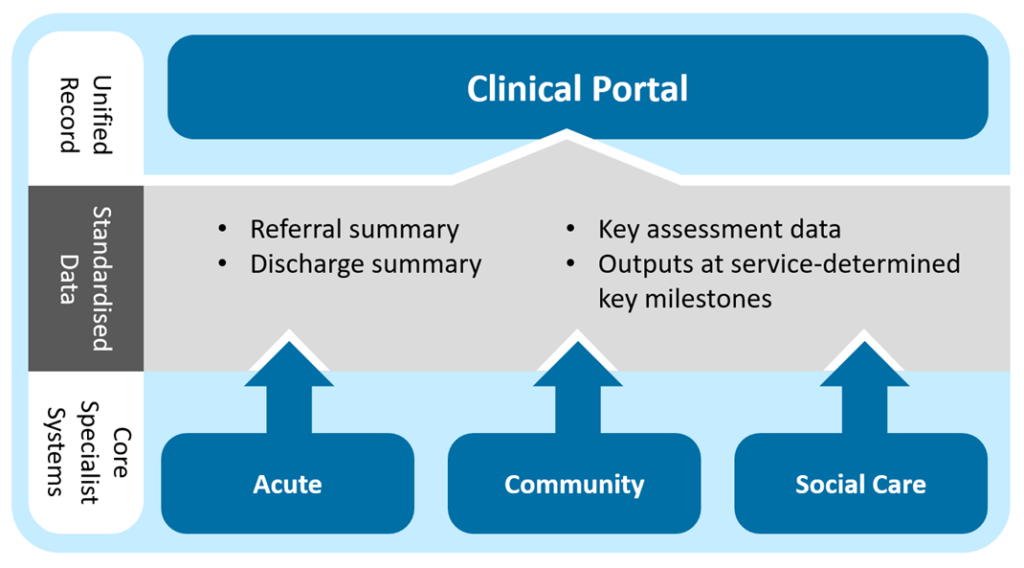
There are 3 ‘cornerstone’ systems used in NHSGGC:
TrakCare used mainly in acute settings;
EMISWeb used mainly in community settings; and
Clinical Portal used across all settings including social care for viewing clinical information. Also used across a variety of settings for documenting information.
The diagram below illustrates the NHSGGC strategic plan of how they integrate:
Connecting with our patients remotely is easy with Near Me. Speak with you manager to see if it is available in your service.
A recent patient feedback survey showed over 90% of patients that had used the video call service would use it again if offered. It has many benefits both to the patient and the clinician.
The Telerehab Toolkit is an excellent resource to help you feel more confident with video calls as well as some other really useful info and links.
Was this helpful?
Yes
No
Thanks for your feedback!
Cookie Consent
We use cookies to analyse traffic to our site and to enable certain functions such as forms and embedded videos. These do not collect personal information. By clicking "Accept All", you consent to our use of cookies, or you can customise the options.
This website uses cookies
Websites store cookies to enhance functionality and personalise your experience. You can manage your preferences, but blocking some cookies may impact site performance and services.
Essential cookies enable basic functions and are necessary for the proper function of the website.
Name
Description
Duration
Cookie Preferences
This cookie is used to store the user's cookie consent preferences.
30 days
CloudFlare provides web performance and security solutions, enhancing site speed and protecting against threats.
Sequence rules uses cookies to track the order of requests a user has made and the time between requests and makes them available via Cloudflare Rules. This allows you to write rules that match valid or invalid sequences. The specific cookies used to validate sequences are called sequence cookies.
session
cf_ob_info
The cf_ob_info cookie provides information on: The HTTP Status Code returned by the origin web server. The Ray ID of the original failed request. The data center serving the traffic
session
cf_chl_rc_m
These cookies are for internal use which allows Cloudflare to identify production issues on clients.
session
__cfruid
Used by the content network, Cloudflare, to identify trusted web traffic.
session
__cf_bm
Cloudflare's bot products identify and mitigate automated traffic to protect your site from bad bots. Cloudflare places the __cf_bm cookie on End User devices that access Customer sites that are protected by Bot Management or Bot Fight Mode. The __cf_bm cookie is necessary for the proper functioning of these bot solutions.
session
__cflb
When enabling session affinity with Cloudflare Load Balancer, Cloudflare sets a __cflb cookie with a unique value on the first response to the requesting client. Cloudflare routes future requests to the same origin, optimizing network resource usage. In the event of a failover, Cloudflare sets a new __cflb cookie to direct future requests to the failover pool.
session
_cfuvid
The _cfuvid cookie is only set when a site uses this option in a Rate Limiting Rule, and is only used to allow the Cloudflare WAF to distinguish individual users who share the same IP address.
session
cf_clearance
Whether a CAPTCHA or Javascript challenge has been solved.
session
cf_use_ob
The cf_use_ob cookie informs Cloudflare to fetch the requested resource from the Always Online cache on the designated port. Applicable values are: 0, 80, and 443. The cf_ob_info and cf_use_ob cookies are persistent cookies that expire after 30 seconds.
session
__cfwaitingroom
The __cfwaitingroom cookie is only used to track visitors that access a waiting room enabled host and path combination for a zone. Visitors using a browser that does not accept cookies cannot visit the host and path combination while the waiting room is active.
session
cf_chl_rc_i
These cookies are for internal use which allows Cloudflare to identify production issues on clients.
session
cf_chl_rc_ni
These cookies are for internal use which allows Cloudflare to identify production issues on clients.
session
Statistics cookies collect information anonymously. This information helps us understand how visitors use our website.
We use Microsoft Clarity to understand how users interact with our website, including information such as clicks, scrolling and navigation behaviour, to help improve our services.
Microsoft Clarity uses cookies and similar technologies. These are only set if you accept analytics cookies.
If you choose not to accept analytics cookies, Clarity will operate in a limited mode using non-cookie-based data, which does not track users across pages or visits.
The data collected is behavioural and technical in nature and does not directly identify individuals. Sensitive information such as names, email addresses and form inputs is automatically hidden and not recorded or viewed.
Some information, such as device and approximate location data will still be collected and is treated as personal data in accordance with data protection legislation.
This will not be used for any purpose other than analytics and will not be used to identify you.
We use Microsoft Clarity to understand how users interact with our website, including information such as clicks, scrolling and navigation behaviour, to help improve our services.
Microsoft Clarity uses cookies and similar technologies. These are only set if you accept analytics cookies.
If you choose not to accept analytics cookies, Clarity will operate in a limited mode using non-cookie-based data, which does not track users across pages or visits.
The data collected is behavioural and technical in nature and does not directly identify individuals. Sensitive information such as names, email addresses and form inputs is automatically hidden and not recorded or viewed.
Some information, such as device and approximate location data will still be collected and is treated as personal data in accordance with data protection legislation.
This will not be used for any purpose other than analytics and will not be used to identify you.