Accident and Emergency departments across NHS Greater Glasgow and Clyde (NHSGGC) are always there for people who need urgent, emergency care. Every day, NHS staff provide lifesaving treatment for patients who are seriously ill or injured.
At the same time, NHSGGC is encouraging people to be aware that many common injuries and illnesses can often be treated just as safely, and sometimes more quickly, at home or through services in the community. This helps ensure A&E teams can focus on those who need emergency care, while people with less serious conditions can access support that’s right for them.
This approach, known as Right Care, Right Place, is about helping people get the care they need in the setting that best suits their situation, at the right time.
Many everyday conditions aren’t emergencies – and that’s okay
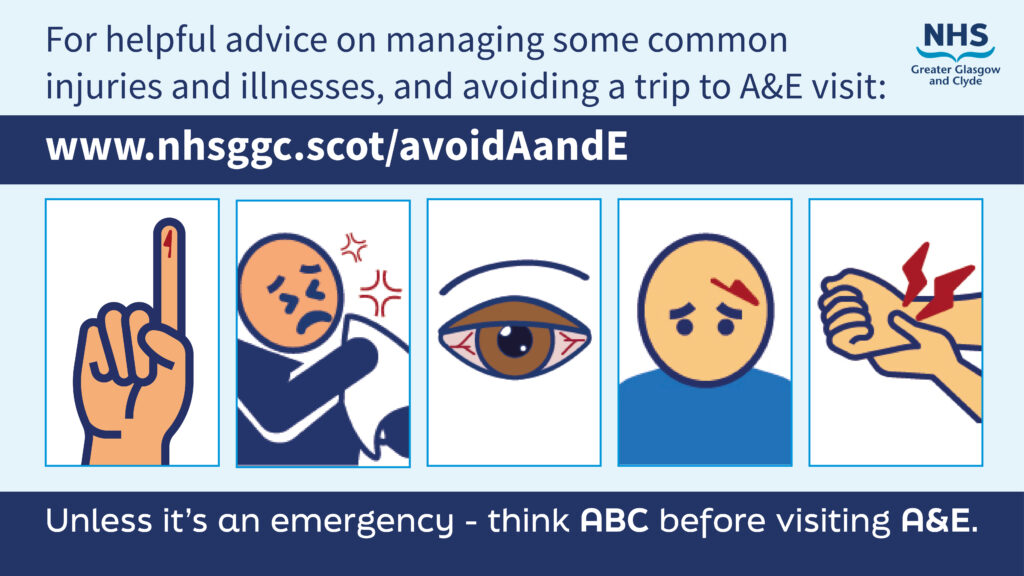
Alongside emergency care, A&E teams also see some people each year with minor injuries and illnesses. Common examples include:
- Sprains, strains and minor fractures of ankles, wrists and fingers
- Minor cuts and simple lacerations to hands or scalps
- Minor head injuries without any warning symptoms
- Coughs, colds, sore throats and other viral infections
- Stomach upsets such as diarrhoea and vomiting
- Urinary symptoms and mild eye problems
To make it easier for people to know what to do in these cases, NHSGGC has launched a new webpage (How to manage some common Injuries and Illnesses – NHSGGC) that brings together clear, practical guidance on treating some of the most common injuries and illnesses, and on where to turn if more support is needed.
The information is designed to help people feel confident managing minor conditions at home, while clearly explaining when and where to seek further help.
Knowing when to seek urgent help is key
NHSGGC continues to stress that some symptoms should always prompt urgent medical advice.
People should seek urgent help via NHS 24 on 111, or call 999 in an emergency, if symptoms are severe, worsening or worrying. This includes, but is not limited to:
- Head injuries with loss of consciousness, confusion or vomiting
- Badly deformed or visible bone injuries, heavily bleeding wounds
- Severe pain, breathing difficulties, or being unable to keep fluids down
- High fever, seizures, mottled skin. or becoming poorly responsive
- Signs of a stroke (new Face, Arm, Speech deficit)
If something doesn’t feel right, people are encouraged to trust their instincts and seek advice.
Clear advice when you’re unsure
Dr Claire Harrow, NHSGGC Deputy Medical Director for Acute Services, said: “Our A&E departments are always there for people who are seriously ill or injured, and no one should ever hesitate to come to an A&E department or call 999 if they need emergency care.
“At the same time, many everyday illnesses and injuries can often be managed safely at home or with help from other NHS services, and we want people to feel supported and informed about the choices available to them.
“We’ve brought together clear, trusted advice on a new webpage to help people understand how to look after common conditions and where to go if they need more help. NHS inform and the NHS 24 Online app are also great places to find reliable information, symptom checkers and self care guidance at any time.
“If symptoms don’t improve, things get worse, or more support is needed, services like community pharmacies, GP services and Minor Injuries Units are there to help. That’s what we mean by Right Care, Right Place – helping people get the care that’s most appropriate for their situation.
“And if you’re unsure where to turn, or your usual services aren’t available, NHS 24 on 111 is there to offer advice and guide you safely to the right service.”