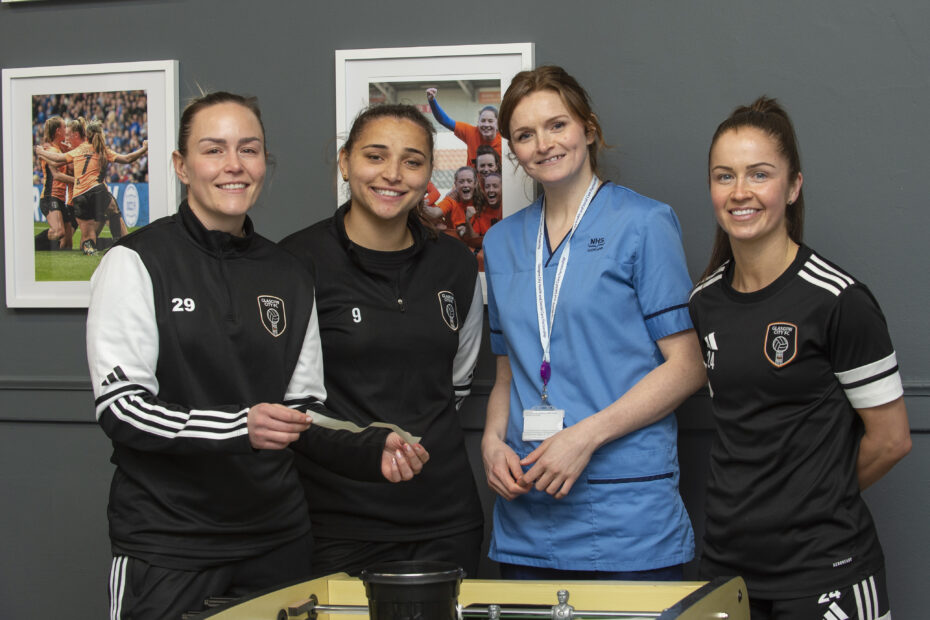

NHS Greater Glasgow and Clyde (NHSGGC) has partnered with Glasgow City Football Club to encourage more 25–29-year-olds to attend their cervical screening appointment as less than half of this age group take the test.
Glasgow City FC are an independent women-founded and women-led club, who are Scotland’s most successful team having won 16 league titles, nine Scottish Cups, and six League Cups since they were established in 1998. As well as providing a space for women and girls in football, the club strives for equality away from the pitch.
Cervical screening, often known as a smear test, is offered every five years to women and people with a cervix, aged 25 to 64. Despite this, over half in the 25–29 age group are not attending when invited.
Among women aged 25 to 29, the most recent statistics[1] for NHSGGC screening show that the uptake rate was 46.5% compared to 74.7% for women aged 50-74.
However, no age group met the national target of 80% with overall uptake across all age categories at 65.2%.
[1] NHSGGC March 2024

Alison Potts, Consultant in Public Health Screening at NHS Greater Glasgow and Clyde, said: “The uptake of cervical screening in women aged 25-29 is a real concern. We’ve seen excellent uptake of the HPV vaccine which protects against most Human Papilloma Viruses that lead to cervical cancer.
“While this is extremely positive as the vaccine offers good protection against HPV infection, the vaccine doesn’t protect against all types of HPV or existing HPV infection that people may have.
“Please don’t assume that being vaccinated means you no longer need to attend screening. That simply isn’t the case.
“You might think, ‘I’ve had the HPV vaccine’, ‘I’ve never been sexually active’, or ‘I’m too young for cervical cancer’. But the truth is that screening is still essential. Cervical cancer can affect anyone with a cervix.
“We know life is busy and appointments can feel inconvenient or embarrassing. But the test only takes a few minutes, and those minutes could save your life. Screening detects early changes long before they have the chance to develop into cancer.”
Alison added: “If you are worried about attending for screening, you will have the chance to speak with your sample taker, usually your GP practice nurse, who will be able to answer all your questions. Reasonable adjustments that can be made to appointments to make you feel more comfortable. Mention that you would like to discuss these when you make your appointment.”
Through a series of videos, posters, and social media activity, the campaign aims to tackle myths, remove stigma and encourage more young women to book their appointment as soon as their letter arrives. Glasgow City FC players are helping spread a clear message: Don’t Fear the Smear.

Glasgow City FC Co-captain, Lee Gibson said: “As professional athletes, we’re always looking at training and nutrition, but football moves quickly and sometimes it’s easy to overlook important health checks and screenings.
“Hopefully, by being open about our own experiences with smear tests, we help to normalise conversations. If talking helps even one woman feel less anxious and more likely to book a screening that only takes a few minutes to look after long-term health, then it’s absolutely worth it.”
Women aged 25 and over are urged to contact their GP practice to book their cervical screening appointment as soon as they receive their letter. The test is quick, safe, and it can be lifesaving.
For more information on Cervical Screening visit: https://nhsggc.scot/nofear