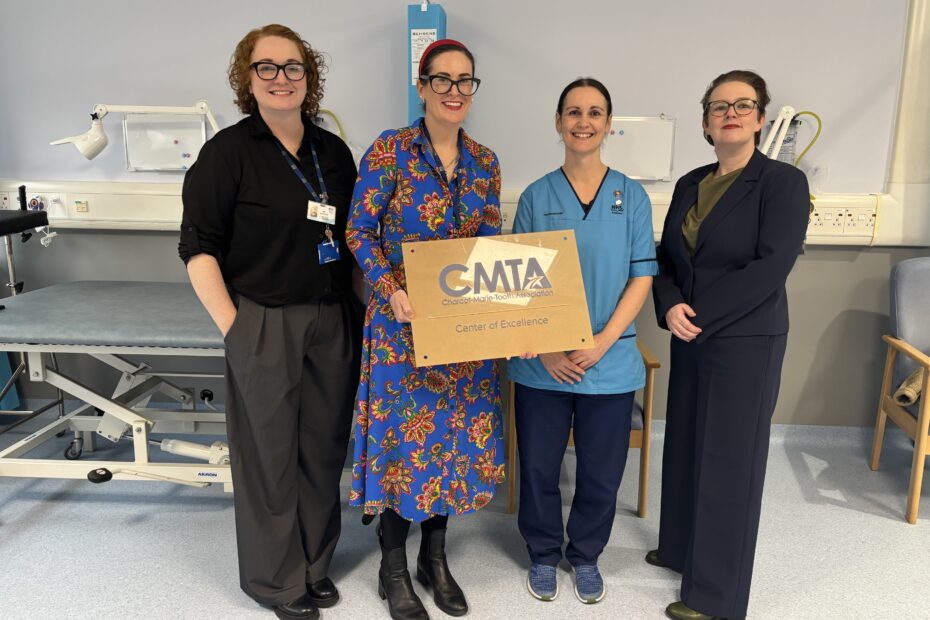
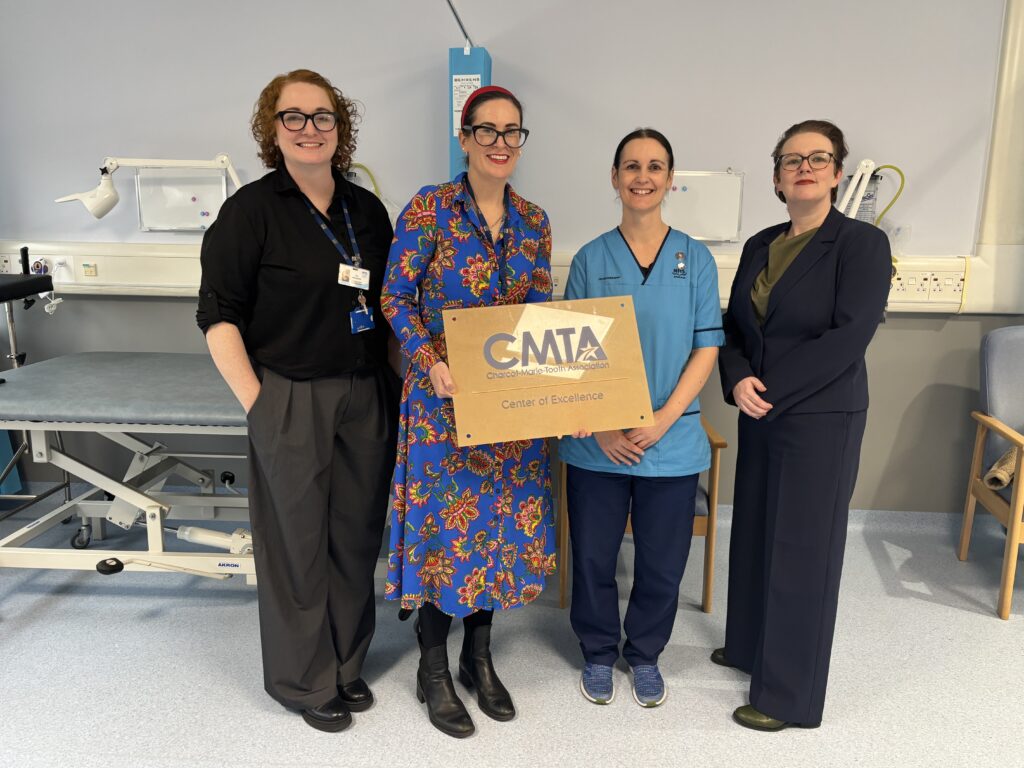
A specialist NHS service for people with a progressive genetic condition that affects the nerves has been named a Centre of Excellence by a global organisation.
NHS Greater Glasgow and Clyde’s specialist neuropathy clinic, based at the Queen Elizabeth University Hospital, received international accreditation for its work supporting patients with Charcot-Marie-Tooth (CMT) disease.
The Centre of Excellence designation from the CMT Association makes the QEUH the first site in Scotland to be given the recognition.
CMT disease is one of the most common inherited neurological conditions, affecting around 1 in 2,500 people.
It damages the peripheral nerves, which carry messages between the brain, the spinal cord and the rest of the body.
Over time, this can lead to muscle weakness in the feet, legs, hands and arms, problems with balance and walking, changes in sensation, such as numbness or tingling, and/or foot issues, such as high arches.
While symptoms vary from person to person, it is usually progressive and can make everyday tasks difficult, meaning support from a specialist, experienced team is vital.
Dr Katie Brennan, Consultant Neurologist and Neuropathy Lead for NHSGGC, leads the multidisciplinary service at the QEUH and has played a key role in developing the care available for patients across the west of Scotland.
Those attending the service have access to a wide range of care, including neurology, physiotherapy, occupational therapy, genetic counselling and referrals to orthotics, surgical consultations and social work support.
This joined‑up approach helps people manage their symptoms, maintain mobility and independence, and plan for future care needs.
By joining the CMTA’s global network of Centres of Excellence, the QEUH service is now formally recognised as a hub for specialist CMT care and research.
The network aims to ensure that people living with CMT can access expert clinicians, receive clear guidance on management, and benefit from advances in research and emerging treatments.
Dr Brennan said: “We are absolutely thrilled to receive this designation from the CMTA.
“It recognises the dedication and expertise of our multidisciplinary team and the high standard of care we aim to provide for people living with CMT.
“This accreditation will help us connect more patients with the support they need and strengthen our ability to participate in research and clinical trials that will shape future treatments.
“Above all, it is a milestone for patients and families across Scotland who deserve access to world‑class, specialist care.”
Laurel Richardson, Senior Director of Community Outreach at CMTA, said: “For people living with CMT in Scotland, having a recognised specialist team close to home matters.
“This designation reflects the care Dr Brennan and her team provide every day and what it means for patients and families to feel supported, understood, and connected to knowledgeable clinicians who know CMT.”