Help with appropriate housing, practical support with money worries and benefits, even making sure someone has something decent to eat when they get home – these are some of the absolute basics of life that wouldn’t normally be associated with healthcare.
But across NHS Greater Glasgow and Clyde (NHSGGC), there is a team of staff who work in the background every day, helping patients, carers and staff to access support with these fundamental necessities.
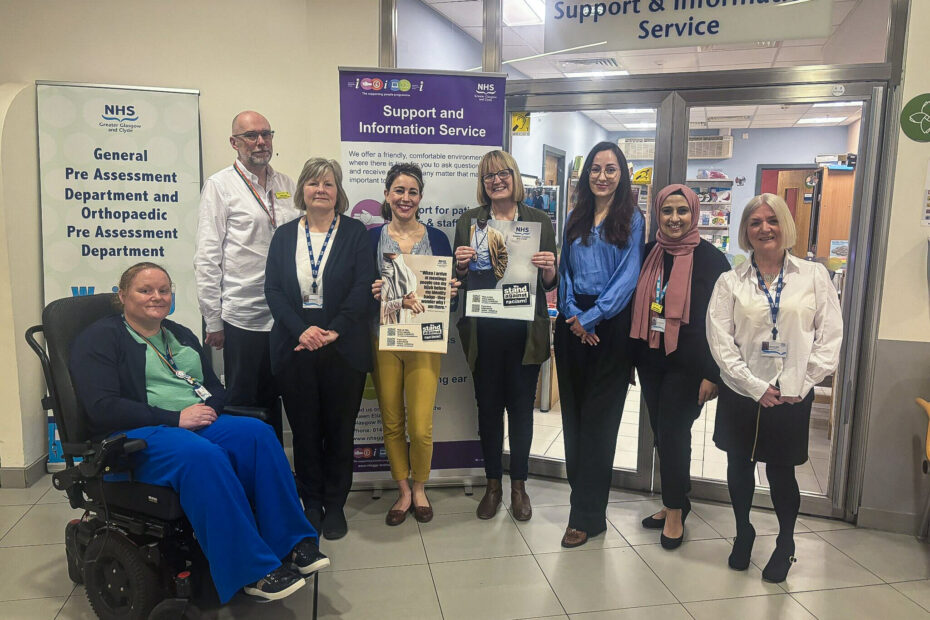
NHSGGC’s Support and Information Service (SIS) helps people to address the practical and social issues that affect their health and wellbeing.
The service operates as a first point of contact for non‑clinical health and social care inquiries, and by focusing on people’s actual needs, the team helps reduce health inequalities, supports self‑management and plays an important role in enabling safe and timely discharge from hospital.
During 2024/25, SIS supported 9,353 presentations across NHSGGC’s hospitals. As part of this work, 2,490 Health Needs Assessments were completed, allowing staff to identify wider social and practical challenges affecting people’s health.
Much of the support is provided in-house, but when additional help is needed the team work closely with advice and support services co-located within hospitals as well as services in the community, and during 2024/25, nearly 2000 referrals were made to these partner services.
Speaking about the impact of the service, Gillian Harvey, Health Improvement Lead for Acute who manages SIS, said: “Social prescribing allows us to look beyond someone’s immediate clinical needs and understand what’s really going on in their life. Whether it’s worries about money, food, housing or caring responsibilities, SIS helps people get the right support at the right time, often at a point when they are most vulnerable.”
A key part of SIS’s work focuses on crisis and cash‑first support, particularly in response to the ongoing cost of living pressures. Over 2024/25, £31,585 in small emergency grants (£5–£50) were provided to vulnerable patients, families and pregnant women, while NHSGGC’s wider money advice services see around 70 people a week, providing simple financial advice and practical help when necessary.
The Hospital Emergency Food on Discharge Service, now available across all acute hospital sites including mental health and regional services, supports patients returning home with no access to food due to isolation or financial difficulty, and in the year from December 2024, nearly 350 emergency food packages were issued through the service.
John O’Dowd, Interim Director of Public Health at NHSGGC, said: “The Support and Information Service shows how social prescribing can be embedded within hospital settings to deliver real benefits for patients, carers and staff. By working closely with third sector partners and addressing the wider factors that affect health, SIS is helping to improve outcomes, reduce inequalities and support more person‑centred care across our health system.”
Through strong partnerships with community and third sector organisations, SIS continues to ensure people leaving hospital are connected to the support they need, helping them recover safely and with dignity.
For more information about NHSGGC’s Support & Information Service, go to the NHSGGC website.