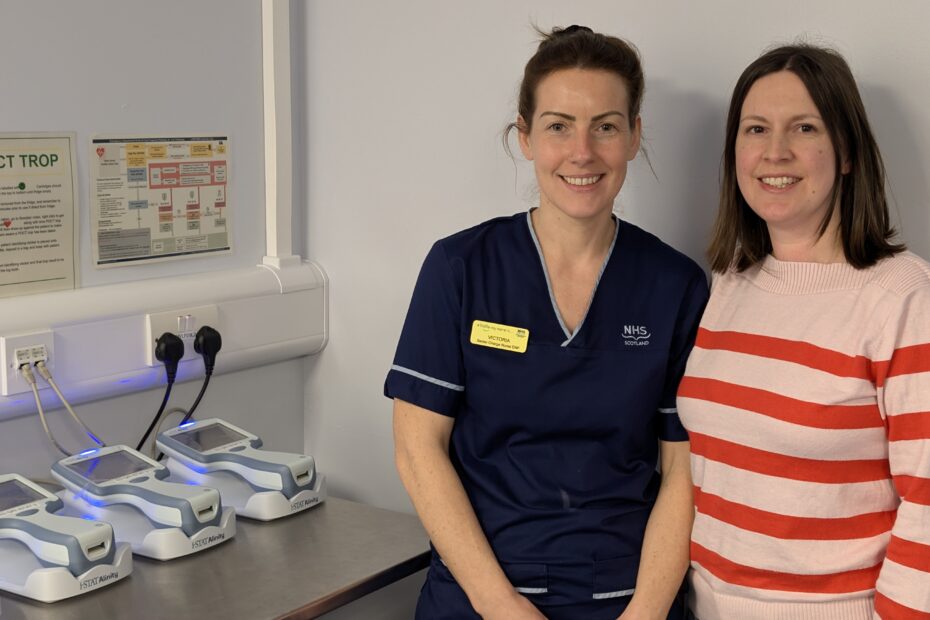
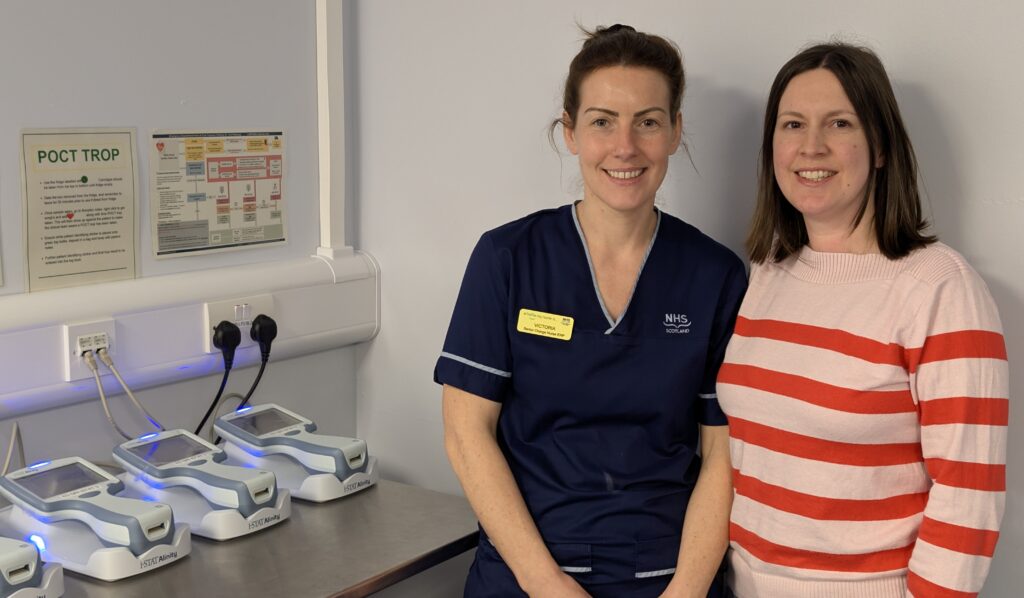
Glasgow Royal Infirmary (GRI) has introduced rapid Point-of-Care (POC) high sensitivity troponin testing in its Emergency Department, an innovation that is set to significantly improve the assessment and treatment of patients presenting with suspected cardiac chest pain.
The move builds on the successful rollout at the Queen Elizabeth University Hospital (QEUH), which became the first in Scotland to implement this technology. Like QEUH, GRI will now be able to deliver cardiac blood test results in under 15 minutes, compared with the traditional laboratory turnaround time of up to 90 minutes.
This new capability supports NHSGGC’s Way Forward Programme and is a key component in developing a faster, more efficient Emergency Department-only chest pain pathway.
By enabling clinicians to make earlier, safer decisions, the test is expected to reduce overcrowding, improve patient flow, and enhance the experience of the thousands of people who attend GRI each year with chest pain.
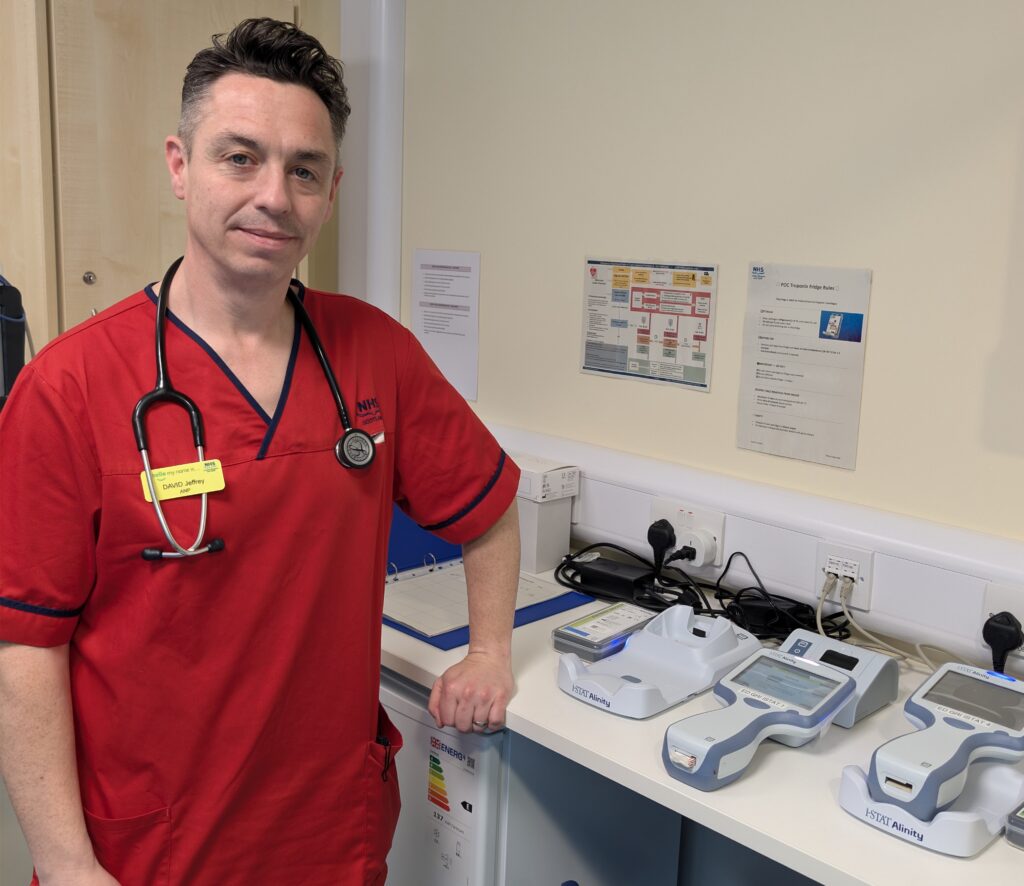
Professor Donogh Maguire, Clinical Director for Emergency Medicine at GRI, welcomed the implementation.
“Introducing rapid point of care troponin testing at Glasgow Royal Infirmary is a hugely positive step for our Emergency Department”, he said.
“We see thousands of patients every year with chest pain, and faster access to high quality diagnostics will make a real difference to how quickly and safely we can assess them.
“This innovation will help ease pressure on our department, support earlier decision making, and ultimately improve patient flow across the hospital.”
The introduction at GRI also reflects close collaboration across Emergency Medicine, Cardiology, POCT Laboratory Services, eHealth and the wider West of Scotland Innovation network, mirroring the partnership model that helped deliver success at QEUH.
Neil McCallum, North Sector Director for NHSGGC, said: “This is exactly the type of improvement that demonstrates the value of our ongoing pathway redesign work within the North Sector.
“Rapid troponin testing will allow our teams to make clearer clinical decisions earlier in a patient’s journey, reducing delays and helping us provide a better, more efficient experience for people who come to us with chest pain.
“I’m incredibly proud of the collaborative effort that has brought this to GRI, and we look forward to building on this momentum as part of our wider Way Forward Programme.”
As the rollout progresses, GRI will contribute to the learning already gathered at QEUH, helping inform future expansion of rapid cardiac testing models across other NHSGGC sites and potentially wider NHS Scotland.