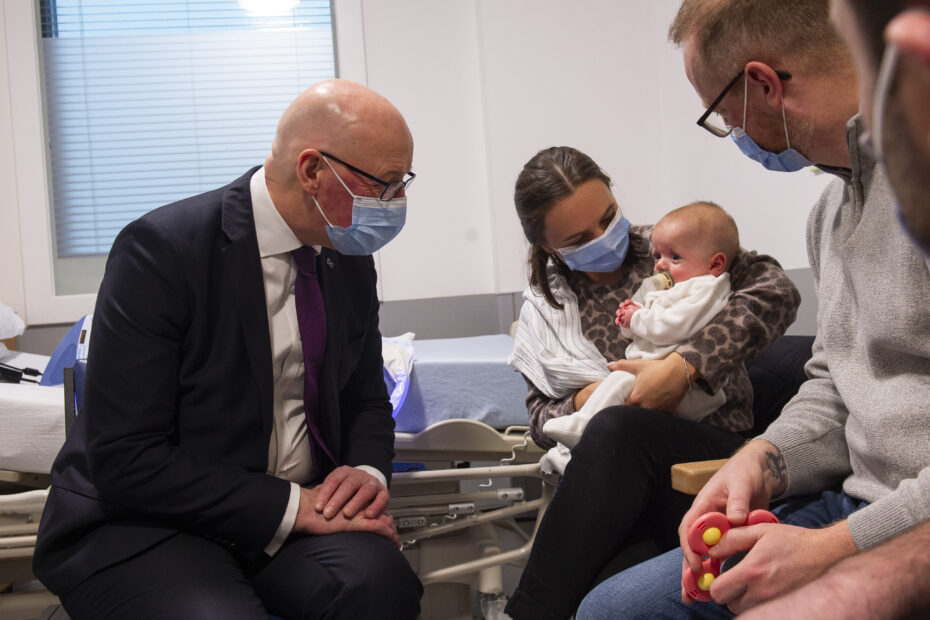
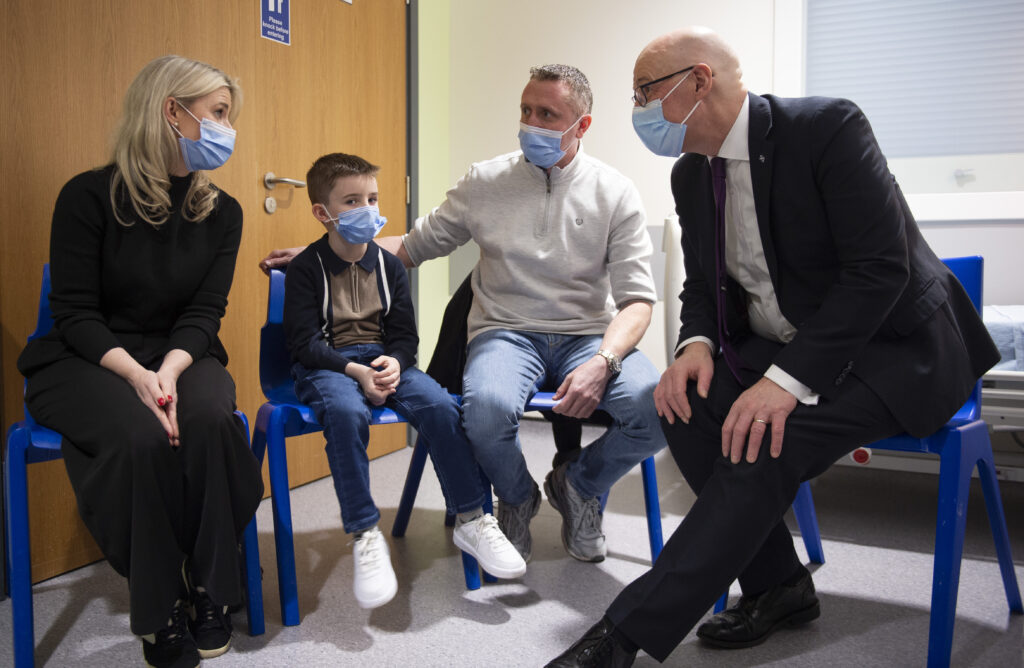
First Minister John Swinney visited the Royal Hospital for Children (RHC) in Glasgow today to meet families who have benefited from NHS Greater Glasgow and Clyde’s expanding Hospital at Home and virtual hospital services.
Mr Swinney was welcomed by NHSGGC Chair Dr Lesley Thomson KC and Chief Executive Professor Jann Gardner and spoke to staff leading new services designed to deliver hospital-level care for children in the comfort of their own homes.
He was also given a tour of key areas of the hospital including the Teddy Hospital and the Sensory Room, which support children and families during their visits to the RHC.
The First Minister had the opportunity to hear from parents whose children have received care through Hospital at Home, as well as those who have received intravenous antibiotic treatments on an outpatient basis.
NHSGGC recently launched two new services within its wider virtual hospital.
Paediatric Hospital at Home offers care and monitoring for children with a wide range of conditions that do not require admission to a physical hospital, while Neonatal Hospital at Home enables babies with neonatal jaundice to receive treatment at home rather than remaining in hospital for several days.
These services, alongside the existing Paediatric Outpatient Parenteral Antimicrobial Therapy (OPAT) service for children with complex infections, significantly expand the opportunities for young patients to be safely treated at home rather than in hospital wards.
First Minister John Swinney said: “We are taking bold action to reduce pressure on our NHS, increase capacity and shift the balance of care into communities.
“Through our £220 million Operational Improvement Plan, we’re investing to reduce waiting times, improving hospital flow, and provide care for patients in the comfort and safety of their own homes.
“It’s clear to see the impact of NHS Greater Glasgow and Clyde’s new Paediatric and Neonatal services, helping children to stay at home while receiving hospital level care.
“Thanks to these innovative services, this festive season they can be treated in familiar surroundings rather than be separated from family, friends and pets and not have to travel to a hospital where it isn’t required.”
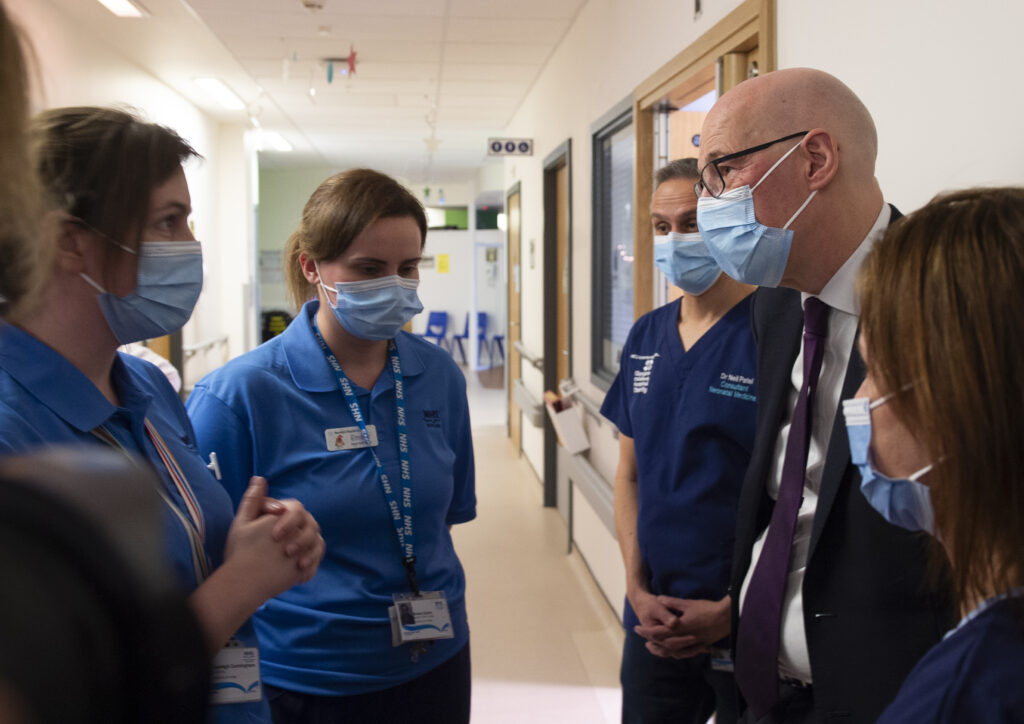
Paediatric Hospital at Home is tailored to each child and can include a combination of nurse home visits, wearable technology such as oxygen and heart‑rate monitors, virtual consultations, phone check‑ins, and early supported discharge.
This approach allows children to remain with their families in a familiar environment while still receiving high-quality clinical care, often reducing the length of time they spend in hospital.
The new Neonatal Hospital at Home service is already improving experiences for families.
Neonatal jaundice affects around six in ten newborns and typically requires several days of phototherapy treatment in hospital.
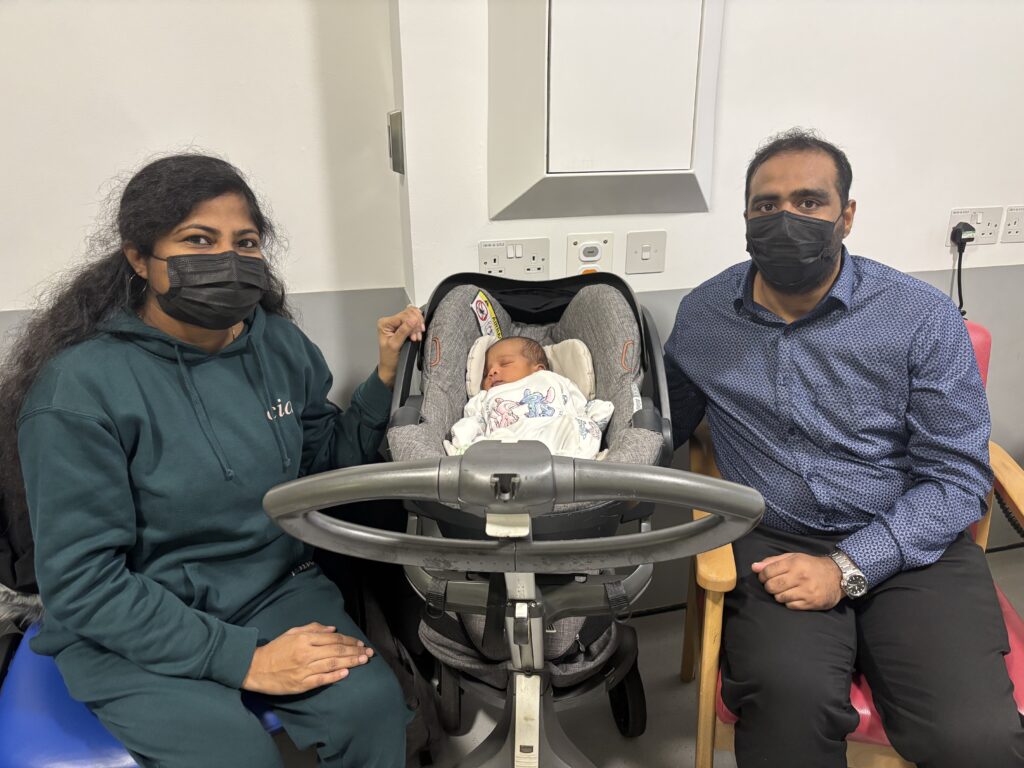
Through the new service, babies can now receive phototherapy at home, with neonatal nurses visiting daily to check bilirubin levels, assess progress, and determine whether treatment should continue – all while keeping families together.
These services form a key part of NHSGGC’s Transforming Together programme, which aims to provide more care closer to home and reduce unnecessary time spent in hospital. The virtual hospital model brings advanced monitoring, treatment, and multidisciplinary support directly to families, helping ensure care is flexible, responsive, and centred around the needs of the patient.
One of the patients Mr Swinney met was 15-week-old Albie Thorburn, who was cared for through the Paediatric Hospital at Home service after having issues with feeding and weight gain.
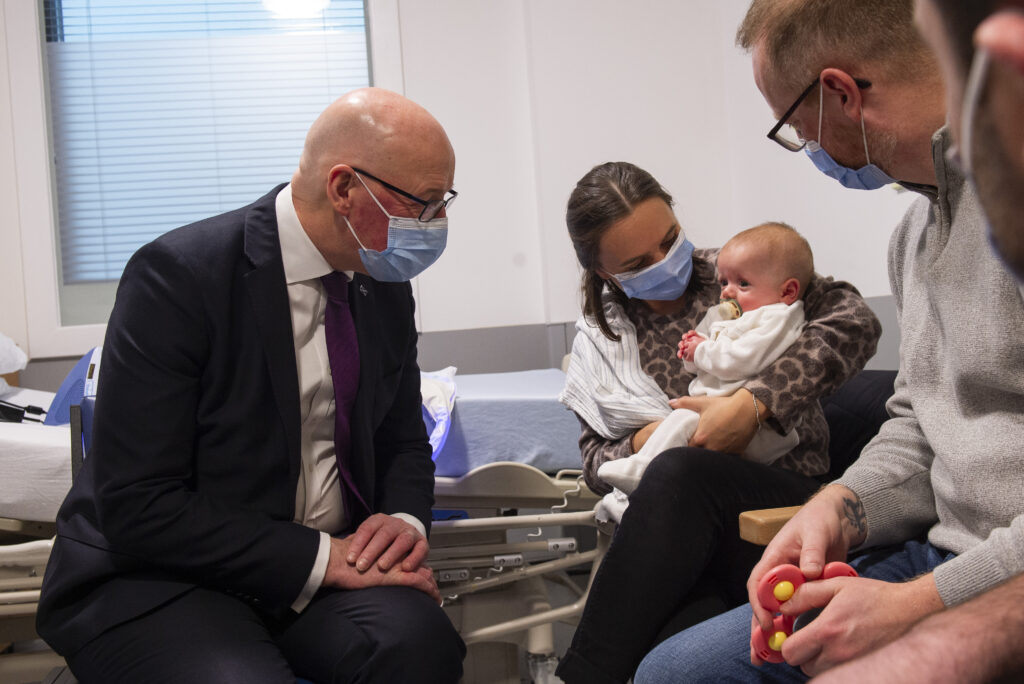
Albie’s mum Kirsty, 32, explained that her son was initially admitted to the RHC for tests to rule out anything underlying.
She and husband Alan, 38, were then shown how to feed Albie using a nasal gastric tube which was inserted during his hospital stay, and they were able to take him home sooner.
Kirsty, from the east end of Glasgow, said the family had daily check-ins with Albie’s clinicians via phone, and two attendances in person for Albie to be weighed. These phone calls allowed his parents to ask for further advice, and they were given a dedicated out of hours number for any concerns.
She said: “It was great to be under the Hospital at Home as we were getting daily input from the clinicians without Albie having to be in a physical hospital.
“Albie wasn’t unwell, so there was no need for him to be kept in hospital other than having his condition monitored.
“Having him at home meant I was more relaxed and was able to feed him and produce milk better.
“It meant my partner could be there overnight too and assist with the night feeds.
“It just helped us be together at home with all of our comforts. He has been thriving since he got home.”
The First Minister also met three-week-old baby Krish Butti who had jaundice when he was born but was able to go home to have phototherapy treatment.
Krish’s mum, Bijini Balan, who is 35 and lives close to Glasgow city centre, said: “We were much more comfortable at home, and it meant we were more settled. It was very beneficial not to have to spend days or weeks in hospital because he could have his treatment at home and the jaundice has completely disappeared now.”
Meanwhile, Mr Swinney had the opportunity to meet families of young patients who received intravenous antibiotic treatment on an outpatient basis, also known as OPAT, rather than having to stay overnight in hospital.
Caleb McLellan, 7, was treated using OPAT for a heart infection called endocarditis.
His mum, Joanne Campbell, from Stepps, said: “Having the OPAT treatment had a significant impact on Caleb and really helped him cope with the situation.
“He was able to go to school for a couple of hours in the afternoon each day which meant he was able to see his friends and regain a sense of normality instead of being isolated and confined to hospital.
“Being at home also allowed him to spend time with his little sister, which was hugely important for both of them.”
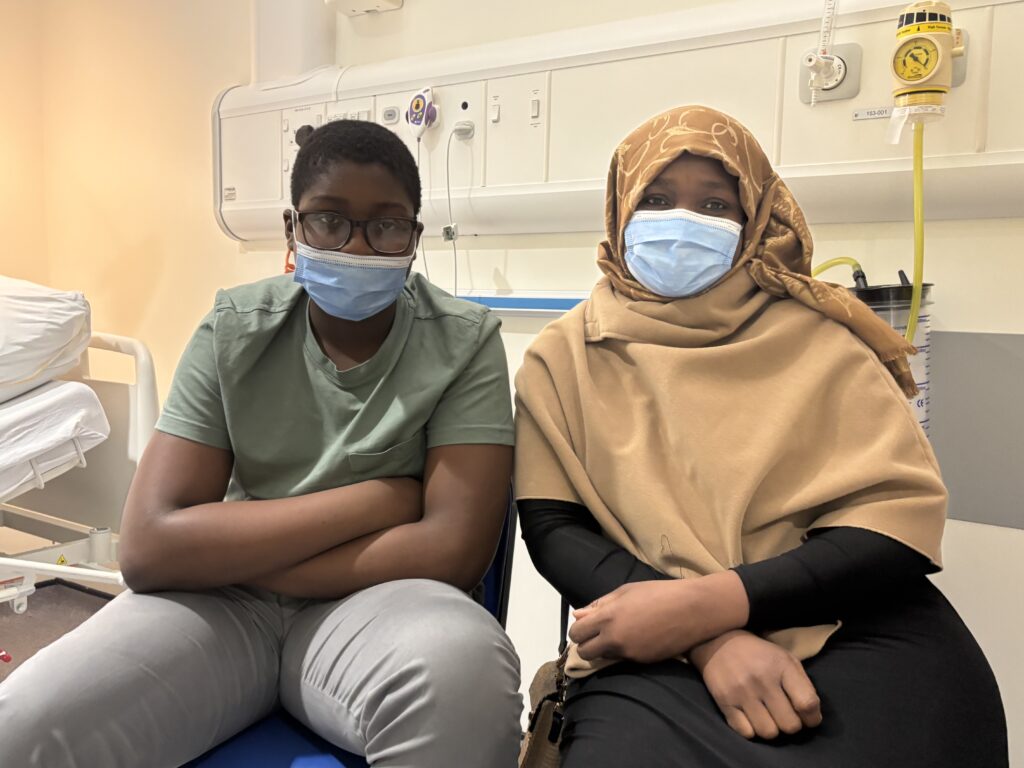
During the visit, the First Minister met with Haruna Salihu, who attended with his mum Amina, after also being on the Paediatric OPAT pathway.
Dr Neil Patel, Clinical Innovation Director and Consultant Neonatologist at the Royal Hospital for Children, said: “Our Hospital at Home programme is giving babies and children the opportunity to receive the same high‑quality care they’d receive in hospital, but in the place that’s most natural and comfortable for them – their own home.
“We’re seeing the benefits every day, from reduced hospital stays to better experiences for families at what can be a very stressful time.
“These services are a core part of NHSGGC’s virtual hospital and our wider Transforming Together agenda.
“By using technology, specialist nursing support, and innovative care pathways, we are safely shifting more hospital‑level care to the home environment, improving outcomes while helping families stay together.”