The Queen Elizabeth University Hospital is home to NHS Greater Glasgow and Clyde’s Endometriosis Centre, a specialist service supporting women living with the often‑debilitating symptoms of endometriosis.
The multidisciplinary team made up of specialist consultants and an endometriosis nurse provides expert care for women with stage three and four endometriosis. The clinic supports and treats patients with complex symptoms, offering pain management, mental health and wellbeing support, and, where required, surgical treatment.
This Endometriosis Awareness Month (March 2026), the team is shining a light on the condition estimated to affect around 1.5 million women and girls in the UK, including one in ten women in Scotland.
Endometriosis occurs when cells similar to the lining of the womb grow elsewhere in the body, commonly on the ovaries, fallopian tubes and pelvic lining, and sometimes on the bladder, bowel or other organs. It is a long-term condition with no definitive cure, and its symptoms can significantly affect every aspect of a woman’s physical, emotional and social wellbeing.
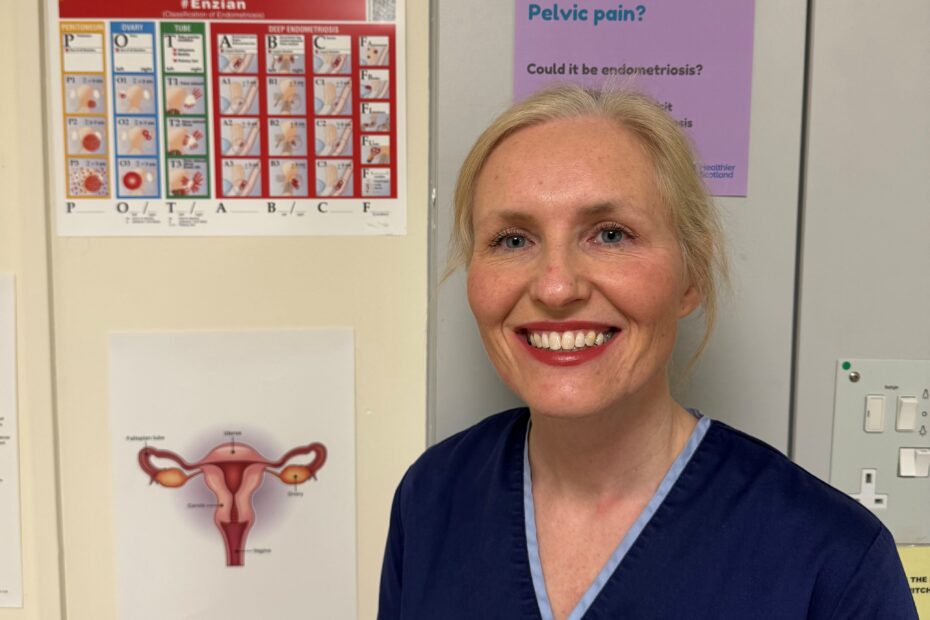
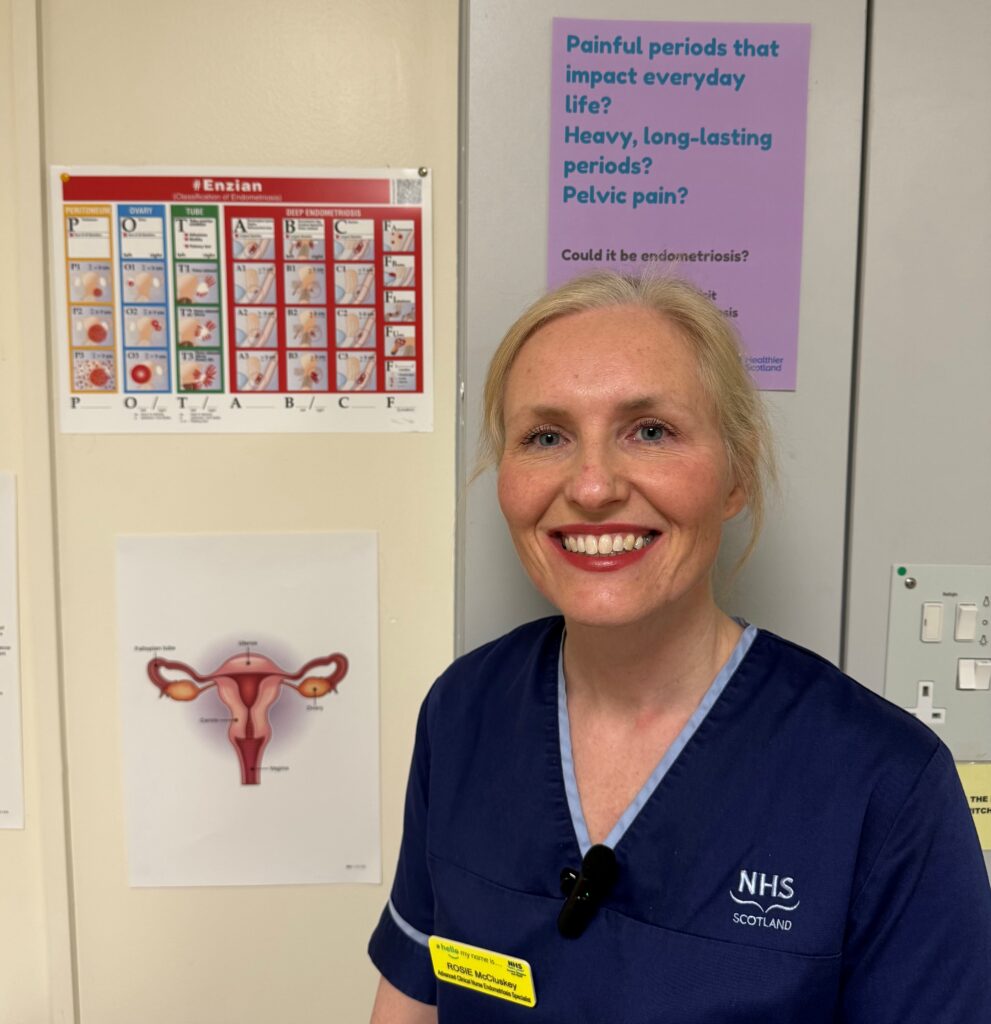
Rosie McCluskey, Advanced Clinical Nurse Endometriosis Specialist at NHS Greater Glasgow and Clyde, said:
“We’re spreading awareness because it’s so important that girls and women listen to their bodies and understand the symptoms. Recognising patterns in what they’re experiencing, what’s happening, when it happens and how often, can make a huge difference when they speak to their GP and explore support or treatment options.”
Rosie explained that symptoms can include heavy periods, irregular bleeding, bowel and bladder changes, abdominal bloating, extreme fatigue and, in some cases, an impact on fertility.
“These symptoms can have a profound effect on women’s mental and physical health which in turn affects home life, work life and even financial stability,” she said.
Symptoms can begin as early as adolescence and may continue through menopause.
They vary widely from person to person and may affect the body in multiple ways. Common symptoms include:
• Pelvic pain
• Painful ovulation
• Severe period pain, both during menstruation and at other times
• Heavy or irregular bleeding
• Abdominal bloating
• Bladder and bowel symptoms
• Extreme fatigue
• A potential impact on fertility
Rosie also explained that early recognition and support are vital in helping women and girls access appropriate care, manage symptoms and advocate for their own health.
“By improving awareness, we hope to empower more people to seek help sooner and feel confident discussing their concerns,” she said.
For more information on endometriosis visit: