
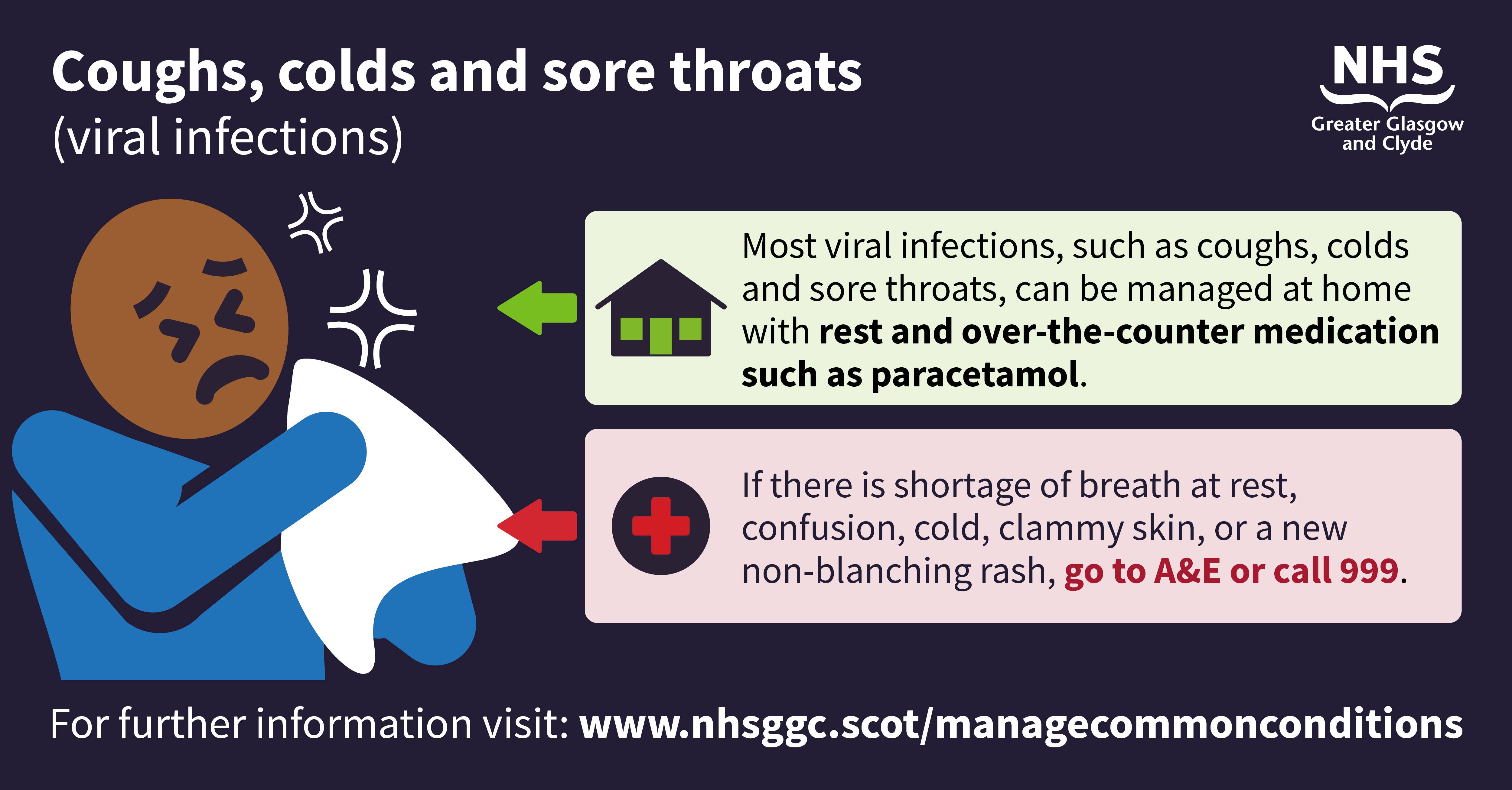
Coughs, colds, sore throats and flu are all common at this time of year. If you or someone in your family is feeling under the weather, the good news is that many winter illnesses can be safely managed at home.
A few simple things can help you feel better while your body recovers, and can also help stop bugs spreading to friends, family and others around you.
NHS inform advises that if you have symptoms of a respiratory infection, you should try to stay at home and avoid contact with other people. If you do need to go out, wearing a well-fitting face covering can help reduce the risk of passing the infection on.
Look after yourself at home
If you’re battling a winter bug, give yourself time to recover. Some simple things can help:
- Rest and sleep: Take it easy and give your body the time it needs to recover.
- Stay hydrated: Drink plenty of water and other fluids.
- Manage your symptoms: Paracetamol or ibuprofen can help with fever, aches and pains if these medicines are suitable for you.
- Give yourself time: Don’t rush your recovery. Rest and self-care can make a difference.
Antibiotics don’t work against viral infections such as colds and flu, so giving yourself time to recover and looking after yourself is important.
Know where to get help
Sometimes you might need a little more help. If your symptoms are more severe, persistent or getting worse, your local community pharmacy or GP practice can provide advice and support.
Call NHS 24 on 111 if:
- you think you need A&E but it’s not life- or limb-threatening
- you need support with mental health distress
- you need urgent care and your GP, pharmacy or dental practice is closed.
For a serious or life- or limb-threatening emergency, call 999 or go directly to A&E. For coughs, colds and sore throats specifically, NHSGGC guidance advises seeking emergency help for symptoms including shortness of breath at rest, confusion, cold or clammy skin, or a new non-blanching rash.
Help stop winter bugs spreading
Nobody wants to pass a winter bug on. A few everyday actions can help protect the people around you:
- Stay at home when you’re unwell, particularly if you have a high temperature or don’t feel well enough to carry out your normal activities.
- Wash your hands regularly with warm water and soap.
- Catch coughs and sneezes in a tissue or your elbow.
- Bin used tissues as soon as possible and wash your hands afterwards.
- Clean frequently touched surfaces, such as phones, keyboards and door handles.
- Get your flu vaccination if you’re eligible: Vaccinations – NHSGGC.
Cold or flu?
Not sure whether you’ve got a cold or the flu? You’re not alone. It isn’t always easy to tell the difference.
In the NHS 24 video Cold vs Flu: What’s the difference? Dr Julie Ronald explains the main differences between these common illnesses, including their symptoms, how they spread, typical recovery times, and when you should seek further help.
Trusted advice when you need it
If you or someone in your family is feeling unwell this winter, you don’t have to second-guess what to do.
NHS inform has trusted information on common winter illnesses including colds, coughs, COVID-19, fever, flu, norovirus and sore throats. You can check symptoms, find out what you can do at home and understand when it might be time to seek further help. Visit the Winter illness | NHS inform hub.
You can also find practical advice on the NHSGGC website about managing common illnesses and injuries and choosing the right care for your needs: How to manage some common Injuries and Illnesses – NHSGGC.