NHS Greater Glasgow and Clyde (NHSGGC) is reminding people that trusted digital and virtual NHS services can help them access advice and urgent care without automatically making a trip to A&E.
As winter approaches, knowing what help is available before you become unwell or injured can make it easier to get the right care when you need it.
Much of the help and advice you may need is available at your fingertips, from the comfort of your own home, helping you find the right NHS service without heading to A&E.
From checking symptoms to getting urgent advice through NHS 24 on 111 and, where appropriate, NHSGGC’s Flow Navigation Centre+ Plus (FNC+Plus), a range of services can help you get the right care.
Feeling unwell? Start with trusted NHS advice
If you experience a small injury or illness, a good first step is to check trusted online NHS advice.
The NHS Inform website and NHS 24 Online app provide information about illnesses, symptoms and self-care, as well as symptom checkers. The NHS Inform website also has a service directory to help you find healthcare services locally.
You can manage many common illnesses and injuries at home or with support from services in your community including a pharmacy, your GP, dentist, or opticians.
For example, most coughs, colds and sore throats can be managed at home with rest and over-the-counter medication such as paracetamol. Minor urinary symptoms can usually be supported with help and medication at a local pharmacy. A high-street optician can assess many common eye problems, and your dentist can help with issues to do with your teeth, mouth or gums.
NHSGGC’s website also explains where to turn for some of the most common injuries and illnesses that present at A&E and could be treated elsewhere, including coughs and colds, stomach upsets, urinary symptoms, eye problems, back pain and minor injuries: Find out how to manage common illnesses and injuries.
Think you need urgent care, but it isn’t an emergency?
If your local services are closed and you have an injury or illness you can’t treat, isn’t getting better but it isn’t life- or limb-threatening, call NHS 24 on 111 for urgent advice and help to access the most appropriate care for your needs.
NHS 24 can provide urgent advice and help you access the most appropriate care for your needs.
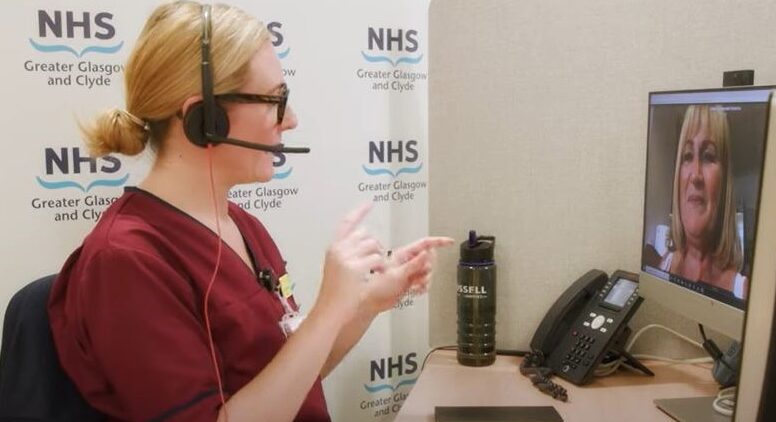
Depending on the care you need, one of the pathways available within NHSGGC is Flow Navigation Centre+ Plus (FNC+Plus), also known as Virtual A&E.
Patients can be referred to FNC+Plus through NHS 24 on 111 or by a clinician. Expert staff can assess what support is needed and may arrange a virtual consultation.
Depending on the patient’s needs, they may be supported from home or directed onwards to the appropriate service.
What could this look like in practice?
The route to care will depend on your symptoms, but knowing your options can make the process less confusing.
Have an injury or illness you can treat at home?
Check the NHS Inform website, NHS 24 Online app, or NHSGGC self-care guidance. Many common injuries and illnesses can be managed at home, while your pharmacist, GP, dentist, or optician can help if symptoms are more severe, persistent or worsening.
Think you need urgent care but it’s not a life- or limb-threatening injury or illness?
Call NHS 24 on 111. You can receive advice and, depending on your needs, be directed to the appropriate service.
Need help when your usual service is closed?
NHS 24 on 111 can provide urgent advice when services are closed or you are unsure where to turn.
Healthcare information in your pocket
Using trusted online NHS advice can also help people prepare before illness strikes.
As well as health and self-care information, NHS inform provides a service directory to help find local GPs, pharmacies, opticians, and other NHS services.
Taking a few minutes to understand what’s available now could make it easier to know what to do if you or someone in your family becomes unwell.
Know when to use A&E
A&E remains the right place for life- or limb-threatening injuries or illnesses. If you think it is an emergency, call 999 or go straight to A&E.
Warning signs can include serious breathing difficulties, signs of a stroke, loss of consciousness, badly deformed or visible bone injuries, heavy bleeding, seizures or becoming poorly responsive.
Lorraine Cowie, Director of Unscheduled Care and Interface, said: “When you’re unwell or injured, it isn’t always easy to know which healthcare service is right for you, particularly when you need help quickly.
“There are a number of services available that can help people access advice and the most appropriate care. The NHSGGC website, NHS Inform website, and NHS 24 Online app provide trusted health information online, while NHS 24 on 111 can provide urgent advice and help people navigate what to do next.
“For some patients, that may include support through FNC+Plus, where our teams can assess what care is needed and, where appropriate, support people virtually or direct them to the most suitable service.
“A&E will always be there for life- or limb-threatening injuries and illnesses, but knowing your options can make it much easier to get the right help when you need it.”