A much-loved four-legged member of staff at NHS Greater Glasgow and Clyde is taking centre stage once again as Take Your Dog to Work Day comes around this Friday.
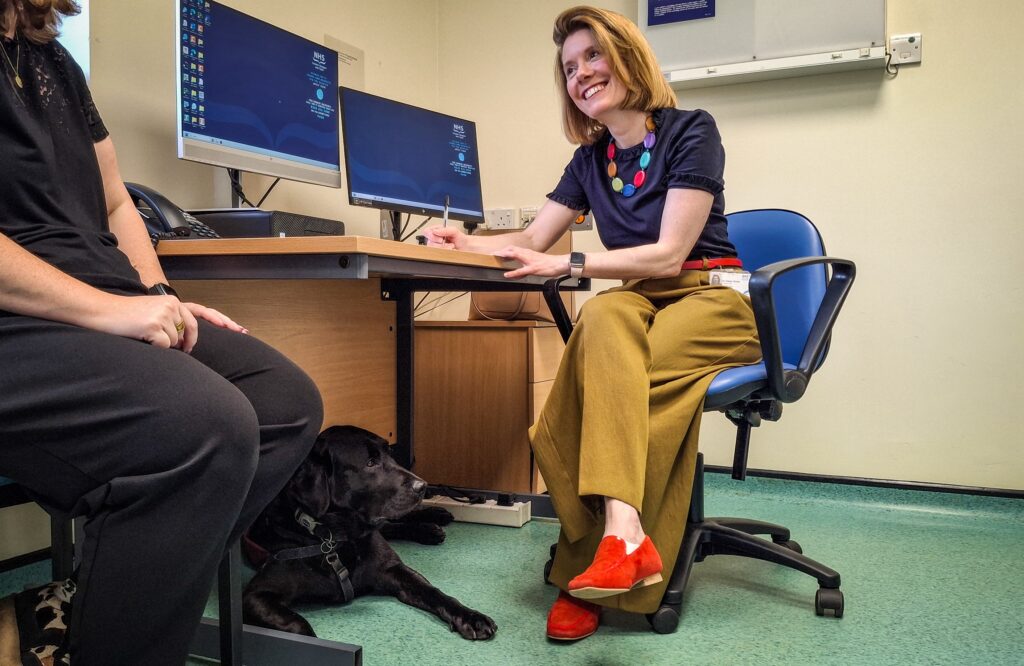
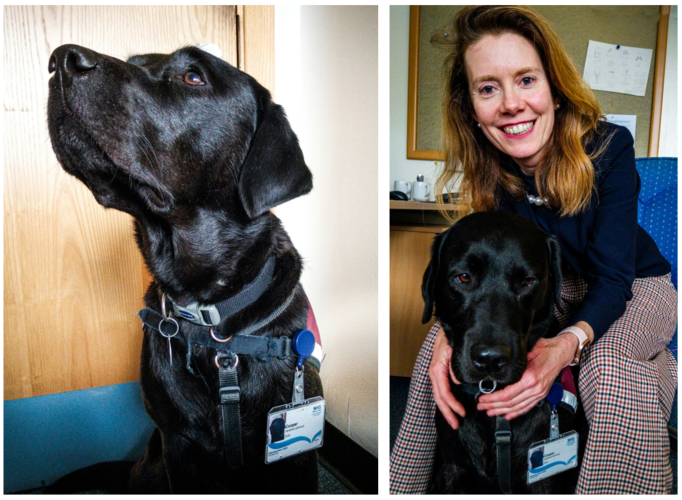
Cooper, a Hearing Dog, joined the Neurology team at the Queen Elizabeth University Hospital alongside Consultant Neurologist Dr Helen Grote in 2024 – and remains a familiar and valued presence.
Since moving to Glasgow, both Helen and Cooper have settled quickly into life in Scotland.
“It’s been going really well,” Helen said. “Cooper has settled in brilliantly – and is loving life here. It’s great having Loch Lomond and the Trossachs on our doorstep and we spend time there whenever we can.”
NHSGGC’s neurology service cares for patients from across Greater Glasgow and Clyde as well as the wider west of Scotland, and Helen splits her working week between the Queen Elizabeth University Hospital and University Hospital Ayr.
“At the QEUH I do more specialist work in movement disorders, whilst in Ayr most of my work is general neurology clinics and ward referrals – you see everything from headaches and seizures to memory concerns,” she said.
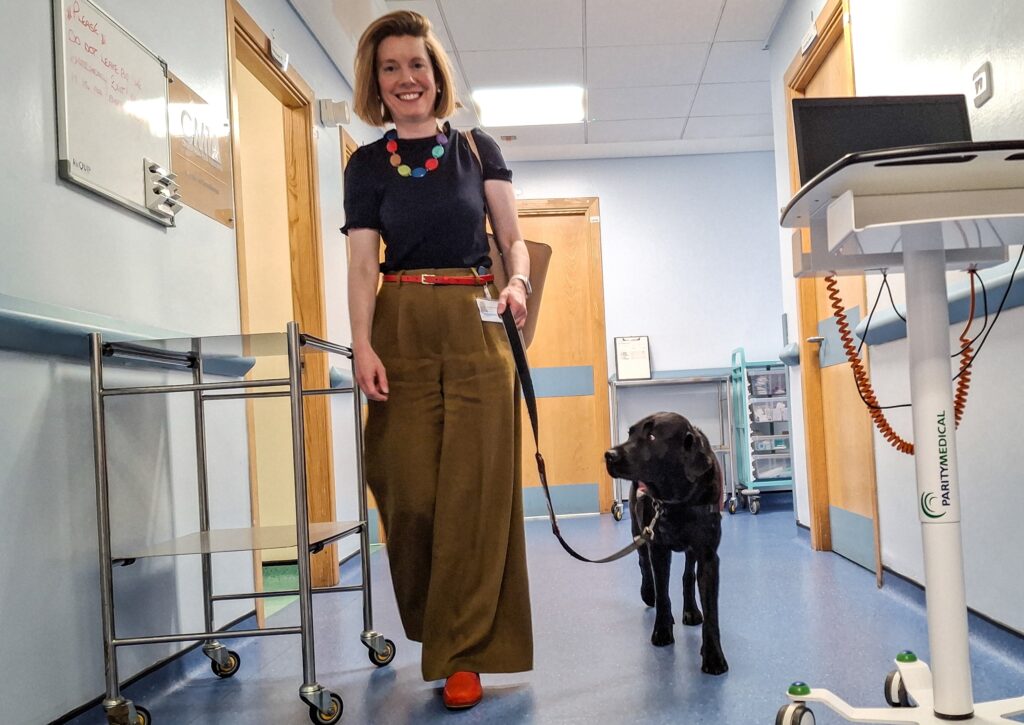
“The hospitals are very different too – the QEUH is huge and urban, while Ayr is smaller and right next to open countryside. We often go for a walk in the morning there, and Cooper loves it.”
In clinic, Cooper is a calm and reassuring presence.
“He just curls up on his little mat and snoozes,” Helen said. “Patients always comment on how well behaved he is.”
Patients are introduced to Cooper before they arrive, with a postcard included in appointment letters explaining his role and highlighting Helen’s hearing loss.
“It helps set things up really nicely,” she said. “Patients know to face me, speak clearly and not cover their mouths – it just makes communication easier.
“And it’s also a great icebreaker. If someone is anxious, having that common ground through Cooper can really help them relax.”
Cooper also supports Helen beyond the clinic.
“He’s a great help at work and at home,” she said. “And just having him there, especially at night, is a real comfort.”
On top of that, he has changed Helen’s experience in wider professional settings.
“In the past I could feel quite isolated at conferences or events,” she said. “Now I find that people are interested in Cooper, so they come over and start conversations – it makes things much more inclusive.”
Back within the department, Cooper has become a familiar and welcome sight for colleagues and patients alike.
Susan Groom, Director of Regional Services at NHS Greater Glasgow and Clyde, said: “We want all of our staff to feel supported and able to thrive in their roles, and Helen’s experience shows how straightforward adjustments can make a real difference.
“It’s been great to see how well Helen has settled into her role, and Cooper has become a popular member of the team too.
“As we mark Take Your Dog to Work Day, it’s a nice opportunity to recognise the positive impact that support animals – and a welcoming workplace – can have for both staff and patients.”
Take Your Dog to Work Day offers a chance to celebrate the positive role dogs can play in the workplace, from boosting wellbeing to supporting inclusion.
For Helen, Cooper has made a real difference.
“He’s made a huge difference to my confidence and independence,” she said. “I really can’t imagine being without him now.”
Hearing Dogs for Deaf People is a UK charity that trains dogs like Cooper to alert their deaf partners to important sounds, while also providing companionship and support.
To find out more, go to: hearingdogs.org.uk